Community Musicians, building a worldwide Community Music.
All the music you want to play on one site. Sharing the world’s best Contemporary, Jazz, Popular, Film, and Classical Sheet Music.
Scores for all instruments: over 15,000
(active and growing), over 231,000 pages.
All genres, styles, and instruments — Jazz & Blues, Rock & Pop, Classical & Contemporary, Film & Musicals;
books, methods, études, play-along tracks (MP3) for Jazz & Rock.
Access & benefits: $15.99 one-time payment, valid for lifetime.
How to Join — 🔍 Search the Catalog — FAQs — Join Us
Table of Contents
Maurice Ravel : Pavane pour une infante défunte, Easy Piano sheet music, Noten, partitura, spartiti, 楽譜, 乐谱
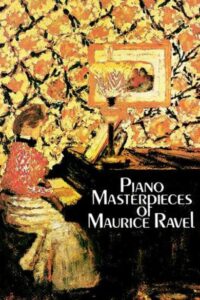
Best Sheet Music download from our Library.
Maurice Ravel: A Biography
Joseph-Maurice Ravel (1875–1937) was a French composer of Swiss-Basque descent, often associated with Impressionism, though his music is more classically structured, precise, and neoclassical than that of his contemporary Claude Debussy. He is celebrated for his masterful orchestration, evocative melodies, and works that blend technical perfection with profound emotion and color.

Please, subscribe to our Sheet Music Library.
If you are already a subscriber, please, check our NEW SCORES’ page every month for new sheet music. THANK YOU!
Key Biographical Points:
- Early Years & Conservatoire: Born in Ciboure, France, he moved to Paris as an infant. Entered the Paris Conservatoire at 14, where he was a brilliant but rebellious student, repeatedly failing to win the prestigious Prix de Rome, which caused a public scandal.
- Influences: He was influenced by diverse sources: the elegance of French Baroque music (Couperin, Rameau), the structural clarity of Mozart and Saint-Saëns, the exoticism of Spanish music (from his mother), Asian aesthetics, and the new textures of American jazz.
- The “Apaches”: He was part of a forward-thinking artistic group called the “Apaches,” which included composers, poets, and painters, who supported each other’s avant-garde work.
- WWI & Later Life: He served as a truck driver in World War I, an experience that deeply affected him. After the war, his style became sparer and more austere. In the 1930s, a mysterious neurological condition (likely frontotemporal dementia or aphasia) gradually robbed him of his ability to speak, write, or compose. He died in 1937 after a failed brain surgery.

His Major Works
Ravel’s output, though not vast, is exceptionally refined and varied:
- Piano Music: Jeux d’eau (a cornerstone of Impressionist piano writing), Miroirs (including the virtuosic “Alborada del gracioso”), Gaspard de la nuit (a terrifyingly difficult triptych inspired by poems, featuring the famous “Ondine” and “Scarbo”).
- Orchestral Works: Rapsodie espagnole, La Valse (a macabre, whirling deconstruction of the Viennese waltz), the spectacularly orchestrated Boléro (a 17-minute crescendo he called “an experiment in a very special and limited direction”).
- Ballet & Stage: Daphnis et Chloé (a full-length ballet commissioned by Diaghilev, considered his orchestral masterpiece), the two one-act operas L’heure espagnole (comic) and L’enfant et les sortilèges (magical and poignant).
- Chamber Music: The exquisite Introduction and Allegro for harp, the passionate Piano Trio (composed as WWI broke out), and the virtuosic Violin Sonata with a blues movement.
- Concertos: The glittering Piano Concerto in G (influenced by jazz) and the tragic, single-movement Piano Concerto for the Left Hand, written for pianist Paul Wittgenstein, who lost his right arm in the war.
Special Focus: Pavane pour une infante défunte (1899, orch. 1910)
1. The Story and Meaning
The title, “Pavane for a Dead Princess,” is often misunderstood. Ravel insisted the piece was not a funeral lament for a deceased child. Instead, he explained it was “a pavane that a little princess might, in former times, have danced at the Spanish court.” The “infante” (a Spanish royal title) is imagined, and the piece is an evocation of a stately, antique dance from a bygone era—a nostalgic daydream, not a tragedy. Ravel later wryly remarked, “I chose the title only for the alliteration; I must have regretted it ever since.” He felt it was played too slowly, stating it should be a “pavane for a dead princess, not a dead pavane for a princess!”
2. Structure and Harmony
The piece is a model of Ravel’s early, distilled style: melancholic, elegantly simple on the surface, but harmonically subtle.
- Form: It follows a simple ternary (ABA’) form with a brief coda.
- A Section: Presents the iconic, wistful main melody in a sarabande-like rhythm, over a stately chordal accompaniment.
- B Section: Shifts to a slightly more impassioned, rising melody in a related key, providing gentle contrast.
- A’ Section: Returns to the main melody, now delicately ornamented and enriched harmonically.
- Coda: Fades away with fragments of the theme, ending in serene resignation.
- Harmonic Language:
- Modal Ambiguity: The piece floats between E minor and G major, never fully committing to one key. This creates a sense of timeless, floating sadness.
- 7th and 9th Chords: Ravel makes extensive use of rich, unresolved seventh and ninth chords (e.g., the famous opening chord is a G major triad with an added 9th). These chords provide color and a sense of lingering poignancy, rather than functional direction.
- Planing: He often moves parallel chords up and down in blocks (a technique called “planing”), a hallmark of the Impressionist texture that Debussy also used, which softens the sense of traditional harmonic progression.
- Bass Pedal Points: A sustained or repeated bass note (often G or E) anchors the fluid harmonies above, giving the piece its grounded, processional quality.
3. Instrumentation (Orchestral Version)
Originally for solo piano (1899), Ravel orchestrated it in 1910. His orchestration is masterfully restrained:
- The main melody is given first to a solo horn, evoking a distant, noble call.
- It is then passed to woodwinds (flute, oboe) and strings.
- The accompaniment is scored for plucked strings (harp and pizzicato strings), harps, and gentle winds, recreating the piano’s resonant, harp-like figurations but with a warmer, more ethereal palette.
4. Legacy
The Pavane remains one of Ravel’s most popular works. Its apparent simplicity and direct emotional appeal make it accessible, while its sophisticated harmony rewards deeper listening. It stands as a perfect gateway into Ravel’s sound world: a blend of classical form, poetic evocation, and innovative, exquisite craftsmanship. It captures, in just a few minutes, the essence of his art—the ability to crystallize a distant, elegant melancholy into a timeless musical object.
Browse in the Library:
Or browse in the categories menus & download the Library Catalog PDF:
Téléchargement des meilleures partitions dans notre bibliothèque.
Ravel plays his Pavane pour une infante défunte
Ravel: Pavane pour une infante défunte · Alessandro Crudele (Orchestrated version)
Maurice Ravel: Pavane pour une infante défunte Orchestra UniMi – Alessandro Crudele, conductor.