Come join us now, and enjoy playing your beloved music and browse through great scores of every level and styles!
Can’t find the songbook you’re looking for? Please, email us at: sheetmusiclibrarypdf@gmail.com We’d like to help you!
Table of Contents
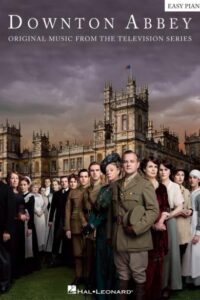
Downton Abbey Main Theme piano-solo, sheet music, Noten, partitura, spartiti, 楽譜, 乐谱
Best Sheet Music download from our Library.

Please, subscribe to our Sheet Music Library.
If you are already a subscriber, please, check our NEW SCORES’ page every month for new sheet music. THANK YOU!
Downton Abbey: A Symphony in Stately Splendour
Nestled in the rolling Yorkshire landscape, the Grantham estate of Downton Abbey is not merely a setting; it is a living, breathing character. Across six television seasons and two feature films, Julian Fellowes’ creation has offered a sumptuous, sweeping portrait of the aristocratic Crawley family and their servants, navigating the tectonic social shifts from the sinking of the Titanic in 1912 to the dawn of the Roaring Twenties and beyond. While the drama captivates with its wit, romance, and upstairs-downstairs intrigue, an essential, often subconscious element of its storytelling is its music—a musical tapestry woven by composer John Lunn that masterfully underscores the emotional and historical heartbeat of the era.
The Musical Architect: John Lunn
Scottish composer John Lunn, a relative unknown to mainstream audiences before Downton Abbey, crafted a score that would become instantly iconic. His task was immense: to create a sound that felt authentically period-appropriate yet emotionally resonant for a modern audience, and to navigate seamlessly between the grandeur of the upstairs world and the poignant, typically frantic, rhythms of the downstairs. His solution was a score built on two foundational pillars: a memorable main theme and a versatile set of musical “suites” for characters and situations.
The Downton Sound: Themes and Textures
1. The Main Title Theme: “Did I Make the Most of Loving You?”
The series’ signature theme is a masterpiece of musical storytelling. Built around a haunting, lyrical piano melody (performed by Lunn himself), it is both elegant and yearning. Its full title, revealed later, is the poignant “Did I Make the Most of Loving You?”—a question that encapsulates the series’ core themes of love, regret, time’s passage, and legacy. The theme’s beauty lies in its adaptability: it can swell with strings for majestic establishing shots of the Abbey, become intimate and tender for a private moment between Matthew and Mary, or turn bittersweet for scenes of loss. It is the show’s emotional compass.
2. Character and Class Leitmotifs:
Lunn uses distinct musical textures to differentiate the worlds of the estate.
- The Upstairs World: The Crawleys are often accompanied by classical-influenced pieces, drawing on the sounds of the early 20th century drawing room—think chamber music, string quartets, and refined pianoforte. For grand events, Lunn incorporates authentic period dance music (waltzes, foxtrots) and original compositions that mirror the era’s popular composers like Elgar or Vaughan Williams, evoking a sense of ordered, if fading, grandeur.
- The Downstairs World: The servants’ halls and kitchens have a more rhythmic, urgent, and sometimes folk-inspired musical quality. The music here is frequently propelled by pianos, woodwinds, and lighter strings, mirroring the constant motion, chatter, and mechanical rhythms of their work. It feels lived-in and grounded.
3. Emotional Nuance and Historical Passage:
Lunn’s score is exceptionally sensitive to the era’s evolution. The music subtly shifts as the series moves from the rigid Edwardian era through the cataclysm of WWI and into the jazzy, liberated 1920s. You can hear it:
- The Shadow of War: During WWI sequences, the score incorporates sombre, minimalist textures, distant echoes of military drums, and dissonant chords that reflect anxiety and loss.
- The Jazz Age Arrives: As the 1920s dawn, particularly in the later seasons and films, syncopated rhythms, saxophones, and lighter, more playful tunes infiltrate the score, especially in scenes involving characters like Rose or during the London adventures. This creates a palpable cultural clash with the Abbey’s more traditional soundscape.
Standout Musical Moments
- Sybil’s Death: One of the series’ most devastating scenes is underscored with heartbreaking restraint. A simple, repeating piano figure underscores the family’s helpless grief, making the silence and the performances all the more powerful.
- Matthew’s Proposal: The emotional climax of Season 2 uses a lush, sweeping version of the main theme, perfectly capturing the release of wartime tension and the promise of future happiness.
- The Films’ Expanded Canvas: The movies allowed Lunn to write for a larger orchestra, creating even more spectacular set pieces. The royal visit in the first film features majestic, ceremonial music, while the second film’s trip to the South of France introduces warmer, sun-drenched Mediterranean tones.
- The Finale: The series’ closing moments are a masterclass in musical resolution. As the family gathers for one last dinner, a full, triumphant, yet deeply sentimental rendition of the main theme swells, acknowledging the end of an era while celebrating the enduring spirit of Downton Abbey and its inhabitants.
The Sound of a Vanishing World
Ultimately, the music of Downton Abbey does more than accompany the action; it translates the subtext. It gives voice to the unspoken emotions of a restrained society—the repressed love, the quiet dignity, the profound grief, and the cautious hope. John Lunn’s score is the invisible thread that binds the two worlds of the house together, reminding us that whether above or below stairs, joy, heartbreak, and ambition resonate with the same fundamental human chords.
It is a score that manages to sound both nostalgically of its time and timelessly emotional, ensuring that long after the final credits roll, the haunting melody of Downton Abbey continues to echo. It is a beautiful elegy for a world both glorious and gone.
Browse in the Library:
Or browse in the categories menus & download the Library Catalog PDF: