| Community Musicians, building a worldwide Community Music. | |
| All the music you want to play on one site. Sharing the world’s best Contemporary, jazz, Popular, and classical Sheet Music for all instruments. | |
| Scores: >15,000 (active and growing every day), over 231,000 pages All genres and Categories: Jazz & Blues, Rock & Pop, classical & contemporary, film & musicals’ scores; books & biographies; methods, études, and exercises; play along background tracks (MP3), audios & PDFs for Jazz & Rock Access and benefits: Subscription fee: $15.99 one-time payment, valid for lifetime (secure Payment via Paypal, or Stripe) How to join the Sheet Music Library 🔍 Search in the Library Catalog — FAQs — Join us |
Table of Contents
Happy birthday, John McLaughlin (b. Jan. 4, 1942)
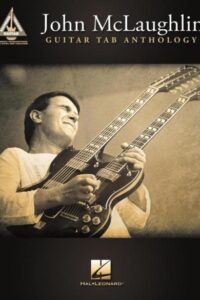
Best Sheet Music download from our Library.
John McLaughlin: Master of Fusion and Guitar Visionary
I. Early Life & Formative Years
John McLaughlin was born on 4 January 1942 in Doncaster, West Riding of Yorkshire, England. From an early age he immersed himself in music — first studying violin and piano in childhood before turning his focus to the guitar around age 11. His early musical exposure encompassed blues, jazz, and classical music: influences such as Elmore James, Django Reinhardt, and other blues/swing players shaped his ear and technique. (Encyclopedia Britannica)
In the 1960s London scene, McLaughlin played blues and R&B with notable British groups and performers like Alexis Korner and Georgie Fame, navigating a time when British guitarists were blending American jazz and blues with rock sensibilities. (Encyclopedia Britannica)
Please, subscribe to our Sheet Music Library.
If you are already a subscriber, please, check our NEW SCORES’ page every month for new sheet music. THANK YOU!
II. Musical Style & Artistic Philosophy
A. Fusion of Genres
John McLaughlin is one of the founding architects of jazz fusion, a hybrid style that merges jazz’s improvisational logic with the energy, instrumentation, and rhythmic drive of rock, world music, Indian classical music, and flamenco. (Viquipèdia)
His music is defined by:
- Complex harmonies and modal frameworks
- Use of odd time signatures and rhythmic innovation
- Rapid-fire alternate picking and scale passages
- Eastern scales and textures, often inspired by Indian music
- Integration of jazz harmony with linear approach akin to ragas
McLaughlin’s philosophy treated harmony and melody as interconnected, blurring the conventional vertical (chord-based) thinking of Western harmony with linear modal improvisation — a concept he explored deeply in both jazz and Indian music contexts. (The Tonearm)
B. Trumping Tradition: Improvisation
McLaughlin’s improvisations — whether in the searing energy of the Mahavishnu Orchestra or the meditative spaces of Shakti — often emphasize:
- Modal scales (Dorian, Phrygian, Lydian)
- Chromaticism, tension & release
- Odd meters (e.g., 5/4, 7/8, 11/8) as vehicles for exploration
- Rapid alternation between rhythm and lead roles
His solo on “Miles Beyond” (from Live at Ronnie Scott’s) won the Best Improvised Jazz Solo Grammy, highlighting his skill in spontaneous musical creation. (Encyclopedia Britannica)
Browse in the Library:
Or browse in the categories menus & download the Library Catalog PDF:
III. Career & Band Leadership
A. Early Career & Miles Davis
After his London years, McLaughlin moved to the United States in 1969, where his innovative approach quickly drew attention. He contributed electric guitar to several of Miles Davis’s pivotal jazz-fusion albums including:
- In a Silent Way (1969)
- Bitches Brew (1970)
- On the Corner (1972)
Miles’s direction — urging McLaughlin to “play it like you don’t know how to play guitar” — was foundational in his experimental mindset and helped redefine jazz guitar’s role in ensemble contexts. (MusicRadar)
B. The Mahavishnu Orchestra
In 1971, McLaughlin formed the Mahavishnu Orchestra, a groundbreaking group that fused jazz, rock, and Eastern musical influences. The original lineup featured:
- John McLaughlin (guitar)
- Billy Cobham (drums)
- Jan Hammer (keyboards)
- Jerry Goodman (violin)
- Rick Laird (bass)
Their music was intense, high-energy, and rhythmically advanced, pushing technical limits and reshaping what could be expressed by a guitar-led ensemble. Albums like The Inner Mounting Flame and Birds of Fire are cornerstones of jazz fusion. (Viquipèdia)
C. Shakti and World Fusion
In 1973, McLaughlin founded Shakti (initially Turiyananda Sangit) — a group that married jazz with Indian classical music, blending instruments and traditions across cultural lines. Shakti’s lineup included:
- L. Shankar (violin)
- Zakir Hussain (tabla)
- Vikku Vinayakram (ghatam)
McLaughlin’s approach was not just technical fusion; it was a spiritual and musical synthesis, rooted in mutual respect among musicians. (Viquipèdia)
The band’s revival as Remember Shakti in later decades reaffirmed its enduring global influence. (Viquipèdia)
D. Other Collaborations
McLaughlin’s extensive collaborations include:
- Carlos Santana — Love Devotion Surrender
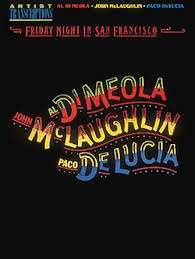
- Al Di Meola & Paco de Lucía — Guitar trio albums like Friday Night in San Francisco
- Session work and live performances crossing jazz, rock, and classical contexts
These projects reflect his genre-defying curiosity and camaraderie with fellow virtuosos. (EBSCO)
IV. Discography & Major Works
Solo and Band Albums
McLaughlin’s recorded output is vast. Highlights include:
Solo / McLaughlin-Led Albums
- Extrapolation (1969) — early fusion exploration (Encyclopedia Britannica)
- My Goal’s Beyond (1971) — interior, Indian-influenced fusion (Viquipèdia)
- Electric Dreams (1979) — fusion with The One Truth Band (Viquipèdia)
- Industrial Zen (2006), Floating Point (2008), Now Here This (2012) — later fusion works (Encyclopedia Britannica)
With Mahavishnu Orchestra
- The Inner Mounting Flame (1971)
- Birds of Fire (1972)
- Visions of the Emerald Beyond (1975) (Encyclopedia Britannica)
Shakti
- Shakti with John McLaughlin (1976)
- A Handful of Beauty (1976)
- Natural Elements (1977) (EBSCO)
Collaborations
- Friday Night in San Francisco (with Di Meola & de Lucía) (EBSCO)
- Remember Shakti (1999) and subsequent world fusion releases (Viquipèdia)
V. Improvisational Licks & Harmonic Approach
McLaughlin’s playing integrates jazz language, rock energy, and Eastern modal systems:
- Rapid alternate picking, often in high register runs
- Use of bends, chromatic passing tones, and modal sequences
- Exploration of non-functional harmony — focus on scalar relationships rather than traditional chord changes
His harmonic vocabulary often leans on modal jazz principles (a legacy of Coltrane and Davis) while incorporating world scales that give his lines an exotic yet coherent flow. (Guitar World)
VI. Influence & Legacy
McLaughlin’s impact on contemporary music is multi-layered:
Recognition
- Ranked “49th Greatest Guitarist of All Time” by Rolling Stone (Encyclopedia Britannica)
- Multiple Grammys, including Best Improvised Jazz Solo and Best Global Music Album (Grokipedia)
Artistic Impact
His work:
- Recast the guitar as a vehicle for modern jazz innovation
- Paved the way for progressive rock, fusion, and world music
- Bridged Western and Eastern musical systems in a way few artists have matched
Artists from jazz and rock alike cite McLaughlin’s influence — from fusion guitarists to players in progressive rock and beyond. (Jazz Daily)
VII. Filmography & Media
While McLaughlin’s primary domain is music, several documentaries and live films document his work with Shakti and Mahavishnu. Albums like Remember Shakti and DVD features capture iconic performances. (Viquipèdia)
An example is the This Way of Beauty documentary focusing on Shakti’s story, offering insights into McLaughlin’s global musical journey. (Viquipèdia)
VIII. The McLaughlin Ethos
John McLaughlin’s career stands as a testament to creative courage, cross-cultural communion, and technical brilliance. Few musicians have:
- Shaped entire genres (jazz fusion, world jazz)
- Blended musical traditions so seamlessly
- Maintained relevance — from the late 1960s to the present
His legacy is not confined to recordings; it lives in the countless musicians he inspired and the bridges he built across musical worlds.
Search your favorite sheet music in the Sheet Music Catalog
John McLaughlin Greatest Hits (Full Album)
John McLaughlin – Mr. DC – Live (Official Video) | “Live at Montreux Jazz Festival 2022”