
| Community Musicians, building a worldwide Community Music. | |
| All the music you want to play on one site. Sharing the world’s best Contemporary, jazz, Popular, and classical Sheet Music for all instruments. | |
| Scores: >15,000 (active and growing every day), over 231,000 pages All genres and Categories: Jazz & Blues, Rock & Pop, classical & contemporary, film & musicals’ scores; books & biographies; methods, études, and exercises; play along background tracks (MP3), audios & PDFs for Jazz & Rock Access and benefits: Subscription fee: $15.99 one-time payment, valid for lifetime (secure Payment via Paypal, or Stripe) How to join the Sheet Music Library 🔍 Search in the Library Catalog — FAQs — Join us |
Table of Contents
Happy heavenly birthday, David Bowie, born on this day in 1947

Best Sheet Music download from our Library.
Please, subscribe to our Sheet Music Library.
If you are already a subscriber, please, check our NEW SCORES’ page every month for new sheet music. THANK YOU!


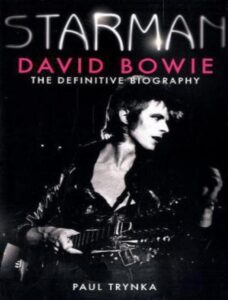
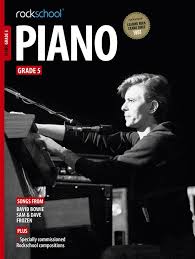


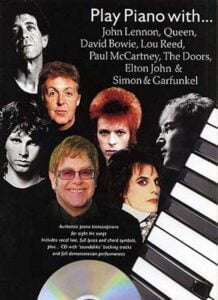

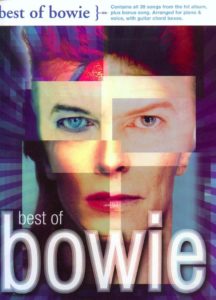
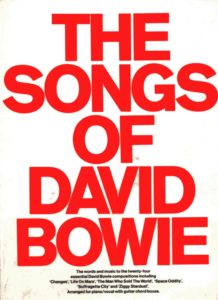

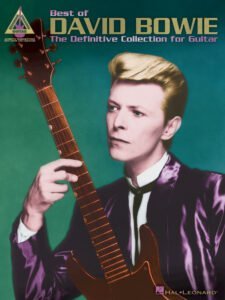
Browse in the Library:
Or browse in the categories menus & download the Library Catalog PDF:
David Bowie: The Chameleon of Rock – An Exhaustive Analysis
I. Full Biography: From Brixton to the Blackstar
Early Life and Formation (1947-1968):
David Robert Jones was born on January 8, 1947, in Brixton, London. His working-class family moved to the suburb of Bromley when he was six. A pivotal childhood event was a schoolyard fight in 1962 that left him with a paralyzed pupil in his left eye, creating the iconic illusion of different-colored eyes and a lifelong sense of being an observer. His half-brother, Terry Burns, introduced him to jazz, Beat literature, and Buddhism, but Terry’s later schizophrenia haunted Bowie. By his teens, David was immersed in music, taking saxophone lessons and playing in various blues and R&B outfits like The King Bees and The Mannish Boys. To avoid confusion with The Monkees’ Davy Jones, he renamed himself David Bowie in 1965. His early career was marked by false starts: a novelty hit with “The Laughing Gnome” (1967), a theatrical folk-rock album (David Bowie, 1967), and immersion in Lindsay Kemp’s mime theatre, which profoundly shaped his physical expressiveness. His 1969 single “Space Oddity,” capitalizing on the moon landing, gave him his first major hit but also typecast him as a novelty act.
The Genesis of Ziggy Stardust (1969-1972):
The 1969 album David Bowie (later retitled Space Oddity) and 1970’s The Man Who Sold the World (featuring the heavy rock of “The Width of a Circle” and Mick Ronson’s searing guitar) showed a darker, more ambitious artist. Hunky Dory (1971) was a brilliant, piano-driven synthesis of Dylan-esque songwriting (“Changes,” “Life on Mars?”), Warholian homage (“Andy Warhol”), and proto-feminist anthem (“Oh! You Pretty Things”). Yet, it was a blueprint. Bowie, inspired by Japanese kabuki, mime, and the alien rock star concept of Vince Taylor, was constructing a persona that would detonate popular culture: Ziggy Stardust.
The Ziggy Stardust Era and Beyond (1972-1974):
The Rise and Fall of Ziggy Stardust and the Spiders from Mars (1972) was a full-blown conceptual masterpiece. Bowie, as the androgynous, alien rock messiah Ziggy, fronted the powerhouse Spiders from Mars (Mick Ronson, Trevor Bolder, Mick Woodmansey). The album married 1950s rock ‘n’ roll energy with futuristic glamour and apocalyptic anxiety (“Five Years,” “Rock ‘n’ Roll Suicide”). The live shows were revolutionary theatre. Ziggy’s “retirement” at the Hammersmith Odeon in July 1973 was a masterstroke. He immediately followed with the darker, harder Aladdin Sane (1973) (“Jean Genie,” “Panic in Detroit”) and the covers album Pin Ups. Having broken America, he abruptly dissolved the Spiders and entered a period of manic creativity.
The Plastic Soul and Berlin Triptych (1974-1979):
Diamond Dogs (1974), a grim Orwellian rock opera, gave way to a dramatic pivot. Inspired by a new obsession with American R&B, he created Young Americans (1975), the “plastic soul” album featuring the title track and his first US #1, “Fame,” co-written with John Lennon. This period was defined by cocaine addiction, paranoid delusions, and his role as the alien Thomas Jerome Newton in The Man Who Fell to Earth. To escape, he moved to Berlin with Iggy Pop in 1976. The so-called “Berlin Trilogy” with Brian Eno—Low (1977), “Heroes” (1977), and Lodger (1979)—was a radical deconstruction of song. Low and “Heroes” were bifurcated: short, sharp, anxiety-ridden pop songs on Side One, and long, instrumental ambient landscapes on Side Two. The title track of “Heroes,” recorded near the Berlin Wall, became an eternal anthem of defiant love. This period is arguably his most influential, merging krautrock rhythms (from collaborators like Robert Fripp and Tony Visconti’s “snare drum sound”) with avant-garde textures.
The Commercial Megastar (1980-1989):
Bowie re-entered the mainstream with astonishing force. Scary Monsters (and Super Creeps) (1980) refined the Berlin experiments into accessible, yet edgy, art-pop (“Ashes to Ashes,” “Fashion”). It closed the book on his major personae. In 1983, with the Nile Rodgers-produced Let’s Dance, he became a global pop titan. The title track, “China Girl” (a remake of an Iggy Pop co-write), and “Modern Love” were irresistible, sleek, and politically subtextual. The accompanying “Serious Moonlight Tour” was a stadium phenomenon. While subsequent 80s albums (Tonight, Never Let Me Down) saw diminishing critical returns, his commercial power and iconic status, cemented by a legendary Live Aid performance in 1985, were unquestionable.
The 1990s: Experimentation and Re-engagement (1990-1999):
Disillusioned with his 80s work, Bowie aggressively returned to experimentation. He formed the guitar-rock band Tin Machine (1989-1992) as a deliberate anti-star statement. In the 90s, he embraced electronic music, jungle, and industrial sounds. Outside (1995), a reunion with Eno, was a dark, narrative-driven cyber-punk concept album. Earthling (1997) featured “drum ‘n’ bass” rhythms and the iconic Union Jack coat designed by Alexander McQueen. He also re-engaged with his catalogue, playing older songs he’d long ignored, and gave a celebrated 50th-birthday concert at Madison Square Garden in 1997.
The Later Years and Final Act (2000-2016):
The new millennium saw a respected elder statesman. Albums like Heathen (2002) and Reality (2003) were well-crafted, mature reflections. A heart attack on the Reality Tour in 2004 led to a near-decade of public retirement, though he contributed to musicals and quietly curated his legacy. His unexpected return on his 66th birthday in 2013 with The Next Day was a critical triumph—a vital, angry, and complex rock record. But it was his final act that secured his immortality. Diagnosed with liver cancer in secret, he channeled his impending mortality into Blackstar (2016), released on his 69th birthday. A collaboration with jazz musicians, it was a profound, unsettling, and beautiful meditation on death, art, and legacy. The video for “Lazarus,” showing a blindfolded Bowie in a hospital bed, was a chilling farewell. He died two days later, on January 10, 2016. His death was a globally mourned, culturally seismic event.
II. Music Style and Composition Characteristics
David Bowie’s core artistic principle was reinvention. He was a cultural magpie and a conceptualist, using personae as filters to explore different musical genres and ideas.
- The Method of Persona: Ziggy Stardust, The Thin White Duke, and even the “pop star” of Let’s Dance were not just costumes but full psychological and aesthetic frameworks from which music, lyrics, and performance could logically emanate. This allowed him radical freedom.
- Genre Synthesis as Innovation: He did not merely dabble in styles; he absorbed, deconstructed, and re-synthesized them into something new. Glam Rock (Glam + Rock + Theatre), Plastic Soul (R&B filtered through a detached European lens), the Berlin sound (Ambient + Krautrock + Pop), and even his drum ‘n’ bass phase were all cohesive artistic statements, not bandwagon-jumping.
- Lyrical Themes: Obsessively explored alienation, identity, sexuality, schizophrenia, dystopia, fame, addiction, and the role of the artist. His lyrics were literate, drawing from Burroughs’ cut-up technique (used extensively in the 70s), Nietzsche, Orwell, and occultism.
- Collaboration as Catalyst: Bowie was a master curator of talent. He identified brilliant collaborators (Mick Ronson, Brian Eno, Robert Fripp, Nile Rodgers, Reeves Gabrels, Tony Visconti) and gave them space to define the sound of each era.
III. Harmony, Tonality, Melodic, and Formal Style
Bowie was not a formal innovator in the sense of a jazz composer, but he used harmony and form expressively in service of his concepts.
- Harmony & Tonality: His early work (through Hunky Dory) used relatively standard, if sophisticated, pop/rock chord progressions, often with a piano foundation. The Berlin era, heavily influenced by Eno’s “oblique strategies,” embraced dissonance, modal melodies over static harmonic vamps (the entire structure of “Warszawa”), and a move away from traditional Western functional harmony. Songs like “Heroes” build on a simple, repetitive bassline and drone, with Fripp’s guitar providing atonal shrieks of emotion. On Blackstar, he employed complex, dissonant jazz harmonies and unusual time signatures (the 5/4 pulse of “Blackstar”), creating a sense of eeriness and transcendence.
- Melodic Style: Bowie was one of rock’s great melodists. His vocal melodies could be plaintive and folky (“Space Oddity”), anthemic and soaring (“Heroes”), or bizarrely angular and theatrical (“The Bewlay Brothers”). He had a keen ear for a hook, often delivered in his distinctive, charismatic baritone with careful, dramatic enunciation.
- Formal Style: While many hits followed verse-chorus structures, he frequently subverted them. The Berlin albums famously split into “song” and “atmosphere” halves. Tracks like “Station to Station” (over 10 minutes) build through hypnotic, mantra-like sections. He loved dramatic, non-repetitive structures that felt like mini-suites (“Width of a Circle,” “Cygnet Committee”).
IV. Influences and Legacy
- Influences: A vast array: the rock ‘n’ roll of Little Richard, the vocal phrasing of Anthony Newley and Scott Walker, the literariness of Bob Dylan, the avant-garde of The Velvet Underground and krautrock (Kraftwerk, Neu!), the theatre of Lindsay Kemp, the pop art of Andy Warhol, and the electronic music of Brian Eno.
- Legacy: Bowie’s legacy is arguably the most profound in popular music after The Beatles. He legitimized thematic reinvention and artistic risk-taking as a career model. He pioneered the fusion of high art concepts with mass pop culture. He was a queer icon, challenging gender norms at a mainstream level. He served as a gateway for his audience to discover everything from electronic music to German philosophy. Technologically, his video work (with directors like Mick Rock and David Mallet) set standards for the music video era. Every artist who treats their career as an evolving canvas, from Madonna to Kanye West to Lady Gaga, owes him a debt.
V. Encounters and Collaborations with Other Artists
Bowie’s career is a web of collaborations:
- Mentor/Producer: He resurrected Iggy Pop’s career, co-writing and producing The Idiot and Lust for Life in Berlin. He produced Lou Reed’s transformative Transformer (“Walk on the Wild Side”).
- Peers & Protégés: His friendships and rivalries with Marc Bolan, Mick Jagger, and John Lennon were public fodder. He championed new bands, giving early TV exposure to The Cure and placing Stevie Ray Vaughan on the Let’s Dance tour. His 1980s duets with Queen (“Under Pressure”) and Tina Turner (“Tonight”) were iconic.
- The Inner Circle: Long-term partnerships with producer Tony Visconti (from Space Oddity to Blackstar) and pianist Mike Garson provided continuity. Brian Eno was his most transformative collaborator.
- Later Cross-Pollination: Worked with artists as diverse as Trent Reznor (NIN), Arcade Fire, TV on the Radio, and even (posthumously) on the Moonage Daydream soundtrack.
VI. List of Works: Most Known Compositions and Recordings
Essential Singles & Key Tracks:
- “Space Oddity” (1969)
- “The Man Who Sold the World” (1970)
- “Changes” (1971)
- “Life on Mars?” (1971)
- “Starman” (1972)
- “Ziggy Stardust” (1972)
- “The Jean Genie” (1973)
- “Rebel Rebel” (1974)
- “Young Americans” (1975)
- “Fame” (1975)
- “Golden Years” (1976)
- “Station to Station” (1976)
- “Sound and Vision” (1977)
- “‘Heroes’” (1977)
- “Ashes to Ashes” (1980)
- “Fashion” (1980)
- “Let’s Dance” (1983)
- “China Girl” (1983)
- “Modern Love” (1983)
- “Blue Jean” (1984)
- “Loving the Alien” (1985)
- “Under Pressure” (with Queen, 1981)
- “Dancing in the Street” (with Mick Jagger, 1985)
- “I’m Afraid of Americans” (1997)
- “Where Are We Now?” (2013)
- “Lazarus” (2016)
- “Blackstar” (2016)
Definitive Albums: Hunky Dory (1971), The Rise and Fall of Ziggy Stardust and the Spiders from Mars (1972), Aladdin Sane (1973), Diamond Dogs (1974), Young Americans (1975), Station to Station (1976), Low (1977), “Heroes” (1977), Scary Monsters (and Super Creeps) (1980), Let’s Dance (1983), Heathen (2002), The Next Day (2013), Blackstar (2016).
VII. Filmography (Selective)
Bowie was a unique screen presence, often playing outsiders or ethereal figures.
- The Man Who Fell to Earth (1976) – Thomas Jerome Newton. His masterpiece.
- Just a Gigolo (1978)
- The Hunger (1983) – John, the vampire.
- Merry Christmas, Mr. Lawrence (1983) – Maj. Jack Celliers.
- Labyrinth (1986) – Jareth the Goblin King.
- The Last Temptation of Christ (1988) – Pontius Pilate.
- Twin Peaks: Fire Walk with Me (1992) – FBI Agent Phillip Jeffries.
- Basquiat (1996) – Andy Warhol.
VIII. Discography Overview
26 studio albums across five decades, plus live albums, compilations (Changesonebowie, Best of 1969/1974), and the massive Who Can I Be Now? (1974-1976) and A New Career in a New Town (1977-1982) box sets. His work is meticulously catalogued and reissued.
IX. Covers in Modern Music and Music in Films
- Covers: Countless. Notable include:
- Nirvana’s haunting MTV Unplugged cover of “The Man Who Sold the World.”
- Seu Jorge’s Portuguese acoustic versions for The Life Aquatic with Steve Zissou.
- Bauhaus’s “Ziggy Stardust.”
- Mott the Hoople’s “All the Young Dudes” (a song Bowie gave them).
- Cover versions by artists as diverse as Beck, Warpaint, and The Polyphonic Spree.
- Music in Films: His songs are filmmakers’ shorthand for otherworldliness, cool, or existential depth. Key uses: The Martian (“Starman”), A Knight’s Tale (“Golden Years”), Frances Ha (“Modern Love”), The Perks of Being a Wallflower (“Heroes”), Inglourious Basterds (“Cat People (Putting Out Fire)”), and Christiane F. (the entire “Heroes” album).
X. Famous Performers of His Music
Beyond covers, his influence is seen in the theatricality and genre-fluidity of:
- Glam & Post-Punk: Gary Numan, The Human League, Siouxsie and the Banshees.
- The New Romantics: Duran Duran, Spandau Ballet, Boy George.
- Alternative Rock: The Smashing Pumpkins, Nine Inch Nails, Marilyn Manson.
- Britpop: Suede, Jarvis Cocker (Pulp).
- Contemporary Pop/Rock: Lady Gaga, Janelle Monáe, St. Vincent, Tame Impala.
XI. Last Works
Blackstar (2016) is his ultimate masterpiece and final statement. Recorded with a New York jazz quartet, it is a dense, symbolic, and deeply personal meditation on death. Songs like “Lazarus” (“Look up here, I’m in heaven”), the title track’s ritualistic imagery, and the yearning “I Can’t Give Everything Away” form a profound farewell note. The accompanying videos are integral to the work. The off-Broadway musical Lazarus, which he co-created, premiered in late 2015, extending these themes. His death transformed Blackstar from an album into a monumental, self-orchestrated final act of artistic communication.
David Bowie was the 20th century’s quintessential modernist artist working in the popular idiom. He treated his life and career as a sustained piece of performance art, a continual becoming. He was not just a musician but a total artist—a singer, songwriter, producer, painter, actor, and iconographer. His genius lay in his acute sensitivity to cultural currents, which he would absorb, reflect, and distort back to the world as something startlingly new. He provided a roadmap for navigating identity in a fragmented, media-saturated age. From the androgynous alien Ziggy to the sophisticated soul man, the gaunt Berlin experimentalist to the global pop superstar, and finally, the wise éminence grise facing the void with artistic courage, Bowie embodied the restless, transformative spirit of his times. His legacy is not a static catalogue of songs but a living methodology for creativity: fearless change, intellectual curiosity, and the sublime marriage of the avant-garde with the emotionally resonant. The Starman didn’t just pass by; he changed the atmosphere forever.