
Come join us now, and enjoy playing your beloved music and browse through great scores of every level and styles!
Can’t find the songbook you’re looking for? Please, email us at: sheetmusiclibrarypdf@gmail.com We’d like to help you!
Table of Contents
Happy heavenly birthday, Elvis Presley, born on this day in 1935

Best Sheet Music download from our Library.
Please, subscribe to our Sheet Music Library.
If you are already a subscriber, please, check our NEW SCORES’ page every month for new sheet music. THANK YOU!
Elvis Presley: The King of Rock ‘n’ Roll – An Exhaustive Analysis
I. Full Biography: From Tupelo to Graceland
Early Life (1935-1948):
Elvis Aaron Presley was born on January 8, 1935, in a two-room shotgun house in Tupelo, Mississippi, to Vernon and Gladys Presley. His identical twin brother, Jesse Garon, was stillborn, leaving Elvis to grow up as an only child in a close-knit, working-class family. The family’s financial situation was precarious, and they attended the First Assembly of God Church, where Elvis’s lifelong immersion in gospel music began. For his 11th birthday, he received his first guitar (though he had wanted a bicycle or rifle), and he took basic lessons from his uncles and the local pastor. The family moved to Memphis, Tennessee, in 1948, seeking better opportunities.


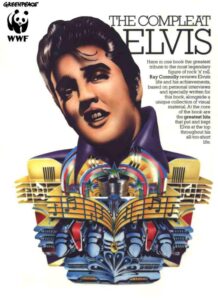


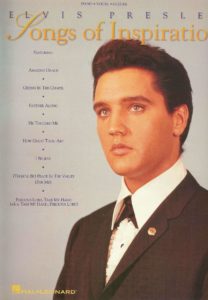
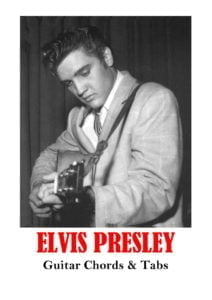

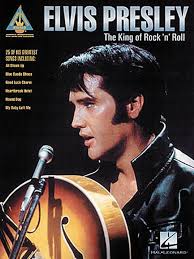
Browse in the Library:
Or browse in the categories menus & download the Library Catalog PDF:
Adolescence and First Musical Stirrings (1948-1953):
Memphis exposed Elvis to a potent cultural cocktail. Living in a federally funded housing project, he absorbed the diverse sounds of the city: the blues of Beale Street, the country and western from radio stations like WMPS, the pop ballads of the era, and the sanctified gospel from churches like the Reverend H. W. Brewster’s. He was a regular at the all-night gospel sings at the Ellis Auditorium. A shy teenager, he was known for his flamboyant wardrobe choices (pink and black) even in high school. In August 1953, he walked into the Memphis Recording Service, a sideline of Sun Records run by Sam Phillips, to pay $4 and record a two-sided acetate (“My Happiness”/”That’s When Your Heartaches Begin”) as a birthday gift for his mother. Marion Keisker, Phillips’s assistant, noted his unique vocal quality.
The Sun Years: The Birth of a Revolution (1954-1955):
Sam Phillips, who had long sought a white singer with a “Negro sound and feel,” recalled Elvis for a trial recording session in June 1954. Initial attempts with ballads were unfruitful. During a break, Elvis started fooling around with Arthur “Big Boy” Crudup’s blues number “That’s All Right.” Bassist Bill Black and guitarist Scotty Moore joined in, and Phillips quickly captured the energetic, hybrid sound. Released in July 1954 with a bluegrass tune, “Blue Moon of Kentucky,” on the flip side, the record became a local sensation. The trio (Elvis, Scotty, Moore) began touring the South, with Elvis’s frenetic leg movements and visceral performances causing hysteria and controversy. Key Sun recordings like “Good Rockin’ Tonight,” “Milk Cow Blues Boogie,” “Baby Let’s Play House,” and “Mystery Train” laid the bedrock of rockabilly—a fervent fusion of country, rhythm & blues, and gospel.
National Ascendancy with RCA Victor (1956-1958):
In November 1955, seeking a larger platform, Sam Phillips sold Elvis’s contract to RCA Victor for the unprecedented sum of $35,000, facilitated by Colonel Tom Parker, who became Elvis’s shrewd and controlling manager. This period marked an explosion of creativity and fame. His first RCA single, “Heartbreak Hotel” (January 1956), was a dark, brooding hit that topped the charts. He followed with a succession of epoch-defining singles: “I Want You, I Need You, I Love You,” the raucous “Hound Dog” (backed with the wistful “Don’t Be Cruel”), “Blue Suede Shoes” (a Carl Perkins cover), “All Shook Up,” and “Jailhouse Rock.” His television appearances—particularly the six hip-shaking performances on The Milton Berle Show, the more restrained but still electrifying slot on The Ed Sullivan Show (where he was famously filmed from the waist up), and the seminal ’68 Comeback Special—made him a national phenomenon. He also began a prolific film career with Love Me Tender (1956).
Military Service and Family (1958-1960):
At the peak of his fame, Elvis was drafted into the U.S. Army in March 1958. Stationed in Friedberg, West Germany, he served as a jeep driver. While in Germany, he met 14-year-old Priscilla Beaulieu, who would later become his wife. His mother, Gladys, died of a heart attack in August 1958, a devastating blow from which many believe he never fully recovered. He was honorably discharged as a sergeant in March 1960. During his service, RCA skillfully released pre-recorded material, maintaining his public presence.
Hollywood and Musical Stagnation (1960-1968):
Upon his return, Elvis embraced a new direction, heavily influenced by Colonel Parker’s focus on lucrative, low-risk film deals. He starred in a series of commercially successful but critically panned musical comedies, such as G.I. Blues, Blue Hawaii, Girls! Girls! Girls!, and Viva Las Vegas. The soundtracks, filled with pleasant but often lightweight pop, ballads, and novelties, dominated the charts but moved him away from his rock and roll roots. While he produced beautiful ballads (“Can’t Help Falling in Love,” “It’s Now or Never”—an adaptation of “O sole mio”), the overall musical output became formulaic. He married Priscilla in 1967, and their daughter, Lisa Marie, was born in 1968, but the marriage was strained by his lifestyle and infidelities.
The Comeback and Las Vegas Residency (1968-1973):
Disillusioned with his career trajectory, Elvis orchestrated a triumphant return with the 1968 NBC television special, Elvis (later known as the ’68 Comeback Special). Clad in black leather, he delivered raw, powerful performances of his early hits in an intimate setting, reclaiming his musical authority. This led to a prolific period of recording at American Sound Studio in Memphis (1969’s From Elvis in Memphis), producing soul-influenced masterpieces like “In the Ghetto,” “Suspicious Minds,” and “Kentucky Rain.” In July 1969, backed by a new, powerful band, he launched a historic residency at the International Hotel (later the Hilton) in Las Vegas, redefining the Vegas concert experience. Tours across America followed, marked by elaborate jumpsuits and grand theatrical spectacle.
Declining Health and Final Years (1973-1977):
The 1970s saw a gradual decline. His divorce from Priscilla was finalized in 1973. An increasing reliance on prescription medications, a taxing touring schedule, and personal unhappiness took a toll on his health and performances, though flashes of his genius remained. His weight fluctuated, and his on-stage banter became rambling at times. His final years were marked by erratic behavior, including a bizarre meeting with President Nixon in 1970 to request a federal narcotics badge. His last concert was in Indianapolis on June 26, 1977. He died at his Graceland mansion in Memphis on August 16, 1977, at age 42, from cardiac arrhythmia, complicated by multiple drug prescriptions. His death prompted an unprecedented global outpouring of grief.
II. Music Style and Composition Characteristics
Elvis Presley did not invent rock and roll, but he was its most potent and catalytic synthesizer. His style was a revolutionary alchemy:
- The Fusion: He seamlessly blended the rhythmic drive and emotional intensity of Black blues and gospel (from artists like Arthur Crudup, Big Bill Broonzy, and Sister Rosetta Tharpe) with the narrative storytelling and chord structures of white country and western (from Hank Williams, Roy Acuff, and Jimmie Rodgers). He added the polished accessibility of pop balladeers like Dean Martin and Mario Lanza.
- Vocal Approach: His voice was an extraordinarily versatile instrument—a rich, resonant baritone with an astonishing range that could leap into a pure, pleading tenor falsetto (e.g., the ending of “Blue Moon of Kentucky”). He employed a wide array of techniques: the aggressive, stuttering hiccup (“Baby Let’s Play House”), the breathy intimacy (“Love Me Tender”), the gospel shout (“Trouble”), and the operatic soar (“It’s Now or Never”).
- Rhythmic Innovation: Elvis and his early band (Scotty Moore on guitar, Bill Black on bass, D.J. Fontana on drums) created a new rhythmic feel. They took the shuffle rhythm of blues and country and injected it with a nervous, accelerated energy—the rockabilly “freight train” rhythm. Elvis’s own rhythm guitar playing, while rudimentary, was percussive and vital, often slapping the strings for accent.
- Lyrical and Thematic Content: Early songs centered on youthful desire, rebellion, and heartbreak. Later, his material expanded to include social commentary (“In the Ghetto”), epic romance, spiritual yearning (“How Great Thou Art”), and personal introspection (“Memories”).
III. Harmony, Tonality, Melodic, and Formal Style
- Harmony & Tonality: Elvis’s early rock and roll work relied on simple, sturdy harmonic progressions derived from 12-bar blues (I-IV-V) and standard country/pop chord changes (I-vi-IV-V). The genius was in the delivery, not complex harmony. In his balladry, especially post-army, he embraced more sophisticated, quasi-operatic chord progressions and modulations, influenced by the Italian bel canto tradition (“It’s Now or Never,” “Surrender”).
- Melodic Style: His melodies were often pentatonic-based, derived from blues and folk traditions, but he was a master of melodic embellishment. He rarely sang a melody straight; he adorned it with swoops, slides, growls, and melismas, particularly influenced by gospel quartet singing. This made even simple tunes uniquely his own.
- Formal Style: Songs typically followed classic verse-chorus-bridge structures. The innovation was in the arrangement and performance. The Sun recordings often featured a “slapback” echo, giving them a spacious, urgent feel. The formal template was often: explosive intro (guitar riff), first verse building tension, a release in the chorus, an instrumental break (often Scotty Moore’s lyrical guitar), and a frantic outro. In his ballad performances, he would often build a song from a whisper to a cathartic climax.
IV. Influences and Legacy
- Influences: Gospel (Jake Hess, The Statesmen, The Blackwood Brothers), Blues (Arthur “Big Boy” Crudup, B.B. King, Howlin’ Wolf), Country (Hank Williams, Jimmie Rodgers, Roy Acuff), Pop/R&B (Dean Martin, Roy Hamilton, Clyde McPhatter), and opera/light classical (Mario Lanza).
- Legacy: Elvis Presley’s legacy is immeasurable. He is the central figure in the birth of rock and roll as a mass cultural phenomenon. He broke down racial barriers in popular music, making Black musical forms acceptable to a white teenage audience. He revolutionized youth culture, fashion, and performance style. He set the template for the modern rock star, from Beatlemania to every pop idol since. His commercial success paved the way for the music industry as we know it. However, his legacy is also complex, encompassing later-career clichés and the tragic archetype of the isolated superstar destroyed by fame.
V. Encounters and Collaborations with Other Artists
Elvis was famously insulated by the “Memphis Mafia,” but key encounters include:
- Sun Records: Carl Perkins, Jerry Lee Lewis, Johnny Cash (the “Million Dollar Quartet” session).
- Early Tours: He opened for country stars like Hank Snow and was mentored by blues singer B.B. King in Memphis.
- Hollywood: Co-starred with numerous actors, but his most notable musical collaboration was with Ann-Margret (Viva Las Vegas).
- ’68 Comeback Special: A direct challenge to and inspiration for The Beatles and The Rolling Stones, who dominated the 60s in his absence.
- Studio Sessions: Worked with legendary producers (Sam Phillips, Steve Sholes, Chips Moman), songwriters (Jerry Leiber & Mike Stoller, Doc Pomus, Mort Shuman), and musicians (guitarists James Burton and Scotty Moore, vocal group The Jordanaires).
- White House: His 1970 meeting with President Richard Nixon is iconic.
VI. List of Works: Most Known Compositions and Recordings
Essential Singles (Chronological):
- “That’s All Right” / “Blue Moon of Kentucky” (1954)
- “Mystery Train” (1955)
- “Heartbreak Hotel” (1956)
- “Hound Dog” / “Don’t Be Cruel” (1956)
- “Blue Suede Shoes” (1956)
- “Jailhouse Rock” (1957)
- “All Shook Up” (1957)
- “Teddy Bear” (1957)
- “Love Me Tender” (1956)
- “It’s Now or Never” (1960)
- “Are You Lonesome Tonight?” (1960)
- “Can’t Help Falling in Love” (1961)
- “Return to Sender” (1962)
- “Viva Las Vegas” (1964)
- “Suspicious Minds” (1969)
- “In the Ghetto” (1969)
- “Kentucky Rain” (1970)
- “The Wonder of You” (1970)
- “Burning Love” (1972)
Definitive Albums: Elvis Presley (1956), Elvis (1956), Elvis Is Back! (1960), His Hand in Mine (1960), Elvis Christmas Album (1957), From Elvis in Memphis (1969), Elvis: The ’68 Comeback Special (soundtrack, 1968), Aloha from Hawaii via Satellite (1973).
VII. Filmography (Selective)
- Dramatic Highlights: Love Me Tender (1956), Jailhouse Rock (1957), King Creole (1958), Flaming Star (1960), Wild in the Country (1961).
- Popular Musicals: G.I. Blues (1960), Blue Hawaii (1961), Girls! Girls! Girls! (1962), Viva Las Vegas (1964), Frankie and Johnny (1966).
- Documentaries/Concerts: Elvis: That’s the Way It Is (1970), Elvis on Tour (1972).
VIII. Discography Overview
Elvis’s discography is vast and complex, with thousands of official and unofficial releases. Key categories:
- Sun Singles (1954-1955): 5 singles, 10 tracks.
- RCA Studio Albums (1956-1976): 23 original studio LPs during his lifetime, plus numerous soundtrack albums.
- Live Albums: Notable are Elvis in Person at the International Hotel, Las Vegas, Nevada (1969) and Aloha from Hawaii via Satellite (1973).
- Gospel Albums: His Hand in Mine (1960), How Great Thou Art (1967)—both Grammy winners.
- Christmas Albums: Elvis’ Christmas Album (1957) remains the best-selling Christmas album of all time in the US.
- Posthumous Compilations: The Sun Sessions (1976), the Essential Elvis Presley series, and massive box sets documenting every studio master.
IX. Covers in Modern Music and Music in Films
- Covers: Virtually every rock and pop artist has covered Elvis. Notable versions include:
- The Beatles (“That’s All Right,” live early in their career)
- Bruce Springsteen (“Can’t Help Falling in Love” live)
- U2 (“Can’t Help Falling in Love” snippet in “A Day Without Me”)
- Norah Jones (“Love Me Tender”)
- Muse (“Can’t Take My Eyes Off You” interwoven with “Prescription” live)
- Alien Ant Farm (“Smooth Criminal,” a cover of a song heavily influenced by Elvis’s style)
- Music in Films: Elvis’s music is a shorthand for Americana, rebellion, and nostalgia. Key uses: Mystery Train (Jim Jarmusch, 1989), Honeymoon in Vegas (1992, featuring flying Elvises), Lilo & Stitch (2002, using his music extensively), Forrest Gump (1994, “Hound Dog”), and Men in Black (1997, “Promised Land”).
X. Famous Performers of His Music
Beyond covers, many artists have built careers or pivotal moments on Elvis’s songs and style: Carl Perkins (writer of “Blue Suede Shoes”), Johnny Cash, Jerry Lee Lewis (Sun contemporaries), Tom Jones (vocal style and stage presence), Neil Diamond (early writing for Elvis), John Fogerty, Robert Gordon, The Stray Cats (rockabilly revival), Chris Isaak, and even symphonic tributes and gospel choirs.
XI. Last Works
His final recording sessions were in early 1977 at Graceland, producing tracks like “Way Down” (his last #1 hit during his lifetime) and “Pledging My Love.” His last studio album released before his death was Moody Blue (1977), a mix of live and studio tracks. His final concert performance on June 26, 1977, in Indianapolis, included staples like “Jailhouse Rock,” “Hurt,” and “Can’t Help Falling in Love.”
Elvis Presley was a cultural atom bomb whose shockwaves permanently rearranged the landscape of music, performance, and celebrity. He was a vessel for the rich musical traditions of the American South who transmitted them, supercharged and transfigured, to the entire world. His story is the quintessential American parable: meteoric rise, revolutionary triumph, commodification, decline, and an enduring, ghostly presence in death. The King is dead, but as the continuing pilgrimage to Graceland and the unending stream of his music attest, his reign is far from over. He remains the foundational pillar upon which the edifice of modern popular music was built.