
Come join us now, and enjoy playing your beloved music and browse through great scores of every level and styles!
Can’t find the songbook you’re looking for? Please, email us at: sheetmusiclibrarypdf@gmail.com We’d like to help you!
Table of Contents
Music History Events: albums released January 13
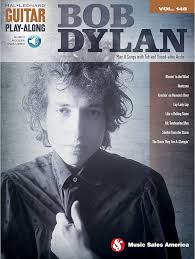
• 1964 – BOB DYLAN – ‘The Times They Are A-Changin’’
Best Sheet Music download from our Library.
• 1969 – THE BEATLES – ‘Yellow Submarine’ (USA)

Please, subscribe to our Sheet Music Library.
If you are already a subscriber, please, check our NEW SCORES’ page every month for new sheet music. THANK YOU!
• 1971 – POCO – ‘Deliverin’’
• 1973 – DEEP PURPLE – ‘Who Do We Think We Are’ (EUR)

• 1979 – NAZARETH – ‘No Mean City’
• 1989 – FINE YOUNG CANNIBALS. ‘The Raw & the Cooked’

• 1991 – DARKTHRONE – ‘Soulside Journey’
• 1998 – DJ SHADOW – ‘Preemptive Strike’
• 1998 – UNWOUND – ‘Challenge for a Civilized Society’
• 2002 – HUMBLE PIE – ‘Back on Track’
• 2003 – KAMELOT – ‘Epica’
• 2006 – FRANK ZAPPA – ‘Imaginary Diseases’

• 2009 – KREATOR – ‘Hordes of Chaos’
• 2010 – LOST PROPHETS – ‘The Betrayed’
• 2017 – SEPULTURA – ‘Machine Messiah’

• 2017 – GRAVE DIGGER – ‘Healed by Metal’
• 2017 – THE FLAMING LIPS – ‘Oczy Mlody’
• 2017 – BONOBO – ‘Migration’
• 2017 – GOTTHARD – ‘Silver’
• 2017 – THE XX – ‘I See You’
• 2017 – RICK WAKEMAN – ‘Piano Portraits’

• 2023 – BELLE AND SEBASTIAN – ‘Late Developers’
• 2023 – OBITUARY – ‘Dying of Everything’

Search your favorite sheet music in the Sheet Music Catalog
LP 1964: ‘THE TIMES THEY ARE A-CHANGIN” (Bob Dylan)
On January 13, 1964, Bob Dylan’s third album was released. Recorded at Columbia Studios in New York under production by Tom Wilson, it was the singer-songwriter’s first work to contain only original compositions. The album appeared just weeks after the assassination of President John F. Kennedy, but that didn’t seem to affect sales. The disappearance of the young politician in whom so many young people and defenders of social freedoms had placed their hopes caused many to radicalize and find in Dylan’s protest songs and lyrics a new path.
With the song that opens the album and gives it its title, Dylan once again achieves an anthem for the social struggle. More obvious and emphatic than ‘Blowin’ in the wind’, it is a statement of the decline of American society that resembles a powder keg about to explode. Racial segregation, social rights and the rejection of war divide the conscience of Americans as never before and lead to the tragic event in Dallas. Dylan’s song hits the nail on the head and delivers an important document of its time that, like many other songs by the singer-songwriter, ends up being timeless.
Dylan himself confessed in the seventies: ‘Every time I sing this song I have the feeling of finishing writing it’. Other key songs from ‘The Times they are a-changin’ are the anti-war song ‘With God on our side’ that Bob used to sing on stage when he performed as a duet with Joan Baez, ‘Only a pawn in their game’, which refers to the murder of social rights activist Medgar Evers. The Brechtian ‘The lonesome death of Hattie Carroll’ narrates the death of black hotel maid Hattie Carroll at the hands of William Zantziger, a white member of high society. But on the album there is not much more protest song; In addition to a couple of ballads, the rest do not convey the messages and slogans that many expect.
Dylan was already beginning to repudiate his role as a social guru and the label of protest singer, and many call this work ‘the end of Dylan’s political era’. His words were evident when a month earlier he received the Tom-Payne-Award from the civil rights organization ‘Emergency Civil Liberties Committee’ in New York: With a few too many drinks and uncomfortable being surrounded by what he considered bourgeois old men, he approached the microphone and blurted out: ‘The world is not made for the old. When their hair starts to fall out, they should leave.’
After a light laugh of courtesy, Dylan continues: ‘You talk about black and white, skin colors, red, blue and yellow, but I don’t see any of that. You talk about left and right and I don’t see it that way either. I only see up and down and down is the ground I walk on. I don’t give a damn about politics, I’m interested in the human being”.
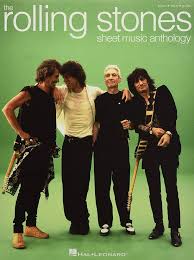
Single 1967: ‘LET’S SPEND THE NIGHT TOGETHER’ (Rolling Stones)
On January 13, 1967, the Rolling Stones’ single ‘Let’s spend the night together’ was released in England, which reached No. 3 in the British charts and was No. 1 in Germany. On the other side was the song ‘Ruby Tuesday’, both written by Jagger and Richards. Well known is the glam rock style version made by David Bowie for the album ‘Aladdin Sane’ of 1973 that curiously was banned in the Spanish edition (due to its sexual content), despite the fact that the original song by the Stones was published in Spain without problems at the time. In 2006 it suffered another censorship, this time in China, when on the occasion of a tour they were forbidden to sing it live ‘because of its insinuating lyrics’.
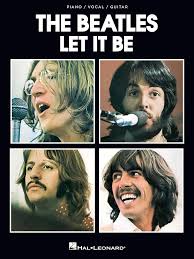
LP 1969: ‘YELLOW SUBMARINE’ (The Beatles & George Martin)
On January 13, 1969, the tenth official Beatles’ album was released in the United States, although only one side of the album contained songs by the group. Of the six songs, four had not been released previously, ‘All Together Now’, ‘Hey Bulldog’, ‘Only a Northern Song’ and ‘It’s All Too Much’, the latter two by Harrison. The other side included orchestral music by George Martin from the soundtrack of the animated film ‘Yellow Submarine’, released seven months earlier.
LP 1973: ‘WHO DO WE THINK WE ARE’ (Deep Purple)
On January 13, 1973, ‘Who Do We Think We Are’, the seventh studio album by the British band Deep Purple, was released in Europe. It was Deep Purple’s last work with Ian Gillan on lead vocals and Roger Glover on bass until eleven years later, with ‘Perfect Strangers’. It was recorded in Rome and Frankfurt with the Rolling Stones’ mobile studio after an exhaustive 18-month tour. The pressure and accumulated fatigue generated tensions that led to the abandonment of Ian and Roger after the sessions. The last performance with the Mark II line-up was on June 29, 1973, in Osaka. The album contained a single hit, ‘Woman from Tokyo’ which was top 5 in the UK and in numerous European countries.

Browse in the Library:
Or browse in the categories menus & download the Library Catalog PDF: