Come join us now, and enjoy playing your beloved music and browse through great scores of every level and styles!
Can’t find the songbook you’re looking for? Please, email us at: sheetmusiclibrarypdf@gmail.com We’d like to help you!
Table of Contents
Happy heavenly birthday, Joe Pass, born on this day in 1929.
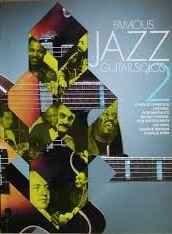
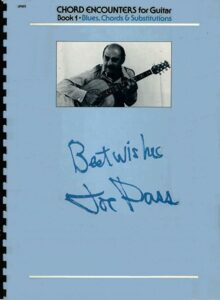
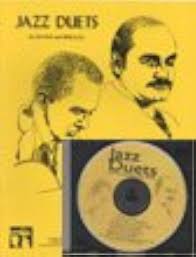
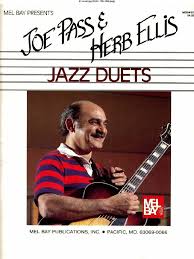
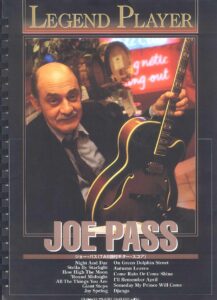
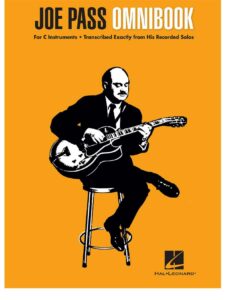
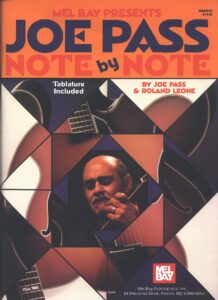

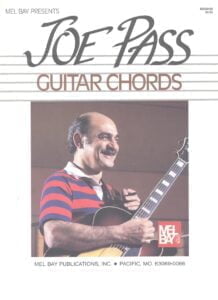
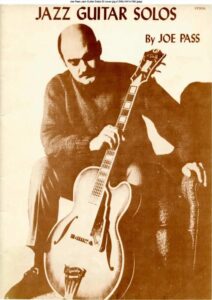

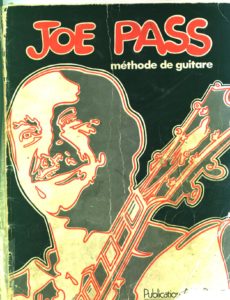

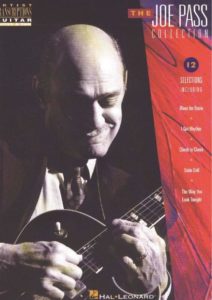
Best Sheet Music download from our Library.
Joe Pass: The Virtuoso of Jazz Guitar
Born January 13, 1929 – Died May 23, 1994
Full Biography: From Steel Town to World Stage
Joe Pass was born Joseph Anthony Jacobi Passalacqua on January 13, 1929, in New Brunswick, New Jersey, to Sicilian immigrants Mariano and Josephine Passalacqua. His father, a steel mill worker, recognized his son’s musical inclination early and bought him a $17 Harmony guitar when Joe was just nine years old. This modest instrument would become the gateway to one of the most revolutionary approaches to jazz guitar in history.
The Passalacqua family moved to Johnstown, Pennsylvania, a steel town where young Joe’s musical education took a decisive turn. His father, determined to see his son succeed, insisted on rigorous classical training. Joe studied with local teacher Harry Volpe, who instilled in him solid technical foundations. By age 14, Pass was already playing professionally in local bands, his talent evident despite his youth.
The 1940s brought both opportunity and struggle. At 17, Pass joined Tony Pastor’s orchestra, his first major professional engagement. However, this period also marked the beginning of a long battle with substance addiction that would plague him for nearly two decades. Throughout the 1950s, Pass worked sporadically while struggling with heroin addiction, spending time in Las Vegas, New Orleans, and eventually New Orleans, where he was arrested and spent time in the Federal Medical Center in Fort Worth, Texas. It was during his incarceration that Pass began the difficult journey toward recovery, practicing guitar obsessively during his confinement.
The turning point came in the early 1960s. After being released, Pass entered the Synanon rehabilitation program in Santa Monica, California. This structured environment allowed him to rebuild his life and his musical career. While at Synanon, he recorded the remarkable album “Sounds of Synanon” (1962), which caught the attention of the jazz world and specifically producer Norman Granz.
Granz, founder of Verve Records and Jazz at the Philharmonic, became Pass’s champion. In 1963, he signed Pass to his label and began featuring him on recordings with major artists. This partnership marked the beginning of Pass’s ascent to international acclaim. For the next three decades, Pass would establish himself as one of the most influential and technically accomplished jazz guitarists of all time.
Please, subscribe to our Sheet Music Library.
If you are already a subscriber, please, check our NEW SCORES’ page every month for new sheet music. THANK YOU!
Musical Style: The Anatomy of Genius
Joe Pass developed a comprehensive approach to the guitar that revolutionized solo jazz guitar performance. His style can be characterized by several distinct elements:
Chord Melody Mastery: Pass perfected the art of playing melody, harmony, and bass simultaneously on a single guitar. Unlike many guitarists who specialized in either chordal accompaniment or single-note lines, Pass seamlessly integrated both, creating the impression of multiple instruments playing at once. His chord voicings were particularly innovative, often incorporating extensions (9ths, 11ths, 13ths) and alterations while maintaining impeccable voice leading.
Walking Bass Lines: In solo playing, Pass developed an exceptional ability to imply walking bass lines while simultaneously playing chords and melodies. This wasn’t merely alternating bass notes but creating contrapuntal movement that gave his solo performances the harmonic and rhythmic foundation typically provided by a rhythm section.
Improvisational Logic: Pass’s improvisations were characterized by architectural clarity. He had an uncanny ability to develop motifs logically, building solos that felt like composed pieces. His phrasing incorporated elements of bebop’s complexity but with a lyricism that made even his most technical passages musically meaningful.
Technical Precision: Pass possessed formidable technique but never displayed it gratuitously. His right-hand technique allowed for remarkable independence between thumb (for bass lines) and fingers (for chords and melodies), while his left-hand facility enabled him to execute complex chord changes at rapid tempos without sacrificing clarity.
Swing Feel: Despite his technical prowess, Pass never lost the essential swing feel that defines jazz. His time feel was impeccable, whether playing uptempo bebop tunes or slow ballads.
Browse in the Library:
Or browse in the categories menus & download the Library Catalog PDF:
Encounters with Other Artists
Joe Pass’s career was marked by collaborations with jazz royalty:
Ella Fitzgerald: Perhaps his most famous partnership, Pass accompanied Fitzgerald extensively in her later career. Their duo recordings, including “Take Love Easy” (1973) and “Fitzgerald and Pass… Again” (1976), showcase an extraordinary musical empathy. Pass provided the perfect guitar accompaniment—supportive but never intrusive, harmonically rich but always leaving space for Fitzgerald’s voice.
Oscar Peterson: The collaboration with pianist Oscar Peterson resulted in some of Pass’s most celebrated work, particularly the album “Porgy and Bess” (1976) with Peterson and bassist Niels-Henning Ørsted Pedersen. The interplay between Pass’s guitar and Peterson’s piano represents one of the great dialogues in jazz history, with both artists pushing each other to new heights.
Herb Ellis: Pass and fellow guitarist Herb Ellis shared a special chemistry, documented on albums like “Two for the Road” (1974) and “Seven, Come Eleven” (1973). Their guitar duets showcased complementary styles—Ellis’s bluesy attack balanced by Pass’s harmonic sophistication.
Duke Ellington: Pass recorded “Duke Ellington’s Piano” with the composer himself in 1974, a respectful yet creatively engaged interpretation of Ellington’s music.
Other Notable Collaborations: Pass worked with a who’s who of jazz including Count Basie, Dizzy Gillespie, Milt Jackson, Zoot Sims, Jimmy Rowles, and singers like Sarah Vaughan and Frank Sinatra. Each collaboration revealed different facets of his adaptable yet distinctive musical personality.
Composition Characteristics
While primarily known as an interpreter, Pass was also a gifted composer. His original compositions reveal several characteristics:
Blues Foundation: Many Pass originals, like “C.E.D.” and “Blues for Alican,” are built on blues forms but with sophisticated harmonic variations that transcend standard blues changes.
Bebop Influence: Tunes like “Joe’s Blues” and “For Django” reflect bebop’s rhythmic complexity and harmonic sophistication, though always filtered through Pass’s distinctive guitaristic sensibility.
Latin and Brazilian Flavors: Pieces such as “Joy Spring” (though originally Clifford Brown’s) and his own “Samba” demonstrate Pass’s comfort with Latin rhythms, often incorporating bossa nova and samba feels with authentic phrasing.
Ballad Writing: His ballad compositions, like “A Time for Love,” showcase his melodic gift and sophisticated harmonic sense, often featuring rich chord progressions that avoid cliché while remaining emotionally direct.
Through-Composed Elements: Even in ostensibly improvised pieces, Pass’s compositions often feature through-composed sections that reveal his classical training and structural thinking.
Harmony and Tonality Treatment
Pass’s approach to harmony was both sophisticated and practical:
Reharmonization: He was a master of reharmonizing standard tunes, substituting chords to create fresh harmonic landscapes while respecting the original melody. His solo guitar arrangements often featured subtle or dramatic reharmonizations that gave familiar tunes new life.
Chord Substitution: Pass employed a wide range of substitution techniques—tritone substitutions, diminished chord substitutions, and modal interchange—all deployed with such naturalness that they never sounded academic or forced.
Voice Leading: Perhaps his most distinctive harmonic characteristic was his impeccable voice leading. Even in complex chord sequences, individual voices moved logically and melodically, creating counterpoint within harmony.
Tonality and Modality: While firmly grounded in functional harmony, Pass increasingly incorporated modal elements in his later work, especially in original compositions. He had a particular facility for moving between tonal centers smoothly, creating the impression of broader harmonic landscapes.
Economy and Density: Pass understood when to use dense, extended chords and when to use sparse, open voicings. This dynamic approach to harmonic density created dramatic contrast in his performances.
Melodic and Formal Style
Melodic Development: Pass treated melodies with profound respect but never mere reverence. His variations on standards always maintained the essence of the original while exploring new melodic territory. His improvisations were notable for their motivic development—taking a small cell of notes and developing it logically through variation, sequence, and transformation.
Phrasing: His phrasing combined elements of horn-like linearity with guitar-specific articulation. He made extensive use of slides, bends, and vibrato, but always tastefully and in service of the musical line.
Formal Awareness: Whether playing 32-bar AABA forms, 12-bar blues, or through-composed pieces, Pass always demonstrated acute formal awareness. His solos typically built logically from statement through development to climax and resolution, creating satisfying musical narratives.
Rubato and Tempo: Pass had complete command of tempo, from blistering bebop lines to expansive ballad playing. His use of rubato was particularly masterful—stretching time without losing the underlying pulse.
Influences
Pass’s musical development was shaped by diverse influences:
Early Influences: Django Reinhardt was a primary early inspiration, introducing Pass to the possibilities of jazz guitar. Charlie Christian’s single-note lines and rhythmic drive also profoundly influenced him.
Piano Transference: Pass often cited pianists as major influences, particularly Art Tatum and Oscar Peterson. From them, he learned about harmonic density, virtuosic facility, and the art of solo performance.
Bebop Masters: Charlie Parker and Dizzy Gillespie influenced Pass’s linear improvisational concept, their complex melodies and harmonies finding translation to the guitar through his innovations.
Classical Training: His early classical studies with Harry Volpe gave him technical foundations and an appreciation for formal structure that distinguished him from many self-taught jazz guitarists.
The Great American Songbook: The composers of standards—Gershwin, Porter, Berlin, Rodgers—shaped his melodic sensibility and his reverence for song form.
Legacy
Joe Pass left an indelible mark on jazz guitar and jazz performance more broadly:
Solo Guitar Revolution: Pass fundamentally changed what was considered possible on solo jazz guitar. Before his “Virtuoso” series, few guitarists attempted—or could execute—complete solo performances of standards with such completeness. He established a new standard for solo guitar playing that continues to influence guitarists today.
Pedagogical Impact: Through his instructional materials—particularly the “Joe Pass Guitar Style” book and video series—Pass systematized his approach, making his innovations accessible to generations of guitarists. His clear explanations of chord melody, walking bass, and improvisation continue to be essential study materials.
The Guitar as Complete Instrument: Pass demonstrated that the jazz guitar could be a self-contained ensemble instrument, capable of expressing the full range of jazz expression without accompaniment. This elevated the instrument’s stature in jazz.
Bridge Between Eras: Pass connected the swing era (through his work with Ellington and Basie) to bebop (through Gillespie and Parker’s influence) to contemporary jazz, creating a synthesis that respected tradition while embracing innovation.
Technical Standard: He set a new technical benchmark for jazz guitar, inspiring countless guitarists to pursue greater technical mastery without sacrificing musicality.
List of Major Works (Original Compositions)
While Pass was primarily an interpreter, his original compositions include:
- “C.E.D.” (named for his daughter)
- “Blues for Alican”
- “Joe’s Blues”
- “For Django” (tribute to Django Reinhardt)
- “A Time for Love”
- “Samba”
- “Child’s Play”
- “The Best Thing for You”
- “How About You?”
Filmography
Joe Pass appeared in several films and television productions:
- “Jazz Is Our Religion” (1972) – Documentary
- “Joe Pass… On Guitar” (1974) – Instructional film
- “The Sound of the Guitar” (1977) – BBC documentary
- “The Tonight Show Starring Johnny Carson” – Multiple appearances
- “Jazz at the Smithsonian” (1981) – Concert film
- “The Great Guitars” (1984) – Featuring Pass, Herb Ellis, and Barney Kessel
Discography (Selective)
As Leader:
- “Sounds of Synanon” (1962) – Pacific Jazz
- “Catch Me!” (1963) – Pacific Jazz
- “12-String Guitar” (1964) – World Pacific
- “For Django” (1964) – World Pacific
- “The Joy of Learning” (1964) – World Pacific
- “A Sign of the Times” (1965) – World Pacific
- “The Stones Jazz” (1967) – World Pacific
- “Intercontinental” (1970) – MPS
- “Virtuoso” (1973) – Pablo
- “Virtuoso #2” (1976) – Pablo
- “Virtuoso #3” (1977) – Pablo
- “Virtuoso #4” (1983) – Pablo
- “I Remember Charlie Parker” (1979) – Pablo
- “Checkmate” (1981) – Pablo
- “Live at Long Beach City College” (1984) – Pablo
- “Whitestone” (1985) – Pablo
- “One for My Baby” (1988) – Pablo
With Ella Fitzgerald:
- “Take Love Easy” (1973) – Pablo
- “Fitzgerald and Pass… Again” (1976) – Pablo
- “Sophisticated Lady” (1975) – Pablo
With Oscar Peterson:
- “The Trio” (1973) – Pablo
- “The Good Life” (1973) – Pablo
- “Porgy and Bess” (1976) – Pablo
- “Digital at Montreux” (1979) – Pablo
With Herb Ellis:
- “Two for the Road” (1974) – Pablo
- “Seven, Come Eleven” (1973) – Concord Jazz
Most Known Compositions and Recordings
Signature Recordings:
- “Virtuoso” (1973) – The album that established Pass as a solo guitar genius, featuring stunning solo versions of “Night and Day,” “Stella by Starlight,” and “Here’s That Rainy Day.”
- “For Django” (1964) – A heartfelt tribute to Django Reinhardt that showcases Pass’s early mastery.
- “Ella Fitzgerald: Take Love Easy” (1973) – The first of his acclaimed collaborations with Fitzgerald.
- “Oscar Peterson: The Trio” (1973) – Live recording that won a Grammy Award.
- “I Remember Charlie Parker” (1979) – Solo guitar tribute to Parker that demonstrates Pass’s bebop fluency.
Most Performed Compositions:
- “C.E.D.” – A blues that has become a standard in jazz guitar repertoire.
- “For Django” – Regularly performed by guitarists paying tribute to both Pass and Reinhardt.
- “Joe’s Blues” – A frequently studied piece in jazz guitar pedagogy.
Covers in Modern Music
Joe Pass’s arrangements and compositions have been covered by numerous contemporary artists:
- Guitarists like Earl Klugh, Larry Carlton, and Pat Metheny have acknowledged Pass’s influence and performed his arrangements.
- “C.E.D.” has been recorded by numerous jazz guitarists in educational and tribute contexts.
- His solo guitar arrangements of standards have been studied and performed by thousands of guitarists worldwide, becoming part of the standard jazz guitar repertoire.
- Contemporary fingerstyle guitarists like Tommy Emmanuel have cited Pass as a major influence in developing solo arrangements.
His Music in Films
Pass’s music has appeared in numerous films and television productions:
- His recordings have been used in films like “The American Friend” (1977) and “Hair” (1979).
- Television series including “The Sopranos” and “Mad Men” have featured his recordings to establish period authenticity.
- Documentary films about jazz frequently include Pass’s performances to illustrate guitar excellence.
Famous Performers of His Music
While Pass’s music is particularly influential among guitarists, his impact extends to other instruments:
- Guitarists: George Benson, John Pisano (his frequent duo partner), Martin Taylor, Mundell Lowe, and virtually every serious jazz guitarist since the 1970s has studied Pass’s approach.
- Beyond Guitar: Pianists like Oscar Peterson and singers like Ella Fitzgerald not only performed with Pass but absorbed elements of his harmonic approach into their own music.
- The next generation of guitar virtuosos including Julian Lage, Kurt Rosenwinkel, and Gilad Hekselman all cite Pass as foundational to their understanding of jazz guitar.
Last Works and Final Years
In his later years, Pass continued to perform and record despite health challenges:
Later Recordings:
- “Summer Nights” (1990) – Live recording with John Pisano
- “Appassionato” (1990) – With orchestra arrangements
- “Duets” (1991) – With John Pisano
- “Live at Yoshi’s” (1992) – One of his final live recordings
- “My Song” (1993) – Among his last studio recordings
Final Years: Pass was diagnosed with liver cancer in the early 1990s but continued performing almost until his death. His final concerts displayed undiminished mastery, though with perhaps a more reflective, economical approach than his earlier pyrotechnics. He died on May 23, 1994, in Los Angeles, California, leaving behind a legacy that continues to grow.
Posthumous Releases:
- “The Complete “Virtuoso” Sessions” (1997) – Box set
- “Unforgettable” (1998) – Previously unreleased recordings
- “Joe Pass: The Best of the Songbooks” (2004) – Compilation
Joe Pass: The Complete Guitarist
Joe Pass represents a unique confluence in jazz history: a musician who combined extraordinary technical ability with profound musicality, a traditionalist who revolutionized his instrument, and a troubled soul who channeled his struggles into art of remarkable clarity and beauty.
His approach to the guitar was holistic—he didn’t separate harmony from melody, technique from expression, or tradition from innovation. In an era of increasing specialization, Pass remained a complete musician, capable of dazzling solo performances, sensitive accompaniment, and egalitarian collaboration.
Perhaps his greatest achievement was making the impossible sound inevitable. The most complex passages in his playing—the simultaneous bass lines, chords, and melodies—flow with such naturalness that they can obscure the revolutionary thinking behind them. He expanded the language of jazz guitar while always speaking in a voice that was recognizably and uniquely his own.
On what would have been his birthday, we remember Joe Pass not merely as a guitar virtuoso but as a musical philosopher who redefined what was possible on six strings, leaving a legacy that continues to inspire musicians to pursue completeness, clarity, and profound musical communication. His music stands as a testament to the transformative power of art and the human capacity for reinvention—from the depths of addiction to the heights of artistic achievement, Joe Pass’s journey and his music continue to resonate, challenging and inspiring new generations of musicians to find their own voice while honoring the tradition he so masterfully embodied.
Search your favorite sheet music in the Sheet Music Catalog
Joe Pass – Jazz Lines 1991
Joe Pass discussing the scales and arpeggios he uses when improvising, Joe also shows non-stop improvised lines for diminished and altered 7th major, 7th minor, and 7th dominant chord types.