
Come join us now, and enjoy playing your beloved music and browse through great scores of every level and styles!
Can’t find the songbook you’re looking for? Please, email us at: sheetmusiclibrarypdf@gmail.com We’d like to help you!
Table of Contents
Best Sheet Music download from our Library.
Please, subscribe to our Sheet Music Library.
If you are already a subscriber, please, check our NEW SCORES’ page every month for new sheet music. THANK YOU!
Happy heavenly birthday, Ryuichi Sakamoto, born on this day in 1952
The Ocean of Sound: The Life and Legacy of Ryuichi Sakamoto
Introduction: The Restless Polymath
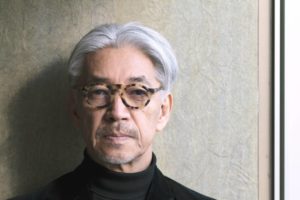
Ryuichi Sakamoto, born January 17, 1952, in Nakano, Tokyo, was not merely a composer but a sonic philosopher, a technological visionary, and one of the most elegantly cross-pollinated artists of the modern era. His death on March 28, 2023, closed a chapter on a career that spanned five decades, multiple Oscar and Grammy awards, and an astonishing range of genres—from pioneering electronic pop and synth-driven classical to minimalist film scores and avant-garde improvisation. Sakamoto’s work defies categorization because his central curiosity was sound itself: its physics, its emotion, its memory, and its relationship to nature and time. He was a true citizen of the world, both in his artistic influences and his humanitarian activism.
Biography: From Yellow Magic to Eternal Echoes
Sakamoto’s journey began with early training in classical piano and an immersion in both Western composers and traditional Japanese music. At Tokyo University of the Arts, he studied ethnomusicology, delving into the musical traditions of India, Africa, and Okinawa—a foundational eclecticism that would define his career.
His public career ignited in 1978 with the formation of Yellow Magic Orchestra (YMO) with Haruomi Hosono and Yukihiro Takahashi. YMO became a global phenomenon, a sleek, ironic, and futuristic synth-pop group that anticipated techno, hip-hop sampling, and electronica. Their influence on acts from Kraftwerk to later generations of electronic musicians is immeasurable.
While YMO made him an international star, Sakamoto simultaneously launched a solo career and moved into film scoring. His collaboration with director Nagisa Ōshima on Merry Christmas, Mr. Lawrence (1983) was a watershed, yielding both a haunting score and his debut as an actor opposite David Bowie. This opened the door to a major film career, most famously his Oscar-winning score for Bernardo Bertolucci’s The Last Emperor (1987), composed with David Byrne and Cong Su.
The 1990s and 2000s saw Sakamoto evolve into a statesman of global music, collaborating with artists across every conceivable genre while deepening his engagement with environmental and anti-nuclear causes. His compositional style grew more minimalist and contemplative. A 2014 throat cancer diagnosis marked a turning point; his work thereafter, like the album async (2017), became a profound meditation on mortality, nature, and the nature of sound. He continued composing until the very end, completing his final score for Kaibutsu (Monster) just months before his passing.
Musical Style and Harmonic Language: Bridging East and West
Sakamoto’s style is a unique alloy of seemingly contradictory elements:
- The Synthetic and the Organic: He was a master of the synthesizer, treating it not as a cold machine but as an extension of the orchestra and the natural world. He would often process natural sounds—rain, water, forest noise—through digital means, blurring the line between the recorded environment and musical note. This is epitomized in works like “grasshoppers” from async, where insect sounds become rhythmic percussion.
- Harmonic Ambiguity and Emotional Clarity: Classically trained, Sakamoto had a deep love for the French Impressionists, particularly Debussy and Satie. Their influence is heard in his use of parallel chords, whole-tone scales, and lush, unresolved harmonies that hover in a state of beautiful suspension. He combined this with a minimalist’s sense of space (influenced by John Cage and early electronic music) and a pop musician’s gift for melody. A Sakamoto chord progression often feels both ancient and futuristic, simple on the surface but harmonically sophisticated.
- Time and Space as Compositional Elements: Following Cage, Sakamoto treated silence and environmental sound as active compositional materials. His later works are less about forward propulsion and more about creating a “field of listening,” an immersive space where time seems to slow down. The decay of a piano note, the hum of a malfunctioning machine—these were not effects, but subjects.
Bands and Musical Groups
- Yellow Magic Orchestra (YMO): The cornerstone. More than a band, YMO was a laboratory for ideas about technology, orientalism, and pop culture. Tracks like “Computer Game / Firecracker,” “Rydeen,” and “Behind the Mask” were built on video game bleeps, disco rhythms, and deconstructed exotica, creating a new, globally influential electronic language.
- KYLYN: An early-70s collaborative project, showing his avant-garde leanings even before YMO.
- More Short Stories: A collaborative project with pianist Christopher Willits, exploring ambient and glitch textures.
- Fusing Ensemble: Though not a formal band, his countless collaborations—from Alva Noto to Christian Fennesz—functioned as temporary, intense musical groups that expanded his sound world.
Essential Songs and Compositions
- “Merry Christmas, Mr. Lawrence” (1983): His iconic theme. A breathtaking fusion of a Romantic-era chord progression with a Gamelan-inspired metallic shimmer and a haunting, simple melody. It contains his entire artistic worldview in one piece.
- “The Last Emperor” Theme (1987): A majestic, tragic waltz that blends Western orchestration with Chinese pentatonic motifs, showcasing his genius for cultural synthesis.
- “Bibo no Aozora” from Babel (2004): A piece of heart-stopping, repetitive beauty, building from a simple piano figure into a soaring string elegy. It represents his peak in neoclassical composition.
- “Energy Flow” (1999): A simple, healing piano piece that became a cultural phenomenon in Japan, topping the pop charts as an instrumental. It announced his turn toward a more introspective, therapeutic aesthetic.
- “andata” from async (2017): A post-diagnosis masterpiece. A dying electric organ chord is stretched and processed into a cathedral of sound—a direct, powerful meditation on decay and permanence.
- “Tong Poo” (Yellow Magic Orchestra, 1978): The definitive YMO track: propulsive, catchy, and intellectually dazzling in its fusion of East Asian melody with synth-funk.
Filmography: Scoring the Image
Sakamoto’s film scores are integral to the emotional architecture of the films they inhabit:
- Merry Christmas, Mr. Lawrence (1983): His acting debut and first major score.
- The Last Emperor (1987): Won the Academy Award for Original Score. A monumental work of historical synthesis.
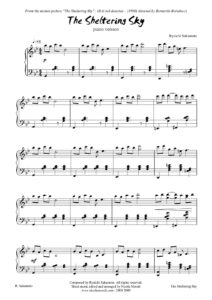
- The Sheltering Sky (1990): His score for Bertolucci’s film is a desertscape of sound, using North African motifs and vast, open harmonies to convey existential longing.
- High Heels (1991) & The Handmaid’s Tale (1990): Showcased his versatility in very different contexts: Pedro Almodóvar’s melodrama and dystopian sci-fi.
- Little Buddha (1993): Another Bertolucci collaboration, featuring beautiful interplay with East Asian instruments.
- Gohatto (1999): A spare, tense score for Nagisa Ōshima’s samurai film, using traditional Japanese music in a stark, modern context.
- The Revenant (2015): Co-scored with Alva Noto, providing a glacial, textured, and immersive sound bed for the survival epic.
- Kaibutsu (Monster) (2023): His final, posthumously released score for Kore-eda Hirokazu—a delicate, poignant closing statement.
Collaborations with Jazz and Beyond
Sakamoto was a collaborator par excellence, drawn to improvisers and innovators:
- Jazz Virtuosos: He worked extensively with Caetano Veloso (a profound meeting of minds), and his playing shares an improvisatory spirit with jazz pianists like Keith Jarrett, though he seldom worked in a standard jazz format. His duet album “Playing the Piano / Out of Noise” features reworked pieces in a freely expressive style.
- Electronic Pioneers: His collaborations with Carsten Nicolai (Alva Noto) are among his most significant late-career works. The “Insen,” “Vrioon,” and “Summvs” series blend Sakamoto’s piano with Nicolai’s precise digital pulses, creating a new genre of “digital chamber music.”
- Global Icons: From David Bowie (on screen in Mr. Lawrence) and Iggy Pop (guest vocals on YMO tracks) to David Sylvian (the sublime “Forbidden Colors”) and Youssou N’Dour, his partnerships were always dialogues, never mere guest spots.
- Classical and Avant-Garde: He worked with cellist Jaques Morelenbaum (the sublime “1996” and “Casa” albums) and composed for the Tokyo Metropolitan Symphony Orchestra.
Influences and Legacy: The Ripples in the Ocean
Influences on Sakamoto:
- Claude Debussy & Erik Satie: For harmony, color, and atmosphere.
- John Cage & Karlheinz Stockhausen: For conceptual rigour, the use of chance, and the expansion of what constitutes music.
- The Beatles & The Beach Boys: For pop songcraft and studio innovation.
- Traditional Japanese Gagaku & Okinawan Music: For timbre, modality, and a non-Western sense of time.
- Brazilian Tropicália: For its spirit of cultural cannibalism and joyful hybridity.
Sakamoto’s Legacy:
- The Architect of Modern Japanese Music: He is the central figure who connected Japan’s past to its digital future, making it a powerhouse of global pop and electronic culture.
- The Godfather of Electropop and Sampling: YMO’s DNA is in everything from hip-hop (early producers sampled them extensively) to synth-pop, techno, and video game music.
- The Model of the Global Composer: He demonstrated how to honor one’s roots while engaging in a genuinely global, collaborative dialogue, without resorting to shallow “world music” fusion.
- The Philosopher-Composer: He elevated the act of composition to a form of sonic philosophy, concerned with ecology, time, memory, and human perception. His late work, particularly async, stands as one of the great artistic meditations on mortality of the 21st century.
- The Activist Artist: He used his platform tirelessly for environmental protection, anti-nuclear advocacy, and disaster relief after the 2011 Tohoku earthquake and Fukushima disaster.
Ryuichi Sakamoto: Hearing the World
Ryuichi Sakamoto’s life was a continuous, open-eared conversation with the world. He heard music in a malfunctioning piano after the 2011 tsunami (“Kizuna World“), in the rustling of a forest, and in the digital glitches of a computer. He refused to be bound by genre, nationality, or discipline. In an age of increasing noise and fragmentation, his work is a profound invitation to listen more deeply—to the environment, to history, to each other, and to the subtle movements of our own inner lives.
He once said, “I’m fishing the sound.” This simple phrase encapsulates his method: a patient, attentive, and graceful act of drawing music from the ocean of noise that surrounds us. His vast catalogue is not just a collection of compositions, but a sustained act of careful, loving listening—a gift that teaches us how to hear our own world anew. Born on this day, Ryuichi Sakamoto left behind not just melodies, but a new way of perceiving the very fabric of sound and silence.
Search your favorite sheet music in the Sheet Music Catalog
Listen to Ryuichi Sakamoto music on Spotify
Browse in the Library:
Or browse in the categories menus & download the Library Catalog PDF: