
Come join us now, and enjoy playing your beloved music and browse through great scores of every level and styles!
Can’t find the songbook you’re looking for? Please, email us at: sheetmusiclibrarypdf@gmail.com We’d like to help you!
Table of Contents
Best Sheet Music download from our Library.

Please, subscribe to our Sheet Music Library.
If you are already a subscriber, please, check our NEW SCORES’ page every month for new sheet music. THANK YOU!
Happy heavenly birthday, Janis Joplin, born on this day in 1943.
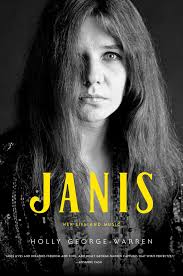
Janis Joplin: The Unyielding Cry of a Pearl
Born on January 19, 1943, in the oil-refining town of Port Arthur, Texas, Janis Lyn Joplin emerged as one of the most electrifying, transformative, and tragic figures in the history of American music. More than just a rock star, she was a force of nature—a whirlwind of raw emotion, psychedelic fashion, and volcanic vocal power that shattered the demure expectations for female performers and redefined the very essence of blues and rock singing. Her life, a turbulent quest for freedom and belonging, burned with an intense, beautiful, and heartbreaking brevity, leaving behind a legacy that continues to resonate with visceral power.
Browse in the Library:
Or browse in the categories menus & download the Library Catalog PDF:
Full Biography: A Search for Escape
Janis’s childhood in conservative, segregated Port Arthur was marked by a profound sense of alienation. An intellectually curious and artistically inclined girl, she was deemed unconventional by her peers, developing a love for blues and folk music—the voices of Bessie Smith, Lead Belly, and Odetta offering a stark contrast to her surroundings and speaking to her burgeoning outsider identity. After graduating high school, she attended the University of Texas at Austin, where her bold, bohemian style and powerful singing at local folk clubs began to turn heads. A 1962 Texas Campus newspaper article dubbed her “She Dares to Be Different,” a title that would define her life.
Seeking a more progressive environment, Joplin hitchhiked to San Francisco’s North Beach in 1963, immersing herself in the nascent counterculture. She sang in folk clubs, developed a heroin addiction, and, after a period of heartbreak and disillusionment, returned to Texas in 1965 in an attempt to conform, even becoming engaged. This “normal” life proved suffocating. The call of music and freedom was irresistible.
Her salvation came in 1966 when San Francisco psychedelic band Big Brother and the Holding Company, having heard tapes of her singing, invited her to join as their lead vocalist. She returned to San Francisco, and with her arrival, the band’s fortunes changed overnight. Their explosive performance at the Monterey International Pop Festival in June 1967 was a cultural detonation. Filmed by D.A. Pennebaker, Joplin’s raw, wrenching performance of “Ball and Chain” (a song she learned from blues great Big Mama Thornton) left the audience stunned and announced the arrival of a new archetype: the white female blues-rock shaman. She was no longer a singer with a band; she was a star.
Commercial success followed with the album “Cheap Thrills” (1968), a chaotic, brilliant document of the band’s live energy, featuring the seminal tracks “Piece of My Heart” and “Summertime.” However, Joplin’s ambition soon outgrew the loose, sometimes sloppy, musicianship of Big Brother. Seeking greater artistic control and a tighter, more soulful sound, she formed the Kozmic Blues Band in 1969. This move was both brave and fraught. Her first solo album, “I Got Dem Ol’ Kozmic Blues Again Mama!” (1969), showcased her evolution toward a more Stax/Motown-influenced R&B sound with tracks like “Try (Just a Little Bit Harder)” and “Maybe,” but was met with mixed reviews. The pressure was immense.
Undeterred, she dissolved the Kozmic Blues Band and formed her final and most accomplished group, the Full Tilt Boogie Band, in 1970. Comprised of seasoned, versatile Canadian musicians, they provided the perfect, responsive vehicle for her voice—soulful, rock-solid, and dynamically nuanced. With them, she found a new level of artistic confidence and personal happiness, working on what would become her masterpiece, “Pearl.”
Tragically, Joplin would not live to see its release. On October 4, 1970, after a productive recording session, she died of an accidental heroin overdose at the Landmark Motor Hotel in Hollywood. She was 27 years old. “Pearl,” released posthumously in January 1971, became a monumental success, featuring her iconic a cappella greeting on “Move Over,” the soaring “Cry Baby,” the funky “Get It While You Can,” and her ultimate signature song, Kris Kristofferson’s “Me and Bobby McGee,” with its heartbreakingly prophetic final line, “freedom’s just another word for nothin’ left to lose.”
Musical Style and Harmonic Language
Janis Joplin’s style was a primal synthesis of influences, filtered through a uniquely explosive personality. At its core was the blues—not as a studied revival, but as a lived-in, desperate emotional language. She absorbed the pain, defiance, and sexual frankness of classic blues women like Bessie Smith and Big Mama Thornton, amplifying their intensity with the sheer physical power of a rock band.
Her approach to harmony was instinctual rather than theoretical. She operated as a supreme melodist and text-painter within the structures of her bands. The harmonic frameworks of her songs were often straightforward—standard 12-bar blues progressions (“Ball and Chain”), soul-chord vamps (“Tell Mama”), or folk-rock changes (“Bobby McGee”). Her genius lay in what she did over these foundations:
- Microtonal Crying & Screaming: She bent notes not just for bluesy color, but to emulate the sound of a human sob or a shout of joy. Her voice would crack, fray, and soar, often moving through the notes of the chord rather than cleanly landing on them, creating a sense of unbearable urgency.
- Rhythmic Vocal Placement: She used rhythmic delay and anticipation with masterful skill, lagging behind the beat to create aching tension, then rushing ahead for explosive release. Listen to her phrasing on “Piece of My Heart”—it’s a masterclass in rhythmic vocal dynamism.
- Dynamic Extremes: She could move from a vulnerable, almost conversational purr to a full-throated, rasping roar in a single phrase. This wasn’t mere volume; it was an emotional seismograph.
- Textual Improvisation: She treated lyrics as living material, repeating, fragmenting, and roaring lines for maximum dramatic impact. Her performances were theatrical soliloquies set to music.
With the Full Tilt Boogie Band, the harmonic palette became richer, incorporating gospel piano (“Move Over”), soulful horn arrangements (courtesy of the Memphis Horns), and more sophisticated songwriting, allowing her voice to explore new shades of soul and tenderness alongside its signature power.
Best Songs and Compositions
- “Me and Bobby McGee” (from Pearl): Her definitive recording. The journey from wistful, folkish reminiscence to the final, cathartic roar is the story of her artistry in miniature.
- “Piece of My Heart” (with Big Brother, from Cheap Thrills): The anthem of wounded defiance. Her vocal is a series of assaults on the song’s structure, each chorus more devastating than the last.
- “Ball and Chain” (Live at Monterey Pop, 1967): The performance that made her legend. A seven-minute tour de force of blues torment and transcendence.
- “Cry Baby” (from Pearl): A perfect marriage of soul structure and rock intensity. The build from pleading verse to the soaring, multi-tracked chorus is sublime.
- “Summertime” (with Big Brother, from Cheap Thrills): A radical deconstruction of the Gershwin classic. Slowed to a druggy, oppressive crawl, her vocal is both childlike and world-weary.
- “Mercedes Benz” (from Pearl): A acerbic, a cappella social satire written with poet Michael McClure. It showcases her wit, timing, and the raw, unadorned beauty of her voice.
- “Try (Just a Little Bit Harder)” (from Kozmic Blues): A Stax-inspired powerhouse that captures the relentless drive of her solo ambition.
- “Down on Me” (with Big Brother, from Big Brother & the Holding Company): A traditional folk song transformed into a fierce declaration of autonomy and sexual power.
Filmography and Documentaries
Joplin’s cinematic presence, though limited, is unforgettable.
- Monterey Pop (1968): D.A. Pennebaker’s festival documentary features her earth-shattering “Ball and Chain” performance.
- Janis (1974): A poignant, Oscar-nominated documentary directed by Howard Alk and Seaton Findlay, using extensive interviews and performance footage.
- Janis: Little Girl Blue (2015): The definitive documentary by Amy J. Berg, narrated by Cat Power, using Joplin’s intimate letters to tell her story with profound compassion and clarity.
- Biopic attempts have been numerous and fraught, but none have successfully captured her essence, a testament to her inimitable authenticity.
Cooperations with Jazz and Blues Musicians
While Joplin’s core bands were rock-oriented, her quest for authentic soul led her to collaborate with key figures from the R&B and jazz worlds:
- The Kozmic Blues Band was explicitly modeled on the Stax/Motown revue bands, featuring horn players like Snooky Flowers.
- On Pearl, she worked with Paul A. Rothchild (producer for The Doors) and key session musicians, but the most significant collaboration was with the Memphis Horns, the legendary duo (Wayne Jackson, Andrew Love) who played on countless Stax classics. Their arrangements on “Move Over” and “Try” provided an authentic, punchy soul foundation.
- Her deepest connection was with the blues tradition itself. She financially helped erect a tombstone for her idol, Bessie Smith, and considered herself a direct descendant of that lineage.
Influences and Legacy
Influences: Bessie Smith, Big Mama Thornton, Lead Belly, Odetta, Otis Redding, Aretha Franklin, and the raw energy of San Francisco psychedelia.
Legacy: Janis Joplin’s impact is immeasurable. She demolished the gender barriers of rock, proving a woman could be as powerful, raucous, sexually liberated, and commercially successful as any man. She paved the way for everyone from Patti Smith and Stevie Nicks to Melissa Etheridge, Pink, and Florence Welch.
Beyond influence, she became an icon of the 1960s counterculture—a symbol of unfettered freedom, aching vulnerability, and the dangerous cost of both. Her voice remains a benchmark for authentic emotional expression in popular music; it is a sound of need, of celebration, of pain unmediated by polish.
Janis Joplin was not a perfect musician, but she was a perfect conduit for feeling. In a life marked by a desperate search for home, she found it only in the three-minute crucible of a song. As she once said, “On stage, I make love to 25,000 different people, then I go home alone.” Her artistry was that act of communion—fierce, generous, and devastatingly honest. She gave a piece of her heart, and in doing so, she gave us a sound for our own deepest sorrows and joys, a raw, glorious testament to the beautiful, tragic, and unyielding cry of the human spirit.