Come join us now, and enjoy playing your beloved music and browse through great scores of every level and styles!
Can’t find the songbook you’re looking for? Please, email us at: sheetmusiclibrarypdf@gmail.com We’d like to help you!
Table of Contents
Bachianas Brasileiras by Heitor Villa-Lobos
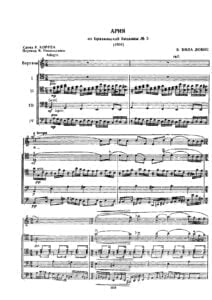
Best Sheet Music download from our Library.
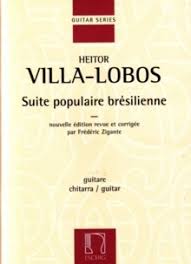
Please, subscribe to our Sheet Music Library.
If you are already a subscriber, please, check our NEW SCORES’ page every month for new sheet music. THANK YOU!
Heitor Villa-Lobos is now considered not only Brazil’s most celebrated composer, but indeed the most celebrated in all of Latin America. His contribution to the music of his country is immeasurable: in addition to his vast output, he designed a pedagogical system for all Brazilian schools based on his folk music, which has influenced several generations of children. Undoubtedly, many Brazilian musicians today owe a debt to Villa-Lobos.
From his extensive catalog, we have chosen to analyze his most universal works, his Bachianas brasileiras. In these works, he achieved something as unprecedented as adapting the tonal, polyphonic, contrapuntal, rhythmic, and structural elements of Johann Sebastian Bach’s music to the folklore of his country.

Bachiana No. 1
The first of the Bachianas, written for a group as unusual for the time as a cello orchestra (which is hardly surprising considering it was dedicated to Pau Casals and that, moreover, that was his favorite instrument), came from Villa-Lobos’s pen in 1930, but he wouldn’t premiere it until two years later, and even then incomplete, as he only presented the first two movements, prelude and fugue, to the public. Another six years would pass before he conducted the definitive version at the Sociedade Pro-Musica in São Paulo, with an added introductory movement. By then, Villa-Lobos (who had already premiered Bachiana No. 2) had become aware of his intention to adapt Bach’s musical language to Brazilian folklore, for which he added a name to each movement taken from the popular music of his country, without abandoning the names of the ‘Bachiana’ forms. Thus, the introduction became a “conundrum,” the prelude a “modinha,” and the fugue a “conversation.” The prelude is one of the musician’s most popular pieces, a dreamy adagio that faithfully follows the schemes of those written by the genius from Eisenach, but it is in the fugue, with its somewhat uninspired progression, that Villa-Lobos makes the following declaration of intent: “It is about the spiritualization of Bach’s syntax in order to adapt it to the musical conversation of four choirs.” Curiously, this fugue has the peculiarity of bearing little resemblance to that of the idolized German master.
A particularity of all Bachianas is that they end with all the instruments in unison on the same note.
Bachiana No. 2
This Bachianas premiered at the Second Venice International Music Festival in 1934, conducted by none other than Alfredo Casella. It was actually written in the same year as Bachianas No. 1, in 1930. It is the first of Bachianas for symphony orchestra, scored for the following instrumentation: piccolo, flute, oboe, clarinet, tenor saxophone, baritone saxophone, bassoon, two trumpets, trombone, a rich percussion section including various Brazilian rattles—such as the recoreco, matraca, and chocalhos—celesta, piano, and strings. The movements are as follows: Prelude (Canto de Capadocio), Aria (Canto de Nossa Terra), Dance (Lembrança do Sertão), and Toccata (O Trenzinho do Caipira).
The first movement alludes to the term “Capadocio,” which can be roughly translated as “braggart,” though it also means “Carioca mulatto with a bohemian lifestyle.” “Capadocio” was also a guitar teaching method, very popular in Brazil during the first third of the 20th century. This movement is notable for its nostalgic saxophone solo throughout the adagio. In the Aria, Villa-Lobos entrusts another solo, this time of a mournful nature, to the cello. Lembrança do Sertão (“Memories of the Sertão”) (see Bachianas No. 4), on the other hand, gives prominence to the trombone in an andantino moderato that leads into an energetic allegro. Finally, the Toccata “Trenecito del caipira” (understand “caipira” as rural, villager, but without any intention of offense; the main areas of influence of caipira culture are Mato Grosso, northern Paraná, Minas Gerais, Goiás, and some areas of São Paulo and Mato Grosso do Sul) is Villa-Lobos’s most famous piece after the Aria from Bachianas No. 5. With its great tonal variety, it begins somewhat moderately and concludes in a dizzying allargando that, in effect, imitates the sound of a train starting up and reaching speed.
Although this movement has inevitably been compared to Honegger’s Pacific 231, premiered nine years before this work was written, Villa-Lobos recreates his locomotive through a colorful display of Brazilian percussion. This Toccata became very famous years after the composer’s death, thanks to an arrangement by the multi-instrumentalist Egberto Gismonti.
Bachiana No. 3
It is surprising that Villa-Lobos dedicated only one of the Bachianas to the piano-orchestra combination, but it is clear that he did so with José Vieira Brando’s abilities in mind. He would premiere the original version for solo piano of No. 4. Again, the premiere took place long after the composition process, finally appearing on February 19, 1947, in New York, nine years after it was written.
Villa-Lobos conducted the Columbia Symphony Orchestra and Vieira Brandão. It is structured as follows: Prelude (Ponteio), Fantasia (Devaneio), Aria (Modinha), and Toccata (Picapaú). Villa-Lobos introduces passages of great technical difficulty for the soloist, especially in the first movement, which contains passages of true virtuosity without resorting to exhibitionism or empty spectacle. It is an adagio in D minor with a ‘meno mosso’ cadenza before the recapitulation and another brief one preceding the recapitulation. The final movement, much appreciated by the public, is an allegro in 3/4 time that places the soloist in a very difficult position; their part is indicated in the score as “Ben rimato (mechanically)”. Therefore, this Bachiana can be considered more a kind of Symphonic Variations in the style of Franck than a true piano concerto.
Bachiana No. 4
It was originally written for piano in 1930 but was not heard for the first time until nine years later, performed by pianist José Vieira Branco in Rio de Janeiro. The warm reception it received from the public encouraged Villa-Lobos to arrange it for symphony orchestra, and in this new form it premiered in June 1942, under his own baton.
The first movement, Prelude (Introduction), is a beautiful and poignant slow movement in B minor, in which a single theme is developed, played solely by the strings, which, rather than Bach, evokes the Nordic composers (it could easily be mistaken for the ‘Andante religioso’ from Grieg’s Holberg Suite, to give an example). In the other three movements, the remaining sections of the orchestra join in. The Chorale (Canto do Sertão) is a largo in C minor that then becomes più mosso. Here is another folkloric reference to the Sertão, a semi-arid region of Northeast Brazil, encompassing parts of the states of Alagoas, Bahia, Pernambuco, Paraíba, Rio Grande do Norte, Ceará, and Piauí. The Aria (Cantiga), in a moderato-vivace-moderato rhythm, develops the melody of the song Mana, Deix’Eu ir, originating from the Northwest of the Amazonian country. This Bachianas piece concludes with the quintessential Brazilian rhythm, samba, in the Danza (Miudinho), based on the popular song Vamos, Maruca, collected and cataloged by Villa-Lobos himself years earlier.
Bachiana No. 5
Here is the most celebrated of the Bachianas, the one that brought fame to the entire cycle. It is the only one that includes a vocal part, specifically for soprano, and features the cello orchestra again, already used in No. 1. According to Villa-Lobos, the number of members in this orchestra should be a minimum of eight, or, if it is expanded, the number should always be a multiple of eight. It is no wonder that for a long time this Bachiana was the calling card of the Iberian Cello Octet, directed by Elías Arízcuren.
As in other cases, Villa-Lobos composed his only two pieces with a considerable gap in time. The marvelous opening aria (cantilena), which begins with an adagio in 5/4 time over the pizzicato cellos, has been immortalized by sopranos such as Victoria de los Ángeles (who recorded it in a landmark recording in 1956 under the composer’s direction), Kiri Te Kanawa, Barbara Hendricks, and many others. It was written in 1938 and premiered on March 25, 1939, with the singer Ruth Valadares Correia, conducted by the composer himself.
Although this piece is often associated with the soprano Bid Sayao, who popularized it worldwide and recorded it under Villa-Lobos’s direction in 1948, Valadares Correia will always be linked to the piece for having written its central verses. These are sung after the prolonged opening vocalise.
Tarde.
¡Una nube rosa lenta y transparente.
Sobre el espacio, soñadora y bella!
Surge en el infinito la luna dulcemente,
engalanando la tarde, como una tierna doncella
que se pusiera linda, soñadoramente,
deseando con su alma estar bella.
¡Grita al cielo y a la tierra toda la Naturaleza!
Callan las aves a sus tristes lamentos
Y refleja el mar toda su riqueza…
Suave la luz de la luna despierta ahora
¡La cruel añoranza que ríe y llora!
¡Una nube rosa lenta y transparente.
Sobre el espacio, soñadora y bella!
Afternoon.
A slow, transparent pink cloud.
Over space, dreamy and beautiful!
The moon rises sweetly in the infinite,
adorning the afternoon, like a tender maiden
that she should dress up beautifully, dreamily,
wishing with all her soul to be beautiful.
Shout to the heavens and the earth, all of Nature!
The birds fall silent, their sad cries falling silent.
And the sea reflects all its richness…
Soft moonlight awakens now
The cruel longing that laughs and cries!
A slow, transparent pink cloud.
Over space, dreamy and beautiful!
Aware of the possibilities of the aria, a true page of vocal virtuosity and expressiveness (which concludes with a very difficult passage ‘a bocca chiusa’), the musician hastened to write a reduction of it, for voice and guitar.
Not content with that, in 1945 he commissioned the poet Manuel Bandeira to write some verses that would allow him to create a second number, Dansa (Martelo).
Irerê, mi pajarito de la región de Cariri,
Irerê, mi compañero.
¿Dónde está mi guitarra? ¿Dónde está mi bien? ¿Dónde está María?
¡Ay, triste suerte la del guitarrista cantor!
¡Ah! Sin la guitarra en la que cantaba su amor.
¡Ah! Su silbido es tu flauta de Irerê:
que cuando tu flauta de la región silba,
¡Ah! ¡Hace sufrir sin querer!
¡Ah! Tu canto llega allí, a lo profundo de la región,
¡Ah! Como una brisa conmoviendo el corazón.
¡Ah! ¡Ah!
¡Irerê, suelta tu canto!
¡Canta más!¡Canta más !
¡Para recordar el Cariri !
¡Canta cambaxirra ! ¡Canta juriti !
¡Canta Irerê! Canta, canta sufre
¡Patativa! ¡Bem-te-vi !
María, despierta que es de día
¡Cantad todos vosotros
Pajaritos de la región!
¡Bem-te-vi ! ¡Eh ! ¡Sabiá !
¡La! ¡Liá! ¡Liá ! ¡Liá ! ¡Liá ! ¡Liá !
¡Eh! ¡Sabiá en la foresta cantando!
¡Liá ! ¡Liá ! ¡Liá ! ¡Liá !
¡Eh! ¡Sabiá en la foresta sufriendo!
Vuestro canto viene de lo profundo de la región,
como una brisa conmoviendo el corazón.
Ireê, my little bird from the Cariri region,
Ireê, my companion.
Where is my guitar? Where is my love? Where is Maria?
Oh, what a sad fate for the singing guitarist!
Ah! Without the guitar on which he sang of his love.
Ah! His whistling is your Irerê flute:
that when your flute from the region whistles,
Ah! It causes suffering unintentionally!
Ah! Your song reaches there, to the depths of the region,
Ah! Like a breeze stirring the heart.
Ah! Ah!
Irerê, let your song flow!
Sing more! Sing more!
To remember Cariri!
Sing the song “Cambaxirra”! Sing the song “Juriti”!
Sing Irerê! Sing, sing, suffer
Patativa! Bem-te-vi!
Maria, wake up, it’s daytime
Sing, all of you!
Little birds of the region!
Great Kiskadee! Hey! Thrush!
La! Liá! Liá! Liá! Liá! Liá! Liá!
Hey! The mockingbird is singing in the forest!
Liá! Liá! Liá! Liá!
Hey! I knew suffering in the forest!
Your song comes from the depths of the region,
like a breeze stirring the heart.
The Dance is an allegretto, with a central section più mosso. While the Aria presents a significant technical challenge for the soloist, demanding considerable expressive ability, this Martelo of wild joy requires meticulous diction, given the devilishly intricate lyrics and their rapid-fire enumeration of various types of Brazilian dances. Aware of this, Villa-Lobos grants the soprano fourteen bars of respite between “Para recordar el Cariri” and the poem’s final section.
Bachiana No. 6
All of Bach’s works have a particularity that clearly distinguishes them from the others. The Sixth Symphony is the only one of a chamber nature and was written in 1938 for the flautist Alfredo Martins Lage and the oboist Evandro Moreira Pequeno, to whom it is dedicated. Both instrumentalists were amateurs. Very little is known about Martins Lage, only that he was a friend of the choro group that Villa-Lobos frequented at the time. Moreira, on the other hand, was a linguist and journalist, and played the cello more diligently than the oboe. The work is divided into Aria (Choro) and Fantasia. Here, the composer needs only two instruments to skillfully imitate Bach’s contrapuntal texture in the first movement. The fantasia, on the other hand, is a very free-flowing allegro, without a specific tonality, in which the flute takes center stage, with some passages of beautiful virtuosity that are surprising considering they were conceived for a theoretically amateur performer like Lage. The fantasia concludes on three unison C’s.
Bachiana No. 7
From the sweet intimacy of the flute and oboe, Villa-Lobos returns here to the exuberance of the symphony orchestra. It premiered on March 13, 1944, under the composer’s direction, two years after he wrote it. On this occasion, the dedicatee was the Minister of Education at the time, Gustavo Capamena, a man closely connected to the artists and intellectuals of Brazil then. Villa-Lobos begins in the Prelude (Ponteio) with an adagio in G minor of breathtaking lyricism, which gives way to a Gigue in which he explores the lively rhythm of the Quadrilha caipira, curiously, a contradance of Dutch origin in 6/8 time involving four couples of dancers and introduced to Brazil in the salons of Rio de Janeiro in the 19th century. The third movement, Toccata (Challenge), of effervescent festivity, evokes the “challenge” of the singers of Northeast Brazil, while the final Fugue (Conversation) gives a cyclical character to the work, by adopting a lyrical character that links with the initial Prelude.
Bachiana No. 8
Here is the last of Bach’s works to be premiered, as it was not first performed until August 6, 1947, three years after it was written. The composer had the honor of conducting it at the Accademia Nazionale di Santa Cecilia in Rome. Like Symphony No. 7, it is also written for symphony orchestra and, moreover, shares with it the characteristic of ending with a fugue. We also find other common elements from the rest of the cycle: a Prelude that begins with an adagio in C major, continuing in andante and then poco più mosso before the repeat; and an Aria (Modinha) of great melodic richness in largo-più mosso-largo. The third movement, Toccata (Catira Batida), alludes to the catira, whose rhythmic pattern is marked by the clapping and heel-tapping of the dancers. Also belonging to the Caipira culture of the Brazilian interior, its introduction to the country is attributed to Blessed José de Anchieta (1534-1597). The Fuga (Conversa) begins slowly but develops into a final crescendo.
Bachiana No. 9
It was composed and premiered in 1945 and dedicated to Aron Copland. Conceived for string orchestra, there is an optional, much less well-known version for choir. It is divided simply into a prelude and a fugue, without any classifications based on Brazilian folklore. The prelude, slow and mystical according to the score, develops a melody of great simplicity, with bitonal harmony. The meditative fugue, pouco apressado, with its slow progression, is also very much indebted to Bach; it has a choral treatment and stands out for its expressive character. It concludes without grand flourishes, with all the instruments in unison on the note C.
Browse in the Library:
Or browse in the categories menus & download the Library Catalog PDF:
Bachianas Brasileiras No. 3 • Villa-Lobos • São Paulo Symphony Orchestra
Heitor Villa-Lobos (1887 – 1959) Bachianas Brasileiras No. 3, for piano and orchestra (1938) 1. Prelúdio (Ponteio) 00:00 2. Fantasia (Devaneio) 07:11 3. Ária (Modinha) 13:37 4. Toccata (Picapau) 21:06
São Paulo Symphony Orchestra Jean Louis Steuerman, piano José Soares, conductor 🇧🇷 Sala São Paulo, 2023