
Come join us now, and enjoy playing your beloved music and browse through great scores of every level and styles!
Can’t find the songbook you’re looking for? Please, email us at: sheetmusiclibrarypdf@gmail.com We’d like to help you!
Table of Contents
Happy heavenly birthday, Antônio Carlos Jobim (Tom Jobim), born on this day in 1927
Best Sheet Music download from our Library.

Please, subscribe to our Sheet Music Library.
If you are already a subscriber, please, check our NEW SCORES’ page every month for new sheet music. THANK YOU!
Antônio Carlos Jobim: The Architect of Bossa Nova
Full Biography
Early Life (1927-1949)
Antônio Carlos Brasileiro de Almeida Jobim was born on January 25, 1927, in the Tijuca neighborhood of Rio de Janeiro. His father, Jorge de Oliveira Jobim, was a diplomat, writer, and journalist who passed away when Tom was just eight years old. His mother, Nilza Brasileiro de Almeida, moved the family to Ipanema, the neighborhood that would later inspire one of his most famous compositions. Tom’s stepfather, Celso da Frota Pessoa, recognized his musical talent and provided him with piano lessons beginning at age 14.
Jobim initially pursued architecture but abandoned his studies to focus on music, working in recording studios and nightclubs. He married Thereza Otero Hermanny in 1949, with whom he would have two children, Elizabeth and Paulo. This period saw him playing piano in bars and working as an arranger for Continental Records and later Odeon Records.







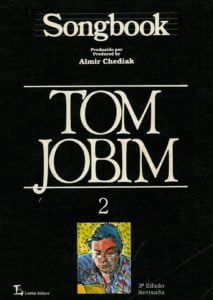
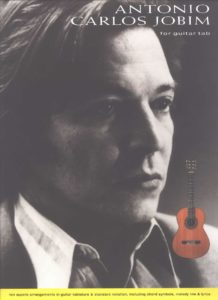
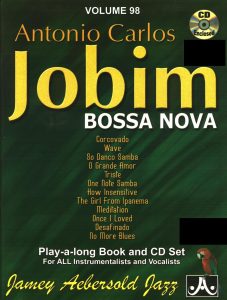


Formative Years and Rise to Prominence (1950-1961)
In the 1950s, Jobim worked as an arranger and pianist for various artists while developing his compositional voice. His breakthrough came in 1956 when he partnered with poet Vinícius de Moraes on the play “Orfeu da Conceição,” which would later become the film “Black Orpheus” (1959). Their collaboration produced “Se Todos Fossem Iguais a Você” and the iconic “A Felicidade.”
The true revolution began in 1958 when singer-guitarist João Gilberto recorded Jobim’s “Chega de Saudade” with revolutionary rhythmic phrasing. This recording, along with Gilberto’s 1959 album of the same name featuring Jobim compositions, marked the birth of bossa nova (literally “new trend” or “new wave”). Jobim’s 1959 album “Chega de Saudade” (released as “The Composer of Desafinado, Plays” in the US) established him as the movement’s leading composer.
Browse in the Library:
Or browse in the categories menus & download the Library Catalog PDF:
International Success and Bossa Nova Conquest (1962-1967)
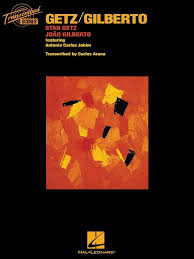
The 1962 Bossa Nova concert at Carnegie Hall introduced Jobim, Gilberto, and other Brazilian artists to the United States. This led to collaborations with American jazz musicians, most significantly saxophonist Stan Getz. The 1963 album “Getz/Gilberto” featuring Jobim’s compositions “The Girl from Ipanema,” “Corcovado,” and “Desafinado” became a worldwide phenomenon, winning Album of the Year at the 1965 Grammys and making bossa nova an international sensation.
During this period, Jobim produced a remarkable body of work including the albums “The Composer of Desafinado, Plays” (1963), “Wave” (1967), and the classic songbook with Frank Sinatra, “Francis Albert Sinatra & Antônio Carlos Jobim” (1967).
Mature Period and Ecological Consciousness (1968-1979)
The late 1960s saw bossa nova’s commercial peak wane, but Jobim continued evolving artistically. Albums like “Stone Flower” (1970) and “Matita Perê” (1973) displayed sophisticated arrangements and deepening thematic concerns. Following the death of his mother in 1975, Jobim entered a period of reflection, eventually marrying his longtime companion, photographer Ana Beatriz Lontra, in 1986.
His ecological consciousness emerged strongly during this period, with compositions like “Matita Perê” and “Águas de Março” reflecting his love for Brazil’s natural world. The double album “Urubu” (1976) represented a creative peak with complex orchestration and thematic unity.
Later Years and Legacy (1980-1994)
In his final decade, Jobim remained prolific, releasing albums like “Terra Brasilis” (1980) and “Passarim” (1987), while continuing to perform internationally. He collaborated with younger Brazilian artists and saw his music embraced by new generations. His final album, “Antonio Brasileiro,” was released posthumously in 1995.
Jobim died of heart failure on December 8, 1994, in New York City while recovering from surgery. His body was flown back to Rio de Janeiro, where he was buried with national honors. The airport was renamed Rio de Janeiro–Antonio Carlos Jobim International Airport in his honor, and December 8 is commemorated as “The Day of Brazilian Music.”
Music Style and Composition Characteristics
Harmonic Language
Jobim’s harmonic vocabulary represents one of the most sophisticated fusions of Brazilian music and jazz harmony in the 20th century. His approach featured:
- Extended Chord Structures: Heavy use of 7th, 9th, 11th, and 13th chords, often with added 6ths
- Modal Interchange: Borrowing chords from parallel modes, particularly between major and minor
- Chromatic Voice Leading: Smooth movement between chords via half-step motion in individual voices
- Altered Dominants: Frequent use of ♭9, ♯9, ♭5, and ♯5 alterations on dominant chords
- Pedal Points and Ostinatos: Repetitive bass patterns creating harmonic stasis over which chords change
His harmonic rhythm often followed samba patterns, with chord changes on weak beats creating syncopation against the steady pulse.
Melodic Style
Jobim’s melodies are deceptively simple, characterized by:
- Narrow ranges, often within an octave
- Conversational phrasing that mimics Portuguese speech rhythms
- Pentatonic foundations with chromatic passing tones
- Motivic development through subtle variation
- Understated, lyrical quality requiring nuanced interpretation
Formal Structures
While often working within standard AABA or ABAC song forms, Jobim innovated through:
- Extended introductions and codas that became integral to compositions
- Through-composed sections that avoided repetition
- Modular structures where sections could be rearranged
- Blurring of verse/chorus distinctions
Rhythm and Phrasing
Jobim mastered the bossa nova rhythmic foundation—a distillation of samba’s complexity into a smoother, jazz-influenced pattern. His compositions feature:
- Syncopation derived from Brazilian percussion traditions
- Cross-rhythms between melody and harmony
- Hemiola patterns (3 against 2)
- Anticipations and delays creating rhythmic tension
Encounters with Other Artists
Key Collaborations
Vinícius de Moraes: The poet-diplomat was Jobim’s most important early collaborator. Their partnership produced dozens of standards including “Garota de Ipanema,” “Insensatez,” and the entire “Orfeu da Conceição” song cycle. Their working method involved Vinícius providing lyrics to Jobim’s melodies or vice versa, with intense discussion about every word and note.
João Gilberto: The singer-guitarist’s revolutionary rhythmic approach gave Jobim’s compositions their definitive early interpretations. Their artistic symbiosis defined the bossa nova sound, with Gilberto’s minimalist phrasing perfectly complementing Jobim’s sophisticated harmonies.
Stan Getz: The “Getz/Gilberto” album (1963) created the bossa nova craze in the United States and won multiple Grammys. Jobim’s piano and occasional vocals on this recording helped bridge Brazilian and American musical sensibilities.
Frank Sinatra: Their 1967 album “Francis Albert Sinatra & Antônio Carlos Jobim” represented a peak of sophisticated popular music. Sinatra’s respect for Jobim’s compositions was evident in his nuanced performances, a departure from his usual swagger.
Elis Regina: The fiery Brazilian singer recorded definitive versions of Jobim songs including “Águas de Março” in a famous duet with the composer. Her emotional intensity brought new dimensions to his work.
Edu Lobo, Chico Buarque, and Milton Nascimento: Younger Brazilian composers who collaborated with Jobim, creating cross-generational dialogues that enriched Brazilian popular music.
Other Significant Encounters
- Quincy Jones: Arranged and conducted for Jobim on several projects, bringing big band sophistication to bossa nova
- Claus Ogerman: German arranger whose orchestrations on albums like “Wave” and “Tide” created lush soundscapes for Jobim’s compositions
- Dizzy Gillespie: Early jazz advocate of bossa nova who performed Jobim’s music
- Ella Fitzgerald: Recorded several Jobim compositions, bringing them into the American songbook canon
Influences and Inspirations
Brazilian Foundations
- Samba and Choro: The rhythmic complexity and melodic contours of traditional Brazilian forms
- Modinha: 19th-century Brazilian sentimental song form influencing Jobim’s lyrical approach
- Pixinguinha: Early 20th-century composer whose sophisticated arrangements paved the way
- Dorival Caymmi: Bahian composer whose songs about fishermen and the sea influenced Jobim’s thematic concerns
Classical Influences
- Heitor Villa-Lobos: Brazil’s foremost classical composer, whose fusion of folk elements with classical forms inspired Jobim
- Claude Debussy: Impressionist harmony, whole-tone scales, and parallel chord movements
- Frédéric Chopin: Lyricism and sophisticated harmonic treatment of popular forms
- Maurice Ravel: Complex harmonies and orchestral colors
- Igor Stravinsky: Rhythmic complexity and formal innovation
Jazz Masters
- Cole Porter and George Gershwin: Sophisticated popular songcraft
- Duke Ellington: Orchestral thinking and distinctive harmonic vocabulary
- Bill Evans: Pianistic approach to harmony and understated melodic development
- Miles Davis: Modal approaches and atmospheric composition
Legacy and Impact
Musical Legacy
Jobim fundamentally reshaped Brazilian music and its international perception. He transformed samba into the more harmonically sophisticated bossa nova, creating a genre that became Brazil’s most significant musical export. His compositions entered the standard repertoires of jazz and popular musicians worldwide.
Cultural Significance
Jobim helped create a new image of Brazil as sophisticated and modern, countering exotic stereotypes. His music became synonymous with Brazilian urbanity while maintaining deep roots in national traditions. The international success of bossa nova coincided with Brazil’s period of modernization in the late 1950s and 1960s.
Environmental Advocacy
Through compositions celebrating Brazil’s natural beauty and ecological themes, Jobim became an early voice for environmental consciousness in Brazilian arts. His later works increasingly focused on nature, influencing subsequent generations of ecologically-minded artists.
Pedagogical Impact
Jobim’s harmonic language has been extensively analyzed in music education worldwide. His compositions are standard study material for understanding extended harmony, voice leading, and the fusion of popular and classical elements.
List of Major Works
Essential Compositions
- “Garota de Ipanema” (The Girl from Ipanema) – 1962
- “Águas de Março” (Waters of March) – 1972
- “Desafinado” (Off Key) – 1958
- “Corcovado” (Quiet Nights of Quiet Stars) – 1960
- “Chega de Saudade” (No More Blues) – 1958
- “Insensatez” (How Insensitive) – 1961
- “Wave” – 1967
- “Triste” – 1967
- “Samba de Uma Nota Só” (One Note Samba) – 1960
- “Meditação” (Meditation) – 1962
Significant Album Cycles
- “Orfeu da Conceição” (1956) – Theater music with Vinícius de Moraes
- “Chega de Saudade” (1959) – First bossa nova album as leader
- “Getz/Gilberto” (1963) – Historic collaboration
- “Wave” (1967) – Mature period masterpiece
- “Stone Flower” (1970) – Experimental period
- “Urubu” (1976) – Orchestral and ecological themes
- “Passarim” (1987) – Later period reflections
Discography (Selected)
Studio Albums as Leader
- Chega de Saudade (1959) [released in US as The Composer of Desafinado, Plays]
- O Amor, o Sorriso e a Flor (1960)
- Getz/Gilberto (1963) [with Stan Getz and João Gilberto]
- The Composer of Desafinado, Plays (1963)
- The Wonderful World of Antônio Carlos Jobim (1965)
- Love, Strings and Jobim (1966)
- A Certain Mr. Jobim (1967)
- Wave (1967)
- Tide (1970)
- Stone Flower (1970)
- Jobim (1973) [also known as Matita Perê]
- Urubu (1976)
- Terra Brasilis (1980)
- Passarim (1987)
- Antonio Brasileiro (1995) [posthumous]
Collaborative Albums
- Francis Albert Sinatra & Antônio Carlos Jobim (1967) with Frank Sinatra
- Sinatra & Company (1971) with Frank Sinatra
- Elis & Tom (1974) with Elis Regina
- Miúcha & Antônio Carlos Jobim (1977) with Miúcha
Live Albums
- Tom Jobim en México (1970)
- Inédito (1987)
- Tom Canta Vinícius (1990) [with Vinícius de Moraes tribute]
- Rio Revisited (1990) [with Gal Costa]
Filmography and Music in Films
Films Scoring
- Black Orpheus (1959) – Contributed several songs including “A Felicidade”
- The Adventurers (1970) – Composed score
- The Deadly Affair (1967) – Contributed “The Look of Love” (instrumental version)
- Gabriela (1983) – Composed theme song
Documentaries
- A Banda do Tom (1972) – Documentary about Jobim’s band
- Tom Jobim (1987) – Biographical documentary
- Passarim (1995) – Posthumous tribute documentary
Notable Film Uses of Jobim’s Music
- “The Girl from Ipanema” in The Heart Is a Lonely Hunter (1968)
- “Águas de Março” in The Wackness (2008)
- “Desafinado” in Match Point (2005)
- “Corcovado” in Eat Pray Love (2010)
- “Insensatez” in The Thomas Crown Affair (1999)
Famous Performers of His Music
Jazz Interpretations
- Stan Getz: Definitive instrumental versions
- Ella Fitzgerald: Ella Abraça Jobim (1981) album
- Bill Evans: Recorded several Jobim compositions
- Sarah Vaughan: Vaughan with Voices (1971) included Jobim songs
- Nina Simone: Powerful interpretations of “Desafinado”
Brazilian Artists
- João Gilberto: Foundational interpretations
- Elis Regina: Emotionally charged versions
- Gal Costa: Tribute albums and frequent performances
- Chico Buarque: Collaborative performances
- Caetano Veloso: Homages in his own compositions
Pop and Contemporary
- Sting: Recorded “How Insensitive” and performed Jobim in concert
- George Michael: Covered “Desafinado”
- Everything But The Girl: Recorded “Corcovado”
- Sade: Incorporated bossa nova influences
- Amy Winehouse: Cited Jobim as influence
Classical
- Yo-Yo Ma: Included Jobim on Obrigado Brazil (2003)
- Herbie Hancock: Jazz-classical fusion interpretations
Covers in Modern Music
Jobim’s compositions have been reinterpreted across genres:
Electronic and Downtempo
- “Águas de Março” remixed by numerous electronic artists
- Bossa nova samples in trip-hop and lounge music
- Thievery Corporation’s bossa nova influenced productions
Indie and Alternative
- Norwegian singer Ane Brun’s delicate covers
- Brazilian indie bands like Bossacucanova modernizing the sound
- Japanese bossa nova revival groups
Jazz Continuations
- Contemporary jazz musicians like Brad Mehldau reharmonizing Jobim
- Diana Krall’s bossa nova influenced albums
- Guitarists like Earl Klugh continuing the tradition
Last Works and Final Period
Final Album: Antonio Brasileiro (1995)
Recorded in 1994 and released posthumously, this album features:
- New compositions including “Samba do Aviao” rerecording
- Collaboration with guitarist Oscar Castro-Neves
- Introspective mood reflecting on his career
- Return to acoustic intimacy after orchestral period
Late-Period Themes
- Ecological concerns: Continued focus on nature
- Nostalgia: Reflections on Brazilian musical traditions
- Spiritual questioning: In compositions like “Anos Dourados”
- Formal experimentation: Blurring boundaries between popular and classical
Final Public Appearances
- 1994 performance at Carnegie Hall tribute
- Television appearances in Brazil promoting environmental causes
- Planning for new collaborative projects interrupted by his death
Technical Analysis: Harmony and Tonality
Modal Approaches
Jobim frequently employed modal mixtures:
- Dorian mode in “Wave”
- Lydian mode in “Passarim”
- Aeolian borrowings in minor key compositions
Key Relationships
- Unconventional modulations (e.g., “Insensatez” moves between unrelated keys)
- Tonal centers established through pedal points rather than functional harmony
- Ambiguous tonality in introductions and bridges
Voice Leading Techniques
- Contrary motion between outer voices
- Inner voice chromaticism
- Non-resolving tensions creating forward motion
Piano Style
- Sparse textures allowing space for rhythm section
- Countermelodies in right hand against chordal left hand
- Orchestral thinking in solo piano arrangements
Antônio Carlos Jobim: The Eternal Composer
Antônio Carlos Jobim created a musical language that transcends its Brazilian origins to speak universally. His synthesis of samba rhythms with sophisticated harmony created a new paradigm for popular music composition. The apparent simplicity of his melodies belies profound structural and harmonic complexity—a quality that has made his music endlessly fascinating to musicians and listeners across generations and cultures.
Jobim’s legacy continues to grow as new generations discover his work. His compositions have become standards in the truest sense—songs that musicians are expected to know, that continue to inspire new interpretations, and that maintain their emotional resonance decades after their creation. From the beaches of Ipanema to concert halls worldwide, Jobim’s music remains a testament to the power of artistic synthesis and the universal language of beauty.
His work represents not just a musical style but an entire sensibility—one of subtlety, sophistication, and profound connection to both human emotion and the natural world. In an age of increasingly fragmented musical cultures, Jobim’s integrated vision—where popular accessibility meets artistic depth, where national tradition meets international language—offers a model of what popular music can achieve at its highest potential.
The architecture student who abandoned his studies to pursue music ultimately built structures more enduring than any physical edifice: songs that have become part of the world’s collective musical consciousness, harmonies that continue to challenge and inspire musicians, and a vision of Brazilian culture that remains vital and compelling. As he once said, “Brazil is not for beginners”—and neither is his music, which continues to reveal new depths with each listening, ensuring that Tom Jobim’s wave will continue rolling through musical history indefinitely.
Search your favorite sheet music in the Sheet Music Catalog
JOÃO GILBERTO & TOM JOBIM │ Desafinado (07.12.1992)
Frank Sinatra & Antônio Carlos Jobim Medley | Live from A Man and His Music (1967)
Tracklist: 00:00 Quiet Nights of Quiet Stars (Corcovado) 01:00 Change Partners 03:24 I Concentrate on You 04:46 The Girl From Ipanema