| Community Musicians, building a worldwide Community Music. | |
| All the music you want to play on one site. Sharing the world’s best Contemporary, jazz, Popular, and classical Sheet Music for all instruments. | |
| Scores: >15,000 (active and growing every day), over 231,000 pages All genres and Categories: Jazz & Blues, Rock & Pop, classical & contemporary, film & musicals’ scores; books & biographies; methods, études, and exercises; play along background tracks (MP3), audios & PDFs for Jazz & Rock Access and benefits: Subscription fee: $15.99 one-time payment, valid for lifetime (secure Payment via Paypal, or Stripe) How to join the Sheet Music Library 🔍 Search in the Library Catalog — FAQs — Join us |
Table of Contents
Best Sheet Music download from our Library.

Please, subscribe to our Sheet Music Library.
If you are already a subscriber, please, check our NEW SCORES’ page every month for new sheet music. THANK YOU!
Happy heavenly birthday, Ronnie Scott, born on this day in 1927.
Ronnie Scott: The Patriarch of British Jazz
Full Biography
Ronnie Scott was born Ronald Schatt on January 28, 1927, in Aldgate, East London, to a family of Russian Jewish and Portuguese descent. His father, Joseph Schatt, was an amateur saxophonist who inspired Ronnie’s early interest in music. Growing up in a working-class Jewish community during the Great Depression, Scott found solace and passion in the jazz records that began arriving from America in the 1930s. He started playing the saxophone at 16, teaching himself by listening obsessively to the recordings of American jazz giants.
Browse in the Library:
Or browse in the categories menus & download the Library Catalog PDF:
Scott’s professional career began in the thriving post-war London jazz scene. He played with bands led by Johnny Claes, Ted Heath, and Cab Kaye before joining the group of trumpeter Johnny Dankworth in the late 1940s. During this period, he also performed with the legendary Tito Burns sextet. His first trip to the United States in 1947 proved transformative, exposing him directly to the bebop revolution that was reshaping jazz.
In 1953, Scott co-founded the “Jazz Couriers” with fellow saxophonist Tubby Hayes, a group that would become one of the most celebrated modern jazz ensembles in Britain. However, his most enduring legacy would begin in 1959 when he co-founded “Ronnie Scott’s Jazz Club” with business partner Pete King. Originally located at 39 Gerrard Street in Soho, the club would later move to its legendary Frith Street location in 1965, where it remains today.
Scott’s club became more than a performance venue—it was a cultural institution that brought American jazz legends to British audiences during a time when transatlantic exchange was limited. The grueling work of running the club gradually overtook Scott’s performing career, though he continued to play regularly with his house band until his death on December 23, 1996.
Musical Style and Harmony
Ronnie Scott emerged as part of the first generation of British musicians to fully embrace and master the bebop language pioneered by Charlie Parker and Dizzy Gillespie. His style was characterized by a distinctive dry, smoky tone on tenor saxophone, with phrasing that reflected the complex rhythmic and harmonic sophistication of bebop.
Harmonically, Scott was deeply fluent in the extended chord structures that defined modern jazz. His improvisations navigated complex chord progressions with fluency, often employing chromatic passing tones and substitutions that showed his understanding of both Parker’s approach and the later developments of musicians like Sonny Rollins and John Coltrane. Unlike some of his flashier contemporaries, Scott’s playing typically emphasized melodic development over pure technical display, though he was certainly capable of executing rapid bebop lines when the music called for it.
His style evolved subtly over the decades, incorporating elements of modal jazz and hard bop while never abandoning his bebop roots. As a bandleader, he favored arrangements that provided ample space for extended improvisation while maintaining structural coherence.
Best Songs and Compositions
While Ronnie Scott was primarily known as a performer and club owner rather than a prolific composer, several recordings stand out in his discography:
- “The Night Is Scott and You’re So Swingable” (1966) – The title track from one of his most celebrated albums showcases his smooth, blues-inflected tenor sound and his knack for memorable melodic lines.
- “Mexican Green” – A Scott original that became something of a signature tune, featuring Latin-influenced rhythms and sophisticated harmonic movement.
- “Scott’s Tune” – A bebop line that demonstrates his mastery of the idiom, with complex chord changes handled with seeming effortlessness.
- “On a Clear Day” – Not an original, but his interpretation of this standard, particularly the version with the Kenny Clarke-Francy Boland Big Band, is considered definitive among British jazz versions.
- “Serious Gold” (1977) – From his later period, this composition shows how his writing evolved while maintaining his distinctive voice.
Scott’s recorded output includes notable albums like “The Night Is Scott and You’re So Swingable” (1966), “Serious Gold” (1977), and several live recordings from his club. His playing on Tubby Hayes’ “The Jazz Couriers” recordings (1957-59) represents some of his finest early work.
Filmography
Ronnie Scott made several appearances in film and television, both as a performer and actor:
- “All Night Long” (1962) – A British film adaptation of “Othello” set in the jazz world, featuring Scott alongside musicians like Dave Brubeck and Charles Mingus.
- “A King in New York” (1957) – Charlie Chaplin’s film featuring a cameo from Scott.
- “The Beauty Jungle” (1964) – British drama featuring Scott’s musical performance.
- “Stop the World: I Want to Get Off” (1966) – Film adaptation of the musical featuring Scott.
- “The Lively Arts: Ronnie Scott and His Orchestra” (1975) – BBC documentary special.
Scott also appeared on numerous television programs, including variety shows and jazz specials. His distinctive voice and dry humor made him a natural television presence, and he was often interviewed about the jazz scene.
Collaborations with Other Jazz Musicians
Ronnie Scott’s career was defined by remarkable collaborations:
With British Musicians:
- Tubby Hayes: Their co-led Jazz Couriers (1957-59) represented the pinnacle of British modern jazz at the time, featuring extraordinary musical chemistry between the two saxophonists.
- Victor Feldman: The brilliant pianist and vibraphonist was a frequent collaborator in Scott’s early groups.
- Stan Tracey: The innovative British pianist worked extensively with Scott in various settings.
- Phil Seamen: The legendary drummer was a regular in Scott’s bands during the 1950s.

With American Musicians at Ronnie Scott’s Club:
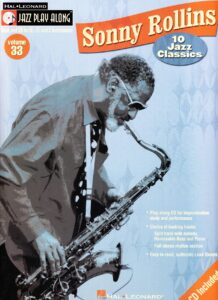
- Sonny Rollins: The tenor saxophone giant made his first British appearance at Scott’s club in 1965, beginning a long association.
- Roland Kirk: The multi-instrumentalist’s legendary 1963 residency was documented on the album “Kirk in Copenhagen” but began at Scott’s.
- Ben Webster: The great tenor saxophonist became something of a resident during his later years in Europe.
- Ella Fitzgerald: Performed at the club in 1974, with Scott joining her on stage.
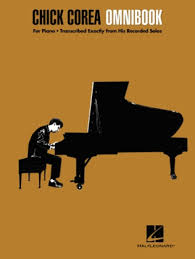
- Chick Corea: Made several appearances during the 1970s as his career was ascending.
Notable Musical Partnerships:
- The Kenny Clarke-Francy Boland Big Band: Scott was a featured soloist with this celebrated European-based big band throughout the 1960s.
- Mike Carr: The organist was a key member of Scott’s house trio in the club’s later years.
- Jimmy Deuchar: The trumpeter was an important collaborator in Scott’s groups during the 1950s.
Influences and Legacy
Influences:
Scott’s primary influences were the architects of bebop, particularly Charlie Parker and Dizzy Gillespie. He also drew inspiration from tenor saxophonists Lester Young, Coleman Hawkins, and later, Sonny Rollins and John Coltrane. His style represented a unique synthesis of American innovations filtered through his distinctly British sensibility.
Legacy:
Ronnie Scott’s most profound legacy is undoubtedly the club that bears his name. By establishing a world-class jazz venue in London, he created:
- A Cultural Bridge: He brought American jazz musicians to British audiences during decades when such exchanges were logistically and financially challenging.
- A Home for British Jazz: The club nurtured generations of British musicians, providing a regular performance space and opportunities to play with visiting legends.
- A Global Destination: Ronnie Scott’s became synonymous with jazz excellence worldwide, attracting audiences from across the globe.
Beyond the club, Scott’s legacy includes:
- Pioneering British Bebop: As one of the first British musicians to master the complex language of bebop, he helped establish modern jazz as a serious art form in Britain.
- Mentorship: He supported countless younger musicians, both through performance opportunities and personal encouragement.
- Cultural Icon Status: His distinctive persona—complete with dry wit and memorable stage announcements (“We have a special treat for you this evening—me”)—made jazz accessible and entertaining beyond hardcore aficionados.
The club continues to operate today as one of the world’s most famous jazz venues, maintaining Scott’s vision while adapting to contemporary musical landscapes. Annual events like the Ronnie Scott’s International Jazz Piano Competition continue to discover and promote new talent.
Personal Legacy:
Scott battled depression throughout his life, a fact little known to most who enjoyed his on-stage humor. His death in 1996 sent shockwaves through the jazz world, with tributes pouring in from musicians across generations and continents. In 2019, a blue plaque was unveiled at his childhood home in East London, formally recognizing his contribution to British cultural life.
Ronnie Scott’s story is ultimately one of passion transcending limitations. Though he never achieved the international fame as a performer that some of his American idols enjoyed, he created something arguably more enduring: an institution that continues to celebrate jazz in all its forms, a temple to improvisation that stands as his ultimate solo—a chorus that never ends, welcoming new voices while echoing with the spirits of all who played there before.
Search your favorite sheet music in the category of Jazz, Blues, Soul, & Gospel.
Ronnie Scott’s Jazz Club: The Sanctum Sanctorum of British Jazz
Genesis: The Birth of an Institution
The story of Ronnie Scott’s Jazz Club begins not as a grand vision, but as a practical solution to a shared frustration. In the late 1950s, Ronnie Scott and his friend, fellow saxophonist and businessman Pete King, were weary of the restrictive and often inhospitable environments for modern jazz in London. Musicians had few places to play after hours, and American jazz giants rarely toured Britain. Their dream was simple yet revolutionary: to create a musicians’ club, run by musicians, where they could play what they wanted, when they wanted, in a respectful setting.
On October 30, 1959, they opened the doors at 39 Gerrard Street in Soho, in the basement of a former Chinese restaurant. The space was narrow, smoky, and could squeeze in about 120 people. The opening night featured a quartet led by pianist Dick Katz with Ronnie Scott himself on saxophone. The initial ethos was as a private members’ club—a clever loophole around strict licensing laws—where musicians could jam until the early hours. The atmosphere was raw, intimate, and electric, capturing the spirit of the New York clubs Scott and King so admired.
The Move to Frith Street: Becoming a Legend
The club’s success quickly outgrew the Gerrard Street premises. In 1965, Scott and King acquired a former warehouse and strip club at 47 Frith Street, just a few hundred yards away. This location would become one of the most famous addresses in global music. The new venue had a proper stage, better acoustics, and a capacity of around 220, though its long, narrow shape and low ceiling preserved an unparalleled sense of intimacy. The move marked the club’s evolution from a musicians’ hangout to a world-class performance venue.
The American Invasion: Bringing the Giants to London
Scott and King’s most audacious and defining achievement was their relentless campaign to book the American jazz legends they idolized. This was an era before large-scale international jazz touring was common, fraught with financial risk and logistical hurdles (musicians’ union restrictions were a particular obstacle).
Their breakthrough came in 1961 with the booking of Zoot Sims, who was already in Europe. Sims’ residency was a triumph, proving that American stars could draw London crowds. Then came the flood:
- 1962: John Coltrane. A monumental booking that cemented the club’s credibility.
- 1964: Roland Kirk’s legendary, mind-bending residency.
- 1965: Sonny Rollins made his UK debut at the club. His powerful, exploratory solos blew the roof off.
- 1968: Wes Montgomery, shortly before his tragic death.
- 1969: Elvin Jones bringing the spirit of Coltrane.
- 1970s: The club hosted everyone from Ella Fitzgerald and Sarah Vaughan to the avant-garde of Sun Ra and the fusion of Chick Corea’s Return to Forever.
Scott and King often operated on a handshake, sometimes losing money on a big act but viewing it as the cost of their artistic mission. These artists didn’t just perform; they often stayed for weeks, playing two sets a night, and would frequently sit in with the house band or each other, creating legendary, unrepeatable moments.
The House Band and the “Upstairs” Vibe
Central to the club’s identity was the Ronnie Scott’s House Band. For decades, Ronnie himself would open each night with his trio or quartet, delivering sets of straight-ahead bebop before introducing the headline act. His laconic, famously dry-witted announcements became a ritual (“Our next guest is a man of few words… mainly because we don’t give him a microphone”). Musicians like Stan Tracey (piano), Phil Seamen (drums), Jeff Clyne (bass), and later, organist Mike Carr, formed the backbone of this band.
Equally important was the “Upstairs” Room at Frith Street. Officially opened in 1978, this smaller, more informal space became the incubator for the next generation. It hosted late-night jam sessions after the main show finished, and later became a booked venue in its own right for emerging UK talent, experimental projects, and more contemporary styles. This two-tier model—legendary masters downstairs, hungry newcomers upstairs—perfectly encapsulated the club’s role in sustaining the entire jazz ecosystem.
Atmosphere and Cultural Aura
Ronnie Scott’s was never just about the music on stage; it was about the total experience.
- The Interior: Red velvet banquettes, dark wood, intimate lighting, and the iconic “RONNIE SCOTT’S” script on the backdrop. It felt like a timeless, subterranean refuge from the outside world.
- The Crowd: A unique mix of jazz purists, celebrities (from Prince Charles to The Beatles), Soho characters, tourists, and music students, all united in focused attention.
- The Staff: Legendary maître d’ Pete (Pete Pelizzari), who ran the door and front of house for over 40 years with a mixture of warmth and intimidating efficiency, became as much a part of the fabric as the musicians.
It was a place of community, where the barriers between artist and audience felt uniquely permeable. You might find yourself sitting next to a saxophone hero at the bar or see a headline act quietly watching the support from the shadows.
Crisis and Continuity: The Legacy Secured
The 1980s brought financial difficulties. Changing musical tastes and rising costs put immense strain on the business. In 1985, facing potential closure, Scott and King made the painful decision to sell the club to theatre impresario Sally Greene. Crucially, the sale agreement stipulated that Ronnie and Pete would continue to run the booking and operations. The club’s soul was preserved.
Tragedy struck in the 1990s with the deaths of both founders: Pete King left the business in 1995, and Ronnie Scott died in December 1996. The jazz world feared the club would lose its way. However, under the stewardship of Sally Greene and later, with music directors like Leo Green (Ronnie’s son) and James Pearson (the current Artistic Director), the club has navigated the 21st century with remarkable success.
Ronnie Scott’s in the 21st Century
Today, Ronnie Scott’s remains a thriving institution by balancing reverence for its history with a forward-looking programming policy.
- Programming: While still hosting jazz legends like Sonny Rollins (in his final UK performances), McCoy Tyner, and Pat Metheny, the club now also features soul icons (Burt Bacharach, Chaka Khan), hip-hop influenced acts, and cutting-edge international artists.
- Broadening the Mission: It hosts educational workshops, the annual Ronnie Scott’s International Jazz Piano Competition, and live radio broadcasts.
- The Physical Space: A sensitive refurbishment in 2006 modernized facilities while meticulously retaining the club’s iconic look and feel. The “Upstairs” room remains a vital space for new talent.
Enduring Legacy
Ronnie Scott’s ultimate achievement is that it normalized excellence. It made world-class jazz a nightly expectation in London. It provided a pedagogical university for generations of British musicians who learned their craft on its stage, either in the house band or by watching the masters from a few feet away.
More than a club, it is a living museum and a laboratory—a place where the history of jazz is palpable in the walls, even as its future is being shaped on stage every night. It stands as Ronnie Scott’s greatest solo: a complex, enduring composition built on a foundation of passion, risk, and an unwavering belief in the power of the music. It is, as many have called it, “the most famous jazz club in the world,” not just for its longevity, but for the profound, intimate communion between artist and audience that has been its heartbeat for over six decades. The red neon sign on Frith Street remains a beacon, signaling that inside, something vital and alive is always happening.