Come join us now, and enjoy playing your beloved music and browse through great scores of every level and styles!
Can’t find the songbook you’re looking for? Please, email us at: sheetmusiclibrarypdf@gmail.com We’d like to help you!
Table of Contents
Happy birthday, Philip Glass, born on this day in 1937
Best Sheet Music download from our Library.
Please, subscribe to our Sheet Music Library.
If you are already a subscriber, please, check our NEW SCORES’ page every month for new sheet music. THANK YOU!
Philip Glass: The Architect of Minimalism
Full Biography
Early Life and Education
Philip Glass was born on January 31, 1937, in Baltimore, Maryland, to Jewish immigrants from Lithuania. His father, Benjamin Charles Glass, owned a record store, exposing young Philip to unsold classical recordings, including those of Beethoven, Schubert, and Shostakovich. Glass began studying violin at age six and flute at eight. By fifteen, he had entered an accelerated program at the University of Chicago, where he studied mathematics and philosophy while simultaneously attending the Juilliard School’s summer program.

After earning his bachelor’s degree at 19, Glass moved to New York to attend Juilliard full-time, studying composition with Vincent Persichetti and William Bergsma. During this period (1958-1962), his works followed traditional neoclassical lines, influenced by Copland and Sessions. After graduation, he received a Fulbright scholarship to study with the legendary pedagogue Nadia Boulanger in Paris from 1964-1966. Boulanger’s rigorous training in counterpoint and harmony would become the bedrock of his technical prowess.

Browse in the Library:
Or browse in the categories menus & download the Library Catalog PDF:
The Paris Epiphany
While in Paris, Glass was hired by filmmaker Conrad Rooks to transcribe Indian music for the film “Chappaqua.” This led him to meet the legendary Indian sitarist Ravi Shankar, whose music revolutionized Glass’s understanding of rhythmic structure. “I had been taught that rhythm was a stripling companion to melody and harmony,” Glass later wrote. “But in Indian music, I discovered a complete universe of rhythmic organization.” This encounter, along with his exposure to the theater of Samuel Beckett (for whom he composed incidental music), fundamentally altered his artistic direction.
Return to New York and Founding of the Ensemble
Returning to New York in 1967, Glass worked as a plumber and taxi driver while developing his new musical language. He formed the Philip Glass Ensemble in 1968—a group of seven musicians playing keyboards and woodwinds, amplified to rock concert volumes. Their early performances in SoHo lofts and art galleries attracted a cross-disciplinary audience of artists, dancers, and filmmakers rather than traditional classical concertgoers.
Breakthrough and Maturity
The monumental “Einstein on the Beach” (1976), created with visionary director Robert Wilson, marked Glass’s breakthrough. This 4.5-hour opera without narrative, starring the violinist as Einstein, revolutionized contemporary opera. Its success at the Metropolitan Opera in 1976 brought international recognition.
The 1980s saw Glass complete his “Portrait Trilogy” of operas: “Satyagraha” (1980, about Gandhi), “Akhnaten” (1984, about the Egyptian pharaoh), and the earlier “Einstein.” These works established him as a major operatic composer. During this period, he also began his prolific film scoring career with “Koyaanisqatsi” (1982), beginning a long collaboration with director Godfrey Reggio.
Later Career and Legacy
From the 1990s onward, Glass’s productivity has been staggering, encompassing symphonies (12 to date), concertos, string quartets, and over twenty operas. He has collaborated with pop stars (David Bowie, Paul Simon), choreographers (Twyla Tharp), and writers (Doris Lessing). Now in his late 80s, Glass remains remarkably active, continuing to compose daily in his New York studio.
Music Style and Composition Characteristics
Minimalism and Beyond
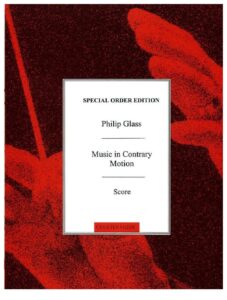
Glass is often labeled a “minimalist,” a term he accepts cautiously. His early works like “Music in Contrary Motion” (1969) and “Music in Twelve Parts” (1971-1974) exemplify the high-minimalist style: repetitive structures, steady pulse, and slowly evolving patterns. However, Glass’s work has consistently evolved beyond strict minimalism into a more expressive, harmonically complex language.

Additive Process and Rhythmic Structures
Glass’s most distinctive technique is the “additive process,” derived from Indian talas. A musical phrase repeats, but with tiny additions or subtractions of notes each cycle. In “Two Pages” (1969), a simple five-note pattern expands note by note over twenty minutes. This creates a sense of organic growth and hypnotic momentum.
Harmony and Tonality Treatment
Glass’s harmonic language is predominantly modal and diatonic, avoiding traditional functional harmony. His early works often orbit around a central tonic, with shifts occurring through “cyclic harmonic progressions”—chord patterns repeating but gradually transforming. By the 1980s, his harmonic palette expanded to include more chromaticism and polytonality. In “Satyagraha,” he uses expansive arpeggios to create luminous, floating harmonies that evoke spiritual transcendence.

Melodic Style
Glass’s melodies are often built from arpeggiated figures or scale fragments. Unlike Romantic melodies with dramatic arches, Glass’s lines are modular and process-driven. In his “Violin Concerto No. 1” (1987), the solo violin weaves intricate patterns that are more meditative than virtuosic in the traditional sense. His vocal writing, particularly in the operas, favors syllabic setting and speech-like rhythms, influenced by his work with Beckett.
Formal Architecture
Glass’s forms are typically through-composed, with seamless transitions between sections. Large-scale structures emerge from the accumulation of small changes. “Music in Twelve Parts” is a four-hour encyclopedia of his techniques, each part exploring different processes. His symphonies, while more traditionally structured, still employ repetitive cells that generate momentum across movements.
Influences
- Indian Classical Music (Ravi Shankar, Alla Rakha): Rhythmic cycles, drone-based harmony, melodic development through variation.
- Nadia Boulanger: Rigorous counterpoint, clarity of voice-leading, deep understanding of Western tradition.
- Samuel Beckett: Economy of means, existential themes, cyclical structures.
- Visual Arts (especially Sol LeWitt, Richard Serra): Conceptual approaches to process, seriality, and systemic thinking.
- Non-Western Musics (African drumming, Balinese gamelan): Polyrhythms, layered textures, ensemble interlock.
- American Experimentalists (John Cage, Morton Feldman): Expansion of musical materials, conceptual framing.
Encounters and Collaborations with Other Artists
Ravi Shankar (1965): The transformational encounter that redirected Glass’s musical path.
Robert Wilson (1975-present): Their collaboration on “Einstein on the Beach” defined postmodern opera. Subsequent collaborations include “the CIVIL warS,” “White Raven,” and “Monsters of Grace.”
Godfrey Reggio (1982-present): The “Qatsi” trilogy (“Koyaanisqatsi,” “Powaqqatsi,” “Naqoyqatsi”) and other films created a new paradigm for film music.
Doris Lessing (1997): Adaptation of her novels into the opera “The Making of the Representative for Planet 8.”
Twyla Tharp (multiple collaborations): Choreography to Glass’s music, including “In the Upper Room” (1986).
David Bowie & Brian Eno (1990s): Reciprocal influence; Glass composed symphonies based on Bowie/Eno’s “Low” and “Heroes” albums.
Leonard Cohen (posthumous): Glass’s “Book of Longing” (2007) sets Cohen’s poetry and drawings.
Woody Allen (2012): Controversial collaboration on “To Rome With Love” after Allen had criticized minimalism.
Legacy
Glass, along with Steve Reich, Terry Riley, and La Monte Young, fundamentally reshaped late-20th-century music. His legacy includes:
- Democratization of New Music: By presenting in galleries and alternative spaces, he reached audiences beyond traditional classical circles.
- Cross-Disciplinary Model: His work with Wilson established a new paradigm for music-theater collaboration.
- Film Scoring Innovation: His integration of minimalism into film changed how movies use music.
- Pedagogical Influence: His techniques are now standard study for composition students worldwide.
- Mainstreaming Minimalism: Through popular film scores and collaborations, he brought minimalist aesthetics to mass audiences.
Major Works (Selected List)
Operas
- “Einstein on the Beach” (1976)
- “Satyagraha” (1980)
- “Akhnaten” (1984)
- “The Voyage” (1992)
- “White Raven” (1998)
- “Galileo Galilei” (2002)
- “Appomattox” (2007)
- “The Perfect American” (2013)
- “The Trial” (2014, based on Kafka)
Symphonies
- No. 1 “Low” (1992, based on Bowie)
- No. 2 (1994)
- No. 3 (1995)
- No. 4 “Heroes” (1996, based on Bowie)
- No. 5 “Choral” (1999)
- No. 6 “Plutonian Ode” (2002)
- No. 7 “Toltec” (2005)
- No. 8 (2005)
- No. 9 (2010)
- No. 10 (2010)
- No. 11 (2017)
- No. 12 (2019)
Concertos
- Violin Concerto No. 1 (1987)
- Cello Concerto No. 1 (2001)
- Piano Concerto No. 2 “After Lewis and Clark” (2004)
- Double Concerto for Violin and Cello (2010)
Chamber Music
- String Quartets Nos. 1-8 (1966-2018)
- “Music in Twelve Parts” (1971-1974)
- “Glassworks” (1982)
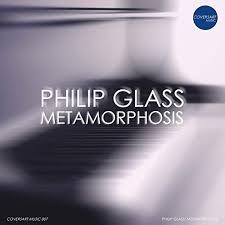
- “Metamorphosis” (1988, for piano)
Film Scores
- “Koyaanisqatsi” (1982)
- “Mishima” (1985)
- “The Thin Blue Line” (1988)
- “The Hours” (2002)
- “Notes on a Scandal” (2006)
- “Watchmen” (2009)
- “Fantastic Four” (2015, uncredited contributions)
Filmography (as composer)
- Koyaanisqatsi (1982)
- Mishima: A Life in Four Chapters (1985)
- The Thin Blue Line (1988)
- Candyman (1992)
- The Fog of War (2003)
- The Hours (2002)
- Notes on a Scandal (2006)
- Roving Mars (2006)
- Watchmen (2009)
- Visitors (2013)
- Fantastic Four (2015)
- Jane (2017)
- At Eternity’s Gate (2018)
Discography (Selected Essential Recordings)
- Einstein on the Beach (1979, Tomato Records) – The definitive recording of the opera.
- Glassworks (1982, CBS) – His most accessible introduction, featuring “Opening.”
- Koyaanisqatsi (1983, Antilles) – Landmark film score.
- Solo Piano (1989, CBS) – Includes “Metamorphosis” and “Mad Rush.”
- Low Symphony (1993, Point Music) – Symphony No. 1, based on Bowie.
- Heroes Symphony (1997, Point Music) – Symphony No. 4.
- The Hours (2002, Nonesuch) – Academy Award-nominated score.
- Symphony No. 9 (2012, Orange Mountain Music) – Powerful late work.
- Philip Glass: Complete String Quartets (2018, Orange Mountain Music) – Performed by the JACK Quartet.
Most Known Compositions and Recordings
“Koyaanisqatsi” (1982)
The hypnotic opening chorus with its descending bass line has become iconic. The film’s fusion of time-lapse photography with Glass’s pulsating score created a new genre of documentary.
“Metamorphosis I-V” (1988)
Originally for piano, these contemplative pieces are among his most performed. Their simple, repeating arpeggios have been used in films, television, and countless memorial services.
“Mad Rush” (1979)
A solo piano work that encapsulates Glass’s meditative side, with its alternating sections of turbulent passagework and calm resolution.
“Opening” from Glassworks (1982)
Perhaps his most recognizable piece—a gentle, cycling pattern for piano that exemplifies his early style.
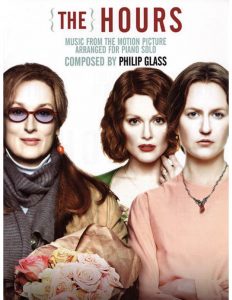
“The Hours” film score (2002)
His Academy Award-nominated score interweaves piano patterns with string textures to evoke Virginia Woolf’s interior world.
“Violin Concerto No. 1” (1987)
A gateway work that blends minimalist processes with traditional concerto drama.
“Pruit Igoe” from Koyaanisqatsi (1982)
Dark, descending chords that have been sampled extensively in electronic music.
Covers in Modern Music
Glass’s influence extends across genres:
Electronic/Ambient:
- Aphex Twin’s early works show clear Glass influence.
- The Orb sampled “Pruit Igoe” in “Little Fluffy Clouds.”
- Brian Eno’s ambient music shares Glass’s concern with process and stasis.
Rock/Pop:
- David Bowie incorporated minimalist elements in his Berlin trilogy.
- Radiohead’s “Kid A” (2000) reflects Glass’s harmonic language.
- Nine Inch Nails’ Trent Reznor has cited Glass as an influence.
Hip-Hop:
- Kanye West sampled Glass’s “Pruit Igoe” in “Selah” (2019).
- MF DOOM used Glass samples in his productions.
Classical Crossover:
- Violinist Lindsey Stirling has adapted Glass’s music.
- The “Reich/Glass Remixed” album (1999) featured electronic producers reworking their compositions.
His Music in Films (beyond his own scores)
Glass’s existing compositions have been extensively licensed:
- “Metamorphosis” in The Truman Show (1998)
- “Prophecies” from Koyaanisqatsi in Watchmen (2009)
- “Pruit Igoe” in G-Force (2009) and The Simpsons
- “Truman Sleeps” (from The Truman Show) in various contexts
- “Opening” from Glassworks in numerous documentaries and advertisements
Famous Performers of His Music
Dedicated Ensembles:
- The Philip Glass Ensemble (founded 1968)
- Kronos Quartet (premiered his String Quartet No. 5)
- JACK Quartet (champions of his later quartets)
- Bang on a Can All-Stars
Soloists:
- Pianists: Michael Riesman (longtime collaborator), Vikingur Ólafsson, Simone Dinnerstein
- Violinists: Gidon Kremer, Robert McDuffie
- Cellists: Wendy Sutter, Matt Haimovitz
- Sopranos: Lauren Flanigan, Lisa Bielawa
Conductors:
- Dennis Russell Davies (championed his symphonies)
- Marin Alsop
- Michael Reisman
Last Works and Current Activities (2010s-present)
Even in his ninth decade, Glass maintains a formidable output:
Recent Major Works:
- Symphony No. 12 (2019): Based on David Bowie’s final album “Blackstar.”
- King Lear (2019): Incidental music for Sam Gold’s Broadway production.
- Circus Days and Nights (2021): A multimedia opera about circus life.
- Symphony No. 13 (2023): Premiered by the Milwaukee Symphony.
Current Projects:
Glass continues to compose daily, often working on multiple commissions simultaneously. Recent years have seen a resurgence of chamber works, including several new string quartets. He remains actively involved with the Philip Glass Ensemble, though he has reduced his touring schedule.
Style Evolution:
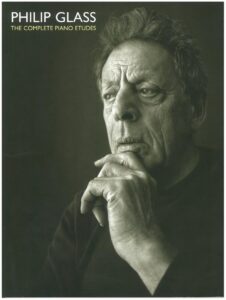
His recent music shows greater economy and introspection. Works like his Piano Etudes (1994-2012) display a distilled language, while later symphonies integrate more dissonance and complex textures. The influence of his early minimalism remains, but subsumed into a more personal, expressive voice.
Critical Assessment and Controversies
Glass has faced criticism from both traditionalists (who dismiss minimalism as simplistic) and avant-gardists (who accuse him of selling out through film work and accessible harmonies). His prolific output has led some to question quality control. Yet his supporters argue that his cross-genre reach represents a healthy democratization of new music.
The 2015 documentary Glass: A Portrait of Philip in Twelve Parts revealed a complex figure: spiritually inclined (practicing Tibetan Buddhism), politically engaged, and remarkably disciplined in his daily routines.
Philip Glass stands as one of the most significant composers of the past century. By synthesizing Western classical training with non-Western rhythms and processes, he created a distinctive musical language that has permeated global culture. From the avant-garde lofts of 1970s New York to Hollywood films and Broadway stages, Glass has demonstrated that repetitive structures can yield profound emotional and spiritual resonance.
His true achievement may be in collapsing boundaries—between high and low art, between Eastern and Western traditions, between process and expression. As he once remarked: “I don’t think about style. I think about what the piece needs.” This pragmatic, piece-centered approach has produced a body of work unparalleled in its breadth and influence, making January 31st not just a birthday, but a landmark in musical history.
Search your favorite sheet music in the Sheet Music Catalog
Philip Glass – Music from The Hours | complete
Philip Glass – Music from The Hours | Live & Complete | Arranged for piano solo by Michael Riesman and Nico Muhly.
0:00 The Poet Acts 3:39 Morning Passages 8:32 Something She Has to Do 11:00 I’m Going to Make a Cake 14:08 An Unwelcome Friend 17:51 Dead Things 22:23 Why Does Someone Have to Die? 25:58 Tearing Herself Away 30:13 Escape! 33:05 Choosing Life 36:05 The Hours
Philip Glass – Metamorphosis | complete
“Metamorphosis One” – 00:00 “Metamorphosis Two” – 06:54 “Metamorphosis Three” – 13:59 “Metamorphosis Four” – 19:09 “Metamorphosis Five” – 26:29
Browse in the Library:
Or browse in the categories menus & download the Library Catalog PDF: