
Come join us now, and enjoy playing your beloved music and browse through great scores of every level and styles!
Can’t find the songbook you’re looking for? Please, email us at: sheetmusiclibrarypdf@gmail.com We’d like to help you!
Table of Contents
Who is Sonny Rollins? (born 1930)
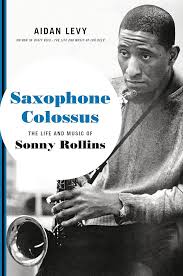
Best Sheet Music download from our Library.
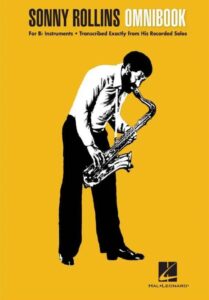
Please, subscribe to our Sheet Music Library.
If you are already a subscriber, please, check our NEW SCORES’ page every month for new sheet music. THANK YOU!
Sonny Rollins: The Colossus of the Improvised Saga
In the pantheon of jazz giants, few figures embody the relentless pursuit of creative perfection, the sheer physical force of sound, and the philosophical depth of improvisation as profoundly as Theodore Walter “Sonny” Rollins. With a career spanning over seven decades, Rollins is not merely a saxophonist; he is an institution, a force of nature who reshaped the vocabulary of the tenor saxophone and whose very name is synonymous with the heroic, narrative arc of a jazz solo.
To explore Rollins is to explore the evolution of modern jazz itself—from bebop through hard bop, the avant-garde, and beyond—all filtered through the mind of a man forever in search of the next thematic idea.
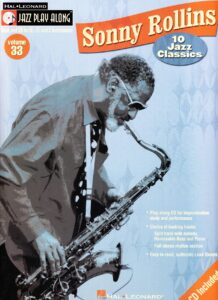
Browse in the Library:
Or browse in the categories menus & download the Library Catalog PDF:
Biography: The Odyssey of a Sound-Seeker
Sonny Rollins was born on September 7, 1930, in New York City, the epicenter of jazz innovation. Raised in Harlem’s Sugar Hill district, he was surrounded by musical greats; his neighbor was the legendary pianist Thelonious Monk. He began on piano, switched to alto saxophone, and finally found his voice on the tenor at age 16, inspired by the commanding presence of Coleman Hawkins and the smooth fluency of Lester Young.
His professional ascent was meteoric. By the late 1940s, he was recording with bebop architect Bud Powell (“Bouncing with Bud,” 1949) and the iconic vocalist Babs Gonzales. The 1950s established him as a leading composer and improviser. He was a pivotal member of the Miles Davis Quintet (1951), contributing classics like “Oleo” and “Airegin,” and a key collaborator in the groundbreaking Clifford Brown-Max Roach Quintet (1955-56), a period of blazing creativity cut short by tragedy.
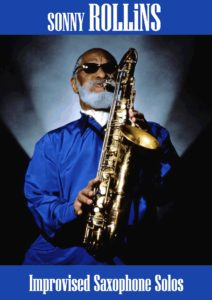
However, Rollins’s biography is punctuated by enigmatic, self-imposed sabbaticals, periods of intense woodshedding that have become the stuff of legend. The most famous of these occurred in 1959, at the height of his fame following the album Way Out West. Feeling the need to deepen his craft away from the commercial pressures of the jazz life, he famously practiced on the Williamsburg Bridge in New York, often for 15-16 hours a day. This retreat birthed one of his masterworks, The Bridge (1962), upon his return.
A second major hiatus came in the late 1960s, a period of spiritual and philosophical exploration that took him to India and Japan. He studied yoga, meditation, and Eastern philosophies, seeking a deeper connection between his music and his life’s purpose. He returned in 1972, his sound even more colossal and his artistic restlessness undimmed.
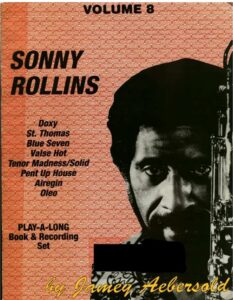
Throughout the 70s, 80s, and beyond, Rollins remained a titanic live performer, though his studio output became more sporadic. He became a revered elder statesman, receiving a Grammy Lifetime Achievement Award (2004) and the National Medal of Arts (2010). He officially retired from performing in 2012 due to respiratory issues, but his presence as the “Saxophone Colossus”—the title of his definitive 1956 album—remains undimmed.
Music Style and Improvisational Architecture
Sonny Rollins’s style is a monumental fusion of power, wit, logic, and surprise. It is built upon several foundational pillars:
- The Sound: It is, first and foremost, one of the most recognizable sounds in jazz—huge, brawny, and dry-toned, with a vocalized, sometimes gruff edge. He employs a wide vibrato that can convey anything from joyous exuberance to dark foreboding. He commands the horn with the authority of a orator, filling every space with his robust sound.
- Thematic Improvisation (Motivic Development): This is Rollins’s supreme contribution to improvisation. Unlike soloists who run changes with pre-formed licks, Rollins builds his solos like a composer constructing a narrative. He takes a small, often simple melodic motif from the tune’s theme—a rhythmic cell, an interval—and subjects it to a process of relentless variation. He inverts it, elongates it, fragments it, reharmonizes it, and plays it against shifting rhythmic backdrops. A Rollins solo is a journey where every idea logically sprouts from the previous one. This can be heard magnificently on “Blue 7” from Saxophone Colossus, a solo often analyzed by musicologists for its brilliant thematic unity.
- Rhythmic Mastery and Polytonality: Rollins has an unparalleled, almost devilish rhythmic conception. He employs startling pauses, unexpected accents, and a fluid, dancing sense of time that can make the beat seem to stretch and contract. He is a master of polytonality—implying one key over a chord from another—creating thrilling dissonances that he then resolves with logical force. His use of calypso rhythms, a nod to his Caribbean heritage (his mother was from the U.S. Virgin Islands), infuses tunes like “St. Thomas” with an irresistible, loping groove.
- Quotation and Humor: Rollins’s solos are often laced with sly, sometimes absurd musical quotations. A snippet of “Home on the Range,” “Pop Goes the Weasel,” or a Broadway show tune might surface mid-solo, deployed as a witty commentary or a deliberate non-sequitur, showcasing his encyclopedic musical memory and playful intellect.
Chord Progressions and Harmonic Approach
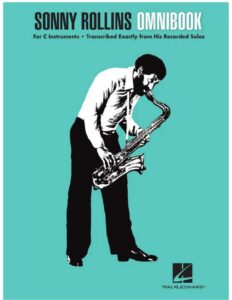
While deeply rooted in the standard harmonic language of bebop and the American Songbook, Rollins’s approach is marked by a combination of tradition and daring simplification.
- Bebop Foundation: His early work is firmly within complex chord progressions. His own compositions like “Oleo” (based on “I Got Rhythm” changes) and “Airegin” (Nigeria spelled backwards) are harmonic playgrounds for advanced improvisation.
- Modal and Pedal Point Exploration: Even before Miles Davis’s Kind of Blue, Rollins was exploring static harmonies and modal vamps. “Blue 7” is essentially a 12-bar blues built on a walking bassline with minimal harmonic movement, allowing maximum freedom for melodic development. On The Bridge, tunes like “John S.” use simple, repeating chord cycles that focus energy on rhythmic and motivic interplay.
- Harmonic Superimposition: His later work, particularly with pianoless trios (sax, bass, drums), demonstrates a move towards harmonic abstraction. Without a chordal instrument, Rollins became the entire orchestra, implying harmonies through his line alone. He would often play “over” the changes, superimposing new chord structures or ignoring them entirely to follow his melodic inspiration, forcing the bassist into a deeply interactive, conversational role.
Cooperation with Other Artists
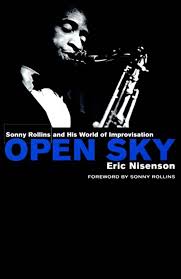
Rollins’s career is a web of collaborations with the very greatest in jazz:
- Miles Davis: Their partnership was brief but fertile, yielding classics like Dig and Miles Davis with Sonny Rollins.
- Clifford Brown & Max Roach: This quintet represented hard bop perfection. Rollins’s blazing, intricate lines meshed flawlessly with Brown’s trumpet brilliance and Roach’s dynamic drumming (Clifford Brown and Max Roach at Basin Street).
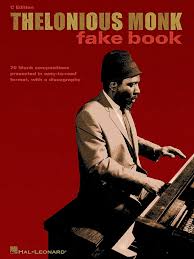
- Thelonious Monk: A lifelong friend and kindred musical spirit. Their collaborations (Thelonious Monk and Sonny Rollins, Brilliant Corners) are masterclasses in angular melody and rhythmic surprise. Monk’s unconventional compositions pushed Rollins into brilliant, unorthodox spaces.
- Modern Jazz Quartet & Others: He recorded with MJQ, played with Charlie Parker, and led sessions with generational talents like trombonist J.J. Johnson, pianists Tommy Flanagan and Herbie Hancock, and drummers Elvin Jones and Jack DeJohnette.
Influences and Legacy
Influences: His primary forebears were Coleman Hawkins (for his harmonic sophistication and robust sound) and Lester Young (for his rhythmic flow and lyricism). Charlie Parker’s bebop language was assimilated and then transcended. He also drew from non-jazz sources: calypso, pop tunes, and later, the sounds and philosophies of the East.
Legacy: Sonny Rollins’s legacy is immense and multifaceted. He redefined the possibilities of the tenor saxophone as a narrative instrument. He demonstrated that an improvised solo could have the structural integrity of a written composition. His “thematic improv” methodology directly influenced generations of musicians, from Joe Henderson and Wayne Shorter to Branford Marsalis and Joshua Redman. He stands as the ultimate example of the jazz musician as a perpetual student, whose commitment to growth and authenticity is as important as his recorded output.
Major Works and Most Known Compositions
- Albums: Saxophone Colossus (1956), Way Out West (1957), The Bridge (1962), Our Man in Jazz (1962), The Standard Sonny Rollins (1965), Silver City (1972), The Way I Feel (1976).
- Compositions: “Oleo,” “Airegin,” “Doxy,” “St. Thomas,” “Blue 7,” “The Bridge,” “Alfie’s Theme,” “Global Warming.”
Filmography
While not a film star, Rollins’s iconic sound has graced several soundtracks. His most famous contribution is the hypnotic, blues-drenched score for the 1966 film Alfie, which earned him a Grammy nomination. He also appeared in the documentary Saxophone Colossus (1986) and contributed to the soundtrack of The Exorcist (his uncredited solo on “Night of the Silent Scream”).
Discography (Selected)
- Sonny Rollins with the Modern Jazz Quartet (1953)
- Worktime (1955)
- Tenor Madness (1956) – featuring the legendary title track duel with John Coltrane.
- Saxophone Colossus (1956)
- Way Out West (1957)
- The Sound of Sonny (1957)
- Newk’s Time (1957)
- Freedom Suite (1958)
- The Bridge (1962)
- Our Man in Jazz (1962)
- Sonny Meets Hawk! (1963) – with Coleman Hawkins.
- The Standard Sonny Rollins (1965)
- Next Album (1972)
- Horn Culture (1973)
- The Way I Feel (1976)
- G-Man (1986)
A Colossus of Spirit
Sonny Rollins’s story is not just one of musical notes and recordings; it is a testament to the power of self-critique and renewal. In an art form often associated with spontaneity and instinct, Rollins brought a towering intellect and a monastic discipline. He chased the ideal of the perfect solo—a continuous, logical, and inspired melodic story—knowing it was ultimately unattainable, yet finding glory in the pursuit. The bridge he built was not just between Manhattan and Brooklyn, but between the foundational language of jazz and its limitless future possibilities, between technical mastery and raw expressive power. The sound of his tenor saxophone remains one of the most authoritative, joyful, and searching voices in the history of American music, a sound that truly is, and will forever be, colossal.