
| Community Musicians, building a worldwide Community Music. | |
| All the music you want to play on one site. Sharing the world’s best Contemporary, jazz, Popular, film, and classical Sheet Music | |
| Scores for all instruments: >15,000 (active and growing), over 231,000 pages All genres, styles, instruments, and Categories: Jazz & Blues, Rock & Pop, classical & contemporary, film & musicals’ scores; books & biographies; methods, études, and exercises; play along background tracks (MP3), audios & PDFs for Jazz & Rock Access and benefits: Subscription fee: $15.99 one-time payment, valid for lifetime How to join the Sheet Music Library 🔍 Search in the Library Catalog — FAQs — Join us |
Table of Contents
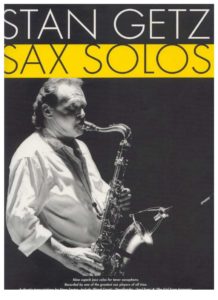
Best Sheet Music download from our Library.

Please, subscribe to our Sheet Music Library.
If you are already a subscriber, please, check our NEW SCORES’ page every month for new sheet music. THANK YOU!
Happy heavenly birthday, Stan Getz, born on this day in 1924.
Stan Getz: The Sound of Tenderness
Born on February 2, 1927, in Philadelphia, Pennsylvania, Stanley Gayetski—who would become known to the world as Stan Getz—emerged as one of the most singular and beloved voices in jazz history. While his contemporaries chased harmonic complexity and breakneck speed, Getz pursued something more elusive and profound: a tone. It was a sound of gossamer beauty, lyrical warmth, and breathy intimacy that earned him the enduring sobriquet, “The Sound.” More than just a masterful saxophonist, Getz was a storyteller whose instrument sang with a poignant, vocal quality that transcended genre and generation, making him a pivotal figure in the rise of Cool Jazz and a global superstar through Bossa Nova.

Browse in the Library:
Or browse in the categories menus & download the Library Catalog PDF:
Full Biography: The Troubled Poet
Getz’s childhood was marked by a restless intellect and an early, all-consuming passion for music. His family’s move to the Bronx, New York, placed him in a fertile musical environment. A natural, he picked up the bass, then the bassoon, before finding his true voice on the tenor saxophone at age 13. He practiced obsessively, reportedly up to eight hours a day, honing the foundation of his legendary sound.
His professional career began astonishingly early. At 16, he dropped out of school and, lying about his age, joined the band of Jack Teagarden in 1943. This was followed by formative stints with the big bands of Stan Kenton, Jimmy Dorsey, and, most crucially, Woody Herman. It was with Herman’s “Second Herd” (1947-1949) that Getz first achieved fame as one of the “Four Brothers” saxophone section—alongside Zoot Sims, Serge Chaloff, and Herbie Steward—whose light, airy, Lester Young-inspired sound defined a new chapter in ensemble writing. Getz’s solo on the 1948 recording of “Early Autumn” was a watershed moment, a ballad performance of such aching beauty it catapulted him to stardom at just 21.
The 1950s established Getz as a leading voice of the Cool Jazz movement. Leading his own groups on the West Coast, he recorded a series of classic albums (Stan Getz Plays, The Steamer, Stan Getz and the Cool Sounds) that showcased his sublime balladry and effortless swing. However, this decade was also marred by a deepening struggle with heroin addiction, which led to erratic behavior, arrests, and a desperate, failed attempt to rob a pharmacy in 1954.
Seeking a fresh start, Getz moved to Europe in 1958, living primarily in Copenhagen. This period was one of personal stabilization and artistic refinement. He recorded extensively with local and expatriate musicians, deepening his interpretive skills on the American Songbook. His return to the United States in 1961 coincided with the dawn of the Bossa Nova craze. Collaborating with guitarist Charlie Byrd, he recorded Jazz Samba (1962), which became a cultural phenomenon. The single “Desafinado” was a Top 20 pop hit, and the album won a Grammy. This set the stage for his monumental collaboration with Brazilian masters João Gilberto and Antônio Carlos Jobim, Getz/Gilberto (1963). Featuring the haunting, iconic vocals of Astrud Gilberto on “The Girl from Ipanema,” the album was a global sensation, winning Album of the Year at the Grammys and making Bossa Nova a permanent part of the global musical lexicon.

The remainder of the 1960s and 1970s saw Getz navigating the shifting jazz landscape. He explored the fringes of modal and free jazz with albums like Sweet Rain (1967) with Chick Corea and Captain Marvel (1972) with Corea and Stanley Clarke, proving his adaptability. However, he always returned to the lyrical, song-focused approach that defined him. The 1980s were a renaissance period. He formed a celebrated quartet with pianist Kenny Barron, a partnership that yielded some of the most refined, emotionally deep playing of his career, as heard on albums like Anniversary and Serenity. Getz continued to perform at the peak of his powers until shortly before his death from liver cancer on June 6, 1991.
Musical Style and Harmonic Approach: The Lyrical Engine
Stan Getz’s style is the ultimate expression of melodic lyricism in jazz. While he possessed formidable technique, he subordinated it to the service of song and emotion. His sound was his signature: a breathy, vibratoless (or with a very fast, subtle flutter), centered tone that seemed to float, weightless and pure, above the rhythm section. It was a sound of extraordinary vocal immediacy, often described as “yearning” or “tender.”
His harmonic approach was sophisticated but never ostentatious. Rooted in the language of Lester Young—his primary idol—Getz favored long, flowing, linear phrases that connected chord changes with a graceful, logical inevitability. Unlike bebop pioneers who emphasized angularity and surprise, Getz’s lines were smooth, consonant, and sung. He was a master of paraphrase improvisation, weaving new melodies that stayed intimately connected to the original tune’s essence.
His time feel was uniquely buoyant. He had a way of playing just behind the beat, creating a sensation of relaxed propulsion, a gentle lilt that was perfect for ballads and Bossa Nova. In his later years, his harmonic palette expanded to incorporate the quartal harmonies and modal freedoms of post-bop, but he always filtered them through his innate melodicism. He didn’t play “outside”; he played through, finding poignant, singable lines within even the most modern structures.
The Best Songs and Compositions
While Getz was not a prolific composer, he was arguably the greatest interpreter of melodies in jazz saxophone history. His repertoire highlights include:
- “The Girl from Ipanema” (Jobim): The recording that defined an era. Getz’s cool, breezy saxophone chorus is the perfect counterpoint to Astrud Gilberto’s naive vocal, a moment of pure, sun-drenched magic.
- “Desafinado” (Jobim): The track that launched the craze. Getz’s solo is a masterclass in relaxed phrasing and melodic invention over a syncopated Brazilian groove.
- “Early Autumn” (Burns/Mercer): His star-making turn with Woody Herman. A ballad solo of such mature, wistful beauty it remains a benchmark for jazz balladry.
- “Stan’s Blues” (aka “Blues for Mary Jane”): A Getz original and a concert staple, showcasing his ability to swing with unerring, relaxed grace on a simple blues form.
- “Here’s That Rainy Day” (Van Heusen/Burke): Perhaps the quintessential Getz ballad. His 1961 recording on Dynasty is a profound exploration of melancholic beauty, every note placed with heartbreaking care.
- “I Remember Clifford” (Golson): His tribute to Clifford Brown is a monument of elegiac emotion, the purity of his tone perfectly suited to Golson’s timeless melody.
- “Windows” (Chick Corea): From Sweet Rain, this performance shows Getz adapting seamlessly to Corea’s modern, modal composition, finding a soaring, lyrical narrative within its expansive structure.
- “Blood Count” (Strayhorn): Recorded near the end of his life with Kenny Barron, his reading of Billy Strayhorn’s final, pain-wracked composition is devastatingly raw and honest, a testament to Getz’s deep emotional capacity.
Filmography and Media Appearances
Getz’s elegant sound and persona made him a natural for film.
- The Benny Goodman Story (1956): He provided the saxophone soundtrack for actor Steve Allen, portraying Goodman.
- The Hanged Man (1964): He made a brief acting appearance and contributed to the soundtrack.
- Mickey One (1965): Contributed to the avant-garde-tinged score.
- Numerous television appearances on shows like The Tonight Show, The Steve Allen Show, and in various documentary features, including Jazz on a Summer’s Day (1960), performing “April in Paris” with the Gerry Mulligan Quartet.
Cooperations: The Catalytic Partner
Getz’s sound was a constant, but he thrived on the inspiration of brilliant collaborators:
- The Brazilian Masters: The partnership with Antônio Carlos Jobim, João Gilberto, and Astrud Gilberto was transformative for all parties, creating a timeless, cross-cultural dialogue.
- The Pianists: He had extraordinary musical relationships with a who’s-who of piano greats: Al Haig, Horace Silver, Oscar Peterson, Lou Levy, Chick Corea, Joanne Brackeen, and, most profoundly, Kenny Barron. Each challenged and complemented him in different ways.
- The Cool School: His early work with Woody Herman’s “Four Brothers” band and collaborations with Gerry Mulligan and Chester Baker placed him squarely at the heart of the cool aesthetic.
- The Modernists: His willingness to work with younger innovators like Chick Corea, Gary Burton (Crystal Silence sessions), and Stanley Clarke in the 1970s kept his music vital and contemporary.
Influences and Legacy
Influences: The primary and overwhelming influence was Lester Young, from whom Getz derived his basic sound concept, relaxed phrasing, and melodic priority. He also absorbed elements from the smooth, legato style of Johnny Hodges (on alto) and the swing-era fluency of Benny Carter.
Legacy: Stan Getz’s legacy is monumental and multifaceted:
- “The Sound”: He established an enduring standard of tonal beauty on the tenor saxophone. His sound is instantly recognizable and has been a north star for generations of players seeking lyricism and expression over pyrotechnics. Saxophonists from Michael Brecker to Branford Marsalis have cited his profound influence.
- Bossa Nova Ambassador: He was the essential catalyst in introducing Brazilian Bossa Nova to a massive global audience. Getz/Gilberto remains one of the best-selling and most beloved jazz albums of all time, a permanent fixture in popular culture.
- The Lyrical Imperative: In an era of increasing complexity, Getz championed melody, song, and emotional directness. He proved that deep feeling and sophisticated improvisation were not just compatible, but inseparable.
- Longevity and Evolution: His career successfully bridged the Swing, Cool, Bossa Nova, and Post-Bop eras. Unlike some of his peers, he never became a relic; he evolved while remaining unmistakably himself.
- The Poet of Melancholy: Getz channeled the tumult of his personal life—his addictions, his famous temper, his search for peace—into his music, particularly his ballad playing. He communicated a profound, vulnerable humanity that listeners felt directly. He wasn’t just playing notes; he was conveying an emotional state.
Stan Getz was more than a jazz saxophonist; he was one of the great melodic voices of the 20th century. His sound—that sigh, that whisper, that gentle cry—speaks to something universal and timeless. He showed that in the right hands, a saxophone could possess the intimate eloquence of the human voice, telling stories of longing, joy, and exquisite sadness. From the smoky clubs of 52nd Street to the sunlit beaches of Ipanema, Stan Getz left behind a trail of unforgettable beauty, ensuring that “The Sound” would resonate forever.
Search your favorite sheet music in the category of Jazz, Blues, Soul, & Gospel.
Search your favorite sheet music in the Sheet Music Catalog
Stan Getz – Stan Getz At Large ( Full Album )
Stan Getz – Stan Getz At Large ( Full Album )
Tenor Saxophone – Stan Getz…. Bass – Dan Jordan…. Drums – William Schiøppfe…. Piano – Jan Johansson….
0:00:00 [01] Night And Day 0:10:32 [02] Pammie’s Tune 0:17:42 [03] Amour 0:23:32 [04] I Like to Recognize the Tune 0:30:14 [05] When the Sun Comes Out 0:36:04 [06] Just a Child 0:40:03 [07] Folks Who Live on the Hill 0:44:23 [08] Café Montmartre Blues 0:52:28 [09] He Was Too Good for Me 0:57:02 [10] Younger Than Springtime 1:02:12 [11] Goodbye 1:05:55 [12] Land’s End 1:13:00 [13] In Your Own Sweet Way 1:19:05 [14] In the Night
Recorded – Copenhagen, January 14th and 15th, 1960.
Listen to Stan Getz music on Spotify