
Come join us now, and enjoy playing your beloved music and browse through great scores of every level and styles!
Can’t find the songbook you’re looking for? Please, email us at: sheetmusiclibrarypdf@gmail.com We’d like to help you!
Table of Contents
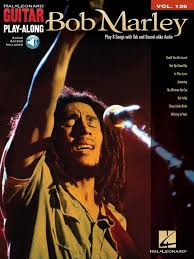
Best Sheet Music download from our Library.
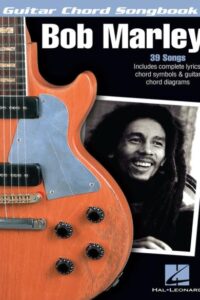
Please, subscribe to our Sheet Music Library.
If you are already a subscriber, please, check our NEW SCORES’ page every month for new sheet music. THANK YOU!
Happy heavenly birthday, Bob Marley, born on this day in 1945.
The Lion of Judah: The Enduring Legacy of Robert Nesta Marley
Born on February 6, 1945, in the rural parish of St. Ann, Jamaica, Robert Nesta Marley emerged from humble beginnings to become a global icon, a prophet of social justice, and the single most recognizable figure in popular music from the developing world. His life and work transcended the boundaries of music, morphing into a powerful cultural, spiritual, and political force. To write about Bob Marley is to trace the journey of reggae itself, from the gritty streets of Kingston to the world stage, and to explore a legacy that continues to resonate with profound intensity nearly half a century after his untimely death.
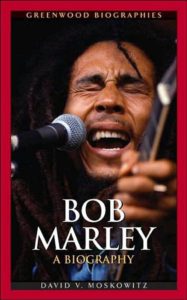
Full Biography: From Nine Mile to Global Prophet
Early Life (1945-1962): Marley was born to Cedella Booker, a Black Jamaican teenager, and Captain Norval Sinclair Marley, a much older white Jamaican of English descent. This mixed-race heritage, in a colony steeped in the legacy of slavery, profoundly shaped his identity and worldview, leaving him feeling like an outsider in both Black and white communities—a theme he would later explore in songs like “Corner Stone.” After his father’s death, he and his mother moved to the government-yard tenements of Trench Town, Kingston’s infamous slum. This crucible of poverty, creativity, and resilience became the foundational landscape of his music. It was in Trench Town that he met Neville “Bunny” Livingston (later Bunny Wailer) and Peter Tosh, studied the emerging sounds of ska and rocksteady under vocal coach Joe Higgs, and solidified his ambition to make music his escape route.
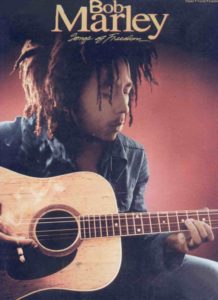
Browse in the Library:
Or browse in the categories menus & download the Library Catalog PDF:
The Wailers Era (1962-1974): In 1963, Marley, Livingston, and Tosh formed “The Wailing Wailers,” scoring an early local hit with “Simmer Down.” The 1960s were a period of apprenticeship and struggle, recording for seminal producers like Coxsone Dodd at Studio One and Lee “Scratch” Perry at his Black Ark studio. It was with Perry that The Wailers honed the deep, hypnotic “riddims” that would define roots reggae, creating classics like “Small Axe” and “Duppy Conqueror.” Their big break came in 1972 when they signed with Island Records, founded by Chris Blackwell, who astutely marketed them as a “rock band” that happened to play reggae. The albums Catch a Fire (1973) and Burnin’ (1973) introduced The Wailers to an international rock audience. Burnin’ included incendiary anthems like “Get Up, Stand Up” and “I Shot the Sheriff” (later a massive hit for Eric Clapton), signaling Marley’s unapologetic embrace of social and political themes.
International Stardom and Political Crucible (1975-1980): By 1974, Bunny Wailer and Peter Tosh had left for solo careers, and the group was re-branded “Bob Marley & The Wailers,” with the legendary I-Threes (Rita Marley, Marcia Griffiths, Judy Mowatt) on backing vocals. This period marked his artistic zenith. The masterpiece Natty Dread (1974) announced a fully formed visionary, with songs like “No Woman, No Cry” offering tender solace and “Rebel Music (3 O’Clock Roadblock)” capturing the paranoia of life in Kingston.
Marley’s commitment to Rastafari—a spiritual and political movement centering the divinity of Haile Selassie I and the repatriation to Africa—became the core of his message. This spirituality was inextricably linked to political empowerment, making him a destabilizing figure in Jamaica’s volatile pre-election climate. On December 3, 1976, gunmen stormed his Hope Road house, shooting Marley, his wife Rita, and manager Don Taylor. He performed at the Smile Jamaica concert two days later, showing defiance but soon went into self-imposed exile in England.
This exile produced the album Exodus (1977), named by Time magazine as the “Album of the Century.” A work of staggering breadth, it moved from the political militancy of the title track to the romantic devotion of “Waiting in Vain” and the unifying call of “One Love/People Get Ready.” It was followed by the more militant Kaya (1978) and the politically charged Survival (1979), an unflinching Pan-African manifesto featuring “Africa Unite” and “Zimbabwe,” the latter becoming an anthem for that nation’s liberation struggle.
Final Act and Ascension (1980-1981): His final studio album, Uprising (1980), was a spiritual tour de force, containing the timeless “Redemption Song”—a stark, acoustic testament that distilled his message of mental and physical liberation. A malignant melanoma, discovered under a toenail in 1977 and controversially left untreated due to his Rastafarian beliefs, had metastasized. His final, legendary tour in 1980, including a triumphant show in newly independent Zimbabwe, was cut short by his collapsing health. He died in a Miami hospital on May 11, 1981, at the age of 36. His state funeral in Jamaica combined elements of Ethiopian Orthodoxy and Rastafarian tradition; he was buried with his red Gibson Les Paul guitar, a bible, and a bud of marijuana.
Musical Style, Harmony, and the Anatomy of a Riddim
Marley’s genius lay in synthesis. He took the American rhythm and blues heard on transistor radios, fused it with the indigenous Jamaican syncopations of mento and the backbeat-driven urgency of ska and rocksteady, and filtered it all through the spiritual lens of Rastafari to create roots reggae.
Rhythm and “Riddim”: The foundation is the one-drop drumbeat, where the emphasis is on the third beat of the bar (the “drop”), creating a hypnotic, loping groove. This was anchored by the interplay of bass and rhythm guitar. Aston “Family Man” Barrett’s bass lines were not mere accompaniments; they were melodic, dominant, and endlessly inventive lead parts that drove the entire track. The rhythm guitar, often played by Marley himself, executed the signature “skank”—a percussive, choppy chord on the offbeat. Percussion from “Sky Juice” or “Seeco” Patterson added layers of texture. This composite “riddim” was a sacred, trance-inducing space.
Harmony and Melody: Harmonically, Marley’s music is often deceptively simple, revolving around cyclical, two or three-chord vamps (often I-V or I-IV-V progressions in a minor key). This simplicity provided a sturdy, meditative foundation for complex lyrical and rhythmic exploration. His melodies, however, were exceptionally strong and soulful, bearing the clear influence of Curtis Mayfield and Sam Cooke. They were singable, memorable, and imbued with a raw, pleading, or triumphant emotionality. The harmonies of the I-Threes, often in root-third-fifth triad formations, provided a celestial, gospel-like cushion that sweetened and elevated the militant rhythms.
Lyrics and Spirituality: Marley was a master lyricist, operating on multiple levels. His songs could be direct political protests (“Get Up, Stand Up”), poignant narratives of ghetto life (“Concrete Jungle”), tender love songs (“Stir It Up”), or dense, biblical allegories (“Small Axe,” “Duppy Conqueror”). The Rastafari concept of “word-sound-power”—the belief that language has the power to manifest reality—infused his songwriting with a prophetic, incantatory quality.
The Canon: Essential Songs and Compositions
Selecting a definitive list is a challenge, but these tracks represent the pillars of his work:
- “Redemption Song” – The stark, acoustic finale. More folk than reggae, it is his philosophical last will and testament, a call for mental self-liberation.
- “No Woman, No Cry” – A masterpiece of nostalgic storytelling, painting a vivid, compassionate picture of Trench Town solidarity and resilience.
- “Exodus” – A seven-minute epic of spiritual and physical movement, built on one of the most majestic and driving bass lines in popular music.
- “Get Up, Stand Up” (with Peter Tosh) – The definitive anthem of human rights and defiance, co-written with Tosh and born from their experience witnessing poverty in Haiti.
- “One Love/People Get Ready” – His ultimate statement of unity, a brilliant reworking of Curtis Mayfield’s Impressions classic into a universal prayer.
- “Three Little Birds” – Deceptively simple, its message of effortless reassurance has made it one of the world’s most recognizable songs.
- “Stir It Up” – A foundational reggae love song, sensual, smooth, and perfectly crafted.
- “Waiting in Vain” – A soulful ballad of romantic longing that showcases his melodic genius and vulnerability.
- “Could You Be Loved” – A dance-floor juggernaut that incorporates a disco-funk edge, proving his ability to adapt his sound without diluting his message.
- “I Shot the Sheriff” – A brilliant allegory of resistance against systemic oppression, wrapped in a catchy, confrontational narrative.
Filmography and Documentaries
Marley’s cinematic presence is captured in several key works:
- The Harder They Come (1972): While not starring Marley, this iconic Jamaican film (starring Jimmy Cliff) provided the explosive international context for reggae and featured in its soundtrack, establishing the genre’s cinematic power.
- Live! at the Rainbow (1977): Captures the raw energy of his 1975 London show, a band at the peak of its powers.
- Heartland Reggae (1980): Documents the 1978 “One Love Peace Concert” where Marley famously brought political rivals Michael Manley and Edward Seaga together on stage.
- Bob Marley: Time Will Tell (1992) and Rebel Music (2001): Authoritative documentaries using extensive archival footage.
- Marley (2012): The definitive, authorized documentary by Kevin Macdonald, a comprehensive and deeply researched biopic featuring rare interviews and footage.
- His life has also been the subject of numerous biopics and dramatizations, though none have yet captured the full complexity of the man.
Cooperations with Jazz and Other Musicians
While Marley’s core sound was reggae, his collaborations reveal an artist open to broader musical conversations, particularly with jazz and rock musicians.
- Jazz Connections: The most significant link is through the Wailers rhythm section, Aston “Family Man” Barrett (bass) and his brother Carlton Barrett (drums). Their playing was deeply informed by jazz’s sense of space, syncopation, and melodic improvisation, especially in the bass lines. Saxophonist Cedric “Im” Brooks and trumpeter David Madden of the group The Zap Pow horns contributed jazzy, Stax-like brass arrangements to crucial albums like Natty Dread and Live!. In a more direct jazz fusion context, legendary guitarist Eric Gale, known for his work with Grover Washington Jr., played the iconic, wah-wah infused guitar solo on “Concrete Jungle.”
- Rock and Soul Collaborations: The most famous is Eric Clapton’s cover of “I Shot the Sheriff,” which introduced Marley to a massive mainstream rock audience. He also worked with Johnny Nash early in his career, co-writing “Stir It Up” and “Guava Jelly.” While never formally recording together, his mutual respect with The Rolling Stones (who signed The Wailers to their label in the UK) and Bruce Springsteen (who cited him as a major influence) placed him squarely in the rock pantheon.
Influences and Legacy: The Eternal Ripple
Influences: Marley’s musical DNA was formed by the R&B of Curtis Mayfield, Fats Domino, and The Impressions; the soulful vocal styles of Sam Cooke and Ray Charles; and the pioneering Jamaican sounds of The Skatalites, Alton Ellis, and Ken Boothe. Spiritually and lyrically, he was shaped by the Pan-African teachings of Marcus Garvey, the King James Bible, and the lived experience of the Rastafari elders.
Legacy: Bob Marley’s legacy is immeasurable and multi-dimensional.
- Musical Revolution: He is synonymous with reggae, elevating a regional genre to global prominence. His songbook is a standard repertoire covered by artists across every genre.
- Cultural Icon: His image—dreadlocks, defiant posture, often with a spliff—became a universal symbol of rebellion, cool, and connection to a natural, spiritual identity.
- Political and Social Voice: He gave voice to the oppressed, championing Pan-Africanism, anti-colonialism, and human rights. He remains a touchstone for liberation movements worldwide.
- Spiritual Guide: For millions, he is a secular saint, a prophet who offered a theology of liberation, love, and resistance that transcended organized religion.
- Commercial Phenomenon: Decades after his death, he moves millions of records annually, his face adorns merchandise globally, and his music is a permanent fixture on streaming platforms and radio.
Bob Marley was not a jazz musician, but his approach to rhythm was as sophisticated as any jazz composer’s; his band’s interplay was as telepathic; and his improvisation occurred in the realm of lyrical phrasing and the subtle evolution of a song’s groove over minutes. He took the struggles of the Jamaican underclass, wrapped them in a spiritual and musical framework of overwhelming power and beauty, and broadcast them to the world. In doing so, Robert Nesta Marley became more than a musician. He became a symbol, a scripture, and a sound that continues to echo, demanding that we get up, stand up, and work towards that promised land of one love. The lion’s roar, it seems, is truly eternal.