
Come join us now, and enjoy playing your beloved music and browse through great scores of every level and styles!
Can’t find the songbook you’re looking for? Please, email us at: sheetmusiclibrarypdf@gmail.com We’d like to help you!
Table of Contents
Happy birthday, John Williams, born on this day in 1932.





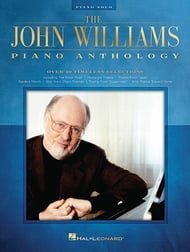
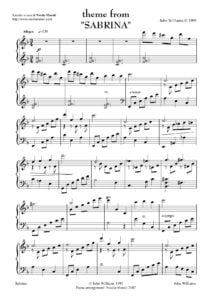




Best Sheet Music download from our Library.
John Williams: The Maestro of Modern Cinema
Born on February 8, 1932, in Flushing, Queens, New York, John Towner Williams stands as a colossus in the world of music, an artist whose compositions have become inseparable from the shared emotional vocabulary of global popular culture. Over a career spanning nearly seven decades, Williams has not merely scored films; he has breathed symphonic life into them, crafting unforgettable themes that transcend the screen to become cultural touchstones. He is the architect of the modern film score, a master of orchestral storytelling whose work has defined the sound of adventure, wonder, and heroism for generations.
Please, subscribe to our Sheet Music Library.
If you are already a subscriber, please, check our NEW SCORES’ page every month for new sheet music. THANK YOU!
Full Biography: From Juilliard to Jedi
Early Years and Musical Pedigree (1932-1950s)
John Williams’ musical destiny was shaped from an early age. His father, Johnny Williams, was a jazz percussionist who played in the Raymond Scott Quintet and the CBS Radio Orchestra, immersing the young John in the professional music world. The family moved to Los Angeles in 1948, where John began studying composition privately and honed his skills as a pianist. After graduating from North Hollywood High School, he attended both UCLA and the Los Angeles City College, studying under renowned composer Mario Castelnuovo-Tedesco. His formal training was further solidified at The Juilliard School in New York, where he studied piano with Rosina Lhévinne, aiming for a concert career. However, the pull of popular music and the emerging world of studio work proved stronger.
The Studio Apprenticeship (1950s-1960s)
Returning to Los Angeles in the mid-1950s, Williams embarked on the classic Hollywood apprenticeship. He worked as a session pianist, playing on recordings by artists like Frankie Laine and on film scores by giants such as Bernard Herrmann (for Psycho), Franz Waxman, and Alfred Newman. This immersion in the studio system’s rigorous craft was invaluable. He began composing for television, working on series like Lost in Space and Land of the Giants, where he learned to write quickly, evocatively, and for narrative. His early film scores, such as Daddy-O (1958) and The Killers (1964), showcased his versatility, blending jazz, contemporary classical, and traditional orchestral styles.
Breakthrough and Establishing a Voice (1970s)
The 1970s marked Williams’ ascent to the summit of his profession. His score for The Reivers (1969) earned him his first Academy Award nomination. However, it was his fruitful collaboration with director Steven Spielberg, beginning with The Sugarland Express (1974), that would change cinematic history. Spielberg, impressed by Williams’ work on The Poseidon Adventure (1972), recommended him to a friend, a young director named George Lucas, who was working on a “space opera.” The result was Star Wars (1977).
The impact of the Star Wars score cannot be overstated. Its grand, Wagnerian leitmotifs, performed by the London Symphony Orchestra, revived the large-scale symphonic score at a time when popular film music was dominated by pop songs and synthesizers. It won Williams his third Oscar (after Fiddler on the Roof, which he adapted, and Jaws) and cemented his status. Concurrently, his scores for Spielberg’s Jaws (1975)—with its primal, menacing two-note motif—and Close Encounters of the Third Kind (1977)—featuring the iconic five-tone communication theme—demonstrated an unprecedented range, from intimate terror to sublime awe.
The Peak of Collaboration and Prolificacy (1980s-1990s)
This period saw Williams operating at a staggering level of creative output and influence. His work became the backbone of the era’s blockbuster cinema:
- The Indiana Jones series (Raiders of the Lost Ark, 1981) delivered swashbuckling, heroic brass marches.
- E.T. the Extra-Terrestrial (1982) provided a heart-wrenchingly beautiful score of childhood wonder and soaring flight.
- He returned to the galaxy far, far away for The Empire Strikes Back (1980) and Return of the Jedi (1983), introducing some of his most complex and darkly beautiful themes (e.g., “The Imperial March”).
- He brought emotional gravity to historical dramas like Empire of the Sun (1987) and Schindler’s List (1993), the latter earning him his fifth Oscar and showcasing a profoundly moving, violin-centric idiom.
Alongside his film work, Williams served as the nineteenth Principal Conductor of the Boston Pops Orchestra (1980-1993, then Laureate Conductor), bringing film music to the concert hall and broadening the orchestra’s repertoire and appeal.
The Modern Master (2000s-Present)
Entering his seventies and beyond, Williams’ productivity and genius showed no sign of dimming. He scored the remaining Star Wars prequels and sequels, adding new layers to his galactic tapestry with themes like “Duel of the Fates” and “Rey’s Theme.” His collaborations with Spielberg continued unabated, yielding diverse masterpieces: the futuristic melancholy of A.I. Artificial Intelligence (2001), the thrilling chase music of Catch Me If You Can (2002), the haunting, minimalist soundscape of Munich (2005), and the lyrical warmth of The BFG (2016).
Beyond these franchises, he crafted magical scores for the first three Harry Potter films, establishing the musical identity for the entire series. In 2022, at the age of 90, he delivered a semi-autobiographical, intimate score for Spielberg’s The Fabelmans and announced his “retirement” from franchise films, though he continues to compose for Spielberg’s projects.
Musical Style and Harmony: The Symphonic Storyteller
Williams’ style is a brilliant synthesis of late-Romanic orchestral tradition and the demands of modern cinematic storytelling.
Orchestration: He is a master orchestrator in the lineage of Richard Strauss, Gustav Holst, and Igor Stravinsky. His command of the orchestra is absolute. He often employs vast forces—full string sections, expansive brass (especially heroic trumpets and horns), lush woodwinds, and elaborate percussion—to create textures of immense power and detail. He has a particular gift for writing virtuosic, singing lines for individual instruments, such as the solo violin in Schindler’s List, the bassoon in Jaws, or the flugelhorn in Close Encounters.
Harmony and Melody: Williams’ harmonic language is largely tonal and accessible, yet rich with complexity. He frequently uses modal interchange, bold chromaticism, and sophisticated extended chords to add color and emotional nuance. But it is his gift for melody that truly defines him. His themes are immediately memorable, perfectly shaped to represent a character (Luke’s Theme), a concept (The Force), or an emotion (Adventure from Indiana Jones). They are often constructed with a clarity and arch that make them ideal for symphonic development.
The Leitmotif Technique: Williams’ most significant contribution is the revitalization of the Wagnerian leitmotif for cinema. Unlike many film composers who write “mood” music, Williams constructs intricate symphonic narratives. Each major character, place, or idea receives a distinct musical theme. These motifs are then developed, varied, fragmented, and combined throughout the score to reflect the story’s psychological and dramatic arc. In Star Wars, the interplay of the Rebel Fanfare, the Imperial March, the Force Theme, and Leia’s Theme creates a rich, purely musical layer of storytelling.
Rhythm and Pacing: His music is impeccably timed to visual action, a skill honed in his TV years. His action cues (The Asteroid Field from Empire, The Desert Chase from Last Crusade) are marvels of rhythmic propulsion and contrapuntal energy, often drawing from Stravinsky and Holst’s The Planets.
Definitive Works: A Selection of Masterpieces
- Star Wars Saga (Main Title / Rebel Fanfare): The quintessential fanfare of heroism, a blast of C-major triumph that instantly declares the scale of the adventure.
- The Imperial March (Darth Vader’s Theme): A masterpiece of menacing, militaristic music in a minor key, perfectly encapsulating authoritarian power.
- The Force Theme (Binary Sunset): The spiritual heart of Star Wars, a noble, yearning melody that speaks of legacy, destiny, and hope.
- Jaws (Main Theme): The ultimate example of music as predator. The alternating pattern of E and F creates a primal, inescapable sense of approaching doom.
- Raiders March (Indiana Jones Theme): The perfect musical portrait of a swashbuckling hero: bold, brassy, romantic, and irresistibly energetic.
- Flying Theme (from E.T.): The purest musical expression of childhood wonder and the exhilaration of flight, building to one of the most emotionally cathartic climaxes in film history.
- Schindler’s List (Main Theme): A haunting, klezmer-inflected melody for solo violin, embodying profound grief, memory, and a fragile thread of humanity.
- Hedwig’s Theme (from Harry Potter): Instantly established the magical world of Hogwarts, a celesta-driven motif that is whimsical, mysterious, and iconic.
- The Throne Room & End Title (Star Wars): A triumphant synthesis of the saga’s major themes, showcasing Williams’ ability to write in grand, ceremonial style.
- Adventures on Earth (from E.T.): A multi-movement concert suite within the film, encapsuring the entire emotional journey of the story.
Filmography: A Legendary Partnership (Selected)
Williams’ filmography is a history of modern Hollywood itself. His most defining collaboration is, unquestionably, with Steven Spielberg, spanning over 50 years and nearly 30 films, including: Jaws, Close Encounters of the Third Kind, the Indiana Jones series, E.T., Empire of the Sun, Jurassic Park, Schindler’s List, Saving Private Ryan, Catch Me If You Can, Munich, War Horse, Lincoln, The BFG, The Fabelmans.
With George Lucas: The entire Star Wars saga (Episodes I-IX and Solo).
Other seminal works: The Poseidon Adventure, Superman: The Movie, The Witches of Eastwick, the first three Harry Potter films (Sorcerer’s Stone, Chamber of Secrets, Prisoner of Azkaban), Memoirs of a Geisha, The Book Thief.
Collaborations and Influences
Collaborations: Beyond Spielberg and Lucas, Williams has worked with a host of esteemed directors, including Robert Altman (Images), Oliver Stone (Born on the Fourth of July), and Chris Columbus (Harry Potter). He has also written numerous concert works, including concertos for instruments like the bassoon, cello, and violin, often for virtuoso friends like Yo-Yo Ma and Itzhak Perlman.
Influences: Williams’ style is deeply rooted in the late-Romantic and early 20th-century orchestral tradition. The shadow of Erich Wolfgang Korngold (the father of the Hollywood swashbuckler score) looms large, as do the epic canvases of Gustav Holst (The Planets), the rich harmonies of Richard Strauss, the rhythmic drive of Igor Stravinsky, and the impressionist colors of Ravel and Debussy. He is also a master of the Golden Age Hollywood idiom perfected by Bernard Herrmann, Franz Waxman, and Alfred Newman—composers under whom he literally played as a session musician.
Legacy: The Sound of a Century
John Williams’ legacy is immeasurable. He is, quite simply, the most recognizable, celebrated, and influential film composer of all time.
- Revival of the Orchestra: In the 1970s, he single-handedly revived the use of the large symphony orchestra in film, ensuring its place as the primary voice for epic storytelling.
- Cultural Permeation: His themes are more widely known than many classical works. They are performed by orchestras worldwide, studied in schools, and hummed by people who may never have seen the films.
- The Leitmotif Standard: He established the intricate, leitmotif-driven score as the gold standard for franchise and fantasy filmmaking, influencing every film composer who followed.
- Bridging Worlds: Through his tenure with the Boston Pops and countless concert suites, he demolished the artificial barrier between “classical” and “film” music, bringing millions to concert halls.
- The Composer as Auteur: He demonstrated that a composer’s voice could be as distinct and vital to a film’s identity as that of its director.
With 53 Academy Award nominations (second only to Walt Disney), five Oscars, four Golden Globes, and 25 Grammys, the accolades only tell a fraction of the story. John Williams has scored our collective dreams of adventure, our fears of the deep, our wonder at the stars, and our most profound sorrows. He has given the final frontier a soundtrack, equipped our heroes with anthems, and provided a symphonic heartbeat to the magic of cinema. He is not just a composer for film; he is a foundational pillar of 20th and 21st-century music, a true maestro whose work will resonate for as long as stories are told and music is played.
Search your favorite sheet music in the Sheet Music Catalog
The Best Of John Williams – John Williams Greatest Hits Full Album
Track List:
0:00 Duel of the Fates 4:56 Hedwig’s Theme 10:05 Cantina Band 13:18 Prologue 15:29 The Imperial March 18:35 Battle of the Heroes 26:12 Harry’s Wonderous World 31:33 Double Trouble 34:25 Anakin’s Betrayal 38:36 A Window to the Past 41:19 Lumos! (Hedwig’s theme) 42:54 Buckbeak’s Flight (Extended) 47:29 Finale 51:47 The Imperial March 54:53 Aunt Marge’s Waltz
Browse in the Library:
Or browse in the categories menus & download the Library Catalog PDF: