Come join us now, and enjoy playing your beloved music and browse through great scores of every level and styles!
Can’t find the songbook you’re looking for? Please, email us at: sheetmusiclibrarypdf@gmail.com We’d like to help you!
Table of Contents
Happy heavenly birthday, Roland Hanna, born on this day on 1932.
Sir Roland Hanna: The Nobility of Jazz
On February 10, 1932, in the bustling industrial city of Detroit, Michigan, a pianist was born who would come to embody the very essence of jazz nobility—in both his artistic bearing and his literal title.
Sir Roland Hanna was a musician of profound depth, technical mastery, and expansive emotional range, a figure who seamlessly bridged the worlds of swing, bebop, and classical music over a career spanning five decades. His legacy is not one of radical iconoclasm but of refined elegance, intellectual rigor, and a touch of regal soul that made him one of the most respected and sought-after pianists in jazz history.
Best Sheet Music download from our Library.
Early Life and Formative Years: The Detroit Crucible
Roland Pembroke Hanna’s musical journey began in a home filled with sound. His father, a trombonist who played in local churches, and a mother who sang, provided a fertile environment. He started on piano at age 11, but his initial focus was the clarinet. However, the piano soon reclaimed him, and he began formal studies at the Detroit Institute of Musical Art and later at the prestigious Juilliard School in New York. The Detroit of the 1940s and 50s was a jazz powerhouse, a breeding ground for future legends. This environment was Hanna’s crucible. He played alongside peers like Donald Byrd, Kenny Burrell, and Tommy Flanagan, who would become a lifelong friend and stylistic counterpart.

Please, subscribe to our Sheet Music Library.
If you are already a subscriber, please, check our NEW SCORES’ page every month for new sheet music. THANK YOU!
A pivotal moment came with his military service in the U.S. Army, where he played in bands alongside a young John Coltrane. This experience exposed him to intense, cutting-edge improvisation and solidified his commitment to a life in music. After his discharge, he returned to Detroit before making the inevitable move to New York City in 1959, just as the jazz world was undergoing another evolution.
Musical Style and Harmonic Language: The Architect of Elegance
Roland Hanna’s style is a masterful synthesis of several key elements:
- Orchestral Piano Concept: Influenced by Art Tatum and Earl Hound, Hanna approached the piano as a one-man orchestra. His left hand was not merely an accompanist but a full partner, providing rich, moving bass lines, lush chordal textures, and contrapuntal melodies that interacted complexly with his right-hand lines. He possessed a formidable technique that allowed for dazzling runs and intricate passagework, but it was always deployed in service of the music’s emotional arc, never mere display.
- Classical Formal Rigor: His Juilliard training was not just a footnote; it was integral to his musical identity. Hanna’s compositions and improvisations often exhibited a classical sense of development, structure, and motivic variation. He could weave a fugue-like complexity into a blues or construct a ballad with the formal elegance of a Chopin nocturne. This foundation gave his jazz playing a unique architectural solidity and depth of harmony.
- Harmonic Sophistication: Hanna’s harmonic language was lush and expansive. He was a master of reharmonization, able to take a standard tune and refract it through a prism of advanced chord substitutions and altered extensions (flat nines, sharp elevens, thirteenths). He loved rich, thick chords—block chords in the manner of Milt Buckner or Red Garland, but with his own distinctive voicings that often incorporated inner-voice movement. His approach to ballads was particularly revelatory, as he would build harmonic landscapes of breathtaking beauty and complexity around a melody.
- Swing and Blues Foundation: For all his sophistication, Hanna never lost touch with the essential swing and blues feel that is the heart of jazz. His time feel was impeccable, buoyant, and driving when needed. He could play with a gritty, church-inflected blues sensibility that rooted his most elaborate explorations in deep soul. This balance between the intellectual and the visceral is what made his music so compelling.
The Best Songs and Compositions: A Showcase of Range
Hanna’s discography as a leader and sideman is vast, but several works stand as quintessential examples of his art.
As a Leader:
- “Sir Elf” (1973): The title track from one of his most beloved albums is a perfect introduction. A playful, swinging tune with a catchy melodic hook, it showcases his ability to combine childlike joy with impeccable, sophisticated swing.
- “Perugia” (1974): A hauntingly beautiful original ballad, named for the Italian city. It demonstrates his classical compositional sense and his ability to create a narrative arc through harmony and melody alone. The recording on the album “The Baroque Album” is particularly stunning.
- “Seasons” (A Suite in Four Movements): A major compositional work that displays Hanna’s ambition and classical-jazz synthesis. Each movement represents a season, painted with musical colors and textures that go far beyond typical jazz forms.
- “Anna Livia Plurabelle”: A complex, through-composed piece inspired by James Joyce, illustrating his literary interests and his capacity for creating dense, evocative tone poems at the piano.
As an Interpreter:
His interpretations of standards are legendary:
- “Lush Life” (Billy Strayhorn): Hanna’s solo piano rendition is considered one of the definitive versions. He plumbs the depths of the song’s harmonic melancholy and urbane weariness, building it into a miniature epic.
- “What’s New?” (Bob Haggard): He could take a simple ballad and, through his reharmonizations and orchestrative approach, transform it into a breathtaking journey.
- “Blues for Sarka” (an original, but in the blues tradition): A showcase of his deep, rolling, gospel-tinged blues feeling, proving his mastery of the form’s fundamentals.
Films, Cooperations, and The Concert Jazz Circle
While not a film scorer in the traditional sense, Hanna’s musicality graced several projects. He performed and arranged for the landmark 1957 television special “The Sound of Jazz,” accompanying Billie Holiday on her iconic performance of “Fine and Mellow.” He also contributed to the score of the film “The Money Jungle.”
However, it is in his collaborations with other jazz giants that Hanna’s stature becomes fully clear.
- The Thad Jones/Mel Lewis Orchestra: From 1966, this was a defining association. As a pianist and featured soloist in one of the greatest modern big bands, Hanna’s ability to provide both powerful rhythmic propulsion and sparkling, inventive solos was crucial. He thrived in the band’s complex, hard-swinging environment, contributing arrangements and compositions.
- Benny Goodman: Hanna served as the pianist for the swing era king’s groups in the late 1950s and 60s, a testament to his versatility and mastery of the swing idiom.
- Charles Mingus: He played on Mingus’s provocative 1971 album “Charles Mingus and Friends in Concert,” holding his own in the bassist’s tumultuous and demanding musical environment.
- Sarah Vaughan: He accompanied “The Divine One,” his sensitive and harmonically rich playing providing the perfect cushion for her majestic voice.
- A Trio of Bass Legends: He recorded seminal albums with Ray Brown (“Moscow Night”), Ron Carter (numerous sessions), and George Mraz, demonstrating sublime trio interplay, a format in which he excelled.
- The New York Jazz Quartet: Co-founded with Frank Wess, this group in the 1970s and 80s was a prime outlet for Hanna’s more chamber-jazz oriented concepts, blending bebop with classical forms.
Perhaps his most personal cooperative venture was The Concert Jazz Circle. Founded in the 1980s, this was a flexible ensemble of top New York musicians dedicated to performing Hanna’s original compositions and ambitious arrangements. It was the ultimate realization of his vision, blending the discipline of a chamber ensemble with the fire of a jazz group.
Influences and Legacy: The Lasting Nobility
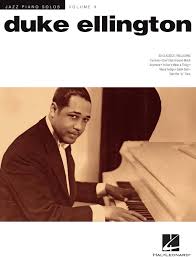
Hanna’s influences were a blend of the titanic and the timeless: the virtuosic whirlwind of Art Tatum, the orchestral imagination of Duke Ellington, the refined lyricism of Tommy Flanagan and Hank Jones, and the classical rigor of composers like Ravel and Debussy. He absorbed these influences not to imitate, but to forge a singular voice.
Browse in the Library:
Or browse in the categories menus & download the Library Catalog PDF:
His legacy is multifaceted:
- The Composer-Pianist: He elevated the role of the pianist in jazz beyond improviser and accompanist to that of a full-fledged composer, writing extended works that expanded the genre’s scope without abandoning its core principles.
- The Educator: A devoted teacher at the Queens College CUNY and elsewhere, he mentored generations of musicians, imparting the importance of both technical mastery and historical knowledge. His pedagogical influence is immense.
- The Sideman Par Excellence: He set a standard for adaptability, taste, and supportive creativity. Leaders knew that hiring Roland Hanna meant grounding their music in rock-solid harmony, impeccable time, and solos of substance and surprise.
- A Bridge Between Worlds: He lived comfortably and authoritatively in the often-separated worlds of straight-ahead jazz, the avant-garde (playing with figures like Archie Shepp), and classical music, proving that profound musicianship transcends categories.
The title “Sir” was not an affectation. In 1970, while on tour in Liberia, he was knighted by President William Tubman for his cultural contributions. It was a fitting honor for a man whose demeanor at the piano was one of calm, focused royalty. Sir Roland Hanna played with a noble authority, a sense that every note had its place and purpose in a grander design.
He passed away on November 13, 2002, but his music remains a testament to the power of elegance, intellect, and deep soul. In an era often celebrating the disruptive and the new, Hanna’s legacy is a reminder that there is equal grandeur in mastery, refinement, and the lifelong pursuit of beautiful sound. To listen to Sir Roland Hanna is to hear the history of jazz piano—from stride to post-bop—filtered through a singularly profound and regal sensibility, a timeless voice that continues to inspire awe and reverence.
Search your favorite sheet music in the Sheet Music Catalog
Sir Roland Hanna – Aprés Un Réve (With Ron Carter) 2003 (FULL ALBUM)
Track List:
1 Serenade
Written-By – F. Schubert*
6:48
2 Après Un Rêve
Written-By – G. Faure*
4:04
3 This Is My Beloved – Nocturne – String Quartet No. 2
Written-By – Borodin*
3:20
4 Prelude – Op. 28 No. 20
Written-By – F. Chopin*
5:03
5 Like Grains Of Sand
Written-By – R. Hanna*
6:02
6 Melody In F
Written-By – A. Rubinstein*
4:48
7 Elvira Madigan – Piano Concerto No. 21 C Major K467
Written-By – W. A. Mozart*
6:06
8 Going Home – From “New World Symphony”
Written-By – A. Dvorak*
6:19
9 Based On Gustav Mahler – Symphony No. 5, 2nd Movement
Written-By – G. Mahler*
6:41
Personnel:
Bass – Ron Carter
Coordinator [Technical] – Derek Kwan
Drums – Grady Tate
Engineer – Jim Anderson
Engineer [Assistant] – Aya Takemura
Mixed By, Mastered By – Shuji Kitamura
Photography By [Artists] – John Abbott (7)
Photography By [Front Cover] – Zlrina Ionesco / G.I.P. Tokyo*
Piano – Sir Roland Hanna*
Producer – Todd Barkan
Producer, Mixed By, Mastered By – Tetsuo Hara