
Come join us now, and enjoy playing your beloved music and browse through great scores of every level and styles!
Can’t find the songbook you’re looking for? Please, email us at: sheetmusiclibrarypdf@gmail.com We’d like to help you!
Table of Contents
Earl Wild 7 Virtuoso Études after Gershwin

Best Sheet Music download from our Library.
Please, subscribe to our Sheet Music Library.
If you are already a subscriber, please, check our NEW SCORES’ page every month for new sheet music. THANK YOU!
Earl Wild was a celebrated American pianist and composer, renowned as one of the last great Romantic virtuosos . His legacy rests on three pillars: his legendary performances, his dazzling piano transcriptions, and his original compositions.
Who Was Earl Wild? A Virtuoso of the 20th Century
Born in 1915 and active until his death in 2010, Wild’s career was marked by extraordinary achievements and a distinctly American story .
- A “Super-Virtuoso”: Critic Harold C. Schonberg famously placed him “in the Horowitz class” . His flawless technique made even the most difficult music sound effortless .
- Historic “Firsts”: He was the first pianist to give a solo recital on U.S. television (1939) and the first to stream a performance over the internet (1997) .
- The White House Pianist: He remains the only pianist to have performed for six consecutive U.S. presidents, from Herbert Hoover to Lyndon B. Johnson .
- Gershwin Champion: His 1942 performance of Rhapsody in Blue with Arturo Toscanini was a resounding success that cemented his association with Gershwin’s music .
- Late Recognition: In 1997, at age 81, he won a Grammy Award for his album Earl Wild: The Romantic Master .
His Works: Transcriptions and Original Compositions
Wild’s output as a composer is almost inseparable from his identity as a performer. His works can be grouped into two main categories:
1. Virtuoso Transcriptions & Paraphrases
This is what he is arguably most famous for. Following in the footsteps of Liszt, he transformed popular songs and orchestral works into spectacular showpieces for solo piano.
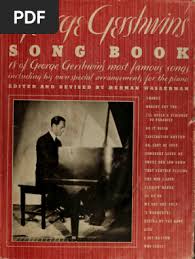
- Gershwin Works: His most significant contribution. This includes the Grand Fantasy on Airs from Porgy and Bess (1973) and the Seven Virtuoso Études on Popular Songs (1954/1973), based on tunes like The Man I Love, Fascinating Rhythm, and I Got Rhythm .
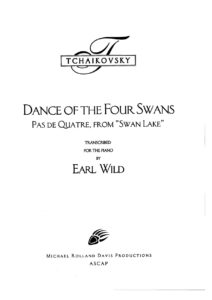
- Other Composers: He created numerous transcriptions of songs by Rachmaninoff (14 songs, 1981), as well as works by Tchaikovsky (Dance of the Little Swans), Berlioz, Saint-Saëns, and Fauré .
- Walt Disney Fantasy: His charming Reminiscences of Snow White (1995) is a Liszt-style fantasy on themes from the film .
2. Original Compositions
While less numerous than his transcriptions, his original works are substantial and frequently recorded.
- Doo-Dah Variations (1992): A 27-minute work for piano and orchestra based on Stephen Foster’s “Camptown Races” .
- Piano Sonata 2000 (2000): His major late work for solo piano, blending classical form with jazz, blues, and ragtime influences .
- Revelations (1962): A large-scale Easter oratorio .
- The Turquoise Horse (1975): A work for chorus and percussion based on an American Indian poem .
- Adventure (1941): An early work for piano and orchestra .
Notable Recordings
Wild’s discography is extensive. Key recordings to explore include:
- Gershwin: His recordings with Arthur Fiedler and the Boston Pops (Rhapsody in Blue, Concerto in F) are classic references .
- Rachmaninoff: His 1960s cycle of the four piano concertos with the Royal Philharmonic is highly regarded .
- Rare Repertoire: He was a champion of forgotten Romantic concertos, making definitive recordings of works by Xaver Scharwenka and Ignacy Paderewski .
- Own Works: His later recordings on his own label, Ivory Classics, often feature his own compositions and transcriptions .
In summary, Earl Wild was a direct link to the 19th-century Romantic tradition who used his unparalleled technique to expand the piano’s repertoire, particularly with American music.
Browse in the Library:
Or browse in the categories menus & download the Library Catalog PDF:
List of the Seven Études:
Based on the 1976 Quintessence LP records and academic verification, the order is:
- Liza
- Somebody Loves Me
- Lady Be Good (properly Oh, Lady, Be Good!)
- The Man I Love
- Fascinatin’ Rhythm
- Embraceable You
- I Got Rhythm
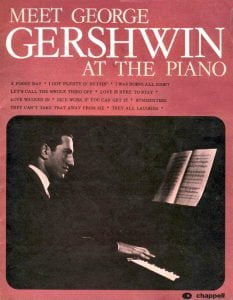
Earl Wild’s 7 Virtuoso Etudes after Gershwin: an analysis
Earl Wild (1915-2010). His name might not be all that familiar, but he was one of the last of the great Romantic pianists in a long line of great virtuoso pianists/composers. In fact, he was called a super virtuoso. He was the first pianist to perform a recital on U.S. television in 1939 and the first to stream a performance over the internet in 1997.
There was no doubt from the very beginning that Wild was musically special. He started piano lessons with Selmar Janson at the Carnegie Institute of Technology at the age of 3, and later with Marguerite Long and Egon Petri.
Wild had immensely large hands, absolute pitch, a graceful stage presence, and an uncanny facility as a sight-reader and improviser. Already as a teenager, Wild started to produce devilish difficult transcriptions of romantic music.
Every great virtuoso Romantic pianist was a master of composing piano transcriptions, just think of Franz Liszt. Earl Wild is a direct descendant of that golden age of piano transcriptions, and he was called “the finest transcriber of our time.” And it is not surprising that Wild would turn his attention to the music of George Gershwin.
Gershwin’s songs are miniature masterpieces, full of enduring charm, melodic appeal, and twinkling wit. Earl Wild’s arrangements are an affectionate tribute from one American virtuoso to another. As Wild writes, “Out of respect for Gershwin’s original notation, I have not changed one rhythmic value of the melodies in my transcriptions of the Seven Virtuoso Études.”
Wild started work on his virtuoso Gershwin etudes in the late 1950s, but he revised the set and added another song in 1976. They are all based on some of Gershwin’s most popular songs and are strictly treated as études or studies. And this kind of treatment is closely associated with the Chopin’s Études to highlight some particular technical difficulty.
Already, the Chopin etudes go far beyond mere technical exercises, and the same is true of Wild’s handling of the seven Gershwin songs as they transcend any mere technical achievement. That does not mean that the virtuosic demands are out of this world, as they address almost every piano technique known to the best players. However, once the focus falls on the music, they are delicious pieces to savour.
It has been said that Earl Wild managed to pack more notes per square inch than anyone else to produce etudes of obscene difficulty. Once you have all the notes down, however, how do you not make it sound too square and too classical? The solution to that problem is given by Wild’s arrangements.
They are not mere literal translations of Gershwin’s song but use the original melodies simply as a springboard for something far more elaborate and interesting. Wild always colours the tunes with exotic harmonies and complex counterpoint. The combination of Gershwin’s tunes and Wild’s harmonies and lines is a winning combination.
Earl Wild loves highly complex textures, and you frequently can hear multiple tempos at the same time. And we also find delicious and difficult polyrhythms with an added touch of jazz. Wild also focuses on demanding scales and arpeggios, but they never really interfere with the melodic interest.
One of my personal favourites is “Fascinatin’ Rhythm,” where staccato playing, scales in thirds, and unbelievable syncopation make for a truly breath-taking musical experience. And just listen to the contrast offered by “Somebody loves me,” with dreamy legato passages evoking a colourful and wistful mood.
The real showpiece of the set is probably “Liza.” There is so much going on technically in the right, and the left hand, but the melody is somehow able to shine through. “Lady be Good” really expands the texture, and at the same time sounds an expressive and rhythmic tone.
It is marked by a thoughtful atmosphere with instinctual tones and is strongly influenced by jazz rhythms.
And you just have to love “I Got Rhythm,” that cheerful polytonal dance featuring polyrhythms and jazz style. Listening to the Wild arrangements of Gershwin’s songs is almost like watching a magic show. The eyes are simply too slow to catch the “sleight of hand” on the keyboard, but the ear is certainly enchanted by this pianistic meeting between Gershwin and Wild, possibly filtered through the pianism of Rachmaninoff.
Earl Wild was a legendary improviser. It follows to reason that his virtuoso etudes after Gershwin also had their basis in improvisation. In 1990, Wild once more engaged with Gershwin, but this time with a titled “Improvisation” on the famous Gershwin tune “Someone to Watch over Me.”
The song comes from the musical comedy “Oh, Kay” with lyrics by Ira Gershwin. “Someone to Watch over Me,” according to Gershwin is “a fast and jazzy up-tempo rhythm tune.” Originally it was sung on Broadway by Gertrude Lawrence while holding a rag doll, but in the 1930s and 1940s, the tune was recorded as a slow ballad, which eventually became standard.
In Wild’s exploration of the song, he once again combines his pianistic genius with his great understanding of music. He manages to put a classical stamp on the work without actually damaging its popular imprint. Initially, Wild presents a clear statement of the song theme, but he quickly adds the most delicious variations. Just listen to the added counter-melodies, the complex rhythmic pattern, and those wonderful harmonic changes.
As we already heard in the études, the theme is lovingly handled, but it never really gets lost. The first variation, so to speak, takes us into the world of the Venetian gondoliers and the famous 6/8 metre of the “Barcarole.” That particular song had already been taken up by Chopin and Brahms, and Wild’s colourful evocation included dazzling trills and repeated notes.
Wild presents the theme in rapid repeated notes, in what he describes as an imitation of a mandolin. Performers have pointed out that this passage would, in fact, be much easier on a mandolin, where this effect is created by a simple strumming technique. This strumming goes on for more than two pages, and you might also hear a bit of “O Sole Mio” in counterpoint against the Gershwin tune.
We find more clever surprises in the second variation entitled “Brazilian Dance.” There is much lively staccato playing to underscore the virtuosity of this movement, but Wild also presents a lyrical interlude to offer some fine harmonic colours to the prevailing lively Latin rhythms.