Come join us now, and enjoy playing your beloved music and browse through great scores of every level and styles!
Can’t find the songbook you’re looking for? Please, email us at: sheetmusiclibrarypdf@gmail.com We’d like to help you!
Table of Contents
Best Sheet Music download from our Library.
Please, subscribe to our Sheet Music Library.
If you are already a subscriber, please, check our NEW SCORES’ page every month for new sheet music. THANK YOU!
Happy birthday, Peter Gabriel, born on this day in 1950.
Peter Gabriel’s five-decade career represents one of the most remarkable artistic journeys in popular music—a path that has consistently defied expectation and categorization. From his theatrical origins with Genesis to his pioneering work in world music and his unexpected transformation into a global pop star, Gabriel has remained a restless creative force whose influence extends far beyond record sales and chart positions. This exhaustive article explores the life, music, and enduring legacy of this singular artist.
Biography: The Complete Life of Peter Brian Gabriel
Early Life and Education (1950-1967)
Peter Brian Gabriel was born on February 13, 1950, in Chobham, Surrey, England, to Ralph Parton Gabriel, an electrical engineer who contributed to the development of fiber optic technology, and Edith Irene Allen, who came from a musically inclined family . This blend of technical innovation and musical heritage would prove prophetic for his future career. His maternal grandfather was Colonel Edward Allen, chairman of the Civil Service Department Store on London’s Strand, while his paternal grandfather came from a long-established family of London timber importers .
Gabriel’s early education began at Cable House, a private primary school in Woking, followed by St. Andrews Preparatory School in Horsell. It was during these formative years that his musical inclinations first emerged. His teachers noticed his singing talent, but he initially pursued piano lessons from his mother and developed a fascination with percussion, purchasing a floor tom-tom at age ten . Reflecting on his early influences, Gabriel later remarked, “Hymns played quite a large part. They were the closest I came to soul music before I discovered soul music. There are certain hymns that you can scream your lungs out on, and I used to love that” .
At age 11, Gabriel experienced a recurring dream that would prove remarkably prescient: “I saw a bifurcation in the road where I could either be an actor, or a singer, or a farmer” . He composed his first song, “Sammy the Slug,” at 12. When an aunt offered him money for professional singing lessons, he instead used it to purchase The Beatles’ debut album Please Please Me—a decision that signaled where his true passions lay.
Browse in the Library:
Or browse in the categories menus & download the Library Catalog PDF:
In September 1963, Gabriel entered the prestigious Charterhouse School in Godalming . There, he joined his first bands: the trad jazz outfit The Milords (or M’Lords), followed by a holiday band called The Spoken Word, which recorded an acetate in 1966 . Notably, Gabriel played drums in these early groups—a detail his future Genesis bandmate Mike Rutherford would later note: “Pete was—and still is, I think—a frustrated drummer” .
The Genesis Years (1967-1975)
In 1965, while still at Charterhouse, Gabriel formed the band Garden Wall with schoolmates Tony Banks on piano, Johnny Trapman on trumpet, and Chris Stewart on drums . Banks and Gabriel, both uninterested in conventional school activities, bonded over music and began writing songs together. At Garden Wall’s final concert, Gabriel already displayed the theatrical flair that would define his career, wearing a kaftan and beads while showering the audience with petals gathered from neighboring gardens .
After Garden Wall disbanded in 1967, Gabriel and Banks were invited by fellow Charterhouse students Anthony Phillips and Mike Rutherford to collaborate on a demo tape. The resulting recording, featuring “She Is Beautiful” (the first song Gabriel and Banks wrote together), found its way to Charterhouse alumnus Jonathan King. Impressed by Gabriel’s vocals, King signed the group and suggested the name Gabriel’s Angels—a proposal the other members rejected in favor of his alternative suggestion: Genesis .
Genesis released their debut album From Genesis to Revelation in 1968, but it achieved little commercial success . The band temporarily disbanded, with Gabriel continuing his studies. However, by September 1969, Gabriel, Banks, Rutherford, and Phillips decided to reconstitute Genesis as a full-time professional band .
The early 1970s saw Genesis evolve into a leading force in progressive rock. Their second album, Trespass (1970), marked Gabriel’s expanding instrumental contributions—flute, accordion, tambourine, and bass drum—driven by his discomfort with remaining inactive during instrumental passages . When the album failed to sell significantly, Gabriel briefly considered abandoning music to study at the London School of Film Technique, as the band “seemed to be dying” .
The arrival of guitarist Steve Hackett and drummer Phil Collins revitalized the group . Gabriel’s confidence as a frontman grew dramatically, though not without incident. During a June 1971 performance of “The Knife,” he took a running jump into the audience expecting to be caught; instead, the crowd parted, leaving him to break his ankle on the floor. He performed subsequent shows using a wheelchair and crutches .
The Foxtrot (1972) tour marked a pivotal moment in Gabriel’s stagecraft. During a Dublin show in September 1972, he disappeared during the instrumental section of “The Musical Box” and reappeared wearing his wife’s red dress and a fox head, echoing the album’s cover . The incident received front-page coverage in Melody Maker, providing Genesis with unprecedented national exposure and enabling them to double their performance fees .
By late 1973, following the success of Selling England by the Pound, Gabriel’s performances had evolved into elaborate theatrical presentations featuring fluorescent makeup, a cape and bat wings for “Watcher of the Skies,” a helmet and chest plate for “Dancing with the Moonlit Knight,” a crown of thorns for “Supper’s Ready,” and an old man mask for “The Musical Box”.
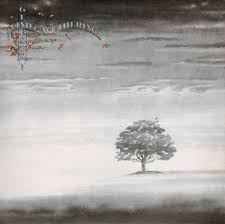
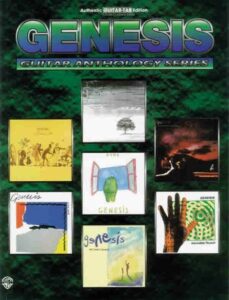
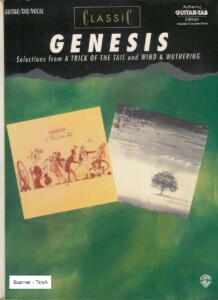
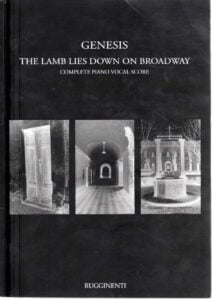




Departure from Genesis
Gabriel’s exit from Genesis resulted from multiple converging factors. The attention generated by his theatrical performances created tensions within the band . These strains intensified during the creation of the ambitious double album The Lamb Lies Down on Broadway (1974), for which Gabriel wrote all lyrics except one song .
The decisive factors, however, were personal and professional. Film director William Friedkin, impressed by Genesis Live, contacted Gabriel about potential film work . Simultaneously, Gabriel’s wife Jill experienced a difficult pregnancy with their first daughter, Anna . When Gabriel chose to prioritize his family over recording and touring, the resulting resentment led to his definitive departure from Genesis in 1975—though he remained on amicable terms with his bandmates, completing The Lamb Lies Down on Broadway tour before leaving .
Solo Career and Artistic Evolution
Following his departure from Genesis, Gabriel took what he later described as “two years off growing cabbages and children” in Bath . His solo debut came in 1977 with the first of four eponymous albums, distinguished by their cover artwork rather than titles—frustratingly for fans and retailers alike .
His first solo single, “Solsbury Hill,” expressed his feelings about leaving Genesis through metaphor. Gabriel had reached his decision after witnessing a Bruce Springsteen concert; in the song’s first verse, he describes the Boss as an “eagle [who] flew out of the night” . The track combined folky acoustic guitars with subtle worldbeat influences, featuring pitch-shifting percussion inspired by West African talking drums .
The third eponymous album (1980), often called Melt due to its cover image, marked a significant artistic breakthrough. Working with producer Steve Lillywhite, Gabriel pioneered new sonic territories. The album’s opening track, “Intruder,” featured Phil Collins on drums using what became known as the “gated reverb” sound—a production technique that would define 1980s drum sounds and launch Collins’s own solo career .
The 1980s represented Gabriel’s most commercially fertile period. His fourth album (1982), titled Security in the US, yielded the hit “Shock the Monkey” and deepened his engagement with global musical traditions . In 1982, he co-founded the World of Music, Arts and Dance (WOMAD) festival, demonstrating his commitment to cross-cultural musical exchange.

So (1986) transformed Gabriel from cult artist to global superstar. The album sold over seven million copies worldwide, driven by the massive success of “Sledgehammer,” whose innovative stop-motion video—created with a young Nick Park—won a record nine MTV Video Music Awards and became the most played video in MTV history . Yet even at this commercial peak, Gabriel maintained artistic integrity: “Don’t Give Up,” his duet with Kate Bush, addressed unemployment and despair with profound empathy .
The WOMAD Years and Real World
The near-financial disaster of the first WOMAD festival in 1982—plagued by terrible weather, train strikes, and poor attendance—left Gabriel personally responsible for massive debts, with creditors viewing him as “the only fat cat worth squeezing” . He received threatening phone calls and even a death threat . In a remarkable act of solidarity, Genesis reunited with Gabriel for a one-off concert at the Milton Keynes Bowl on October 2, 1982, raising £1.2 million that rescued the festival .
This crisis ultimately strengthened Gabriel’s commitment to world music. He founded Real World Records, which has released albums by artists including Youssou N’Dour, Nusrat Fateh Ali Khan, and Afro Celt Sound System . The WOMAD festival continues to this day, presenting music, arts, and dance from around the world.
Later Career and Recent Work
Gabriel’s subsequent studio albums arrived at increasingly lengthy intervals: Us (1992), reflecting his personal struggles following divorce, and Up (2002), a darker, more textural work . He continued composing film scores, including Passion for Martin Scorsese’s The Last Temptation of Christ (1989) and music for Rabbit-Proof Fence (2002) .
In 2023, after more than two decades, Gabriel released i/o, his first album of new original material since Up. The project featured collaborations with visual artists including Ai Weiwei, Nick Cave, Olafur Eliasson, and Tim Shaw, whose work “Lifting the Curse” accompanied the track “The Court” . The song explored themes of justice, inspired by the organization NAMATI, which provides legal access to underserved communities worldwide .
Personal Life
Gabriel married Jill Moore in 1971; they had two daughters, Anna (born 1975) and Melanie (born 1977), before divorcing in 1987 . In 2002, he married Maebh Flynn, with whom he has two sons, Isaac (born 2002) and Luc (born 2008) . He resides in Box, Wiltshire, and Somerset .
His approach to fame has been notably restrained. “I’ve had minimal drug experiences because of fear,” he explained in 1981, adding that “I would be afraid of losing control” . Regarding romantic relationships, he observed: “The sex-drive distorts things. [It makes] you do much of your thinking and analysis from your lower brain, and not as much as you should from your higher brain” .
Humanitarian Work
Gabriel’s humanitarian commitments run deep. His 1980 single “Biko” honored murdered South African anti-apartheid activist Steve Biko and helped focus Western attention on conditions in South Africa . He participated in Amnesty International’s Human Rights Now! tour in 1988 alongside Sting, Bruce Springsteen, Tracy Chapman, and Youssou N’Dour .
In 1992, he co-founded WITNESS, an organization providing video technology to human rights activists worldwide . He developed the concept for The Elders, launched by Nelson Mandela in 2007, bringing together global leaders to address peace and human rights issues .
Music Style and Artistic Characteristics
Genre and Evolution
Peter Gabriel’s music resists easy categorization, spanning progressive rock, art rock, worldbeat, pop, experimental music, and ambient soundscapes . This stylistic diversity reflects his philosophy of continuous exploration—prioritizing “virgin territory” over commercial repetition . As one critic observed, “When successive albums were bought by fewer customers than the seven million who purchased So, one sensed the shortfall was by design” .
Compositional Approach
Gabriel’s compositions typically begin with rhythmic foundations rather than harmonic structures . Drummer Jerry Marotta once described working on a track for hours, only to have Gabriel say, “That’s great, now let’s throw the drums out and start again” . This rhythmic primacy reflects his self-identification as “a frustrated drummer” .
His song structures often avoid traditional verse-chorus formats in favor of through-composed forms that evolve organically. Tracks like “Supper’s Ready” (with Genesis) and “Family Snapshot” demonstrate this architectural approach to songwriting, building tension through accumulation rather than repetition.
Harmony and Tonality
Harmonically, Gabriel favors modal frameworks and suspended resolutions over conventional functional harmony . Chord progressions often delay or avoid complete resolution, creating atmospheric tension that supports lyrical ambiguity. Synthesizers and acoustic instruments shape emotional space rather than simply providing harmonic support.
His later work increasingly incorporates microtonal elements derived from non-Western musical traditions, particularly on the Passion soundtrack and collaborations with Pakistani qawwali singer Nusrat Fateh Ali Khan.
Melodic and Vocal Style
Gabriel possesses a baritone voice capable of remarkable expressive range—from intimate whispers to full-throated declarations . His melodic writing often features wide intervallic leaps and unexpected phrase lengths, avoiding predictable patterns. The voice itself functions as the primary narrative instrument, conveying character and emotion through timbre and delivery rather than merely lyrics .
His vocal dramaturgy—the way he inhabits different personas through vocal quality—derives from his theatrical background. On “Intruder,” he becomes the voyeuristic observer; on “Mercy Street,” he channels the poet Anne Sexton; on “In Your Eyes,” he embodies vulnerable devotion .
Lyrical Themes
Gabriel’s lyrics explore identity, alienation, power, transformation, and spirituality. Early Genesis work featured fantastical narratives derived from mythology and English folklore. His solo career shifted toward psychological introspection and political engagement.
Key lyrical preoccupations include:
- Personal transformation: “Solsbury Hill” (leaving Genesis), “Here Comes the Flood” (apocalyptic renewal)
- Political consciousness: “Biko” (anti-apartheid), “Games Without Frontiers” (nationalism and war)
- Psychological states: “Family Snapshot” (the mindset of an assassin), “Intruder” (voyeuristic obsession)
- Relationship dynamics: “Don’t Give Up” (mutual support in crisis), “Mercy Street” (tribute to Anne Sexton)
Production and Technology
Gabriel has consistently embraced technological innovation. His early solo albums experimented with ambient recording techniques and innovative microphone placements. The “gated drum” sound pioneered on “Intruder” revolutionized 1980s production .
He was among the first major artists to embrace digital distribution, co-founding OD2, one of the earliest online music download services . His music videos, particularly “Sledgehammer,” pushed the boundaries of animation and stop-motion technique .
Encounters with Other Artists
Genesis Bandmates
Despite his departure, Gabriel has maintained connections with his former bandmates. Phil Collins drummed on Gabriel’s third solo album, contributing to “Intruder,” “No Self Control,” and “Biko” . The 1982 reunion concert demonstrated enduring mutual respect .
Kate Bush
Gabriel’s friendship with Kate Bush produced one of pop music’s most moving duets, “Don’t Give Up” . Their voices—his weathered baritone, her ethereal soprano—created an indelible portrait of mutual consolation. Bush also covered Gabriel’s “Here Comes the Flood” on her early demos.
Youssou N’Dour
Gabriel’s collaboration with Senegalese singer Youssou N’Dour exemplifies his commitment to world music. N’Dour sang on “In Your Eyes” (1986), and they co-wrote “Shakin’ the Tree” for N’Dour’s 1989 album The Lion . Gabriel later released his own version, “Shaking the Tree,” on his 1990 greatest hits compilation .
Brian Eno
Eno contributed to Gabriel’s third and fourth solo albums and returned for i/o (2023), playing on “The Court” . Their shared interest in ambient textures and experimental production has yielded consistently innovative results.
Laurie Anderson
Gabriel and Anderson have shared stages and mutual admiration, both representing the intersection of avant-garde performance and popular accessibility.
Sinéad O’Connor
Gabriel toured with O’Connor during WOMAD festivals in the 1990s, and they were romantically linked following his divorce .
Contemporary Artists
Coldplay’s Chris Martin inducted Gabriel into the Rock and Roll Hall of Fame in 2014, humorously noting his album-naming tendencies: “After leaving Genesis, Peter recorded a number of albums, starting with Peter Gabriel, the self-titled album. He followed that with Peter Gabriel, the self-titled album, and then followed that with the unforgettable Peter Gabriel, the eponymous album, and its follow-up, Peter Gabriel. His label said, ‘Peter, is there any way you could give us another title? All your albums are called the same [thing].’ And like a petulant teenager, he said, ‘So?’ And they said, ‘That’s perfect’” .
Composition Characteristics and Techniques
Rhythmic Architecture
Gabriel’s compositions often begin with rhythm sections building layered patterns before other instruments enter. This approach creates hypnotic foundations over which harmonic and melodic elements float. Tracks like “The Rhythm of the Heat” and “San Jacinto” demonstrate this rhythmic primacy, with percussion carrying narrative weight.
The “Gabriel Format”
Many Gabriel compositions follow a distinctive structural pattern:
- Slow build: Quiet, often atmospheric opening
- Gradual accumulation: Layers adding incrementally
- Climactic release: Full band arrival at strategic points
- Resolution: Return to sparser textures
This architecture appears throughout his catalog, from “Here Comes the Flood” to “Red Rain” to “The Tower That Ate People.”
Sound Design as Narrative
Gabriel treats studio production as compositional material rather than mere documentation. Unusual sounds—processed percussion, reversed tapes, environmental recordings—function as narrative elements. The Passion soundtrack integrates field recordings from Africa and the Middle East, making location sound part of the musical fabric.
Collaborative Writing
Unlike many singer-songwriters, Gabriel frequently develops material through improvisation with his band. Longtime collaborators including guitarist David Rhodes, bassist Tony Levin, and drummers Jerry Marotta and Manu Katché have shaped his sound through collective exploration.
Influences
Early Influences
Gabriel cites hymns as his introduction to passionate vocal expression: “They were the closest I came to soul music before I discovered soul music” . The Beatles’ Please Please Me provided an early template for what popular music could achieve .
Soul and R&B
The emotional directness of soul music—particularly Otis Redding and Solomon Burke—influenced Gabriel’s vocal approach. This influence surfaces in the gospel-tinged passages of “Don’t Give Up” and the Stax-style horn arrangements on “Sledgehammer.”
Progressive Rock Contemporaries
Genesis emerged alongside King Crimson, Yes, and Jethro Tull. Gabriel absorbed their ambition while developing his distinctively theatrical presentation. King Crimson’s “In the Court of the Crimson King” demonstrated that rock could sustain extended compositions—a lesson Genesis applied enthusiastically .
World Music Traditions
From the late 1970s onward, Gabriel immersed himself in global musical traditions: African polyrhythms, Brazilian percussion, Pakistani qawwali, Bulgarian choral music. These influences transformed his compositional vocabulary, introducing new rhythmic concepts and modal frameworks.
Literary and Film Influences
Gabriel’s narrative sensibility draws on literature (particularly magic realism) and cinema. His early Genesis stories echoed British folk tales and mythology. Later lyrics referenced poets like Anne Sexton (“Mercy Street”) and drew on cinematic techniques of scene-setting and character revelation.
Legacy and Recognition
Awards and Honors
Gabriel’s contributions have earned numerous accolades:
- Three Brit Awards
- Six Grammy Awards
- Thirteen MTV Video Music Awards, including nine for “Sledgehammer”
- BMI Icon Award (2007) for “influence on generations of music makers”
- Polar Music Prize (2009)
- Rock and Roll Hall of Fame induction as Genesis member (2010) and as solo artist (2014)
- Man of Peace award from Nobel Peace Prize laureates (2006)
- Time magazine’s 100 most influential people (2008)
Critical Assessment
AllMusic describes Gabriel as “one of rock’s most ambitious, innovative musicians, as well as one of its most political” . The Irish Independent called him “the greatest, most underrated shape-shifter in the history of modern music” .
Influence on Other Artists
Gabriel’s influence extends across genres:
- Progressive rock successors: Bands like Radiohead, Muse, and Porcupine Tree absorbed his willingness to combine accessibility with experimentation.
- World music integration: His work legitimized cross-cultural collaboration for Western rock audiences.
- Music video artistry: “Sledgehammer” established music video as an art form, influencing directors and animators.
- Humanitarian activism: His model of artist-as-activist inspired subsequent generations.
- Digital distribution: Early investment in online music services anticipated industry transformation.
The Unfinished Legacy
As Chris Martin noted at his Hall of Fame induction, Gabriel’s catalog combines ambition with accessibility, innovation with emotional directness . His relatively sparse output—ten solo studio albums across five decades—reflects his perfectionism and willingness to wait for inspiration rather than forcing productivity.
Complete Discography
Studio Albums with Genesis
- From Genesis to Revelation (1969)
- Trespass (1970)
- Nursery Cryme (1971)
- Foxtrot (1972)
- Selling England by the Pound (1973)
- The Lamb Lies Down on Broadway (1974)
Solo Studio Albums
- Peter Gabriel (“Car,” 1977)
- Peter Gabriel (“Scratch,” 1978)
- Peter Gabriel (“Melt,” 1980)
- Peter Gabriel (“Security”/”Mask,” 1982)
- So (1986)
- Us (1992)
- Up (2002)
- Scratch My Back (covers album, 2010)
- New Blood (orchestral reinterpretations, 2011)
- i/o (2023)
Soundtrack Albums
- Birdy (1985)
- Passion (The Last Temptation of Christ, 1989)
- Long Walk Home (Rabbit-Proof Fence, 2002)
- Rated PG (compilation of film work, 2019)
Live Albums
- Plays Live (1983)
- Secret World Live (1994)
- Live Blood (2012)
- Back to Front: Live in London (2014)
Compilations and Special Projects
- Shaking the Tree: Sixteen Golden Greats (1990)
- OVO (Millennium Dome Show, 2000)
- Hit (2003)
- Big Blue Ball (collaborative project, 2008)
- And I’ll Scratch Yours (covers of Gabriel by artists he covered, 2013)
Most Known Compositions and Recordings
Essential Tracks
“Solsbury Hill” (1977): Gabriel’s solo debut remains his most personal statement—a metaphorical account of leaving Genesis, set to lilting acoustic guitars and gradually accumulating arrangement .
“Games Without Frontiers” (1980): A sardonic critique of nationalism and war games, featuring Kate Bush on backing vocals. Its whistled hook and nursery-rhyme quality belie serious content.
“Biko” (1980): The anti-apartheid anthem that concludes with the names of South African political prisoners. Its gradual build from simple percussion to full arrangement creates ritualistic intensity .
“Shock the Monkey” (1982): Despite misinterpretation as animal rights advocacy, Gabriel intended it as exploration of jealousy’s physiological effects. The video’s innovative imagery reinforced its themes.
“Sledgehammer” (1986): Gabriel’s biggest hit, a funk-inflected celebration of sexual pleasure whose groundbreaking video revolutionized the medium .
“Don’t Give Up” (1986): The devastating duet with Kate Bush addressing unemployment and despair during Thatcher-era Britain. Its message of mutual support transcends its historical moment .
“In Your Eyes” (1986): Featured prominently in Cameron Crowe’s film Say Anything…, this love song incorporates Senegalese singer Youssou N’Dour’s ethereal vocals.
“Red Rain” (1986): Opening track of So, its ominous atmosphere and layered production address themes of global crisis .
“Mercy Street” (1986): Tribute to poet Anne Sexton, featuring haunting ambient textures and intimate vocal performance.
“The Feeling Begins” (1989): Opening track from Passion, introducing Middle Eastern instrumentation and establishing the soundtrack’s ritualistic atmosphere.
“Digging in the Dirt” (1992): Confrontational exploration of personal psychology, featuring aggressive rhythms and unsettling production.
“The Court” (2023): From i/o, addressing justice and legal systems, inspired by NAMATI’s work .
Covers in Modern Music
Gabriel’s songs have been widely covered across genres:
- “Don’t Give Up”: Covered by Alicia Keys with Bono, by Shannon McNally, and by Low with additional verses.
- “Solsbury Hill”: Covered by Erasure (electronic), by Peter Murphy (gothic rock), and by Lou Reed (live).
- “In Your Eyes”: Covered by Jeffrey Gaines (acoustic), by Tori Amos (live), and by various world music artists.
- “Here Comes the Flood”: Covered by Robert Fripp (on Exposure) and by Kate Bush (early demos).
- “Mercy Street”: Covered by Elbow (live) and by Cassandra Wilson (jazz interpretation).
The tribute album Scratch My Back (2010) featured Gabriel covering artists including David Bowie, Paul Simon, and Neil Young. Its companion And I’ll Scratch Yours (2013) collected those artists’ covers of Gabriel.
Music in Films
Gabriel’s music has enhanced numerous films:
Soundtrack Compositions:
- Birdy (1985): His first complete film score, atmospheric and experimental
- The Last Temptation of Christ (1989): Passion, a landmark integration of world music traditions
- Rabbit-Proof Fence (2002): Long Walk Home, addressing indigenous Australian experiences
- OVO (2000): Millenium Dome Show soundtrack
- Babe: Pig in the City (1999): Contributed “That’ll Do,” Academy Award-nominated
- Wall-E (2008): “Down to Earth”
Film Placements:
- “Solsbury Hill” appears in Vanilla Sky, The Wedding Singer, and numerous television shows
- “In Your Eyes” achieved iconic status in Say Anything…
- “Don’t Give Up” featured in Philadelphia (1993)
- “The Book of Love” (cover) appeared in Shall We Dance (2004)
- “Down to Earth” in Wall-E (2008) earned Grammy and Oscar nominations
Famous Performers of His Music
During Genesis: The band itself performed his theatrical visions, with Phil Collins, Steve Hackett, Tony Banks, and Mike Rutherford bringing his concepts to life.
Solo Band Members:
- Tony Levin (bass, Chapman stick): Gabriel’s longest-serving collaborator, appearing on every album since So
- David Rhodes (guitar): Consistent presence since 1980
- Jerry Marotta (drums): 1970s-1980s
- Manu Katché (drums): Since So
- Peter’s daughters Melanie and Anna Gabriel: Backing vocals on tours and recordings
Collaborators:
- Kate Bush: Duets and backing vocals
- Youssou N’Dour: Featured vocalist and co-writer
- Sinéad O’Connor: Touring and recording
- Paula Cole: Touring vocalist on Secret World Tour
- Elizabeth Fraser (Cocteau Twins): Guest vocalist on OVO
- Paul Buchanan (Blue Nile): Guest vocalist on OVO
- Brian Eno: Contributing musician on multiple albums
Last Works
Gabriel’s first album of new original material in 21 years emerged from extended development and touring. The project’s distinctive feature involved collaborating with twelve visual artists—including Ai Weiwei, Nick Cave, Olafur Eliasson, and Tim Shaw—each creating artwork for a specific track .
Tim Shaw’s contribution accompanied “The Court,” inspired by the artist’s installation “Lifting the Curse,” which addressed the Russian invasion of Ukraine . Gabriel explained the song’s themes: “A lot of life is a struggle between order and chaos and in some senses the justice or legal system is something that we impose to try and bring some element of order to the chaos. That’s often abused, it’s often unfair and discriminatory but at the same time it’s probably an essential part of a civilised society” .
Recent Activity
Gabriel continues touring, performing i/o material alongside catalog favorites. He remains active with Real World Records and WOMAD, sustaining the institutions he built. His 75th birthday in 2025 occasioned retrospectives celebrating his unique trajectory from progressive rock pioneer to world music advocate to pop superstar—a shape-shifting career that confirms his status as “rock’s greatest, most underrated shape-shifter” .
Peter Gabriel’s five-decade career represents an object lesson in artistic integrity combined with commercial success—a rare balance achieved by few. From his theatrical origins through his pop apotheosis to his sustained engagement with global music and human rights, he has consistently followed creative instincts rather than commercial calculations.
His legacy encompasses not only recorded music but institutional contributions—WOMAD, Real World Records, WITNESS—that extend his influence beyond his own catalog. The music itself, from Genesis epics to intimate solo confessions, from pop masterpieces to experimental soundscapes, documents an artist forever in motion, forever curious, forever human.
As Chris Martin noted in his Hall of Fame induction, Gabriel’s achievement lies in making challenging music accessible, making political engagement emotionally resonant, and making artistic evolution seem not like restlessness but like the most natural thing in the world. In refusing to stand still, he has created a body of work that rewards repeated listening across decades—music that continues to reveal new dimensions with each encounter.
At 75, with i/o demonstrating continued vitality, Peter Gabriel remains what he has always been: a singer, songwriter, and seeker whose voice—in every sense—continues to matter.
Search your favorite sheet music in the Sheet Music Catalog
Peter Gabriel – In Your Eyes
Peter Gabriel – So (1986)(Full Album)
1. “Red Rain” 0:00 2. “Sledgehammer” 5:41 3. “Don’t Give Up” (featuring Kate Bush) 11:00 4. “That Voice Again” Gabriel, David Rhodes 17:30 5. “Mercy Street” 22:22 6. “Big Time” 28:44 7. “We Do What We’re Told (Milgram’s 37)” 33:13 8. “This Is the Picture (Excellent Birds)” (featuring Laurie Anderson) Laurie Anderson, Gabriel 36:35 9. “In Your Eyes” 40:55 All tracks are written by Peter Gabriel, except where noted.
Peter Gabriel – lead and backing vocals, CMI (all tracks), Prophet synthesizer (all except tracks 5 & 9), piano (all except tracks 7 & 9), Linn 9000 (tracks 3 & 7), synthesizer (tracks 5 & 7), percussion (track 4), Yamaha CS-80 (track 6), LinnDrum (track 9), Synclavier (track 9) Tony Levin – bass guitar (tracks 1–5), drumstick bass (fretting only) (track 7) David Rhodes – guitar (all except tracks 6 & 9), backing vocals (tracks 1 & 5) Jerry Marotta – drums (tracks 1 & 8), additional drums (track 5), bass guitar (drumming only) (track 7) Manu Katché – drums (tracks 2–5), percussion (tracks 3–5), talking drum (tracks 5 & 9) Chris Hughes – electronic drums, programming (track 1) Stewart Copeland – hi-hat (track 1), drums (track 7) Daniel Lanois – guitar (tracks 1, 2 & 4), tambourine (track 2), surf guitar (track 7), twelve-string guitar (track 9) Wayne Jackson – trumpet (tracks 2 & 7), cornet (track 7) Mark Rivera – tenor saxophone (tracks 2 & 7), processed saxophone (track 6), alto saxophone, baritone saxophone (track 7) Don Mikkelsen – trombone (tracks 2 & 7) P. P. Arnold – backing vocals (tracks 2 & 7) Coral Gordon – backing vocals (tracks 2 & 7) Dee Lewis – backing vocals (tracks 2 & 7) Richard Tee – piano (tracks 3, 5 & 6) Simon Clark – keyboards, backing vocals (track 3), Hammond organ, programming, bass guitar (track 7) Kate Bush – vocals (track 3) L. Shankar – violin (tracks 4 & 8) Larry Klein – bass guitar (tracks 5 & 6) Youssou N’Dour – backing vocals (track 5) Michael Been – backing vocals (track 5) Jim Kerr – backing vocals (track 5) Ronnie Bright – bass vocals (track 5) Djalma Correa – surdo, congas, triangle (track 6) Jimmy Bralower – programming kick (track 7) Bill Laswell – bass guitar (track 9) Nile Rodgers – guitar (track 9) Laurie Anderson – synthesizer and vocals (track 8) Greg Fulginiti – mastering Producer Peter Gabriel & Daniel Lanois.
Search your favorite sheet music in the category of Rock, Pop, Folk and Popular Music.
Genesis – Firth Of Fifth (Official Audio)
The path is clear, though no eyes can see
The course laid down long before
And so with gods and men, the sheep remain inside their pen
Though many times they’ve seen the way to leave
He rides majestic, past homes of men
Who care not or gaze with joy
To see reflected there, the trees, the sky, the lily fair
The scene of death is lying just below
The mountains cut off the town from view
Like a cancer growth is removed by skill
Let it be revealed
A waterfall, his madrigal
An inland sea, his symphony
Na-na, na-na, na-na-ah
Undinal songs urge the sailors on
‘Til lured by the siren’s cry
Now as the river dissolve in sea
So Neptune has claimed another soul
And so with gods and men, the sheep remain inside their pen
Until the shepherd leads his flock away
The sands of time were eroded by
The river of constant change
Composers: Peter Gabriel / Anthony Banks / Phil Collins / Steve Hackett / Mike Rutherford