| Community Musicians, building a worldwide Community Music. | |
| All the music you want to play on one site. Sharing the world’s best Contemporary, jazz, Popular, film, and classical Sheet Music | |
| Scores for all instruments: >15,000 (active and growing), over 231,000 pages All genres, styles, instruments, and Categories: Jazz & Blues, Rock & Pop, classical & contemporary, film & musicals’ scores; books & biographies; methods, études, and exercises; play along background tracks (MP3), audios & PDFs for Jazz & Rock Access and benefits: Subscription fee: $15.99 one-time payment, valid for lifetime How to join the Sheet Music Library 🔍 Search in the Library Catalog — FAQs — Join us |
Table of Contents
A Tribute To Ella Fitzgerald Piano Vocal Guitar
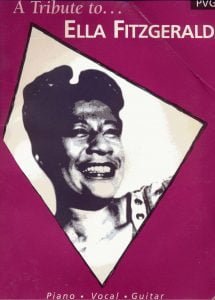
Best Sheet Music download from our Library.
Please, subscribe to our Sheet Music Library.
If you are already a subscriber, please, check our NEW SCORES’ page every month for new sheet music. THANK YOU!
Contents List Download:
Ella Fitzgerald: The First Lady of Song
Ella Fitzgerald, known universally as the “First Lady of Song,” possessed one of the most extraordinary voices of the 20th century. With a career spanning nearly six decades, she transformed the way the world listened to jazz and popular music, leaving an indelible mark on music and culture. From a troubled youth to international stardom, her story is one of resilience, innovation, and unparalleled talent.
| Phase | Key Period | Defining Characteristics & Achievements |
|---|---|---|
| 🎤 Early Life | 1917-1934 | Born in Virginia, endured a difficult youth in Yonkers after her mother’s death, debuted at the Apollo Theater amateur night in 1934. |
| 🎼 Band Years | 1934-1942 | Collaborated with the Chick Webb Orchestra, rose to fame with “A-Tisket, A-Tasket” in 1938, briefly led the band after Webb’s passing. |
| 💿 Solo Career | 1942-1955 | Signed with Decca Records, developed virtuosic scat singing skills with Dizzy Gillespie, began her managerial partnership with Norman Granz. |
| 🏆 Career Peak | 1956-1960s | Signed with Verve Records, recorded the groundbreaking “Songbook” series, became the first African American woman to win a Grammy Award. |
| 🌟 Later Years & Legacy | 1970s-1996 | Continued touring and recording, received numerous lifetime achievement awards including the Presidential Medal of Freedom, passed away in 1996, leaving an enduring musical legacy. |

Browse in the Library:
Or browse in the categories menus & download the Library Catalog PDF:
Early Life and Difficult Years
Ella Jane Fitzgerald was born on April 25, 1917, in Newport News, Virginia. Her early life was filled with upheaval; her parents separated shortly after her birth, and she moved with her mother and stepfather to Yonkers, New York. Growing up in a mixed-ethnic community exposed her to different cultures, but her true passions were dance and music. She would often listen to records by Louis Armstrong and, significantly, the Boswell Sisters. Connie Boswell, in particular, became a lifelong musical idol and a primary influence on her singing style.
In 1932, Ella’s mother died suddenly from a heart attack. This tragedy, when Ella was just 15, devastated the family and sent her life into a downward spiral. After conflicts at home, she ended up in a reformatory school and for a time was even homeless. The turning point came on November 21, 1934. A 17-year-old Ella, living tough times, drew her name from a hat to compete in an amateur night contest at the legendary Apollo Theater in Harlem. Originally intending to dance, she changed her mind at the last moment and sang “Judy” and “The Object of My Affection” in the style of her idol Connie Boswell. She captivated the audience and won the first prize of $25. This contest launched her legendary artistic journey.
The Band Years and Rise to Fame
Her Apollo win led to a crucial meeting with drummer and bandleader Chick Webb. Initially hesitant about her appearance, Webb was quickly won over by her immense talent and hired her to sing with his orchestra. At Harlem’s famous Savoy Ballroom, Ella’s abilities flourished, and she began recording hits with the band.
In 1938, her playful, swinging rendition of the children’s nursery rhyme “A-Tisket, A-Tasket” made her a national star. The record sold over a million copies and stayed on the pop charts for 17 weeks. Tragically, Chick Webb’s health was failing, and he died in 1939. A determined 22-year-old Ella took over the band, renaming it “Ella Fitzgerald and Her Famous Orchestra,” and continued touring and recording for the next few years, gaining invaluable leadership experience.
Solo Career and the Art of Scat Singing
By 1942, Ella decided to strike out entirely on her own and signed with Decca Records. This period coincided with a major shift in jazz from the danceable swing era to the faster, more complex harmonies of bebop. Ella immersed herself in this new sound, collaborating with bebop pioneer Dizzy Gillespie. Her voice became like another instrument, improvising melodies and rhythms with a freedom and precision that was revolutionary. She developed her unparalleled scat singing technique—using her voice to mimic the sounds of horns and drums.
Her 1945 recording of “Flying Home” was hailed by The New York Times as “one of the most influential jazz records of the decade.” It was also during this time that she met the most important manager of her career, producer Norman Granz. Granz not only became her manager but would later create the perfect platform for her to reach her artistic peak.
Career Peak: The Verve Years and the Songbooks
In 1955, Ella left Decca and signed with Norman Granz’s newly formed Verve Records, ushering in her golden age. Granz had a brilliant vision: he believed Ella’s talent should not be confined to jazz clubs but should interpret the greatest popular songs of America. In 1956, the first album, Ella Fitzgerald Sings the Cole Porter Songbook, was released to massive commercial and critical success.
She went on to record a series of these “Songbook” albums over the following years, dedicated to the giants of American composition: George and Ira Gershwin, Duke Ellington, Irving Berlin, Jerome Kern, and Johnny Mercer, among others. These albums were not just collections of songs; they were systematic interpretations that elevated the “Great American Songbook” to high art and set a new standard for the popular music album. Composer Ira Gershwin later remarked, “I never knew how good our songs were until I heard Ella Fitzgerald sing them.”
At the very first Grammy Awards ceremony in 1958, Ella made history. She won two awards—Best Jazz Performance, Individual, and Best Female Vocal Performance—becoming the first African American woman to win a Grammy.
🌟 Later Life and an Enduring Musical Legacy
For the next decades, Ella maintained a grueling schedule, performing 40 to 45 weeks a year, touring the globe and bringing her music to millions. Her famous live album Ella in Berlin (1960) captured the legendary moment she forgot the lyrics to “Mack the Knife” and brilliantly improvised her way through the song, creating one of the most iconic performances in recorded music. Her collaborations with Louis Armstrong and Frank Sinatra also remain beloved by fans worldwide.
Beyond music, Ella was respected for her kindness and quiet courage. She refused to perform in segregated venues, and with crucial help from her friend Marilyn Monroe, who famously called the club’s owner to secure the booking, she broke racial barriers. She became the first African American artist to perform at the prestigious Mocambo club in Hollywood.
In the 1980s, her health declined due to complications from diabetes, but the honors only increased. She received the National Medal of Arts from President Ronald Reagan and the Presidential Medal of Freedom from President George H. W. Bush, among countless other accolades. On June 15, 1996, the 79-year-old “First Lady of Song” passed away peacefully at her home in Beverly Hills, California.
Ella Fitzgerald’s pure tone, flawless diction, and improvisational genius remain unmatched. She left behind over 200 albums and 14 Grammy Awards. More than the awards and records, she left a legacy of joy and musical excellence. Her voice transcended race, nationality, and generations, reminding us of the pure power of a beautiful song sung perfectly. If you are not yet familiar with her music, exploring one of her classic “Songbook” albums is the perfect place to start experiencing the magic of this legendary voice.
Search your favorite sheet music in the Sheet Music Catalog
The Art of Scat: Ella Fitzgerald’s Vocal Innovation
Ella Fitzgerald’s scat singing represents one of the most remarkable achievements in jazz history—a revolutionary approach that transformed the human voice into a flexible, expressive instrument capable of spontaneous musical invention. Her improvisational style not defined her career but set a new standard for what vocal jazz could achieve.
What Is Scat Singing?
At its core, scat singing is a form of vocal improvisation in which the singer uses nonsense syllables—like “sha-ba-do-ah,” “ou-bop-shu-bam,” or “a-bap-di-ah”—to create melodic lines that function like an instrumental solo . Rather than delivering actual words, the vocalist becomes a horn player, using the voice to “play” melodies, rhythms, and harmonic ideas in real time.
This technique allows jazz singers to participate fully in the improvisational conversation that lies at the heart of jazz. As one academic study describes it, vocal improvisation has the same definition as instrumental improvisation—the musician creates melodies based on pre-existing chord progressions . The voice, in this context, abandons its traditional role as a conveyor of lyrics and instead embraces the abstract, spontaneous language of pure music.
Ella’s “Horn-Like” Approach
What set Ella Fitzgerald apart was her extraordinary ability to mimic the sound and phrasing of jazz instruments. She possessed what critics consistently describe as a “horn-like” improvisational ability . This wasn’t merely a technical trick—it was a philosophical approach to singing that placed her voice on equal footing with the saxophones, trumpets, and pianists she performed alongside.
Ella herself acknowledged this influence with characteristic humility and wit: “I steal everything I hear, but mostly I steal from the horns” . This statement reveals the essence of her method—she listened intently to instrumentalists, absorbed their phrasing, their articulation, their sense of swing, and then translated those qualities through her own remarkable instrument.
Her vocal range spanned three octaves, allowing her to move from delicate, bird-like highs to resonant, cello-like lows with seamless ease . This extraordinary range gave her the technical freedom to execute whatever musical ideas emerged in her imagination.
The Bebop Revolution and Scat Evolution
The mid-1940s marked a pivotal moment in both jazz history and Ella’s artistic development. As the swing era gave way to the complex harmonies and rapid-fire melodies of bebop, Ella found herself working with pioneers like Dizzy Gillespie. She later recalled: “I just tried to do [with my voice] what I heard the horns in the band doing” .
This period transformed her singing. Between 1943 and 1952, while recording for Decca Records, she established the syllabic vocabulary that would define her improvisational style for the rest of her career . Scholars who have studied her recordings note that timbre and articulation—the specific qualities of sound and how notes are attacked and released—became vital elements of her approach .
Her 1945 recording of “Flying Home,” arranged by Vic Schoen, became a landmark. The New York Times later described it as “one of the most influential vocal jazz records of the decade” . While other singers, most notably Louis Armstrong, had experimented with scat, no one before Ella had employed the technique with such “dazzling inventiveness” .
Her 1947 bebop recording of “Oh, Lady Be Good!” further cemented her reputation as one of the leading jazz vocalists of her generation . These recordings weren’t just popular—they were instructional, demonstrating to generations of singers how the voice could navigate the complexities of modern jazz.
The Elements of Fitzgerald’s Style
Musicologists and jazz educators have analyzed Ella’s scat singing to understand its technical foundations. Several key elements emerge from these studies:
Motives and Motivic Development: Like a great instrumental soloist, Ella would introduce a short musical idea—a motive—and then develop it throughout her solo, varying it rhythmically and melodically to create coherence and logical progression .
Chordal Approach: Her improvisations clearly outlined the underlying harmony of each song. She had an intuitive understanding of chord progressions and could weave through complex changes with apparent effortlessness .
Chromatic Approach: Ella frequently used chromatic passing tones and embellishments, adding color and tension to her lines before resolving them satisfyingly .
Beyond these technical elements, scholars have also explored a more poetic dimension to her work. One fascinating study approaches Ella’s scat solos through the metaphor of “telling a story” —borrowing concepts from literature such as “plot” and “characters” to understand how she creates coherent, independent narratives through pure sound . This perspective acknowledges that her best improvisations aren’t random collections of notes but carefully shaped artistic statements with beginning, middle, and end.
Recordings That Define the Art
Certain recordings stand as monuments to Ella’s scat genius:
“Flying Home” (1945) : The recording that announced a new era in vocal jazz. Her improvisation captures the exhilaration of bebop while maintaining the warmth and swing that characterized all her work .
“Oh, Lady Be Good!” (1947) : A masterclass in bebop phrasing, with Ella weaving through the changes at breakneck speed while maintaining perfect clarity and swing .
“How High the Moon” (1947) : Another essential recording from this fertile period, demonstrating her ability to construct extended improvisations that maintain interest and logical development .
“Smooth Sailing” (1951) : Part of what scholars call her “vocalized instrumentals” period, showing the refinement of her improvisational style .
These recordings reward careful listening. Each syllable choice, each rhythmic accent, each melodic curve reveals the mind of an artist thinking spontaneously at the highest level.
The First Lady of Song
Ella Fitzgerald’s scat singing earned her numerous honorific titles—the “First Lady of Song,” the “Queen of Jazz,” and simply “Lady Ella” . But these titles only hint at her true significance. She didn’t just excel at scat singing; she redefined what was possible for jazz vocalists.
Her influence extends through generations of singers who followed. When contemporary jazz vocalists improvise with instrumental fluency, they walk a path Ella helped pave. When singers approach the voice as a flexible instrument capable of spontaneous creation, they build on foundations she laid.
Her legacy also includes 14 Grammy Awards, the National Medal of Arts, and the Presidential Medal of Freedom . But perhaps her greatest honor is the continued study of her recordings by musicians and scholars seeking to understand her genius. Doctoral dissertations analyze her syllable choices . Academic papers examine her technical approach . Musicians transcribe her solos to learn her language .
Ella Fitzgerald’s scat singing represents a perfect union of natural talent and cultivated artistry. Her three-octave range gave her the tools; her years of listening to instrumentalists gave her the vocabulary; and her fearless creativity gave her the willingness to improvise in the moment, trusting her musical instincts completely.
When she sang, she didn’t just perform—she conversed with the greatest jazz musicians of her era on equal terms. Her voice became trumpet, saxophone, piano, and drums, all while remaining unmistakably, beautifully human. In doing so, she proved that the human voice could do more than sing words—it could think, create, and swing with the freedom of any instrument in the band.
For anyone seeking to understand jazz improvisation, Ella Fitzgerald’s scat recordings remain an essential education. They are not just historical documents but living music, as fresh and exciting today as when she first sang those nonsense syllables into the microphone and changed jazz forever.