Community Musicians, building a worldwide Community Music.
Scores
for all instruments: 15,000+
(active and growing),
over 231,000 pages.
All genres and levels: Jazz & Blues, Rock & Pop, Classical & Contemporary, Film & Musicals;
books & biographies; methods, études, play-along tracks (MP3) for Jazz & Rock.
Access & benefits: US$15.99 one-time payment, valid for lifetime, full Library access.
Table of Contents
Happy heavenly birthday, Nina Simone, born on his day on 1933.
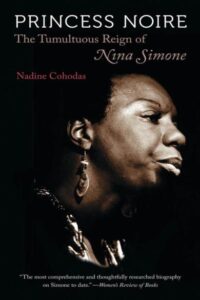
Best Sheet Music download from our Library.
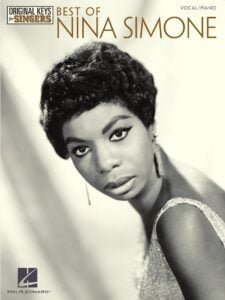
Please, subscribe to our Sheet Music Library.
If you are already a subscriber, please, check our NEW SCORES' page every month for new sheet music. THANK YOU!
The High Priestess of Soul: The Uncompromising Life and Legacy of Nina Simone
On February 21, 1933, a woman was born who would grow to embody the very essence of artistic passion and political defiance. Her name was Eunice Kathleen Waymon, but the world would come to know her as Nina Simone. More than just a singer or a pianist, Simone was a force of nature—a classically trained virtuoso who refused to be confined by genre, a civil rights activist who wielded her art as a weapon, and a voice for the marginalized that continues to resonate with startling clarity decades after her passing .
To delve into the life of Nina Simone is to explore a story of immense talent, searing injustice, and unyielding integrity. Her music was not merely entertainment; it was a diary of her soul and a chronicle of the struggle for Black liberation in America. On what would be her birthday, we celebrate the full scope of her legacy: her biography, her unique musical style, her essential songs, and the indelible mark she left on the world.
From Eunice Waymon to Nina Simone: A Prodigy's Path
Nina Simone was born the sixth of eight children in the small town of Tryon, North Carolina . Her musical genius was evident from the age of three, when she began playing piano by ear at her family's church, learning her first song, "God Be With You, Till We Meet Again" . Recognizing her prodigious talent, her community established a special fund to support her education. This enabled her to study at the Allen High School for Girls in Asheville, North Carolina, where she graduated as valedictorian .
A pivotal, and painful, moment occurred at her first public recital at the age of twelve. As she prepared to perform, she watched her parents, who had proudly taken seats in the front row, be forced to move to the back of the hall to make way for a white couple. In an act of precocious defiance that would foreshadow her entire career, young Eunice refused to play until her parents were reseated in the front . The incident seared into her consciousness the brutal reality of segregation.
With her sights set on becoming the first Black American concert pianist, Simone spent the summer of 1950 at the prestigious Juilliard School in New York City, studying under Carl Friedberg to prepare for an audition at the Curtis Institute of Music in Philadelphia . However, her application was rejected—a devastating blow from which she never fully recovered. Convinced, with good reason, that her race was the primary factor, she watched as the doors to a classical career were slammed shut. (The Curtis Institute would later award her an honorary degree just days before her death in 2003) .
Browse in the Library:
Or browse in the categories menus & download the Library Catalog PDF:
To support herself and continue her private studies, she began teaching piano from her home in Philadelphia. A year later, she took a job playing at the Midtown Bar & Grill in Atlantic City. The owner insisted she sing as well as play, a demand that would inadvertently launch her new career. It was here that she adopted a stage name to hide her identity from her deeply religious mother, who would have disapproved of her playing "the Devil's music" in a bar. "Nina" came from a boyfriend who called her "niña," Spanish for "little girl," and "Simone" was taken from the beloved French actress Simone Signoret . Nina Simone was born.

A Musical Style Forged in Defiance
Nina Simone's music is instantly recognizable, yet maddeningly difficult to categorize. It is a unique alchemy of influences that she fused together into a sound entirely her own. While often labeled a jazz singer, her foundation was classical, her soul was drenched in gospel and the blues, and her message was pure, unvarnished truth .
The Classical Foundation: At the core of Simone's artistry was her piano playing, which was deeply rooted in the Baroque and classical traditions, particularly that of Johann Sebastian Bach. She once said, "Once I understood Bach's music I never wanted to be anything other than a concert pianist" . Bach's mathematical precision and structure are evident in her intricate, often contrapuntal, piano work. In songs like the haunting "Pirate Jenny" (from The Threepenny Opera), she builds tension through "periodicity"—using repeating musical phrases and dramatic silences to create a sense of accumulating dread, a technique that echoes the structure of classical compositions . This classical discipline gave her music a formal sophistication that she used to frame raw, emotional, and often angry content, subverting the expectations of her audience and forcing them to listen on her terms .
The Voice of the High Priestess: Her voice—a deep, rich contralto—was an instrument of profound expressiveness . It could shift from a tender, vulnerable whisper to a ferocious, gravelly shout in the span of a single line. She didn't just sing words; she inhabited them, stretching syllables, bending notes, and using her vocal imperfections to convey a depth of feeling that a "perfect" voice could never achieve. She commanded attention not through volume alone, but through a palpable sense of conviction. As Beyoncé noted at Simone's Rock & Roll Hall of Fame induction, "Her voice is unmatched. She commands your attention and your soul".

Genre as a Tool, Not a Label: Throughout her career, she moved with ease and authority through a vast landscape of genres: jazz, blues, folk, gospel, pop, and later, funk and Afrobeat . This wasn't eclecticism for its own sake; it was a reflection of her belief that no single genre could contain the totality of the Black experience. She used the musical language that best suited the story she needed to tell, whether it was the tender ache of a jazz standard or the driving, gospel-infused cadence of a protest anthem .
The Essential Nina Simone: Songs of Love, Rage, and Freedom
Nina Simone's discography is a treasure trove of powerful performances and indelible compositions. Here are some of the essential songs that define her legacy .
The Artist's Signature:
- "I Loves You, Porgy" (1958): This George Gershwin standard from Porgy and Bess was her first and only top 20 hit in the United States. Recorded as a favor to a friend, her tender, vulnerable performance introduced the world to her unique voice and set the stage for her career .
- "My Baby Just Cares for Me" (1958): While originally a minor hit, this playful, charming track became a global sensation in the 1980s after being used in a British perfume commercial. Its sophisticated piano work and Simone's coy delivery make it a timeless classic .
- "I Put a Spell on You" (1965): Transforming Screamin' Jay Hawkins's original frantic blues number into a slow-burning, ominous, and sensual masterpiece, Simone's version is a tour de force of controlled passion and theatrical drama .
- "Feeling Good" (1965): An anthem of pure, unadulterated optimism and liberation. With its sweeping arrangement and Simone's confident, soaring vocals, the song captures a moment of rebirth and endless possibility, becoming one of her most beloved and enduring recordings .
The Voice of the Movement:
- "Mississippi Goddam" (1964): The cornerstone of her activism. Written in a "rush of fury" after the murder of Medgar Evers and the 16th Street Baptist Church bombing, this song was a direct, sarcastic, and unflinching indictment of racial injustice. It was banned in several Southern states, but it became an anthem for the Civil Rights Movement, forever cementing her role as a protest artist .
- "Four Women" (1966): A stark and beautiful composition that tells the stories of four Black women—each with different skin tones and life experiences—whose identities have been shaped by slavery and systemic racism. It is a masterclass in storytelling and a poignant exploration of Black womanhood .
- "To Be Young, Gifted and Black" (1970): Written in memory of her friend, the playwright Lorraine Hansberry, this song is a powerful and uplifting celebration of Black identity and potential. It became a rallying cry for the Black Pride movement and remains an enduring source of inspiration .
- "Sinnerman" (1965): A ten-minute spiritual epic, "Sinnerman" is a mesmerizing journey of sin, guilt, and the desperate plea for salvation. Built on a repetitive, driving piano figure and escalating to a fever pitch with handclaps and percussion, it showcases her ability to transform a traditional spiritual into a piece of transcendent, cathartic art .
- "I Wish I Knew How It Would Feel to Be Free" (1967): A gospel-infused, joyful yet yearning anthem for liberation that has been covered by countless artists and remains a powerful expression of the universal desire for freedom .
Filmography: The Face and Sound on Screen
While Nina Simone was primarily a recording and performing artist, her presence has been felt in cinema in several significant ways .
As Herself: Her most vital film appearances are in documentaries that capture her live performances and tell her story. The most acclaimed of these is the 2015 Netflix documentary What Happened, Miss Simone? , which was nominated for an Academy Award. Using rare archival footage and interviews, it provides an unflinching look at her life, art, and struggles . Another crucial documentary is the 1992 French film Nina Simone: La légende . She is also featured in the 2021 documentary Summer of Soul (…Or, When the Revolution Could Not Be Televised) , where her legendary 1969 performance at the Harlem Cultural Festival is rightfully celebrated as a centerpiece of the film .
Her Musical Legacy: Simone's voice and songs have been used extensively in film soundtracks, introducing her music to new generations. From Point of No Return (1993) featuring her version of "Don't Let Me Be Misunderstood" to The Thomas Crown Affair (1999) using "Sinnerman," her music provides a powerful emotional and narrative punch. More recently, "Feeling Good" and "Sinnerman" have appeared in numerous films and commercials, ensuring her sound is a permanent fixture in popular culture.
Cooperations and Contemporaries
Nina Simone was a singular, often isolated figure in the music industry, but she was not without connections and collaborators .
- Early Collaborations: Her debut album, Little Girl Blue (1959), featured the skilled accompaniment of bassist Jimmy Bond and drummer Albert "Tootie" Heath, who helped lay down the swinging, intimate foundation of her early sound .
- Poets and Playwrights: Some of her most profound partnerships were with literary figures. Her friendship with Lorraine Hansberry (author of A Raisin in the Sun) deeply influenced her political consciousness and inspired "To Be Young, Gifted and Black." She also set poems by the Harlem Renaissance leader Langston Hughes to music, most notably "Backlash Blues" .
- Musical Peers: In 1960, her early work was compiled on an album called Nina Simone and Her Friends, which also featured tracks by jazz singers Carmen McRae and Chris Connor . While not a direct collaboration, it placed her in the esteemed company of her jazz contemporaries. Throughout her career, her bandleaders and musical directors, often arranged by her husband Andy Stroud, provided the frameworks for her powerful performances.
Influence and Legacy: The Spell Still Holds
Nina Simone passed away on April 21, 2003, in France, but her influence has only grown in the years since. She left behind a legacy that is both profound and multifaceted .
On Music: Her impact on subsequent generations of musicians is immeasurable. Artists from Aretha Franklin to Lauryn Hill, from Alicia Keys to John Legend, and from Jeff Buckley to Mary J. Blige (who inducted her into the Rock & Roll Hall of Fame) have cited her as an inspiration . In the world of hip-hop, her work has been extensively sampled. Kanye West used a sample of her performance of "Strange Fruit" for his song "Blood on the Leaves," while Jay-Z sampled "I Got Life" for his classic "Hard Knock Life (Ghetto Anthem)," introducing her voice to a new generation .
As a Symbol of Resistance: Simone's unwavering commitment to speaking truth to power has made her a lasting icon of the struggle for racial justice. Her songs continue to be used in protests and social movements, their messages as urgent today as they were in the 1960s. She modeled what it means to be an artist who refuses to separate their art from their politics, setting a standard for creative integrity that remains the benchmark for activist artists today.
Honors and Recognition: In the years following her death, the accolades have poured in. She received honorary degrees, including from the very Curtis Institute that had rejected her . In 2018, she was inducted into the Rock & Roll Hall of Fame, a fitting recognition for an artist who transcended all categories . Rolling Stone has consistently ranked her among the greatest singers of all time .
Nina Simone was not always easy to understand. She was demanding, volatile, and often angry. But her anger was born of love—love for her people, love for justice, and love for the truth. She lived by a simple, uncompromising creed: that her art must be an honest reflection of herself and her world. From the classical prodigy in North Carolina to the "High Priestess of Soul" on the world stage, her life was a continuous, courageous act of creation and defiance. And as her music continues to find new listeners and inspire new fights for freedom, the spell she put on the world shows no sign of fading.
Search your favorite sheet music in the Sheet Music Catalog
NINA SIMONE COLLECTION
00:00 Baltimore 04:19 I Put A Spell On You 06:49 Work Song 09:52 Funkier Than A Mosquito's Tweeter 14:53 Take Care of Business 16:50 Sinnerman 19:06 Mississippi Goddam 23:28 Tell Me More and More And Then Some 26:29 To Love Somebody 29:01 Don't Let Me Be Understood 31:38 Here Comes The Sun - (Cover) 35:02 I Hold No Grudge 37:12 Black Is The Color Of My True Love's Hair 40:31 Four Women
Ain't Got No, I Got Life - Nina Simone
Nina Simone playing live in London, 1968.
Browse in the Library:
Or browse in the categories menus & download the Library Catalog PDF: