Community Musicians, building a worldwide Community Music.
Scores
for all instruments: 15,000+
(active and growing),
over 231,000 pages.
All genres and levels: Jazz & Blues, Rock & Pop, Classical & Contemporary, Film & Musicals;
books & biographies; methods, études, play-along tracks (MP3) for Jazz & Rock.
Access & benefits: US$15.99 one-time payment, valid for lifetime, full Library access.
Table of Contents
Happy heavenly birthday, George Harrison, born on this day in 1943.
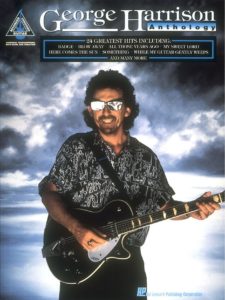
Best Sheet Music download from our Library.
Please, subscribe to our Sheet Music Library.
If you are already a subscriber, please, check our NEW SCORES' page every month for new sheet music. THANK YOU!
George Harrison, "the quiet Beatle."
George Harrison, born on February 25, 1943, in Liverpool, England, remains one of the most influential and spiritually profound figures in the history of popular music . Known to the world as "the quiet Beatle," his legacy extends far beyond his role as the lead guitarist for the most famous band in history. He was a pioneering musical explorer, a visionary philanthropist, and a film producer who reshaped British cinema.
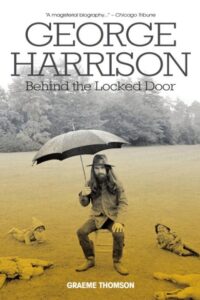
Browse in the Library:
Or browse in the categories menus & download the Library Catalog PDF:
Early Life and The Beatles Years
George Harold Harrison was the youngest of four children born to Harold and Louise Harrison . Growing up in a working-class Liverpool home, music entered his life through the skiffle craze. At the age of 12, he bought his first guitar, a cheap acoustic model, and taught himself to play with a fervent dedication that would define his life . It was on the school bus that he met another young music enthusiast, Paul McCartney, a meeting that would alter the course of cultural history.
Harrison's virtuosity as a lead guitarist was evident from the start, his crisp, melodic lines becoming an essential component of The Beatles' signature sound. However, his role as a songwriter grew steadily. Initially overshadowed by the prolific Lennon-McCartney partnership, Harrison fought for space on the band's albums. His first composition, "Don't Bother Me" (1963), appeared on With The Beatles, signaling his arrival as a writer. By 1965, with albums like Rubber Soul, his songwriting had matured considerably. Songs like the jangling, Byrds-influenced "If I Needed Someone" and the politically charged "Think For Yourself" showcased a unique voice that was distinct from his bandmates.
The mid-60s brought two transformative influences into his life. On the set of the film Help!, he met model Pattie Boyd, who would become his first wife and the inspiration for some of his most beautiful love songs . More profoundly, the film introduced him to Indian classical music and the sitar. This encounter was a spiritual and musical epiphany. He immersed himself in the study of the instrument under the tutelage of the legendary Ravi Shankar, a relationship that would deeply impact his worldview and artistic direction .
This Indian influence bloomed throughout The Beatles' later work, from the droning sitar on "Norwegian Wood" to the full-blown Indian classical arrangement of "Love You To" (1966). His masterpiece from the Sgt. Pepper's era, "Within You Without You," was a direct expression of his philosophical and musical studies, merging Indian instrumentation with a profound lyrical exploration of maya (illusion) and the self . In the band's final years, he emerged as a songwriter of the highest order, contributing two of the most beloved songs on Abbey Road: "Here Comes the Sun," a radiant burst of optimism written in Eric Clapton's garden, and "Something," which Frank Sinatra famously declared the "greatest love song ever written" . Other classics from this period, such as the haunting "While My Guitar Gently Weeps" (featuring Clapton on lead guitar) and the acerbic tax-protest "Taxman," proved his ability to stand toe-to-toe with Lennon and McCartney.
Solo Career and Musical Explorations
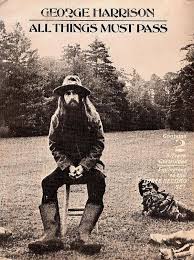
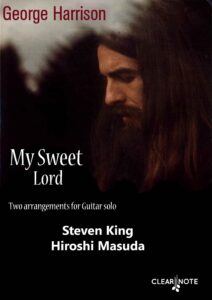
Following The Beatles' breakup in 1970, Harrison unleashed a decade's worth of pent-up creativity with the monumental triple album All Things Must Pass. Widely regarded as the finest solo album by any ex-Beatle, it was a sprawling, spiritually charged masterpiece . Produced with Phil Spector's "Wall of Sound" technique, the album yielded the global number-one hit "My Sweet Lord," a devotional song whose soaring slide guitar and gospel-infused chorus became an anthem for a generation seeking transcendence . Other tracks like the driving "What Is Life" and the poignant title track, "All Things Must Pass," solidified his status as a solo superstar .
His musical style was uniquely his own. He was, as American Songwriter notes, the most harmonically adventurous of The Beatles . His deep understanding of Indian music, particularly the microtonal scales of ragas and the use of meend (glissando) and gamak (ornamental string bends), fundamentally reshaped his approach to Western harmony. This was most evident in his distinctive slide guitar playing, a sound that became his signature. Tracks like the Grammy-winning "Marwa Blues," from his final album Brainwashed (2002), demonstrate his ability to translate the essence of an Indian raga onto the guitar, creating a sound that was both deeply spiritual and profoundly musical . His songwriting often employed complex chord voicings and unexpected shifts, as heard in "Isn't It a Pity," where a simple fret-hand movement created a mysterious and unforgettable harmonic color .
Film Production and The Traveling Wilburys
Beyond music, Harrison was a passionate film producer. In the late 1970s, he founded Handmade Films to finance Monty Python's Life of Brian after original backers pulled out, saving the now-classic comedy for the world . Handmade Films went on to produce a string of beloved British films throughout the 80s, including Time Bandits (1981), Withnail and I (1987), and Mona Lisa (1986), demonstrating his eclectic taste and crucial support for the film industry . He also made cameo appearances in several of these films, including a memorable role as Mr. Papadopolous in Life of Brian .
The 1980s also saw him find a new musical soulmate in Jeff Lynne of ELO. Their collaboration produced the hit album Cloud Nine (1987) and its chart-topping single "Got My Mind Set on You" . More importantly, this partnership led to the formation of the Traveling Wilburys, a supergroup for the ages. Alongside Bob Dylan, Tom Petty, Roy Orbison, and Lynne, Harrison reveled in the camaraderie and collective creativity of the band . Under the humorous pseudonym "Nelson Wilbury," he contributed his signature sound to the group's two beloved albums, a joyful late-career highlight that brought him immense personal and professional satisfaction.
Legacy, Philanthropy, and Lasting Influence
Harrison's legacy is defined as much by his heart as by his art. In 1971, at the urgent request of Ravi Shankar, he organized The Concert for Bangladesh at Madison Square Garden . It was the first major benefit concert of its kind, bringing together friends like Bob Dylan, Eric Clapton, and Ringo Starr to raise awareness and funds for refugees. This groundbreaking event set the template for all future large-scale charity efforts, from Live Aid to the present day .
His influence on subsequent generations of musicians is immeasurable. Noel Gallagher of Oasis openly acknowledged that the guitar riff for their breakthrough hit "Supersonic" was "a bit George Harrison," a testament to the enduring power of Harrison's melodic rock style . More recently, the DownBeat magazine highlighted a unique tribute: Dutch gypsy jazz guitarist Robin Nolan released an album, For The Love of George, in February 2025 (on Harrison's 82nd birthday), featuring interpretations of Harrison's music played on Harrison's own personal guitars at his Friar Park studio . The album even includes a track, "For The Love of George," based on an unfinished chord sequence Harrison had scribbled on an envelope before his death, bringing his musical journey full circle .
George Harrison passed away on November 29, 2001, after a battle with cancer . He left behind a body of work that continues to inspire. He was a seeker who used his immense platform to explore life's biggest questions and to encourage love and compassion. His music, from the gentle warmth of "Here Comes the Sun" to the slide guitar prayers of his later years, remains a timeless gift—a reminder that while all things must pass, the search for meaning, beauty, and connection is a journey worth taking.
Search your favorite sheet music in the Sheet Music Catalog
George Harrison - What Is Life
George Harrison - Give Me Love (Give Me Peace on Earth) [Official Video]
Give me love
Give me love
Give me peace on earth
Give me light
Give me life
Keep me free from birth
Give me hope
Help me cope with this heavy load
Trying to touch and reach you with
Heart and soul
Om
My Lord
Please take hold of my hand
That I might understand you
Won't you please
Oh, won't you?
Give me love
Give me love
Give me peace on earth
Give me light
Give me life
Keep me free from birth
Give me hope
Help me cope with this heavy load
Trying to touch and reach you with
Heart and soul
Om
My Lord
Won't you please
Oh, won't you?
Give me love
Give me love
Give me peace on earth
Give me light
Give me life
Keep me free from birth
Give me hope
Help me cope with this heavy load
Trying to touch and reach you with
Heart and soul
Give me love
Give me love
Give me peace on earth
Give me light
Give me life
Keep me, keep me free from birth
Now give me hope
Help me cope with this heavy load
Trying to touch and reach you with
Heart and soul
Om
My Lord