Come join us now, and enjoy playing your beloved music and browse through great scores of every level and styles!
Can’t find the songbook you’re looking for? Please, email us at: sheetmusiclibrarypdf@gmail.com We’d like to help you!
Table of Contents
Who is Andrea Bocelli?
Andrea Bocelli, Céline Dion – The Prayer (Live at Central Park / 2011)
Search André Gagnon’s best sheet music, books, and transcriptions in the Library:
| Artist or Composer / Score name | Cover or sample | Contents (if available)* |
|---|---|---|
| Andrea Bocceli – Time To Say Goodbye | ||
| Andrea Boccelli – Time To Say Goodbye | 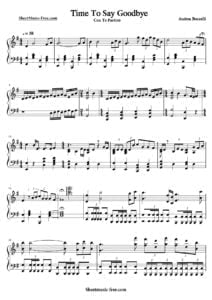 | |
| Andrea Bocelli Romanza songbook (Guitar & Voice) | 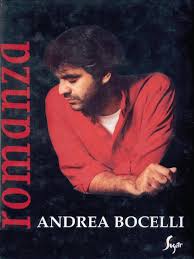 | Andrea Bocelli Romanza songbook |
| Andrea Bocelli – Con te partiro (Time to say Goodbye) Piano Solo arr | Andrea Bocelli – Con te partiro (Time to say Goodbye) Piano Solo | |
| Andrea Bocelli – Con te partiro (Time to say Goodbye) Piano Solo.mscz | ||
| Andrea Bocelli Anthology Piano Vocal guitar | 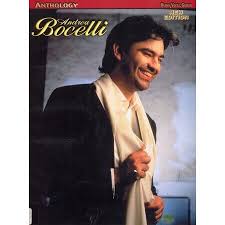 | Andrea Bocelli Anthology Piano Vocal guitar |
| Andrea Bocelli Celine Dion The Prayer Easy Piano And Vocal By David Foster, Carole Bayer Sager, Alberto Testa And Tony Renis |  | |
| Andrea Bocelli Celine Dion – The Prayer – Easy Piano and Vocal by David Foster, Carole Bayer Sager, Alberto Testa and Tony Renis.mscz | ||
| Andrea Bocelli Cieli Di Toscana (Piano, guitar & Vocal) |  | Andrea Bocelli Cieli Di Toscana |
| Andrea Bocelli Cinema Vocal Piano | 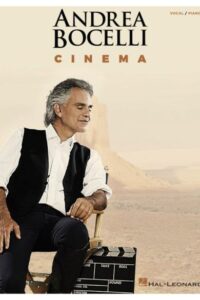 | Andrea Bocelli Cinema Vocal Piano |
| Andrea Bocelli Si Piano Vocal Guitar | 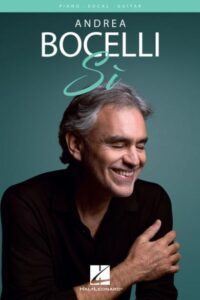 | Andrea Bocelli Si Piano Vocal Guitar |
| Andrea Bocelli Sogno Songbook | 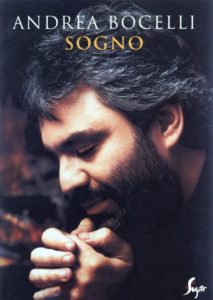 | Andrea Bocelli sogno |
| Andrea Bocelli The Best Of Andrea Bocelli Vivere Vocal Piano | 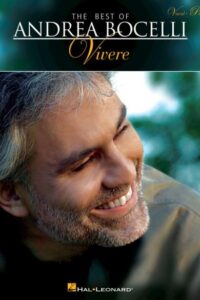 | Andrea Bocelli The Best Of Andrea Bocelli Vivere Vocal Piano |
| Andrea Bocelli The Best Of Piano Vocal | 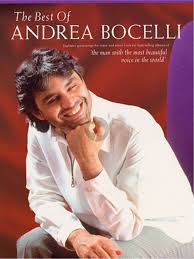 | Andrea Bocelli The Best Of Piano Vocal |
| Andrea Bocelli The Prayer |  |
Best Sheet Music download from our Library.
Andrea Bocelli: The Voice of the Soul – A Comprehensive Examination
Andrea Bocelli stands as one of the most singular and commercially successful musical figures of the past three decades. His is a voice that has transcended the traditional boundaries between classical and popular music, bringing the tenor repertoire to audiences of unprecedented size and diversity. The Canadian singer Celine Dion once offered a sentiment that has been repeated countless times in reference to Bocelli: if God had a singing voice, it would sound like his . This observation captures the ethereal, almost otherworldly quality that listeners have found in his instrument since his emergence in the early 1990s. With global record sales exceeding ninety million units as of 2018, he is not merely a successful singer but the biggest-selling artist in the history of classical music, a figure who has achieved a level of popular penetration that few classically trained vocalists have ever approached . His journey from the Tuscan countryside, through a law degree, to international superstadiums is a narrative of resilience, faith, and the extraordinary power of musical communication. This exhaustive article seeks to explore the complete panorama of Andrea Bocelli’s life and work, examining his biography, musical style, collaborations, compositional characteristics, influence, and enduring legacy.
Please, subscribe to our Sheet Music Library.
If you are already a subscriber, please, check our NEW SCORES’ page every month for new sheet music. THANK YOU!
Full Biography
Early Life and the Loss of Sight
Andrea Bocelli was born on 22 September 1958 in Lajatico, a small rural town in the province of Pisa in Tuscany, Italy . His parents, Alessandro and Edi Bocelli, ran a farm and sold farm machinery. From birth, Andrea suffered from congenital glaucoma, a condition that significantly impaired his vision. Despite this, his early childhood was marked by a profound connection to music. His family nurtured this innate sensitivity; at the age of six, he began piano lessons, later adding flute and saxophone to his instrumental studies . He possessed a natural singing voice that was already drawing attention, but his life took a definitive turn at the age of twelve. While playing football, he was struck on the head by the ball, an accident that caused a brain hemorrhage. Following this event, he was declared completely and irreversibly blind .
Rather than extinguishing his spirit, this tragedy seemed to focus it. Within the same year, he won his first singing competition with a performance of O Sole Mio, demonstrating a resilience and determination that would characterize his entire life . Music became not just a passion but a guiding light.
Education and a Brief Legal Career
Despite his burgeoning musical interests, the path to a career as a singer was far from clear. His family, practical people from a rural background, encouraged him to pursue a stable and secure profession. Following this advice, Bocelli enrolled at the University of Pisa, one of Italy’s most prestigious universities, where he studied law . It was a demanding course of study, made all the more challenging by his blindness, which required him to have textbooks read aloud to him and to commit vast amounts of information to memory. He successfully graduated with a law degree and subsequently worked for one year as a court-appointed lawyer . During all this time, however, he never abandoned music. He continued his vocal studies under the tutelage of Luciano Bettarini and later the great operatic tenor Franco Corelli, one of the most celebrated voices of the twentieth century. To help pay for his expensive vocal lessons, he spent his evenings playing piano in bars, performing a mixture of popular songs and standards .
The Breakthrough: Zucchero, Pavarotti, and Sanremo
Bocelli’s professional life changed irrevocably in 1992. The Italian rock star Zucchero Fornaciari had composed a duet, Miserere, which he intended to record with the legendary Luciano Pavarotti. Seeking a voice for a demo tape to send to Pavarotti, Zucchero was introduced to Bocelli. Bocelli recorded the vocal part, and when Pavarotti received the tape, he famously declined to record the song, not because he disliked it, but because he reportedly said, “You don’t need me. No one can sing it better than him” . This endorsement from the king of tenors was a powerful validation. Bocelli subsequently joined Zucchero on tour, singing the part intended for Pavarotti, introducing his voice to audiences across Europe .
The crucial breakthrough came in 1994. Bocelli entered the prestigious Sanremo Music Festival, a major cultural event in Italy, in the “Newcomers” category. He won that category with his performance of Il mare calmo della sera (The Calm Evening Sea), a song that became the title track of his debut album . That same year, he made his first tentative steps onto the opera stage, appearing in a production of Verdi’s Macbeth. The following year, 1995, he returned to Sanremo, this time in the main competition, with the song Con te partirò (I Will Go With You). While it placed fourth in the competition, the song itself was destined for greatness.
Browse in the Library:
Or browse in the categories menus & download the Library Catalog PDF:
Global Superstardom: Time to Say Goodbye
The definitive moment of Bocelli’s ascent to global fame occurred in 1996. German boxing champion Henry Maske, a close friend of Bocelli, was retiring and asked the tenor to perform at his farewell fight. Bocelli agreed and was joined by the English soprano Sarah Brightman. Together, they performed a new arrangement of Con te partirò, re-titled Time to Say Goodbye, with lyrics adapted by Brightman’s manager, Frank Peterson . The performance was an emotional tour de force, perfectly capturing the mood of farewell. The single was released and became a phenomenon. In Germany, it stayed at the top of the charts for fourteen consecutive weeks and sold over three million copies, a record at the time . It topped charts across Europe and became one of the highest-selling singles in music history. This single launched Bocelli from a successful Italian artist into an international superstar.
His 1997 pop album, Romanza, built on this success. Featuring Con te partirò and other hits, it became the best-selling album by an Italian artist in history and achieved massive success in Canada, Europe, and Latin America . In 1998, he collaborated with Celine Dion on The Prayer for the animated film Quest for Camelot. The song won the Golden Globe Award for Best Original Song and was nominated for an Academy Award, cementing his status in the Anglo-American market . He was nominated for Best New Artist at the Grammy Awards in 1999, a rare honor for a classical singer.
Throughout the late 1990s and 2000s, Bocelli continued to release a steady stream of both pop-oriented albums and classical albums of opera arias and complete operas, establishing a dual career path he has maintained ever since. His 1999 classical album, Sacred Arias, entered the Guinness Book of World Records by simultaneously holding the number one, two, and three positions on the US classical charts and became the biggest-selling classical album by a solo artist of all time . He has performed at countless prestigious events, including the Turin 2006 Winter Olympics closing ceremony, the Shanghai 2010 Expo opening ceremony, and for multiple popes at the Vatican.
Personal Life
Bocelli has been married twice. His first marriage was to Enrica Cenzatti in 1992, with whom he had two sons, Amos and Matteo. They separated in 2002 and later divorced. Matteo has followed his father into the music business, often performing duets with him. In 2014, Bocelli married his long-term partner, Veronica Berti, with whom he had a daughter, Virginia, in 2012. Virginia has also begun performing with her father, appearing on his Christmas albums and in concerts . The Bocelli family residence remains in Tuscany, on the coast in Forte dei Marmi, and he maintains a deep connection to his roots. In 2011, he founded the Andrea Bocelli Foundation, a charitable organization with a mission to empower people and communities in situations of poverty, illiteracy, and distress due to illness and disability, focusing on education and the removal of architectural barriers.
Music Style and Vocal Characteristics
Andrea Bocelli’s musical style is fundamentally defined by its hybrid nature, a category often described as popera or classical crossover. He has successfully navigated two parallel and distinct careers: one as a popular ballad singer and another as an interpreter of the classical operatic and sacred repertoire. His voice itself is the unifying element across these genres.
Bocelli is a lyric tenor, a voice type characterized by its warmth, agility, and ability to sustain long, melodic lines. His vocal production is distinctly Italianate, rooted in the tradition of bel canto, with a focus on legato phrasing and a naturally beautiful, rounded tone. Critics have noted that while he may not possess the dramatic heft or vocal heft of a dedicated dramatic tenor like his idol Franco Corelli or the late Luciano Pavarotti in his prime, his voice has a unique and instantly recognizable timbre. It is a voice of considerable beauty, often described as sweet, clear, and imbued with a certain plaintive melancholy.
In his pop repertoire, Bocelli employs his voice with restraint, aiming for emotional communication over vocal fireworks. He tends to sing in the upper-middle part of his range, creating a sound that is powerful yet never aggressive. A review of his 2007 compilation Vivere noted that some of his performances lack dramatic color and direction, suggesting that the communicative talents of his guests sometimes highlight his limitations in dynamic variation . The review pointed out that for vocal contrast he sometimes resorts to a more closely-miked, gravel-toned delivery, which can feel jarring against his standard light vibrato . However, it is precisely this simplicity and directness that appeals to his vast audience; his singing feels intimate and unpretentious, even on the grandest stages.
In his classical and operatic work, Bocelli demonstrates a solid technical foundation. He is capable of handling the demands of the lyric tenor repertoire, with performances in complete operas like La Bohème, Tosca, and Werther. His phrasing in arias like Nessun dorma is long-breathed and powerful, and his diction is exemplary. His voice may not be the largest ever heard in a major opera house, but the microphone and recording studio are his natural habitats, and in those settings, he is able to create recordings of genuine operatic value that have introduced millions to the art form.
Encounters with Other Artists
A significant component of Bocelli’s career has been his collaborations with a vast array of artists from across the musical spectrum. These duets are not merely publicity stunts but often serve as a bridge between his world and others, and they form a substantial part of his recorded output. This aspect of his career was celebrated comprehensively in his 2024 album, Duets, released to mark his thirtieth anniversary in music .
His most iconic and career-defining partnership was with Sarah Brightman on Time to Say Goodbye. This pairing of a tenor and a soprano in a pop-classical hybrid set the template for countless imitators. His collaboration with Celine Dion on The Prayer is another touchstone, a powerful and sacred-sounding ballad that became a modern standard. These two partnerships alone established him as the pre-eminent male voice in the classical crossover genre.
His list of collaborators is extraordinarily diverse. From the world of pop and rock, he has sung with Ed Sheeran, Dua Lipa, and Ariana Grande . With the Latin music world, he has recorded new versions of his own songs, such as Vivo por Ella with the Colombian star Karol G, a collaboration he described as a “timeless celebration of love and music” . He has worked with country and folk artists like Alison Krauss on Amazing Grace and with Alison Moyet . His partnerships with fellow legends are equally notable: he has performed and recorded with Tony Bennett, Barbra Streisand, and Stevie Wonder .
In the classical realm, he holds dear the memory of performing with Plácido Domingo, José Carreras, and the late Luciano Pavarotti, the three tenors who dominated the operatic world before his rise . He has also frequently collaborated with prominent instrumentalists, such as the Chinese pianist Lang Lang, who has appeared on his recordings . These encounters are not simply about sharing a microphone; they are a testament to his standing in the music industry and his ability to act as a gravitational center, drawing artists from disparate genres into his orbit.
Composition Characteristics, Harmony, and Tonality
Bocelli is primarily an interpreter rather than a composer. His original material, particularly the songs that have become his signature pop hits, are written by a stable of professional songwriters and producers. The most prominent of these is the Italian composer and producer Mauro Malavasi, who has worked with Bocelli for decades. Others include Francesco Sartori, who co-wrote Con te partirò, and producers like David Foster, who has been instrumental in shaping his sound for the international market.
The compositional characteristics of Bocelli’s pop repertoire are designed to showcase his voice to maximum effect. The melodies are typically long, arching, and highly memorable. They are constructed to sit comfortably in his tenor range, often building gradually from a lower, more contemplative beginning to a soaring, anthemic chorus. This is the classic power ballad structure, but it is executed with a level of melodic sophistication that draws on Italian vocal tradition.
Harmonically, the songs are generally tonal and conservative, favoring major keys that convey a sense of uplift and optimism. However, producers sometimes introduce imaginative harmonic variations from verse to verse to maintain interest . The chord progressions are often lush, with extended harmonies that provide a rich bed for the vocal line. The tonality is stable and grounded, rarely venturing into the dissonance or ambiguity found in contemporary art music. The goal is accessibility and emotional directness.
The formal structure of his pop songs adheres to standard popular music conventions: intro, verse, chorus, verse, chorus, bridge, chorus, outro. This familiarity is part of their appeal. In his classical recordings, of course, he is interpreting the work of others, from the structured arias of Mozart and Verdi to the continuous through-composed scenes of Puccini.
Melodic and Formal Style
The melodic style of Andrea Bocelli’s signature songs is deeply rooted in the Italian canzone tradition. There is a discernible lineage from the great Neapolitan songs of the late nineteenth and early twentieth centuries, through the work of Italian pop composers, to the material Bocelli performs. The melodies are often stepwise or contain small, singable intervals, making them easy to remember and to hum. They possess a natural, speech-like quality that belies their sophistication. The phrasing is always legato, encouraging a smooth, connected line.
In terms of formal style, Bocelli’s approach to a pop song is to treat it almost like a miniature aria. He invests the melody with the same seriousness and emotional commitment he would bring to an operatic role. This is what elevates his pop work above the ordinary; it is a tenor singing a pop song, bringing the full weight of his classical training to the interpretation. He pays close attention to the text, using his command of dynamics to color individual words and phrases. While some critics find his delivery wanting in dramatic variety, his fans appreciate the sincerity and lack of irony in his approach . The simple songs, like his rendition of Besame Mucho with just a Spanish guitar, are often cited as some of his most effective work, as the uncluttered texture allows his voice to communicate directly .
Influences
Andrea Bocelli has frequently and openly acknowledged his primary musical influences. The most significant is the great Italian tenor Franco Corelli, with whom he studied. Corelli was renowned for his stunningly beautiful voice, his charismatic stage presence, and his passionate, sometimes daredevil, approach to singing. Bocelli absorbed from Corelli a commitment to the beauty of sound and the importance of direct emotional communication.
Another towering influence was Luciano Pavarotti. Pavarotti’s crossover success and his ability to bring operatic singing to a mass audience provided a clear template for Bocelli’s own ambitions. Pavarotti’s endorsement of Bocelli was a crucial moment, and Bocelli has always spoken of him with the deepest reverence. He also cites the great tenors of the past, such as Beniamino Gigli and Giuseppe Di Stefano, as models for their exquisite phrasing and the sheer beauty of their voices. Beyond the classical realm, his influences are rooted in the popular Italian music he grew up with, the vast treasury of Neapolitan songs and folk melodies that form the soundtrack of Italian life. His 2008 album Incanto is a direct tribute to this heritage, featuring classics like O Sole Mio, Santa Lucia, and Funiculì, Funiculà .
Legacy
Andrea Bocelli’s legacy is multifaceted and already firmly established. His primary legacy is that of a popularizer. He has done more than any other individual singer to bring classical vocal music and the tenor voice to a global popular audience. For millions of people, Andrea Bocelli is their gateway to opera. His recordings of complete operas and sacred arias have introduced listeners to works they might never have otherwise encountered. He has demystified the genre, presenting it with warmth and accessibility rather than intimidating elitism.
His commercial success is a cornerstone of his legacy. With over ninety million records sold, he is the best-selling classical music artist of all time . This statistic alone guarantees his place in music history. He has proven that classical crossover, when done with authenticity and musical integrity, can be a commercially viable and artistically valid genre. He has paved the way for subsequent generations of classical crossover artists, from Katherine Jenkins to Jackie Evancho, who have followed in his footsteps.
He has also left a significant philanthropic legacy through the Andrea Bocelli Foundation, which has built schools in Haiti and Italy and worked to remove barriers for people with disabilities, a cause close to his own heart . His life story itself is a legacy. He is a figure of inspiration, a man who overcame blindness and the skepticism of an industry to achieve his dreams through sheer force of talent and will. His 2017 autobiographical film, The Music of Silence, based on his book, is a testament to the enduring power of his narrative .
List of Works
The following is a structured list of Andrea Bocelli’s principal works, categorized by medium.
Discography
Andrea Bocelli’s discography is vast, spanning pop, classical, opera, and collaborative albums, as well as numerous compilations and singles. The information below is drawn from comprehensive discographic sources and album releases .
Studio Albums (Pop and Crossover)
- Il mare calmo della sera (1994)
- Bocelli (1995)
- Viaggio Italiano (1995, classical arias and songs)
- Romanza (1997, pop)
- Aria: The Opera Album (1998, classical)
- Sogno (1999, pop)
- Sacred Arias (1999, classical)
- Verdi (2000, classical)
- Cieli di Toscana (2001, pop)
- Sentimento (2002, classical)
- Andrea (2004, pop)
- Amore (2006, pop)
- Incanto (2008, Italian songs)
- My Christmas (2009, holiday)
- Passione (2013, pop)
- Cinema (2015, film music)
- Sì (2018, pop)
- Believe (2020, pop/classical)
- A Family Christmas (2022, holiday, with Matteo and Virginia Bocelli)
Complete Opera Recordings
- La bohème (Puccini, 2000)
- Tosca (Puccini, 2003)
- Il trovatore (Verdi, 2004)
- Werther (Massenet, 2005)
- Pagliacci (Leoncavallo, 2006)
- Cavalleria rusticana (Mascagni, 2007)
- Carmen (Bizet, 2008)
- Andrea Chénier (Giordano, 2010)
Collaborative and Special Albums
- Duets (2024) – A 30th-anniversary compilation featuring both classic and new collaborations with artists such as Celine Dion, Ed Sheeran, Dua Lipa, Ariana Grande, Karol G, and others .
Selected Notable Singles
- Il mare calmo della sera (1994)
- Con te partirò (1995)
- Time to Say Goodbye (with Sarah Brightman, 1996)
- Vivo per lei (with Giorgia, 1997)
- The Prayer (with Celine Dion, 1998)
- Canto della Terra (1999)
- Because We Believe (2006)
Filmography
Andrea Bocelli has been involved in film both as a performer and as a subject.
As Himself / Performer
- The Music of Silence (2017) – An authorized biographical film based on his life, for which he also served as a story consultant .
- Andrea Bocelli 30: The Celebration (2024) – A documentary/concert film celebrating his 30-year career .
- Andrea Bocelli: Because I Believe (2024) – Another documentary exploring his life and faith .
- Grace for the World (2025) – A concert special filmed at the Vatican .
As Composer / Source Material
His music has been featured extensively in films. For example:
- His recordings are used in Disney’s The Nutcracker and the Four Realms (2018) .
- A recording appears in Charles Dickens’ A Christmas Carol (2009) .
Bibliography
- La musica del silenzio (The Music of Silence) (1999) – His autobiography.
Most Known Compositions and Recordings
While Bocelli does not compose his own music, his interpretations have made certain songs synonymous with his name.
His most famous recording is undeniably Time to Say Goodbye (Con te partirò) with Sarah Brightman. This single transcends its origins to become a global anthem of farewell and new beginnings. The Prayer, his duet with Celine Dion, is another cornerstone of his legacy, a song of such power and beauty that it has entered the modern wedding and concert repertoire. His solo version, Con te partirò, remains one of the best-selling singles of all time in several European countries .
In the classical realm, his recording of Nessun dorma from Puccini’s Turandot is a definitive modern version for many listeners, included in his Sacred Arias album and frequently performed in concert . His recording of Miserere, the song that launched his career, holds deep personal and historical significance. From his pop albums, Vivo per lei (I Live for Her, referring to music) is a beloved anthem, and Canto della Terra is a powerful, cinematic ballad. His 2018 album Sì produced the hit single Fall on Me, a duet with his son Matteo, which introduced his legacy to a new generation.
Covers in Modern Music
Given his status as a premier interpreter of song, Bocelli has been the subject of many covers, though the more common dynamic is Bocelli covering others. His versions of standards are so authoritative that they often become the new standard for many listeners.
Artists who have covered Bocelli’s signature songs are numerous. Time to Say Goodbye has been recorded by countless classical crossover artists, orchestral ensembles, and even pop singers in various languages. The Prayer has become a duet staple, performed by everyone from amateur singers at talent shows to professional pairs on concert stages.
Bocelli himself is an active interpreter of other artists’ work. His 2020 album Believe features a version of Leonard Cohen’s Hallelujah, a song that has been covered hundreds of times but to which Bocelli brought his own distinctive sacred and reverential tone . His Christmas albums are filled with covers of holiday classics like Happy Xmas (War Is Over) by John Lennon and Yoko Ono, which he arranged to feature his son Matteo’s voice . His 2015 album Cinema is entirely composed of covers of famous film themes, from Maria from West Side Story to Nelle tue mani (Now We Are Free) from Gladiator.
His Music in Films
Andrea Bocelli’s recordings have been used extensively in film soundtracks, often to underscore moments of emotional uplift, spiritual transcendence, or poignant drama.
The most significant direct use of his voice in a film narrative was The Prayer, which was written specifically for and featured in the 1998 animated film Quest for Camelot . This was a rare instance of a song being composed for a film with him specifically in mind.
His recordings have been placed in numerous other films. For example, his voice can be heard in the soundtrack of Disney’s 2018 film The Nutcracker and the Four Realms . His music has also appeared in films such as When a Man Loves a Woman and Nine. The sheer emotional power and cinematic quality of his voice make it a natural fit for the silver screen, and directors frequently license his recordings to add depth and feeling to key scenes. The 2017 biopic The Music of Silence is the ultimate example, as his life story is the subject and his recordings form the entire musical backbone of the film .
Famous Performers of His Music
The repertoire associated with Bocelli is now performed by a wide range of artists across the globe. For young tenors aspiring to a classical crossover career, singing the songs Bocelli made famous is a rite of passage. Artists like the Il Divo quartet, Katherine Jenkins, and Jackie Evancho have all included Bocelli-associated songs like Con te partirò and The Prayer in their repertoires.
In the classical world, other tenors such as Jonas Kaufmann and Vittorio Grigolo have included Nessun dorma and other arias Bocelli is known for in their concert programs, though they approach them from a purely operatic perspective. The song The Prayer, in particular, has been adopted by a multitude of female and male vocalists as a concert staple. More recently, his duet partners themselves have become prominent performers of his music. When Karol G sings Vivo por Ella, she is performing a song that is now inextricably linked with Bocelli’s name, thus ensuring its continued life in the popular sphere .
Last Works
Andrea Bocelli’s creative output has continued unabated into the 2020s, marked by a flurry of activity that demonstrates his enduring popularity and artistic drive.
In 2020, he released the studio album Believe, a collection of songs meant to offer comfort and hope, featuring duets with Alison Krauss and Cecilia Bartoli . This was followed in 2022 by A Family Christmas, a holiday album that featured his children Matteo and Virginia, which was later re-released in a deluxe edition in 2023 with new tracks, including Let It Snow . This project emphasized the family aspect of his music, blending their voices with his in arrangements that were “bespoke and original” .
The major milestone of his recent career was the 2024 release of Duets, a comprehensive album celebrating his thirtieth anniversary in music . Released by Decca Records and Sugar Music, the album is both a retrospective and a forward-looking project. It gathers his classic duets with Celine Dion, Sarah Brightman, and Ed Sheeran while also featuring newly recorded collaborations with an impressive roster of contemporary stars. These included Gwen Stefani, Ariana Grande, Ellie Goulding, and the Latin superstar Karol G, with whom he recorded a new version of Vivo por Ella . The album is a testament to his ability to remain relevant and connected to new generations of musicians and listeners.
Concurrent with the album’s release, Andrea Bocelli was the subject of two major documentary films in 2024: Andrea Bocelli 30: The Celebration and Andrea Bocelli: Because I Believe, which offered intimate portraits of his life and career . In 2025, he continued his tradition of performing at major events, participating in the Grace for the World concert at the Vatican alongside Pharrell Williams and other stars, a performance that was streamed globally . He also took part in “A GRAMMY Celebration of Latin Music” television special in late 2025, further cementing his cross-cultural appeal . His most recent public appearance at the time of writing was a performance at the opening ceremony of the Milan-Cortina 2026 Winter Olympics, bringing his career full circle since his performance at the Turin 2006 closing ceremony.
Andrea Bocelli is more than a singer; he is a global cultural phenomenon. His story, from a visually impaired boy on a farm in Tuscany to the best-selling classical artist of all time, is a modern fairy tale validated by immense talent and relentless perseverance. He has built a career on the simple but powerful premise that a beautiful voice, used with sincerity, can communicate across all boundaries of language and culture. While critics may debate the finer points of his vocal technique or the dramatic depth of his interpretations, the millions who fill stadiums and buy his records are united by a shared emotional response to his sound. He has successfully democratized the tenor voice, bringing it out of the opera house and into the living rooms and hearts of people worldwide. His legacy is not merely the ninety million records sold or the awards won, but the profound and lasting impact he has had on the way the world listens to and loves the human voice. Andrea Bocelli has given a face and a voice to the idea that music is, indeed, the language of the soul.
Search your favorite sheet music in the Sheet Music Catalog
Please, subscribe to our Sheet Music Library.
If you are already a subscriber, please, check our NEW SCORES’ page every month for new sheet music. THANK YOU!
Come join us now, and enjoy playing your beloved music and browse through great scores of every level and styles!
Can’t find the songbook you’re looking for? Please, email us at: sheetmusiclibrarypdf@gmail.com We’d like to help you!
Browse in the Library:
Or browse in the categories menus & download the Library Catalog PDF: