
Come join us now, and enjoy playing your beloved music and browse through great scores of every level and styles!
Can’t find the songbook you’re looking for? Please, email us at: sheetmusiclibrarypdf@gmail.com We’d like to help you!
Table of Contents
Remembering Dexter Gordon, born on this day in 1923.
Best Sheet Music download from our Library.
Please, subscribe to our Sheet Music Library.
If you are already a subscriber, please, check our NEW SCORES’ page every month for new sheet music. THANK YOU!
Dexter Gordon: The Sophisticated Giant Who Reshaped Jazz
On February 27, 1923, a jazz giant was born in Los Angeles, California. Not just a giant in terms of his musical impact, but literally—Dexter Keith Gordon stood an imposing 6 feet 6 inches tall. Over a career that spanned five decades, Gordon earned the nicknames “Long Tall Dexter” and the “Sophisticated Giant,” titles that reflected both his physical stature and his elegant, profound musical voice. He was the first great tenor saxophonist of the bebop era, a master storyteller on his instrument whose influence reverberates through every corner of jazz to this day. His life was a classic jazz narrative of groundbreaking innovation, personal struggle, European exile, and a triumphant, Hollywood-worthy comeback.
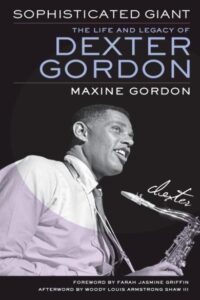
Early Life and Influences: Forged in Los Angeles
Dexter Keith Gordon was born into a family of distinction. His father, Dr. Frank Gordon, was one of the first African American doctors in Los Angeles, a prominent figure whose patients included such musical luminaries as Duke Ellington and Lionel Hampton. His mother, Gwendolyn Baker, was the daughter of Captain Edward Lee Baker Jr., one of only five African American Medal of Honor recipients from the Spanish–American War. This heritage of achievement and resilience provided a strong foundation for young Dexter .
Gordon’s musical journey began at the age of 13 with the clarinet, a common starting point for many reed players. By 15, he had switched to the alto saxophone before finally settling on the tenor sax at 17—the instrument that would become his lifelong voice. While attending Thomas Jefferson High School, he studied with the school’s band director, Sam Browne, and the renowned multi-instrumentalist Lloyd Reese, absorbing the fundamentals of music and discipline. His school years were also spent playing in bands with future jazz greats like bassist Chico Hamilton and saxophonist Buddy Collette, placing him at the heart of a burgeoning West Coast jazz scene .
Gordon’s professional apprenticeship was nothing short of a masterclass. Between 1940 and 1943, he joined the powerful Lionel Hampton band, sitting in a saxophone section alongside the explosive Illinois Jacquet. It was in Hampton’s band that the seeds of the legendary “tenor battles” were planted, with a feature number called “Po’k Chops” designed as a duel between Jacquet and the young Gordon . Following his stint with Hampton, Gordon gained invaluable experience in the orchestras of Fletcher Henderson and Louis Armstrong, learning the intricacies of big-band section work and swing-era showmanship.

The Bebop Pioneer: Birth of a Style
In late 1944, Dexter Gordon made a pivotal move to New York City, the crucible of the new, revolutionary sound known as bebop. He immediately immersed himself in the famous after-hours jam sessions at Minton’s Playhouse and Monroe’s Uptown House, sharing the bandstand with the architects of the movement: Charlie Parker, Dizzy Gillespie, and Bud Powell. He was soon hired as a featured soloist in Billy Eckstine’s groundbreaking big band, an outfit that served as a finishing school for bebop’s elite. Alongside fellow tenor man Gene Ammons, Gordon traded choruses on Eckstine’s recordings, most famously on “Blowin’ the Blues Away,” which became a template for tenor saxophone duels .
By 1945, Gordon was recording under his own name for the Savoy label, producing a series of sides that would cement his place in history. Tracks like Blow Mr. Dexter and Dexter’s Deck are considered the first successful application of the complex, harmonically dense bebop language to the tenor saxophone . Murray Horwitz of the NPR Basic Jazz Record Library noted that on these early recordings, you can hear Gordon “stretching the tunes, especially in the harmony, so that they surprise you and take you where you didn’t think they were going” .
Returning to Los Angeles in 1946, Gordon became the king of the Central Avenue jazz scene. He engaged in a series of legendary saxophone battles with another young tenor titan, Wardell Gray. These friendly but fiercely competitive duels, captured on recordings like The Chase (which Gordon composed as a vehicle for their sparring) and The Hunt, became a sensation. In a 1962 interview, Gordon recalled the musical chemistry with Gray: “We were very compatible, musically speaking. I admired his playing quite a bit… We had the same basic background, being both Lester-influenced, so we thought along similar lines. I had a little different approach from his, so that gave a contrast and made it interesting” . These recordings were so influential that they were even mentioned in Jack Kerouac’s iconic Beat generation novel, On the Road.
The 1950s: Darkness and Resurgence
The momentum of Gordon’s career was severely interrupted in the 1950s by a growing heroin addiction, a scourge that affected many jazz musicians of the era. Legal troubles and lengthy incarcerations at institutions like Chino and Folsom prisons led to a sharp decline in his recording and performing activity . However, even in these dark times, music provided a lifeline. He appeared, uncredited, as a member of a prison band in the film Unchained (1955), which was shot inside Chino. He also managed to record a couple of albums, including Daddy Plays the Horn and Dexter Blows Hot and Cool in 1955, but these recordings lacked the fire and impact of his earlier work .
Upon his final release from prison in 1959, a clean and determined Dexter Gordon began the long road back. He re-emerged on the scene, contributing music to a Los Angeles production of The Connection and recording The Resurgence of Dexter Gordon in 1960, a title that proved prophetic. In 1961, he signed with the legendary Blue Note label, a partnership that would define the next phase of his career and produce some of the most enduring albums in jazz history .
The Blue Note Renaissance and a Masterpiece Called Go!
Now residing in New York, Gordon experienced a powerful creative renaissance. Between 1961 and 1962, he recorded a string of classic albums for Blue Note, including Doin’ Allright, Dexter Calling…, A Swingin’ Affair, and the undisputed masterpiece, Go! . These albums showcased a mature artist who had fully absorbed the hard bop and modal innovations of the late 1950s, influenced in turn by the younger saxophonists he had originally inspired, like John Coltrane and Sonny Rollins.
Go!, recorded in August 1962 with a stellar rhythm section of pianist Sonny Clark, bassist Butch Warren, and drummer Billy Higgins, is often cited as Gordon’s finest hour . Gordon himself considered it his favorite. The album is a perfect encapsulation of his artistry. It features his most famous composition, the blues “Cheese Cake,” a relaxed, infectious swinger . His ballad playing is on full display with a heart-wrenching reading of “I Guess I’ll Hang My Tears Out to Dry,” where he masterfully manipulates time and melody. The album swings with an effortless, joyful authority, demonstrating Gordon’s unique ability to be both deeply sophisticated and completely accessible . Critic Scott Yanow described this era as producing “a core series of dates for Blue Note” that were enough to make him a legend .
The European Exile: Our Man in Paris
Just as his career was back on top in America, Gordon made a surprising decision. In 1962, he relocated to Europe, beginning a self-imposed exile that would last for 14 years. He cited a number of reasons: a desire for a more stable living environment, a greater appreciation for jazz musicians from European audiences, and an escape from the relentless racism and drug culture that had plagued him in the U.S. . He settled first in Paris and then in Copenhagen, Denmark, which became his home base.
The European period was not a retreat but a creative expansion. He recorded another landmark Blue Note album, Our Man in Paris (1963), with an all-star expatriate band featuring pianist Bud Powell, drummer Kenny Clarke, and French bassist Pierre Michelot . He continued to record prolifically for Blue Note and other European labels like SteepleChase and Prestige. Albums like One Flight Up (1964) and The Tower of Power (1969) showcased his continued growth, exploring longer, more complex improvisational forms . He became a permanent fixture on the European jazz scene, a mentor to younger musicians and a beloved figure who played regularly with fellow expats like Kenny Drew and Horace Parlan. During these years, he was in peak form, and his European recordings are now ranked among the finest of his career .
A Homecoming for the Ages
By 1976, Dexter Gordon was a living legend who was largely unknown to a new generation of American jazz fans. His return to the United States that year was therefore one of the most anticipated and celebrated events in jazz history. He opened at the Village Vanguard in New York City, and the engagement was a triumph. The resulting double album, Homecoming: Live at the Village Vanguard, captured the electricity of the moment, proving that Gordon had not lost a step and was, in fact, playing with renewed passion and power .
He was no longer just a musician; he was an elder statesman. He recorded for Columbia Records, including the ambitious big band album Sophisticated Giant (1977), and was finally receiving the widespread recognition and accolades that had long eluded him . His presence, his history, and his timeless music made him a powerful symbol of jazz’s enduring legacy.
An Oscar-Nominated Actor: ‘Round Midnight
Gordon’s final act was perhaps the most unexpected. French director Bertrand Tavernier, a devoted jazz aficionado, was writing a film about an aging, expatriate jazz musician in Paris, a character loosely based on the lives of Gordon and pianist Bud Powell. He wrote the lead role of Dale Turner specifically for Gordon. Despite having no formal acting experience, Gordon delivered a mesmerizing, authentic, and deeply moving performance in ‘Round Midnight (1986). He inhabited the role with the same soulful, world-weary grace that defined his ballad playing .
His performance was universally praised, earning him a nomination for the Academy Award for Best Actor—a remarkable feat for a first-time actor in a small, independent film. He lost to Paul Newman, but the nomination cemented his iconic status. He also won a Grammy Award for Best Jazz Instrumental Performance, Soloist, for his work on the film’s soundtrack, The Other Side of ‘Round Midnight .
He made one final film appearance, a small but memorable role as a saxophone-playing patient named Rolando in the 1990 film Awakenings, starring Robert De Niro and Robin Williams .
Dexter Gordon passed away on April 25, 1990, in Philadelphia, just a few months after the release of Awakenings .
Musical Style: The Art of the Storyteller
Dexter Gordon’s musical style is one of the most recognizable and influential in jazz. He was a master storyteller whose solos unfolded with a logical, soulful, and often surprising narrative.
- The Sound: His sound was enormous—a big, broad, spacious tone that filled any room without ever feeling forced. As he explained in an interview, “your tone, your sound is inside of you. You hear it before you produce it. The real ingredient of the sound is within the individual—the way he hears things” . He achieved this massive sound with a medium-sized Otto Link metal mouthpiece, often surprising people who assumed it was much larger .
- Time and Phrasing: A hallmark of his style was his relaxed, behind-the-beat phrasing. He would lay back on the rhythm section, creating a sense of tension, relaxation, and swing that was all his own. This unhurried, conversational approach gave his music a feeling of profound depth and ease.
- Quoting: Gordon was famous for his witty and erudite use of musical quotes. He would seamlessly weave fragments of other melodies into his improvisations—everything from “Happy Birthday” to popular songs, opera arias from Wagner, or other jazz standards. This became a signature device, adding a layer of intellectual playfulness and emotional subtext to his solos .
- Ballads: Gordon was a supreme ballad player. He approached slow songs with a deep, almost reverent emotional honesty, often reciting the lyrics to himself as he played to better convey their meaning . His ballad performances are masterclasses in phrasing, tone control, and emotional projection.
Best Songs and Compositions
While Gordon was a master interpreter of standards, he also contributed several memorable compositions to the jazz canon.
- Cheese Cake: A relaxed, bluesy swinger from the album Go!, this is his most famous composition and a modern jazz standard .
- The Chase: Written as a feature for his legendary duels with Wardell Gray, this piece captures the competitive and creative energy of the late-40s jam session scene .
- Montmartre: A powerful, soulful blues from his European period, featured on the album The Tower of Power .
- Ernie’s Tune: A beautiful and soulful composition he contributed to the play The Connection, later recorded on his Blue Note album Dexter Calling… .
- Mischievous Lady: A early, groundbreaking bebop composition recorded for the Dial label in 1947, dedicated to his then-girlfriend, a dancer .
Essential Albums
- Go! (1962): The perfect starting point. A flawless album from start to finish .
- Our Man in Paris (1963): A classic session capturing the expatriate vibe with Bud Powell .
- Settin’ the Pace (Savoy, 1945-47): An essential collection of his pioneering bebop work .
- The Hunt (1947): Live recordings of the legendary battles with Wardell Gray.
- Homecoming: Live at the Village Vanguard (1976): A powerful document of his triumphant return to the U.S.
- Doin’ Allright (1961): The first of his great Blue Note comeback albums .
Cooperations with Other Jazz Musicians
Gordon’s career was a web of significant collaborations. He was a bridge between generations and styles.
- Early Mentors and Peers: He learned from Lester Young (his primary influence), Ben Webster, and Illinois Jacquet. He battled and recorded with Gene Ammons and Wardell Gray .
- Bebop Architects: He was a sideman and bandmate for the founders of bop: Dizzy Gillespie (Blue ‘n’ Boogie), Charlie Parker, and Bud Powell .
- Blue Note Greats: His ’60s albums featured a who’s who of hard bop: Freddie Hubbard, Sonny Clark, Kenny Drew, Billy Higgins, Paul Chambers, and Butch Warren .
- European Expatriates: In Europe, he formed deep musical bonds with pianist Kenny Drew, forming one of the great saxophone-piano partnerships, and frequently played with Ben Webster, Dexter Gordon and others .
Legacy
Dexter Gordon’s legacy is immense. He was the first to truly adapt the bebop language to the tenor saxophone, creating a path for everyone who followed. He was a direct link between the swing of Lester Young and the modal explorations of John Coltrane. As Bertrand Tavernier described him, he was “the bridge between Lester and Coltrane. You could hear Dexter in Coltrane’s horn – the energy, the invention, the incredible swing. Coltrane may have been more famous, but Dexter was the precursor” .
His relaxed, behind-the-beat phrasing, his huge sound, and his artful use of quotes became foundational elements of the tenor saxophone tradition. Musicians from Sonny Rollins (who was influenced by him early on) to John Coltrane, and from Joe Henderson to modern players like Joshua Redman and Chris Potter, carry a piece of Dexter Gordon in their sound.
In 2018, his masterpiece Go! was selected by the Library of Congress for preservation in the National Recording Registry for being “culturally, historically, or aesthetically significant” . He was also a jazz icon captured in one of the most famous photographs in jazz history—Herman Leonard’s 1948 image of a lanky Gordon taking a smoke break at the Royal Roost, a cigarette dangling from his fingers, his saxophone by his side .
Dexter Gordon was more than a saxophonist; he was a symbol of jazz itself—its pain and its joy, its intellectual depth and its soulful swing, its struggles and its ultimate, timeless triumph. He was, in every sense, a sophisticated giant.
Search your favorite sheet music in the category of Jazz, Blues, Soul, & Gospel.
Search your favorite sheet music in the Sheet Music Catalog
Dexter Gordon – What’s New – 29 july 1964 • World of Jazz
The very best of DEXTER GORDON – DEXTER GORDON
TrackList! —————————————- 1 A Night in Tunisia 2 Blues Walk 3 Second Balcony Jump 4 You’ve Changed 5 Lady Bird 6 Body and Soul 7 Cheese Cake 8 I Guess I’ll Hang My Tears out to Dry 9 Willow Weep for Me 10 Darn That Dream 11 I’m A Fool To Want You 12 Don’t Explain 13 Three O’Clock… 14 Love For Sale 15 What’s New 16 A Sudden Nightstorms —————————————-