
Come join us now, and enjoy playing your beloved music and browse through great scores of every level and styles!
Can’t find the songbook you’re looking for? Please, email us at: sheetmusiclibrarypdf@gmail.com We’d like to help you!
Table of Contents
Who is Andrew Lloyd Webber?
Andrew Lloyd Webber Memory from Cats Piano Solo sheet music, Noten, partitura spartiti partition, 楽譜
Search Andrew Lloyd Webber’s best sheet music, books, and transcriptions in the Library:
| Andrew Lloyd Webber – All I Ask of You (The Phantom of the Opera) | 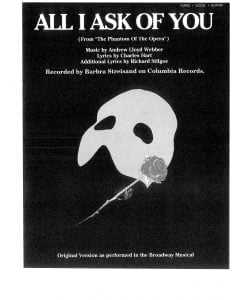 | |
|---|---|---|
| Andrew Lloyd Webber – Angel Of Music (Piano, Vocal, Guitar chords) | Andrew Lloyd Webber – Angel Of Music (Piano, Vocal, Guitar chords) | |
| Andrew Lloyd Webber – CATS (Piano & Vocal score) |  | Andrew Lloyd Webber – CATS (Piano & Vocal score) |
| Andrew Lloyd Webber – Jesus Christ Superstar (Musical Excerpts Complete Libretto) Lyrics by Tim Rice |  |  |
| Andrew Lloyd Webber – Joseph And The Amazing Technicolor Dreamcoat The Musical Full Score |  | |
| Andrew Lloyd Webber – Joseph And The Amazing Technicolor Dreamcoat The Musical Vocal Selections |  | Andrew Lloyd Webber – Joseph And The Amazing Technicolor Dreamcoat The Musical Vocal Selections |
| Andrew Lloyd Webber – Love Never Dies (Piano Book) |  | Andrew Lloyd Weber – Love Never Dies (Piano Book) |
| Andrew Lloyd Webber – Love Never Dies Full Vocal Score (Andrew Lloyd Webber) |  | Love Never Dies Full Vocal Score |
| Andrew Lloyd Webber – Memory (from CATS) Piano Vocal with lyrics | 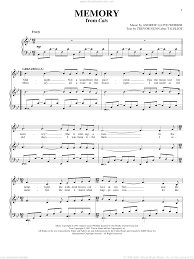 | |
| Andrew Lloyd Webber – Requiem (the musical) Piano Vocal Score |  | |
| Andrew Lloyd Webber – School of Rock | 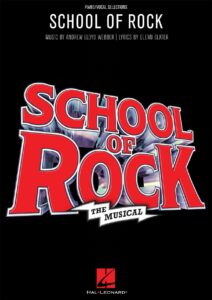 | Andrew Lloyd Webber – School of Rock |
| Andrew Lloyd Webber – The Phantom Of The Opera | ||
| Andrew Lloyd Webber – Unmasked A Memoir (Book) |  | |
| Andrew Lloyd Webber – Unmasked The Platinum Collection (Musicals) Deluxe Edition |  | Andrew Lloyd Webber – Unmasked The Platinum Collection |
| Andrew Lloyd Webber “By Jeeves”, the musical |  | |
| Andrew Lloyd Webber And Glenn Slater Til I Hear You Sing From Love Never Dies | Andrew Lloyd Webber And Glenn Slater Til I Hear You Sing From Love Never Dies | |
| Andrew Lloyd Webber Another Suitcase In Another Hall from Evita | Andrew Lloyd Webber Another Suitcase In Another Hall from Evita | |
| Andrew Lloyd Webber Anthology |  | Webber, Andrew Lloyd – Antholog |
| Andrew Lloyd Webber Cats Vocal Score Piano Reduction |  | Andrew Lloyd Webber Cats Vocal Score Piano Reduction |
| Andrew Lloyd Webber Evita (The Musical) Piano Vocal Songbook |  | Evita The Musical Songbook |
| Andrew Lloyd Webber Evita Andrew Lloyd Webber and Tim Rice Piano Vocal Guitar chords Selections from the OST | 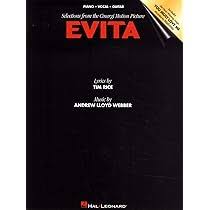 | Andrew Lloyd Webber Evita Andrew Lloyd Webber and Tim Rice Piano Vocal Guitar chords Selections from the OST |
| Andrew Lloyd Webber For Piano Piano Solos The Musicals | 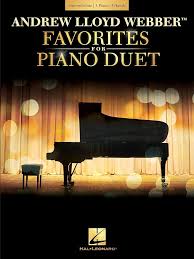 | Andrew Lloyd Webber Musical Favorites For Piano Duet Early Intermediate Level |
| Andrew Lloyd Webber Jesus Christ Superstar (Broadway) (Musical) | 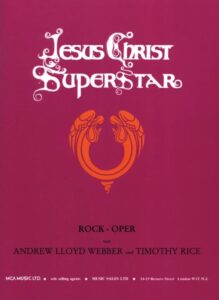 | Andrew Lloyd Webber Jesus Christ Superstar (Broadway) |
| Andrew Lloyd Webber Jesus Christ Superstar Tim Rice (Deutsche Texte) | Andrew Lloyd Webber Jesus Christ Superstar Tim Rice (Deutsche Texte) | |
| Andrew Lloyd Webber Masquerade from The Phantom of the Opera for Guitar TABS | Andrew Lloyd Webber Masquerade from The Phantom of the Opera for Guitar TABS | |
| Andrew Lloyd Webber Memory (from Cats the Musical) for Guitar TABS | Andrew Lloyd Webber Memory (from Cats) for Guitar TABS | |
| Andrew Lloyd Webber Musical Favorites For Piano Duet Early Intermediate Level | 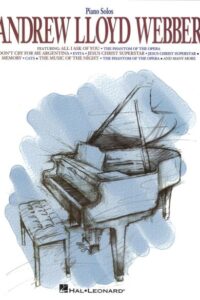 | Andrew Lloyd Webber Musical Favorites For Piano Duet Early Intermediate Level |
| Andrew lloyd Webber Pie Jesu Piano Solo from the musical REQUIEM | 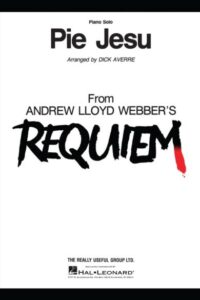 | |
| Andrew Lloyd Webber Pro Vocal Womens Edition (Musicals) |  | Andrew Lloyd Webber Pro Vocal Womens Edition |
| Andrew Lloyd Webber Sheet Music Collection, The – Andrew Lloyd Webber (Musicals) |  | Andrew Lloyd Webber Sheet Music Collection, The – Andrew Lloyd Webber sheet music |
| Andrew Lloyd Webber Solos Arr Phillip Keveren The Phillip Keveren Series Piano Solo (Musicals) | 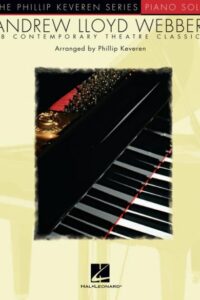 | Andrew Lloyd Webber Solos Arr Phillip Keveren The Phillip Keveren Series Piano Solo |
| Andrew Lloyd Webber Starlight Express (Musicals) |  | Starlight Express – Andrew Lloyd Webber Starlight Express |
| Andrew Lloyd Webber Sunset Boulevard (Revised Broadway Version of the Musical) Piano & Vocal Score | 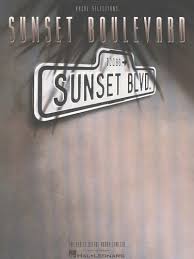 | Andrew Lloyd Webber Sunset Boulevard (Revised Broadway Version) Piano & Vocal Score |
| Andrew Lloyd Webber Sunset Boulevard Piano Vocal Selections | 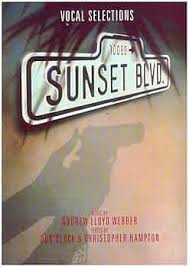 | Andrew Lloyd Webber Sunset Boulevard Piano Vocal Selections (Contents list) |
| Andrew Lloyd Webber Super Easy Songbook Piano Vocal Guitar Chords (Musicals) | 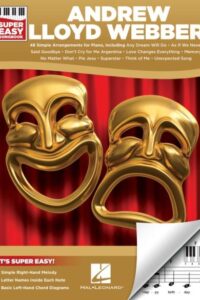 | Andrew Lloyd Webber Super Easy Songbook Piano Vocal Guitar Chords |
| Andrew Lloyd Webber Tell Me On A Sunday Piano Vocal Guitar (The Musical) | Andrew Lloyd Webber Tell Me On A Sunday Piano Vocal Guitar | |
| Andrew Lloyd Webber The Best of Andrew Lloyd Webber Easy Piano (Musicals) |  | Andrew Lloyd Webber The Best of Andrew Lloyd Webber Easy Piano (Musicals) |
| Andrew Lloyd Webber The Music Of The Night | 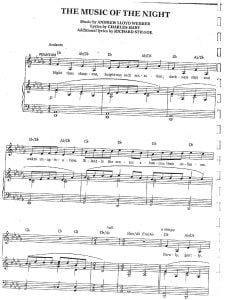 | |
| Andrew Lloyd Webber The Phantom of the Opera (Piano Vocal & Guitar) Songbook |  | Andrew Lloyd Webber The Phantom of the Opera (Piano Vocal & Guitar) Songbook |
| Andrew Lloyd Webber The Phantom of the Opera for Guitar TABS (Musical) | Andrew Lloyd Webber The Phantom of the Opera for Guitar TABS | |
| Andrew Lloyd Webber The Phantom Of The Opera Movie Selections (Musical) | 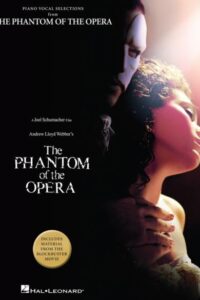 | Andrew Lloyd Webber The Phantom Of The Opera Movie Selections |
| Andrew Lloyd Webber Think of me (The Phantom of the Opera) | Andrew Lloyd Webber Think Of Me |
Best Sheet Music download from our Library.
Andrew Lloyd Webber: The Colossus of Musical Theatre
Andrew Lloyd Webber, Baron Lloyd-Webber (born 22 March 1948), is an English composer and impresario whose name is synonymous with the modern musical. For over five decades, he has been a dominant and often controversial force in the industry, crafting a string of blockbuster shows that have redefined commercial theatre. With a career that spans rock operas, breathtaking spectacles, and poignant adaptations, Lloyd Webber’s music has reached a global audience, making him the most commercially successful composer in history, according to The New York Times . His work is a unique synthesis of classical training, pop sensibility, and theatrical ambition, resulting in a legacy that is as monumental as it is complex.

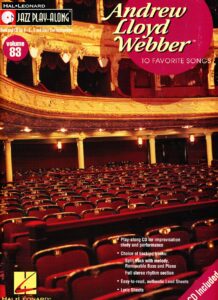
Please, subscribe to our Sheet Music Library.
If you are already a subscriber, please, check our NEW SCORES’ page every month for new sheet music. THANK YOU!
Full Biography
Early Life and Musical Upbringing (1948-1965)
Andrew Lloyd Webber was born in Kensington, London, into a profoundly musical family . His father, William Lloyd Webber, was a respected composer and organist, while his mother, Jean Hermione Johnstone, was a violinist and pianist . His younger brother, Julian Lloyd Webber, would become one of the world’s foremost cellists . This rich environment meant music was not just an interest but the very fabric of his childhood.
Lloyd Webber’s talent manifested early. He began writing music at a young age, composing a suite of six pieces when he was just nine . A pivotal influence was his aunt Viola, an actress who introduced him to the magic of theatre through stage doors and backstage visits, sparking a fascination that would define his life . He built his own toy theatre, staging productions with his brother, a clear precursor to his future career . His formal education included time as a Queen’s Scholar at Westminster School and a brief period reading history at Magdalen College, Oxford, which he left after one term to pursue his passion at the Royal College of Music in London . This classical foundation, combined with a keen ear for the popular music of the 1960s—he would later cite The Rolling Stones’ “(I Can’t Get No) Satisfaction” as a landmark record —created the unique alchemy of his compositional voice.
The Rice Years and the Birth of the Rock Opera (1965-1978)
The most crucial partnership of Lloyd Webber’s career began in 1965 when he was introduced to lyricist Tim Rice . Their first collaboration, The Likes of Us (1965), based on the story of Thomas Barnardo, failed to find a backer and remained unperformed for decades . It was a commission for a “pop cantata” from a family friend, music teacher Alan Doggett, that gave them their breakthrough. The result was Joseph and the Amazing Technicolor Dreamcoat (1968) . Initially a short piece for a school choir, its playful pastiche of musical styles—from rock’n’roll and calypso to country—charmed audiences and critics. It was gradually expanded, eventually becoming a full-length stage musical that found success in the West End on the back of their next project .
That next project was a concept album that would change musical theatre forever. Jesus Christ Superstar (1970), a rock opera telling the story of Jesus’s final days from the perspective of Judas, was a global phenomenon. Its blend of rock music, classical forms, and a controversial yet compelling narrative made it a massive best-seller before it even reached the stage . It premiered on Broadway in 1971 and in London’s West End in 1972, becoming the longest-running musical in British theatrical history at the time .
After the triumph of Superstar, Rice and Lloyd Webber briefly parted ways. Lloyd Webber collaborated with playwright Alan Ayckbourn on Jeeves (1975), a musical based on P.G. Wodehouse’s stories, which was a rare and notable failure, closing after only 38 performances . The partnership with Rice was soon rekindled for another project based on a concept album: Evita (1976). Telling the story of Eva Perón, the musical produced the iconic hit “Don’t Cry for Me Argentina” . Staged in London’s West End in 1978 and on Broadway in 1979, Evita was a critical and commercial triumph, winning seven Tony Awards, including Best Musical and Best Original Score . It would be the last major collaboration between Lloyd Webber and Rice for many years, though they would reunite in 1996 to write the Oscar-winning song “You Must Love Me” for the film adaptation of Evita .
The Megamusical Maestro (1978-1990)
The post-Rice era saw Lloyd Webber ascend to unprecedented levels of global success, becoming an impresario as well as a composer. He founded the Really Useful Group in 1977 to manage his productions . During this period, he demonstrated a remarkable ability to find inspiration in unconventional sources and transform them into spectacular theatrical events.
In 1978, he collaborated with his brother Julian on Variations, a set of variations on Paganini’s 24th Caprice. The main theme famously became the signature tune for ITV’s The South Bank Show for over three decades . His next theatrical venture was inspired by T.S. Eliot’s whimsical poetry collection, Old Possum’s Book of Practical Cats. With lyrics drawn from Eliot’s verses and a team that included director Trevor Nunn and choreographer Gillian Lynne, Lloyd Webber created Cats (1981) . Despite its unconventional premise, Cats became a cultural juggernaut. Its haunting hit song “Memory” became a standard, and the show broke box-office records, running for 21 years in London and 18 years on Broadway, holding the title of longest-running Broadway musical for many years .
He followed this with the high-tech, roller-skating musical Starlight Express (1984), another commercial hit that found a permanent home in Bochum, Germany, where it still runs today . That same year, he began developing a musical with his then-wife, soprano Sarah Brightman, in mind for the lead role . The result was The Phantom of the Opera (1986), with a book by Richard Stilgoe and lyrics by Charles Hart. A sweeping, romantic adaptation of Gaston Leroux’s novel, Phantom was a masterpiece of theatrical spectacle and soaring melody. It featured now-iconic songs like “The Music of the Night” and “All I Ask of You” . It opened in London in 1986 and on Broadway in 1988, where it not only surpassed Cats as the longest-running show in Broadway history but also won the Tony Award for Best Musical . The 1980s also saw him branch into sacred music with his Requiem (1985), dedicated to his father, which won a Grammy and featured the popular soprano solo “Pie Jesu” .
The 1990s and Beyond: Romantic Melodrama and New Ventures
The 1990s opened with the chamber-piece Aspects of Love (1989), a through-composed romantic drama featuring the hit “Love Changes Everything” . He then achieved another major success with Sunset Boulevard (1993), an adaptation of the classic Billy Wilder film. With a book and lyrics by Don Black and Christopher Hampton, the musical starred Patti LuPone in London and Glenn Close on Broadway, winning Tony Awards for Best Musical and Best Score . In 1996, Lloyd Webber and Rice won an Academy Award, a Golden Globe, and a Grammy for “You Must Love Me,” the new song written for the film version of Evita starring Madonna .
The new millennium saw Lloyd Webber continue to produce new work, with varying degrees of success. He explored contemporary themes in The Beautiful Game (2000) about teenagers in Northern Ireland during The Troubles. He served as a producer on A.R. Rahman’s Bombay Dreams (2002) and adapted Wilkie Collins’s novel for The Woman in White (2004) . He revisited his greatest success with a long-gestating sequel to Phantom, titled Love Never Dies (2010), which received a mixed critical response . He also took on the classic The Wizard of Oz (2011), writing new songs for a stage adaptation.
In a significant late-career triumph, he adapted the hit film School of Rock into a musical (2015). With lyrics by Glenn Slater, School of Rock was a critical and commercial success, becoming the first British musical to premiere on Broadway before London and earning Lloyd Webber a new generation of fans . In 2018, he achieved “EGOT” status (Emmy, Grammy, Oscar, Tony) when Jesus Christ Superstar Live in Concert, for which he was a producer, won a Primetime Emmy Award . His memoir, Unmasked, was published the same year . His most recent original musical, Cinderella, opened in London’s West End in 2021, demonstrating his continued creative drive.
Personal Life
Lloyd Webber has been married three times. He wed his first wife, Sarah Hugill, in 1971, and they had two children, including daughter Imogen, before divorcing in 1983 . Later that year, he married soprano Sarah Brightman, for whom he wrote the role of Christine in The Phantom of the Opera. They divorced in 1990 . In 1991, he married Madeleine Gurdon, a former three-day event horsewoman. They have three children together . In 1992, he was knighted, and in 1997, he was created a life peer as Baron Lloyd-Webber, of Sydmonton in the County of Hampshire . He has been a vocal philanthropist, supporting numerous arts and medical charities, and in 2009, he was successfully treated for early-stage prostate cancer .
Musical Style and Composition Characteristics
Andrew Lloyd Webber’s musical style is a distinctive synthesis of diverse influences, defined by its melodic potency, harmonic sophistication, and theatrical instinct. While often pigeonholed, his compositional approach is more nuanced than his critics allow.
Music Harmony and Tonality Treatment
Lloyd Webber’s harmonic language is rooted in late-Romantic classical music, particularly the verismo operas of Puccini, whose gift for poignant melody and rich orchestration is a clear antecedent . He skillfully employs harmony to define character and drive narrative. A characteristic technique is thematic transformation, where a single melodic idea recurs throughout a work in different harmonic and rhythmic guises, altering its emotional meaning. This is masterfully demonstrated in Evita, where the melody of the cynical “Oh What a Circus” is transformed into the earnest anthem “Don’t Cry for Me Argentina” . In The Phantom of the Opera, he uses chromaticism and unexpected modulations to create a sense of mystery, otherworldliness, and longing. The harmonic language of his Requiem is notably more angular and dissonant, reflecting the gravity of its text and inspiration . His later work, such as Love Never Dies, shows a continued interest in complex harmonies, with critics noting “rich harmonies and Tchaikovsky-like orchestrations” alongside unexpected rhythmic shifts, as in “The Coney Island Waltz” .
Melodic and Formal Style
Lloyd Webber’s primary gift is his seemingly inexhaustible ability to create memorable, sweeping melodies. His tunes are characteristically anthemic, with wide interval leaps that create intense emotional release—the octave leap in “Memory,” the rising phrases of “The Music of the Night,” or the determined ascent of “Don’t Cry for Me Argentina” are hallmarks of his style. As noted in academic analysis, he is a “sensitive setter of text,” using melody to mirror and magnify poetic imagery . The shape of a melody often follows the emotional contour of the lyric.
Formally, he has been a key proponent of the “through-composed” musical, where there is little to no spoken dialogue, and the music drives the narrative continuously, a structure more common in opera. Jesus Christ Superstar, Cats, and The Phantom of the Opera are prime examples of this, creating a seamless, immersive dramatic experience . However, his versatility is evident in earlier works like Joseph, which is a collection of distinct, pastiche songs, and later works like School of Rock, which returns to a more traditional book musical format with standalone rock numbers.
Key Composition Characteristics and Pastiche
Pastiche is a central pillar of Lloyd Webber’s compositional toolkit. He deftly borrows and synthesizes a vast range of musical genres. Joseph joyfully skips through rock, country, and calypso . Jesus Christ Superstar is a true rock opera, fusing rock instrumentation and energy with extended classical forms . Cats draws on classical, jazz, and music-hall traditions. The Phantom of the Opera is steeped in operatic and operetta conventions. This eclecticism, sometimes mistaken for a lack of originality, is actually a deliberate and effective dramatic strategy, using musical style to instantly establish time, place, character, and mood. Another characteristic is his use of recurring musical motifs (leitmotifs) to represent characters or ideas, a technique borrowed from Wagner and employed with great effect in Phantom and Evita.
Encounters with Other Artists and Famous Performers
Lloyd Webber’s career is defined by a series of crucial collaborations with the leading talents of his time.
- Lyricists:
- Tim Rice: His most famous partnership, responsible for the “Holy Trinity” of Joseph, Superstar, and Evita. Their contrasting skills—Lloyd Webber’s music and Rice’s witty, incisive lyrics—created a perfect dramatic balance .
- Don Black: A frequent and versatile collaborator on projects like Song and Dance, Sunset Boulevard, and Aspects of Love .
- Charles Hart: Best known for providing the romantic lyrics for The Phantom of the Opera .
- Richard Stilgoe: Contributed to the lyrics of Starlight Express and the original book of Phantom .
- Alan Ayckbourn: The celebrated playwright provided the book and lyrics for Jeeves and its revision By Jeeves .
- Performers: Lloyd Webber has a knack for creating iconic roles for specific artists.
- Sarah Brightman: His second wife, for whom he created the role of Christine in Phantom, unleashing her soprano voice on the world .
- Elaine Paige: Became the definitive Eva Perón in the original London production of Evita and originated the role of Grizabella, singing “Memory” in Cats .
- Michael Crawford: His portrayal of the titular Phantom created one of theatre’s most iconic and moving characters .
- Patti LuPone: The original Eva Perón on Broadway and the first London Norma Desmond in Sunset Boulevard .
- Glenn Close: Became synonymous with Norma Desmond in the Broadway production of Sunset Boulevard, a role she has reprised multiple times .
- Colm Wilkinson: The original Jean Valjean in Les Misérables also originated the role of the Phantom in a workshop and was the first to perform the role publicly in a concert at Sydmonton, though he was deemed too young for the role at the time.
His encounters also extend to directors like Harold Prince (who directed Evita and Phantom), Trevor Nunn (Cats, Sunset Boulevard), and Gillian Lynne (choreographer for Cats and Phantom) . In the classical world, he has worked with stars like Plácido Domingo, who sang in the premiere of his Requiem .
Influences
Lloyd Webber’s music is a melting pot of his upbringing and interests. His primary influences are:
- Classical and Operatic: His father’s profession and his Royal College training gave him a deep foundation. He has openly cited Puccini as a major influence, particularly in his gift for lyricism and dramatic scoring . The through-composed structure of his work is also indebted to Richard Wagner‘s music dramas.
- The Golden Age of Musical Theatre: He grew up idolizing Rodgers and Hammerstein, particularly the structural perfection of South Pacific‘s “Some Enchanted Evening” . The influence of Frederick Loewe (My Fair Lady) and Lionel Bart (Oliver!) is also evident .
- Rock and Pop Music of the 1960s: The energy and sound of The Rolling Stones and the craft of pop songs like Dusty Springfield’s “Son of a Preacher Man” were formative, providing the rhythmic drive for works like Jesus Christ Superstar .
- Literary Sources: A lover of literature, he has drawn inspiration from the Bible (Joseph, Superstar), the poetry of T.S. Eliot (Cats), the novels of P.G. Wodehouse (Jeeves), and the works of Wilkie Collins (The Woman in White) .
Legacy
Andrew Lloyd Webber’s legacy is multifaceted and indelible. He is widely credited with revitalizing the British and American musical theatre in the late 20th century, leading the charge of the “British Invasion” on Broadway alongside Cameron Mackintosh . He transformed the musical into a global, multi-billion-dollar industry, pioneering the “megamusical”—a spectacle-driven, marketable product with a global brand appeal. The Really Useful Group became a model for composer-led, vertically integrated theatre ownership.
His music has entered the standard repertoire, with songs like “Memory,” “Don’t Cry for Me Argentina,” “The Music of the Night,” and “Any Dream Will Do” becoming enduring popular standards, recorded by artists from Barbra Streisand to Johnny Mathis . His ability to blend “classical and rock elements” created a new, widely appealing theatrical sound .
His influence is evident in the work of subsequent composers of epic, pop-infused musicals, such as Claude-Michel Schönberg (Les Misérables, Miss Saigon). Despite his commercial dominance, his critical reputation has always been contested. He is frequently derided by critics for perceived emotional emptiness and reliance on spectacle, a view that has made him “American theater’s favorite punching bag” . However, a wave of radical new revivals in the mid-2020s—such as the ballroom-infused Cats: The Jellicle Ball and Jamie Lloyd’s stripped-back Sunset Boulevard—have prompted a significant critical reappraisal . These productions have stripped away the original spectacles to reveal the strength and depth of the scores themselves, suggesting that his work is far more durable and open to reinterpretation than previously thought. As one commentator noted, “the powerful music was always there, and so was something of a soul” .
List of Works
Musicals and Stage Works
- The Likes of Us (1965, first performed 2005)
- Joseph and the Amazing Technicolor Dreamcoat (1968)
- Jesus Christ Superstar (1970)
- Jeeves (1975)
- Evita (1976)
- Tell Me on a Sunday (1979)
- Cats (1981)
- Song and Dance (1982)
- Starlight Express (1984)
- The Phantom of the Opera (1986)
- Aspects of Love (1989)
- Sunset Boulevard (1993)
- By Jeeves (1996, revision of Jeeves)
- Whistle Down the Wind (1998)
- The Beautiful Game (2000)
- The Woman in White (2004)
- Love Never Dies (2010)
- The Wizard of Oz (2011)
- Stephen Ward (2013)
- School of Rock (2015)
- Cinderella (2021)
Classical and Other Works
- Variations (1978)
- Requiem (1985)
Film Scores
- The Odessa File (1974)
- Gumshoe (1971)
Filmography (Adaptations of his work)
- Jesus Christ Superstar (1973)
- Evita (1996)
- The Phantom of the Opera (2004)
- Cats (2019)
- Jesus Christ Superstar Live in Concert (2018 TV special)
Discography (Selected Notable Recordings)
- Jesus Christ Superstar (1970 Original Concept Album)
- Evita (1976 Original Concept Album)
- Cats (1981 Original London Cast Recording)
- The Phantom of the Opera (1987 Original London Cast Recording)
- Andrew Lloyd Webber: Requiem (1985)
- Sunset Boulevard (1993 Original London Cast Recording)
- The Royal Albert Hall Celebration (1998)
- Love Never Dies (2010 Original London Cast Recording)
- School of Rock (2015 Original Cast Recording)
- Cats: Highlights from the Motion Picture Soundtrack (2019)
Most Known Compositions and Recordings
- “Memory” from Cats
- “The Music of the Night” from The Phantom of the Opera
- “Don’t Cry for Me Argentina” from Evita
- “I Don’t Know How to Love Him” from Jesus Christ Superstar
- “Any Dream Will Do” from Joseph and the Amazing Technicolor Dreamcoat
- “All I Ask of You” from The Phantom of the Opera
- “Pie Jesu” from Requiem
- “Love Changes Everything” from Aspects of Love
- “You Must Love Me” from Evita (film)
- “Amigos Para Siempre (Friends for Life)” (written for the 1992 Barcelona Olympics)
Covers in Modern Music
Lloyd Webber’s melodies have been embraced by a vast array of artists across genres, demonstrating their enduring appeal.
- Barbra Streisand has recorded “Memory” and “The Music of the Night.”
- Sarah Brightman, his ex-wife, has built a career on performing his material, including “The Phantom of the Opera” and “Pie Jesu.”
- Michael Crawford‘s rendition of “The Music of the Night” is definitive.
- Elaine Paige‘s version of “Memory” is a classic.
- Madonna‘s recording of “You Must Love Me” and “Don’t Cry for Me Argentina” brought his music to a new pop audience.
- John Farnham and Anthony Warlow have performed “The Music of the Night” in Australia.
- The London Symphony Orchestra and various classical crossover artists (like The Priests and Katherine Jenkins) have frequently recorded his works.
- Rock and pop artists from Meat Loaf (who starred in a production of The Rocky Horror Show) to The Shadows have covered his songs.
- In a unique collaboration, elements of his music were sampled by the rapper Biz Markie.
His Music in Films
Beyond the film adaptations of his own musicals, Lloyd Webber’s music has been used extensively in cinema to evoke drama, poignancy, or theatricality.
- The South Bank Show theme (the Variations) is one of the most recognizable pieces of television theme music in history .
- “Memory” has appeared in numerous films, including Home Alone 2: Lost in New York and The Muppets.
- “The Music of the Night” is a staple in talent show films and TV shows.
- Requiem and its movements have been used in dramatic film scores.
- School of Rock (2003) prominently features his music, with the children in the film tackling his work, leading directly to the stage musical adaptation.
Last Works
Lloyd Webber’s most recent works show a composer still willing to engage with new forms and contemporary issues.
- Cinderella (2021): A radical re-telling of the classic fairy tale, with a book by Emerald Fennell. The musical features a rock-infused score and a feminist twist on the traditional story. It opened in London’s West End to mixed reviews after several pandemic-related delays.
- Film Production: He served as an executive producer on the controversial 2019 film adaptation of Cats, which, despite an all-star cast, was panned by critics and became a cult curiosity for its visual effects .
- Recent Revivals and Influence: While not a new composition, his active involvement in and support of recent radical revivals of his classic works (like Sunset Boulevard, Evita, and Cats: The Jellicle Ball) represents a significant “last works” chapter, where he has sanctioned and encouraged bold re-interpretations that have solidified his legacy for a 21st-century audience.
Andrew Lloyd Webber As If We Never Said Goodbye Sunset Boulevard Piano Solo sheet music Noten 乐谱 楽譜
Search your favorite sheet music in the Sheet Music Catalog
Please, subscribe to our Sheet Music Library.
If you are already a subscriber, please, check our NEW SCORES’ page every month for new sheet music. THANK YOU!
Come join us now, and enjoy playing your beloved music and browse through great scores of every level and styles!
Can’t find the songbook you’re looking for? Please, email us at: sheetmusiclibrarypdf@gmail.com We’d like to help you!
Browse in the Library:
Or browse in the categories menus & download the Library Catalog PDF: