Come join us now, and enjoy playing your beloved music and browse through great scores of every level and styles!
Can’t find the songbook you’re looking for? Please, email us at: sheetmusiclibrarypdf@gmail.com We’d like to help you!
Table of Contents
Remembering Lucio Dalla, born on this day in 1943.
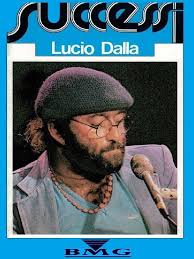
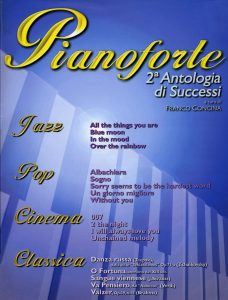
Best Sheet Music download from our Library.
Please, subscribe to our Sheet Music Library.
If you are already a subscriber, please, check our NEW SCORES’ page every month for new sheet music. THANK YOU!
Lucio Dalla: The Eternal Maestro of Italian Song
On March 4, 1943, one of the most original, inventive, and cherished voices in the history of Italian music was born in Bologna. Lucio Dalla would have celebrated his birthday this week, and while he left us suddenly in 2012, his artistic spirit remains a vibrant and guiding force. To speak of Lucio Dalla is to speak of a restless, unclassifiable genius—a jazz musician who became a cantautore (singer-songwriter), a poet of the everyday who could compose an operatic masterpiece, and a man whose profound empathy gave voice to the marginalized, the dreamers, and the hopeful. This article explores the full spectrum of his life and work, from his jazz origins to his lasting legacy as one of Italy’s greatest musical storytellers.

Browse in the Library:
Or browse in the categories menus & download the Library Catalog PDF:
Biography of a Restless Spirit
The Early Years: Jazz, Loss, and a Clarinet (1943-1970)
Lucio Dalla was born into a middle-class Bolognese family. His father, Giuseppe, was a director of a shooting club, and his mother, Jole, was a seamstress and stylist . The sudden death of his father from a tumor in 1950, when Lucio was just seven years old, was a foundational trauma. Sent to a religious boarding school in Treviso, the young Dalla experienced a profound sense of abandonment, later recalling, “Da oggi sei solo come un cane” (“From today, you are alone like a dog”). This solitude would become a fertile ground for his inner life and artistic observation .

His salvation came in the form of music. At the age of ten, he was given a clarinet, and he proved to be a natural, self-taught virtuoso. Drawn to the vibrant energy of jazz, he joined the local Rheno Dixieland Band, a group that included a young future film director, Pupi Avati. Avati later admitted he left the band because he felt overwhelmed by Dalla’s immense talent, a sentiment that speaks to Dalla’s early brilliance . This period was crucial; it was in the smoky clubs of Bologna that Dalla absorbed the language of improvisation and swing. He famously jammed with the legendary American trumpeter Chet Baker, who was living in Bologna at the time, an experience that cemented his jazz credentials .
In 1960, the Rheno Dixieland Band won first prize at the Antibes Jazz Festival in France, catching the attention of a Roman group, the Second Roman New Orleans Jazz Band. This led to Dalla’s first recording session in 1961 . He soon moved to Rome, joining the Flippers, a beat group that backed popular singers like Edoardo Vianello . It was during this time that the singer-songwriter Gino Paoli heard Dalla sing and recognized a raw, soulful quality in his voice. Paoli famously urged him, “You have a voice like a black singer. You should try being a soloist” .
Dalla’s solo debut, however, was not an immediate success. His first singles and his 1966 album 1999 were considered too experimental and his stage presence too unconventional for the Italian pop scene of the time. His breakthrough came in 1971 at the Sanremo Music Festival with the song “4/3/1943” . Originally titled “Gesù Bambino” (Baby Jesus), the song about a young unwed mother was deemed too controversial by censors, so the title was changed to his birth date . This poignant story marked the beginning of his public recognition.
The Roversi Years: Poetry and Social Critique (1973-1976)
Seeking deeper artistic expression, Dalla embarked on a pivotal collaboration with the Bolognese poet, writer, and leftist intellectual Roberto Roversi. For three groundbreaking albums—Il giorno aveva cinque teste (1973), Anidride solforosa (1975), and Automobili (1976)—Roversi provided dense, literary, and politically charged lyrics, while Dalla set them to music that was experimental, dissonant, and rhythmically complex .
These albums were not huge commercial successes, but they were critical landmarks. Tracks like “L’ingorgo” (The Traffic Jam) from Automobili used the metaphor of a highway standstill to dissect consumerism and alienation. Although the partnership ended acrimoniously over the release of Automobili (with Roversi using the pseudonym “Norisso”), it pushed Dalla to new artistic heights and gave him a profound understanding of the power of words .
The Mature Maestro: Profound Seas and Eternal Hits (1977-1990)
The end of his collaboration with Roversi forced Dalla to become a lyricist himself. The result was an extraordinary creative flowering. In 1977, he released Com’è profondo il mare (How Deep the Sea Is), a masterpiece where his surreal, empathetic, and cinematic vision of the world found its own voice. The album, recorded with a new generation of musicians who would later form the rock band Stadio, was a critical and popular triumph. It featured songs like the title track and “Disperato Erotico Stomp,” establishing a new, more personal poetic language .
The year 1979 was monumental. He released his first self-titled album, Lucio Dalla, which contained timeless classics like “L’anno che verrà” (The Year to Come) and “Anna e Marco” (Anna and Marco) . “L’anno che verrà,” a letter to a friend about a seemingly bleak present and a hopeful future, has become an anthem of resilience, played every New Year’s in Italy. “Anna e Marco,” the story of two alienated teenagers who find a fleeting moment of connection, showcased his unparalleled ability to create cinematic miniatures in song . That same year, he formed the supergroup Banana Republic with his friend and rival Francesco De Gregori, releasing a hugely successful live album and embarking on a legendary tour .
He continued his hot streak with the 1980 album Dalla, which featured the epic and beautiful “Futura” , a song about love and the future set against the backdrop of an uncertain world . The mid-80s saw the release of his most famous song, “Caruso” (1986) . A tribute to the great tenor Enrico Caruso, Dalla wrote and performed it in the very suite of the Hotel Vesuvio in Sorrento where the legendary singer spent his final days. The song’s passionate, operatic melody and deeply emotional delivery transcended language barriers. It has since been covered by countless international stars, from Luciano Pavarotti (whose version sold over 9 million copies) to Andrea Bocelli, Julio Iglesias, and even Josh Groban , becoming one of the most beloved and recognizable Italian songs in the world .
His mainstream success continued into the 90s with the massive hit “Attenti al lupo” (1990) , a catchy, folk-infused song that became a singalong favorite across Italy .
Later Years and Sudden Farewell (1990-2012)
In his later decades, Dalla continued to explore. He experimented with world music on albums like Henna (1993), collaborated with Greek singer Maria Farantouri, and delved into classical and operatic projects like Tosca. Amore disperato (2003) . He remained a vital live performer and a beloved public figure, known for his wit, his intelligence, and his distinctively gravelly and expressive voice.
In 2010, he reunited with Francesco De Gregori for the successful “Work in Progress” tour, demonstrating the enduring power of their musical chemistry .
On March 1, 2012, just three days before his 69th birthday, Lucio Dalla died of a heart attack in Montreux, Switzerland, the day after a performance . His sudden death sent shockwaves through Italy. His funeral in Bologna was attended by an estimated 50,000 people, a testament to the deep connection he had forged with the Italian people . He was publicly outed as gay after his death, a fact he had kept private during his life, sparking a national conversation about privacy and identity .
Musical Style, Harmony, and the Dalla Sound
Dalla’s music is a universe unto itself, defying easy categorization. Its foundation, however, is undeniably jazz. His early training as a clarinetist instilled in him a deep understanding of improvisation, syncopation, and harmonic freedom. This jazz sensibility remained the core of his work, even when he ventured into pop, rock, or classical realms .
Harmonically, Dalla’s compositions are often far more sophisticated than the average pop song. He was a skilled pianist and arranger who loved unexpected chord progressions, modal interludes, and complex structures. A song like “Futura” builds its emotional power through a gradual, sweeping harmonic ascent, while “Com’è profondo il mare” uses dissonance and unexpected shifts to mirror its lyrical exploration of chaos and mystery .
Melodically, he had a genius for creating unforgettable, soaring lines. “Caruso” is the prime example, with its Neapolitan-tinged operatic sweep. But even in simpler songs, his melodic gift shone through, often following the natural inflections of his spoken, Bolognese-accented voice.
Rhythmically, Dalla was a constant innovator. From the rock energy of “Disperato Erotico Stomp” to the driving pulse of “Balla balla ballerino” and the reggae-infused beat of “Attenti al lupo,” he used rhythm to propel his stories forward with urgency and drive .
Vocally, he was an instrument unto himself. His voice was not conventionally beautiful; it was raspy, nasal, and prone to sudden cracks and leaps. But it was an incredibly expressive tool, capable of conveying tenderness, desperation, irony, and joy in the space of a single phrase. He used his voice like a jazz musician, bending notes, playing with timing, and improvising with melody.
His instrumentation was equally distinctive. While the piano was his primary songwriting tool, his jazz roots meant the saxophone (which he also played) and clarinet often featured prominently. His long-time collaboration with guitarist Ricky Portera added a rock edge, while the use of strings, as arranged by Maestro Giampiero Reverberi on songs like “Anna e Marco,” brought a cinematic grandeur to his work .
The Best Songs and Compositions
Lucio Dalla’s catalogue is a treasure trove. While choosing the “best” is subjective, certain songs stand as monuments in his career and in Italian popular culture.
- “Caruso” (1986): His undisputed masterpiece. A powerful, emotionally devastating tribute to Enrico Caruso, it is a song about love, loss, and the transcendent power of art. Its global success is a testament to its universal appeal .
- “L’anno che verrà” (1979): An evergreen anthem of hope. Written as a letter to a friend, it paints a picture of a difficult present but looks forward with a stubborn optimism that resonates more than ever .
- “Anna e Marco” (1979): A perfect example of Dalla the storyteller. In just over three minutes, he creates a complete, poignant, and deeply empathetic world for two alienated souls .
- “Futura” (1980): A sweeping, romantic ballad that combines a grand musical landscape with a deeply personal lyric. It is a song about loving in the face of an uncertain future .
- “Com’è profondo il mare” (1977): The title track of his breakthrough album as a lyricist. A surreal, allegorical journey that explores life, death, and society with poetic brilliance .
- “4/3/1943” (1971): The song that launched his career. A delicate and heartbreaking story of a child born out of wedlock, showcasing his early narrative power .
- “Cosa sarà” (1979): A beautiful and questioning duet with Francesco De Gregori, musing on the forces that drive human behavior—love, desire, faith .
- “Attenti al lupo” (1990): A massive popular hit that demonstrated his ability to craft a simple, folk-inspired song with an irresistible, infectious chorus .
- “La sera dei miracoli” (1980): A magical, nocturnal song that perfectly captures the atmosphere of a summer evening in Rome, where miracles seem possible .
- “Milano” (1979): A vivid, impressionistic portrait of the bustling, contradictory metropolis, capturing its energy and its alienation .
Filmography and the Silver Screen
Lucio Dalla’s relationship with cinema was deep and multifaceted, much like his music. He was not only a composer of soundtracks but also a talented actor .
As a composer, his music graced the films of some of Italy’s most celebrated directors. He wrote the score for Mario Monicelli’s comedy I picari (1987) and for Michelangelo Antonioni’s Al di là delle nuvole (1995) . He frequently collaborated with his old friend from the Rheno Dixieland days, Pupi Avati, providing music for films like Il cuore grande delle ragazze (2011). His songs have also been used masterfully in soundtracks by other directors, becoming indelible parts of the cinematic experience. Nanni Moretti used “L’anno che verrà” in his early films, and most recently, Paola Cortellesi’s international sensation C’è ancora domani (2023) beautifully featured “La sera dei miracoli” .
As an actor, Dalla brought his unique, quirky presence to the screen. He appeared in over a dozen films, often playing eccentric characters . His most famous role was perhaps in Mario Monicelli’s satirical western T’as le bonjour de Trinita (1975) . He also acted in Pupi Avati’s Ma quando arrivano le ragazze? (2005), a film inspired by their youthful friendship . His appearances were always memorable, marked by the same authenticity and offbeat charm that defined his music.
Cooperations and Jazz Influences
Dalla was a natural collaborator, a musician who thrived on exchange and dialogue. His partnerships were fundamental to his artistic growth.
- Francesco De Gregori: This was perhaps his most significant musical friendship. Their collaboration, from the “Banana Republic” tour to the later “Work in Progress” project, was a meeting of two giants of Italian song, full of creative tension and mutual respect .
- Roberto Roversi: The poet-mentor who provided the literary backbone for his most experimental phase .
- Gianni Morandi: A fellow Bolognese, their 1988 collaborative album Dalla/Morandi was a massive commercial success, pairing Dalla’s sophisticated songs with Morandi’s everyman appeal .
- Jazz Musicians: His early jam sessions with Chet Baker, Bud Powell, Charles Mingus, and Eric Dolphy were formative experiences that shaped his musical DNA .
- Luciano Pavarotti & Andrea Bocelli: His connection with opera singers brought “Caruso” to an even wider global audience, highlighting the operatic soul in his pop music .
- Stadio: The rock band that started as his session group for Com’è profondo il mare became his long-time backing band and a successful act in their own right .
- International Artists: He collaborated with a wide range of international talent, from Ray Charles to Sting, demonstrating his music’s universal appeal .
Influences and Legacy
Lucio Dalla’s legacy is monumental. He is not just a great singer-songwriter; he is a foundational figure in modern Italian music.
His influences were wide-ranging: the harmonic freedom of jazz, the narrative depth of Italian neorealist cinema, the poetry of Pasolini and the greats, and the raw energy of rock and roll. He absorbed all this and synthesized it into something utterly unique.
His legacy can be seen in countless ways:
- For Artists: He paved the way for a generation of singer-songwriters from Bologna, including Luca Carboni, Samuele Bersani, and others, who saw in his example that it was possible to be both deeply personal and hugely popular. His influence is also felt in the work of artists like Biagio Antonacci and Zucchero .
- For Italian Culture: His songs have entered the collective subconscious of the nation. “L’anno che verrà” is a New Year’s Eve ritual. “Caruso” is an Italian cultural export as recognizable as pizza or opera. His characters—Anna, Marco, the “disperato erotico”—are part of the Italian cultural lexicon.
- For Storytelling: He elevated the Italian pop song to a form of high literature. He proved that a three-minute song could be a short story, a film, a poem, and a piece of social commentary all at once.
- For Empathy: His greatest legacy might be his profound empathy. He gave voice to the losers, the dreamers, the prostitutes, the marginalized, and the misunderstood, always looking at them with tenderness and without judgment.
Lucio Dalla was a true original: a jazzman who became a poet, a comedian who could break your heart, and a man whose restless curiosity never ceased to push him forward. His music remains a profound, joyous, and deeply human companion for all who listen. On his birthday, we remember the maestro from Bologna, and we listen, because in his songs, he is still here with us.
Search your favorite sheet music in the Sheet Music Catalog
Search your favorite sheet music in the category of Jazz, Blues, Soul, & Gospel.
Lucio Dalla – Attenti al lupo – Festival de Viña 1995
Lucio Dalla Caruso Easy Piano Solo (Il Divo) sheet music, Noten, partitura, spartiti, partition
4-3-1943 Lucio Dalla guitar arr. sheet music, Noten, partitura, spartiti, 楽譜, 乐谱
Browse in the Library:
Or browse in the categories menus & download the Library Catalog PDF: