Come join us now, and enjoy playing your beloved music and browse through great scores of every level and styles!
Can’t find the songbook you’re looking for? Please, email us at: sheetmusiclibrarypdf@gmail.com We’d like to help you!
Table of Contents
Happy heavenly birthday, Lucio Battisti, born on this day in 1943.
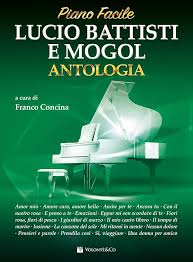
Best Sheet Music download from our Library.
Please, subscribe to our Sheet Music Library.
If you are already a subscriber, please, check our NEW SCORES’ page every month for new sheet music. THANK YOU!
Lucio Battisti: The Architect of the Italian Soul
If one were to construct a pantheon of the most influential figures in Italian popular music, the name Lucio Battisti would be carved not just on the walls, but into the very foundation. Born on March 5, 1943, in the small town of Poggio Bustone, in the province of Rieti, Battisti was more than just a singer-songwriter; he was a sonic architect, a harmonic revolutionary, and a man whose enigmatic persona became as legendary as his music. For over two decades, his compositions provided the soundtrack to Italy’s emotional landscape, transforming its popular music from a tradition of melodic bel canto into a complex, modern, and psychologically profound art form. His work, a perfect synthesis of poetic introspection and musical innovation, remains a timeless monument, as relevant and moving today as it was upon its release.
Browse in the Library:
Or browse in the categories menus & download the Library Catalog PDF:
The Biography of a Reluctant Star
Early Life and Musical Awakening (1943-1965)
Lucio Battisti was born into a modest family. His father, Alceste, was a municipal employee, and his mother, Ebe, was a homemaker. The family moved to Rome when Lucio was just a child, settling in the working-class district of Montesacro. It was here that the seeds of his musical destiny were sown. A self-taught musician, Battisti’s first love was the guitar, an instrument he learned to play with an almost obsessive dedication. His early influences were not the traditional Italian cantautori but the rhythm and blues and rock and roll sounds arriving from across the Atlantic. He idolized figures like Adriano Celentano and the clean-cut sounds of American rockers, a fascination that led him to form his first band, The Campioni, in the early 1960s.
This period was one of apprenticeship. The Campioni played covers of international hits in dance halls and on American military bases in Italy, an experience that gave Battisti an unshakeable feel for rhythm, groove, and the structural dynamics of pop music. Despite his growing skill, he was a painfully shy and introverted performer, a man whose intense focus on music was often at odds with the gregarious nature of the live stage. He recorded a few obscure solo singles during this time, like “Per una lira” (For One Lira), which sank without a trace. These early failures were crucial, however, as they cemented his understanding that his path forward might not be as a frontman, but as a creator behind the scenes.
The Meeting of Minds: Mogol and the Birth of a Songwriting Dynasty (1965-1966)
The turning point in Battisti’s life, and indeed in the history of Italian music, came in 1965. Through a mutual friend, he was introduced to Giulio Rapetti, better known by his pseudonym, Mogol. Mogol was already a successful lyricist, the son of a publishing executive, and a man of immense charisma and cultural awareness. The meeting was a collision of opposites: the taciturn, withdrawn musician from the provinces, and the articulate, sophisticated poet from Milan. Yet, from this apparent dissonance, a perfect harmony was born.
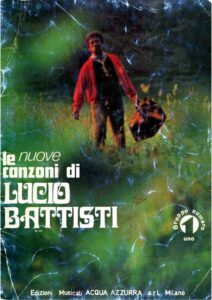
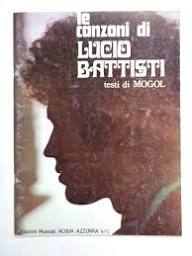
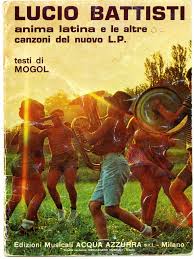
Mogol immediately recognized the extraordinary potential in Battisti’s music—its unusual chord progressions, its rhythmic complexity, and its sheer melodic beauty. Battisti, in turn, found in Mogol a lyricist who could give poetic form to the abstract emotions his music evoked. They formed a partnership based on a revolutionary working method. Battisti would first compose the music—often on guitar or piano—creating a complete musical landscape with its own moods and tensions. Only then would Mogol listen, absorb the emotional essence of the piece, and write lyrics that matched its sonic contours. This was the reverse of the typical Italian songwriting process, which prioritized the words. For Battisti and Mogol, the music was the master, and the text was its servant, a philosophy that resulted in an unprecedented fusion of sound and meaning.
Their first major success came in 1966 with “Dolce di Giorno,” a song they wrote for the pop singer Wilma Goich. But the song that truly announced their arrival was “29 settembre,” recorded by the beat band Equipe 84. With its innovative structure, complex harmonies, and driving rhythm, it was a seismic shock to the Italian pop scene, which was still largely dominated by the sanitized melodies of the Sanremo Music Festival. The song was a hit, and the music industry took notice.
The Solo Career and the “Battisti-Mogol” Canon (1969-1976)
Despite his success as a writer for others, Battisti remained hesitant about performing. His voice, a high, clear, and almost vulnerable tenor, was unconventional for the time. Mogol, however, insisted that only Battisti could truly interpret his own complex compositions. In 1969, he finally released his debut album, the self-titled Lucio Battisti. It was a masterpiece, featuring songs that would become cornerstones of his repertoire: “Acqua azzurra, acqua chiara,” which won him that year’s Un disco per l’estate, and the emotionally devastating “Balla Linda.”
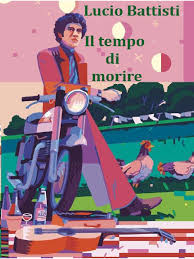
The 1970s were the golden era of the Battisti-Mogol collaboration. Album after album, they pushed the boundaries of Italian pop. Emozioni (1970) offered the sublime title track and the enigmatic “Anna.” Amore e non amore (1971) was a daring concept album based on the I Ching. But it was with La batteria, il contrabbasso, eccetera (1976) that they reached their creative peak, crafting a suite of nine-minute-long suites that were both commercially successful and artistically audacious.

During this period, Battisti’s public persona became as fixed as his music was fluid. He was famously reclusive, giving almost no interviews and rarely appearing on television. When he did perform, he was often stiff and immobile, his eyes fixed on the middle distance, his entire being focused on the act of singing. This silence was not a pose but a profound expression of his character. He believed that the music should speak for itself, that to explain it in words would diminish its power. This mystique only deepened his legend, making him an obsession for fans who pored over every musical and lyrical detail for clues to the man behind the art.
The Rift and the “Fonopoli” Years: A New Language (1980-1994)
After a decade of unparalleled success, the creative partnership with Mogol began to fray. Artistic differences and personal misunderstandings led to a painful and very public split in 1980. For a nation that had grown up with their songs, it was like a musical divorce. Battisti, ever the introvert, retreated further.
He began a new collaboration with lyricist Pasquale Panella, a former ballet dancer and poet whose surreal, abstract, and dreamlike texts were a radical departure from Mogol’s narrative style. This marked the beginning of the “Fonopoli” period, named after Battisti’s own recording studio. The music, too, changed dramatically. The acoustic guitars and warm analog sounds were replaced by cold, layered synthesizers, drum machines, and complex, often dissonant, funk rhythms. Albums like Una donna per amico (1978, with Mogol) had hinted at this direction, but with Panella, Battisti went all in, creating a body of work that was deliberately alienating and avant-garde.
For the public, who yearned for the emotional directness of “Il mio canto libero,” this new music was baffling. The lyrics were nonsensical in a conventional sense, a stream of disjointed images and philosophical wordplay. The music was equally challenging, robotic and repetitive. Yet, for those willing to listen on its own terms, the Panella period revealed a Battisti still fiercely committed to innovation, deconstructing his own legacy to build something entirely new. He released five albums with Panella between 1986 and 1994, after which he withdrew from public life entirely, retreating to his home in Molteno, Lombardy. He died on September 9, 1998, after a long battle with cancer, leaving behind a silence that, like his life, was filled with unspoken music.

The Musical Style and Harmonic Language
To speak of Battisti’s music is to speak of harmony. While most pop songwriters of his era were content with simple triadic chords (major and minor), Battisti was a modernist. His music is characterized by a sophisticated use of extended chords—sevenths, ninths, elevenths, and thirteenths—and a fluidity of modulation that was unheard of in Italian pop.
His songs rarely stay in one key for long. They drift, often seamlessly, between major and minor modes, creating a sense of emotional ambiguity and psychological depth. A perfect example is “Emozioni.” The song begins in a gentle G major, but as the verse progresses, it slips into the relative minor (E minor), then flirts with other keys before resolving, creating a musical representation of the fleeting, elusive nature of emotions themselves. This was not intellectual showmanship; it was a direct means of expression. The harmonic tension and release in his music mirror the emotional tension of Mogol’s lyrics.
His use of rhythm was equally innovative. Drawing from his early love of rock and roll and R&B, his songs have a pronounced rhythmic drive. Tracks like “La canzone del sole” or “Il leone e la gallina” are built on intricate, propulsive basslines and syncopated guitar strums that owe as much to funk as they do to Italian folk music. He was a master of the giro armonico (chord progression), taking simple, cyclical patterns and imbuing them with unexpected harmonic twists.
The Best Songs and Compositions (The Mogol Era)
While the Panella period has its champions, the songs written with Mogol form the canonical heart of Battisti’s legacy and are the works by which he is most remembered.
- “Il mio canto libero” (1972): Perhaps his most famous song, it is a soaring anthem of personal and artistic freedom. The title track from the album of the same name, it builds from a simple, intimate piano line into a majestic, stadium-sized rock chorus. It is a declaration of intent, a promise to use his voice without compromise.
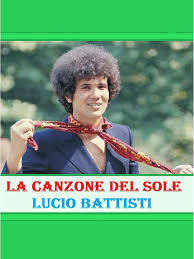
- “La canzone del sole” (1971): A deceptively complex song disguised as a simple summer tune. The lyrics paint a picture of a perfect day at the beach, but the intricate harmonies and the melancholic undercurrent in the vocal melody reveal a deeper sense of longing and the ephemeral nature of happiness. The famous bassline is a masterclass in melodic counterpoint.
- “Emozioni” (1970): The quintessential Battisti ballad. It is a slow, hypnotic meditation on feelings that are too powerful and complex to name. The lyric, “Chi non prova emozioni, non vive davvero” (Whoever doesn’t feel emotions, doesn’t truly live), serves as a motto for his entire artistic project.
- “Acqua azzurra, acqua chiara” (1969): The song that broke him to the mainstream. Its infectious, upbeat rhythm and clever lyrics about a man realizing the shallowness of a former love showcased his ability to be both catchy and insightful.
- “Una donna per amico” (1978): From his final album with Mogol, this song is a masterpiece of polished pop production. The smooth synthesizers, funky guitar, and sophisticated arrangement perfectly complement a lyric about the deep, platonic love for a female friend, a theme that was remarkably modern for its time.
- “Pensieri e parole” (1971): A duet with himself, this song contrasts a spoken-word, conversational verse with a soaring, melodic chorus. It’s a brilliant depiction of the gap between what we think, what we say, and what we feel in a relationship.
- “La collina dei ciliegi” (1973): A delicate and heartbreaking ballad. The imagery of the cherry tree hill becomes a metaphor for a lost, idyllic love. The spare arrangement, built on acoustic guitar and subtle orchestration, allows the raw emotion of the vocal to take center stage.
- “Io vorrei… non vorrei… ma se vuoi” (1972): A song of profound ambivalence. The lyrics perfectly capture the push-and-pull of a new relationship—the desire to commit and the fear of losing oneself. The music, with its gentle, undulating rhythm, mirrors this uncertainty.
Filmography and Other Media
Battisti’s relationship with cinema was complex and somewhat paradoxical. Despite his reclusiveness, his music was highly sought after for film soundtracks, yet he famously had a fraught relationship with the medium.
The most notable example is his collaboration with director Dino Risi for the film La moglie del prete (The Priest’s Wife, 1970), starring Sophia Loren and Marcello Mastroianni. Battisti and Mogol wrote the song “La canzone della verità” for the film, but a dispute arose. Risi wanted to use the music in a way that Battisti felt compromised the artistic integrity of the song. This experience soured him on cinema, and he rarely allowed his music to be used in films afterward.
However, his music has been featured posthumously in numerous films, often used by directors to evoke a specific time, place, or emotion. Nanni Moretti, a devoted fan, has used Battisti’s music in several of his films, most notably in Caro diario (1993), where “La nostalgia” plays during a famous sequence. More recently, films like Luca Guadagnino’s Call Me by Your Name (2017) introduced Battisti’s music to a new international audience by featuring “L’ombra della luce” on its acclaimed soundtrack. This moment underscored the timeless and universal quality of his compositions, capable of transcending language and cultural barriers to speak directly to the heart.
The Jazz Connection and Cooperations
While Lucio Battisti is not typically categorized as a jazz artist, his music has a deep and abiding connection to the genre. His sophisticated harmonic language, with its extended chords and modulations, is fundamentally jazz-adjacent. Furthermore, the caliber of musicians he employed in the studio was extraordinary.
The most significant jazz connection was with the English arranger and conductor Geoff Westley, who arranged and conducted the orchestral parts for many of Battisti’s classic 1970s albums, including Il mio canto libero and La batteria, il contrabbasso, eccetera. Westley brought a classical and jazz sensibility to the arrangements, weaving complex string lines and brass parts that interacted with Battisti’s songs in a symphonic way.
Even more direct was his collaboration with American jazz and session musicians. On the album La batteria, il contrabbasso, eccetera, the rhythm section was a veritable who’s who of the Los Angeles studio scene, including legendary bassist Leland Sklar and drummer Russ Kunkel, both known for their work with artists like James Taylor and Carole King. Their contribution gave the album a distinctly American, groove-oriented feel that was unprecedented in Italian music.
In Italy, he worked closely with virtuoso musicians like bassist Dino D’Autorio and drummer Walter Calloni, both of whom had strong jazz backgrounds. This choice of collaborators ensured that even his pop songs had a rhythmic and harmonic sophistication that was miles above the standard fare. The long instrumental passages and complex vamps in songs from the mid-70s are a direct result of this jazz influence, creating spaces for pure musical interplay within a pop song structure.
Influences and Legacy
Influences on Battisti:
Battisti’s primary influences were not the Italian cantautori tradition, but the Anglo-American pop and rock of the 1960s. He was an avid listener to The Beatles, whose own harmonic experimentation left a clear mark on his work. He also drew from the rhythmic energy of rhythm and blues, the melodic directness of French chanson, and the orchestral pop of artists like Burt Bacharach. His genius lay in absorbing these diverse influences and filtering them through his own unique sensibility to create something entirely Italian and entirely original.
Legacy and Influence on Others:
Lucio Battisti’s legacy is immeasurable. He single-handedly raised the bar for what Italian popular music could be. He proved that a pop song could be harmonically complex, lyrically profound, and emotionally ambiguous without losing its commercial appeal.
His influence can be heard in virtually every Italian singer-songwriter who came after him. Artists as diverse as the poetic Francesco De Gregori, the experimental Franco Battiato, and the alternative rock band Afterhours have all cited him as a foundational influence. His willingness to abandon his own successful formula in the 1980s to explore new sonic territories has also been a touchstone for artists who value artistic integrity over commercial success.
Perhaps his greatest legacy is the continued, fervent devotion of his fans. His music is not just listened to; it is studied, debated, and felt on a deeply personal level. The fact that new generations continue to discover his music—through films, streaming, or the records of their parents—is a testament to its enduring power. The “mystery” of Lucio Battisti, the man who hid in plain sight and let his art do all the talking, ensures that the focus remains exactly where he always wanted it: on the music itself.
In the end, Lucio Battisti’s work is an invitation to feel. It is a body of songs that map the contours of the human heart with a precision and beauty that few other artists have ever achieved. He took the simple ingredients of Italian melody and transformed them into a complex, modern, and profoundly moving art, leaving behind a catalogue of songs that will continue to resonate as long as people are searching for the words and music to express their own “emozioni.”