
Remembering Wes Montgomery, born on this day in 1923.




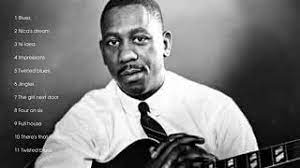
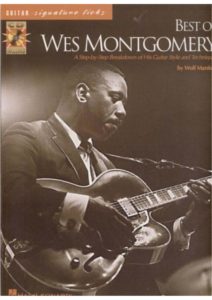
Best Sheet Music download from our Library.

Please, subscribe to our Sheet Music Library.
If you are already a subscriber, please, check our NEW SCORES’ page every month for new sheet music. THANK YOU!
The Man with the Golden Thumb: The Enduring Genius of Wes Montgomery
On March 6, 1923, a guitarist was born in Indianapolis, Indiana, who would single-handedly redefine the language of his instrument and set a new standard for generations to come. John Leslie “Wes” Montgomery’s journey from a self-taught, late-blooming musician to one of the most influential figures in jazz history is a story of raw talent, quiet innovation, and an unmistakable sound that continues to captivate listeners over half a century after his untimely passing.
Montgomery’s name is synonymous with a warm, thumb-plucked tone, thrilling octave passages, and a deeply soulful approach to melody and improvisation. Though his life was tragically cut short at the age of 45, his prolific recording career left behind a legacy that bridges the gap between hard bop and mainstream pop, influencing everyone from George Benson and Pat Metheny to the architects of smooth jazz and beyond . On his birthday, we celebrate the man, his music, and the indelible mark he left on the world.
From Factory Worker to Guitar Hero: A Biography
Wes Montgomery’s path to musical immortality was anything but a straight line. Born into a large family, his parents separated when he was young, and he moved with his brothers to Columbus, Ohio . His older brother, Monk, was a pivotal early influence, buying Wes a four-string tenor guitar from a pawn shop when he was around 12 years old. While Wes would later downplay his time with that instrument, it was his first step into a world that would eventually consume him.
The true awakening came in 1943. At 19, married and working as a welder to support his family, Wes heard a Charlie Christian record at a dance. The experience was transformative. He was so inspired that he picked up the guitar and dedicated himself to learning, spending countless hours copying Christian’s solos note-for-note from records . Lacking formal instruction and unable to read music, he developed his ear to a phenomenal degree, a skill that would become the foundation of his playing.
For years, music was a double life. By day, he worked grueling factory jobs; by night, he played in Indianapolis clubs, mimicking his idol . His big break came in 1948 when Lionel Hampton, passing through town, needed a guitarist. Hired on the spot, Wes spent two years touring with Hampton’s big band, a period that exposed him to the likes of Charles Mingus and Fats Navarro . However, the road was not for him. Plagued by a fear of flying and a deep longing for his family, he returned to Indianapolis in 1950.
Back home, the pattern resumed: factory work by day, club dates by night. He played with his brothers Monk (on bass) and Buddy (on piano and vibes), and organist Melvin Rhyne, honing his craft in relative obscurity . The man who would later revolutionize the instrument was still a secret, known only to local audiences and fellow musicians.
That secret was finally revealed to the world in 1959. Saxophonist Cannonball Adderley was in Indianapolis and heard Montgomery play at a small club called the Missile Room. He was so floored by what he heard that he immediately called Orrin Keepnews, a producer at Riverside Records, urging him to sign this unknown guitarist . Keepnews was convinced, and at 36, Wes Montgomery finally made his debut as a leader with The Wes Montgomery Trio (also known as A Dynamic New Sound).
What followed was a burst of creative energy. For Riverside, he recorded a string of masterpieces that form the core of his artistic legacy. Albums like The Incredible Jazz Guitar of Wes Montgomery (1960), Full House (1962), and Boss Guitar (1963) showcased a fully-formed genius at work . His playing was powerful, inventive, and effortlessly swinging.
After Riverside went bankrupt in 1964, Montgomery moved to Verve Records, where he began a fruitful partnership with producer Creed Taylor . Taylor had a vision for Montgomery that went beyond the small jazz club. He placed Wes’s guitar in lush orchestral settings, having him play melodies of popular songs of the day. This new direction bore fruit with albums like Movin’ Wes (1964), Bumpin’ (1965), and Goin’ Out of My Head (1965). The title track from the latter won Montgomery his first Grammy Award in 1966 for Best Instrumental Jazz Performance by Large Group or Soloist with Large Group .
This commercial success brought new opportunities—invitations to major TV shows like The Tonight Show—but it also drew criticism from jazz purists who preferred his raw small-group work . Montgomery followed Taylor to A&M Records in 1967, continuing in a similar pop-oriented vein with albums like A Day in the Life, which featured his biggest radio hit, a version of “Windy” .
Despite the pressures of fame, Montgomery remained a dedicated family man who never touched drugs or alcohol . Tragically, his newfound success was short-lived. On June 15, 1968, just a few months after returning from a national tour, Wes Montgomery died of a heart attack at his home in Indianapolis . He was only 45 years old.
The “Montgomery Sound”: A Revolution in Style and Harmony
To speak of Wes Montgomery’s musical style is to speak of a sound so unique it can be identified within a single note. His innovations were threefold: his revolutionary picking technique, his masterful use of octaves, and his sophisticated harmonic approach.
The Golden Thumb
The most immediate and famous aspect of Montgomery’s sound was his technique. Instead of using a guitar pick, he plucked the strings with the fleshy part of his right thumb . Legend has it that this began as a practical measure to avoid disturbing his sleeping children while practicing late at night . What was born of necessity became his greatest asset. The thumb produced a warm, round, and incredibly full tone that was unlike the brighter, more articulate sound of a pick. It gave his single-note lines a vocal quality, a singing, horn-like quality that remains the holy grail for countless jazz guitarists .
The Three-Tiered Solo
Montgomery’s solos often followed a brilliant architectural plan that built intensity and excitement. As described by jazz educator Wolf Marshall, he would often construct his improvisations in three layers :
- Single-Note Lines: He would begin with fluid, complex, and melodically rich single-note lines, establishing the harmonic framework of the tune.
- Octaves: After establishing the theme, he would shift to playing passages in octaves—playing the same note on two different strings an octave apart. This technique, which he did not invent but perfected, thickened the sound and added a new level of excitement and power. Django Reinhardt had used it sparingly, but Montgomery made it a cornerstone of his expression .
- Block Chords: The climax of his solos would often feature passages played in block chords. Here, he would harmonize a melodic line with three- or four-note chords, creating a dense, piano-like texture that was harmonically rich and sonically overwhelming .
Harmonic Genius
Beyond technique, Montgomery was a sophisticated harmonist. He had an uncanny ability to reharmonize tunes on the fly. As his solos progressed, he would outline chords melodically that were often substitutions for the ones the rhythm section was playing. This created a fascinating harmonic tension and release, effectively extending the harmony and making his improvisations uniquely compelling . This conceptual approach to navigating chord changes became a model for virtually every guitarist who followed him .
Essential Recordings: The Best Songs and Compositions
Wes Montgomery’s discography is a treasure trove of brilliant music. While his later albums brought him fame, his earlier work for Riverside is often considered his creative peak. Here are some essential tracks and compositions that define his genius.
From his seminal 1960 album The Incredible Jazz Guitar of Wes Montgomery, two tracks stand out as his most enduring compositions. “Four on Six” is a minor-key blues built on a memorable, descending bass ostinato, loosely based on the harmony of “Summertime.” It has become a jazz standard . “West Coast Blues” is a marvel of construction—a 24-bar blues in 3/4 time with a melody so infectious and perfect that it instantly became part of the jazz guitar canon .
The live album Smokin’ at the Half Note (1965) captures Montgomery at his most powerful, playing in a small group with the legendary Wynton Kelly Trio. His version of John Coltrane’s “Impressions” is a tour-de-force of single-note improvisation, showcasing his ability to navigate complex modal changes at breakneck speed . Another standout, “Unit 7,” is a hard-bop burner that highlights the incredible chemistry between Montgomery, Kelly, bassist Paul Chambers, and drummer Jimmy Cobb .
For a taste of his lyrical ballad playing, look no further than “Polka Dots and Moonbeams,” recorded live for the Full House album. His gentle, thoughtful interpretation, rich with octaves, is a masterclass in melodic expression .
His commercial period also produced gems, albeit in a different style. “Bumpin’” (from the 1965 album of the same name) is a masterpiece of mood, a slow, soulful groove that perfectly blended his guitar with a subtle string arrangement. “Goin’ Out of My Head” (1965) became his biggest hit, its undeniable melody and slick production making it a radio staple and a Grammy winner .
Filmography and On-Screen Appearances
While Wes Montgomery’s legacy is primarily on record, his music has found a second life on screen. According to his IMDb page, his recordings have been featured in the soundtracks of several films . His iconic version of “Polka Dots and Moonbeams” was used in the 2015 film Black Mass, while “West Coast Blues” appeared in Woody Allen’s 1992 film Husbands and Wives . “Bumpin’” was featured in the 1971 film City Women, and “Gone with the Wind” was used in Allen’s Anything Else (2003) .
In addition to these posthumous placements, his late-60s fame brought him to the television screen. He made appearances on popular shows of the era, including The Hollywood Palace and The Tonight Show Starring Johnny Carson, bringing his smooth sound into American living rooms .
Key Collaborations
Throughout his career, Montgomery worked with a who’s who of jazz talent. His early years found him playing with Lionel Hampton, Charles Mingus, and Fats Navarro . His most important early partnership was with organist Melvin Rhyne, with whom he developed his signature trio sound on albums like Boss Guitar .
His Riverside albums frequently featured top-tier rhythm sections, including pianist Tommy Flanagan, bassist Percy Heath, and drummer Albert “Tootie” Heath on The Incredible Jazz Guitar of Wes Montgomery . The live album Full House featured a stellar lineup with saxophonist Johnny Griffin, pianist Wynton Kelly, bassist Paul Chambers, and drummer Jimmy Cobb .
Perhaps his most famous direct collaboration was with Hammond B-3 organ giant Jimmy Smith. Their 1966 album, Jimmy & Wes: The Dynamic Duo, arranged by Oliver Nelson, perfectly captured the fiery interplay between two of the most soulful voices in jazz history . He also shared the stage briefly with the great John Coltrane in San Francisco in 1961 .
Influence and Legacy
The legacy of Wes Montgomery is so vast that it is nearly impossible to overstate. He is the patriarch of modern jazz guitar. As the biography on the HighResAudio website states, his work “influenced generations of players who followed him; guitar icons such as George Benson, Pat Martino, Larry Coryell, John Scofield, Pat Metheny, Lee Ritenour and Russell Malone” . Indeed, George Benson, perhaps his most famous direct descendant, built his entire early career on the Montgomery foundation, even recording an entire tribute album, The New Boss Guitar, early in his own career. Benson later recorded the song “We All Remember Wes,” written for him by Stevie Wonder .
His influence extends far beyond the jazz world. Guitarists in rock, blues, and fusion all cite him as an inspiration. Eric Johnson paid tribute with the song “East Wes” on his Ah Via Musicom album, while Lee Ritenour recorded an entire tribute album, Wes Bound .
Tributes have come in many forms. In the years after his death, musicians like Stevie Wonder (with “Bye Bye World”), Bob James and Earl Klugh (with the song “Wes”), and guitarist Emily Remler (with her album East to Wes) have all honored his memory .
His approach to the guitar—the thumb technique, the octaves, the three-tiered solo structure, and the warm, vocal tone—became the lingua franca of jazz guitar. He took an instrument that was still finding its place in modern jazz after Charlie Christian and gave it a voice of unprecedented warmth, complexity, and soul. While his later pop albums paved the way for the smooth jazz genre that would flourish in the decades after his death, his pure jazz recordings remain the pinnacle of artistic achievement on the instrument.
Wes Montgomery may have left us far too soon, but his guitar continues to speak. In every fluid phrase, every resonant octave, and every perfectly placed chord, the man with the golden thumb lives on, a timeless inspiration for anyone who has ever dreamed of making a guitar sing. Happy birthday, Wes.