Come join us now, and enjoy playing your beloved music and browse through great scores of every level and styles!
Can’t find the songbook you’re looking for? Please, email us at: sheetmusiclibrarypdf@gmail.com We’d like to help you!
Table of Contents
Music History Events: albums released March 7
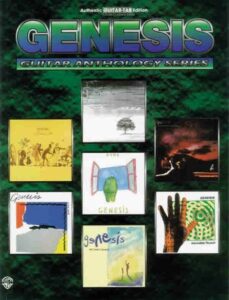
• 1969 – GENESIS – ‘From Genesis to Revelation’
Best Sheet Music download from our Library.
• 1970 – MOUNTAIN – ‘Climbing!’
• 1973 – THE BYRDS – ‘Byrds’
• 1975 – DAVID BOWIE – ‘Young Americans’ (UK)

Please, subscribe to our Sheet Music Library.
If you are already a subscriber, please, check our NEW SCORES’ page every month for new sheet music. THANK YOU!
• 1976 – PORSUGIECO – ‘Porsugieco’
• 1979 – BLACKFOOT – ‘Strikes’
• 1980 – COCKNEY REJECTS – ‘Greatest Hits Volume 1’
• 1980 – THE PSYCHEDELIC FURS – ‘The Psychedelic Furs’
• 1983 – TEARS FOR FEARS – ‘The Hurting’
• 1983 – KIX – ‘Cool Kids’
• 1983 – BANANARAMA – ‘Deep Sea Skiving’
• 1988 – THE BEATLES – ‘Past Masters 1 & 2’
• 1989 – HOWARD JONES – ‘Cross That Line’ (USA)
• 1994 – APHEX TWIN – ‘Selected Ambient Works Volume II’
• 1995 – WARRANT – ‘Ultraphobic’
• 2000 – THE MEKONS – ‘Journey to the End of the Night’
• 2000 – ARMORED SAINT – ‘Revelation’
• 2000 – DISTURBED – ‘The Sickness’
• 2000 – AL JARREAU – ‘Tomorrow Today’
• 2000 – CROWBAR – ‘Equilibrium’
• 2001 – LOUDNESS – ‘Spiritual Canoe’ (JAP)
• 2005 – KAISER CHIEFS – ‘Employment’
• 2006 – NEKO CASE – ‘Fox Confessor Brings the Flood’
• 2006 – MUDHONEY – ‘Under a Billion Suns’
• 2006 – VAN MORRISON – ‘Pay the Devil’
• 2006 – DONALD FAGEN – ‘Morph the Cat’
• 2006 – KRIS KRISTOFFERSON – ‘This Old Road’
• 2006 – REVOLVER – ‘Básico 3’
• 2008 – MESHUGGAH – ‘obZen’
• 2011 – R.E.M. – ‘Collapse into Now’ (EUR)
• 2014 – KING GIZZARD & THE LIZARD WIZARD – ‘Oddments’
• 2025 – NEIL YOUNG – ‘Oceanside Countryside’
• 2025 – BOB MOULD – ‘Here We Go Crazy’
• 2025 – JASON ISBELL – ‘Foxes in the Snow’
• 2025 – JETHRO TULL – ‘Curious Ruminant’
• 2025 – DESTRUCTION – ‘Birth of Malice’
Search your favorite sheet music in the Sheet Music Catalog
LP 1975: ‘YOUNG AMERICANS’ (David Bowie)
On March 7, 1975, ‘Young Americans’ was released in the United Kingdom, David Bowie’s ninth album and the one that finally helped him conquer the American market, indifferent to the glam-rock practiced by David until then. The title track reached No. 28 on the Billboard charts as a single and the album’s second single, “Fame,” was Bowie’s first No. 1 hit in the U.S.
While on tour in North America in 1974, Bowie was seduced by black music, and then called Tony Visconti (his producer) to urgently prepare the recording of a “dirty soul” album. Bowie originally wanted to work with MFSB, the Philadelphia Records label, but had to settle for a mix of their touring musicians, and session musicians such as legendary bassist Willie Weeks, David Sanborn on sax, Carlos Alomar on guitar. Then-unknown Luther Vandross on vocal arrangements.
Browse in the Library:
Or browse in the categories menus & download the Library Catalog PDF:
In the song that opens the album, “Young Americans” Bowie cynically reviews American politics (Nixon had just resigned days before the recording began), making references to racial repression, McCarthy and Nixon himself. He borrowed from his new-and-sudden-best-friend John Lennon the phrase “I heard the news today oh boy!”. John would collaborate with him on two other tracks, “Across the universe”, a composition by Lennon himself, in which he plays guitar, and “Fame”, in which he provides vocals. This one arose from a jam between Bowie, Lennon and Carlos Alomar and is very similar to the song “Pick up the pieces” (1974) by Average White Band.
Although Lennon”s contribution is limited to singing the word “fame” repeatedly over the track, he was offered co-authorship and the song is signed by Bowie-Alomar-Lennon. The last-minute inclusion of the songs with John, caused two songs that had already been recorded and mixed, “It”s going to be me” and “Who can I be now”, which were recovered on the 1991 CD reissue, to fall out of the final list. On “Win”, Bowie uses his British pop experience by adding an R&B chorus and this mix seems to work better for him than when he opts for a single defined style, as in “Right”, in which he seems to imitate James Brown.
The album is completed by “Fascination”, co-written with Luther Vandross, “Somebody up there likes me” and the plaintive cry of “Can you hear me?”. The cover image reinforced Bowie”s new reality and his new “accessibility”. His stylized androgyny was replaced by a close-up looking at the camera in the style of “50s Hollywood, with his cigarette smoke ascending to the heights. Even the album”s title pointed directly at its target audience, “young Americans”. Bowie commented that it was the “definitive soul album”, although his commitment to it was somewhat ambiguous, as he spent the rest of the decade courting the “old world” (“Station to Station”, “Low”, “Heroes” and “Lodger”), which did not prevent “Young Americans” from making Bowie a star in the US.

David Bowie – vocals, guitar
Carlos Alomar – guitar
Mike Garson – piano
David Sanborn – sax
Willie Weeks – bass
Andy Newmark – drums