| Community Musicians, building a worldwide Community Music. | |
| All the music you want to play on one site. Sharing the world’s best Contemporary, jazz, Popular, and classical Sheet Music. | |
| Scores: >15,000 (active and growing every day), over 231,000 pages All genres and Categories: Jazz & Blues, Rock & Pop, classical & contemporary, film & musicals’ scores; books & biographies; methods, études, and exercises; play along background MP3 audios & PDFs for Jazz & Rock Music Access and benefits: Subscription fee: $15.99 one-time payment, valid for lifetime (Secure Payment via Paypal, or Stripe) How to join the Sheet Music Library 🔍 Search in the Library Catalog — FAQs — Join us |
Table of Contents
Happy birthday, Dick Hyman, born on this day in 1927
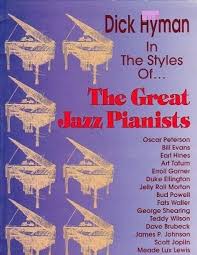
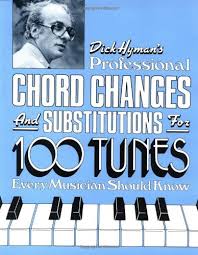
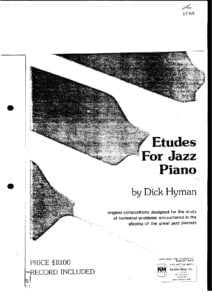
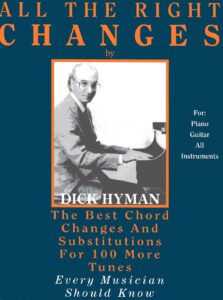

Best Sheet Music download from our Library.
Dick Hyman: A National Treasure of Jazz Piano
On March 8, 1927, a true giant of American music was born in New York City. His name is Dick Hyman, and over the course of a career spanning more than seven decades, he has proven himself to be one of the most versatile, erudite, and accomplished musicians in jazz history. A pianist of staggering technical ability, a prolific composer and arranger, a pioneer of electronic music, and a vital link to the classic jazz styles of the past, Hyman’s contributions to the musical world are immeasurable. As one listener eloquently put it after a performance, “We should designate this guy a national treasure” .
This article celebrates the life and work of Dick Hyman, exploring his comprehensive biography, his unique musical style, his most notable compositions and performances, his extensive filmography, his collaborations with other jazz greats, and the profound legacy he continues to build.
Please, subscribe to our Sheet Music Library.
If you are already a subscriber, please, check our NEW SCORES’ page every month for new sheet music. THANK YOU!
Early Life and Musical Education
Born Richard Hyman to Joseph C. Hyman and Lee Roven, he grew up in the suburban town of Mount Vernon, New York . His introduction to jazz came through his older brother, Arthur, who owned a collection of jazz records featuring the likes of Bix Beiderbecke and the legendary pianist Art Tatum . These early listening experiences planted the seeds for a lifelong fascination with the piano’s possibilities.
Hyman’s formal musical education, however, was rooted in the classical tradition. His mother’s brother, the distinguished concert pianist Anton Rovinsky, became his most important teacher. Rovinsky, who had premiered works by Charles Ives, imparted to the young Hyman a crucial sense of touch and a deep understanding of repertoire, particularly Beethoven . Hyman also independently developed a passion for Chopin, whose inventive embellishments of melody he recognized as a direct parallel to jazz improvisation. “Chopin would have been a terrific jazz pianist! His waltzes are in my improvising to this day,” Hyman later reflected . This classical foundation would become the bedrock upon which he built his jazz career, giving his playing a crystalline clarity and structural integrity.
After a brief stint in the U.S. Navy, where he was placed in the band department and found himself playing alongside more experienced musicians, Hyman used the G.I. Bill to attend Columbia University . While there, he won a piano competition, the prize for which was a series of lessons with the elegant swing-era pianist Teddy Wilson. Hyman has credited these lessons as the moment he truly “fell in love with jazz” . Wilson’s refined touch and melodic improvisation became a key influence, further shaping Hyman’s evolving style.
Browse in the Library:
Or browse in the categories menus & download the Library Catalog PDF:
The Studio Years and A Musical Chameleon
Following his graduation from Columbia and marriage to his wife, Julia, in 1948, Hyman plunged into the vibrant New York music scene . The 1950s and 1960s were a period of immense activity for him as a first-call studio musician. He played on countless recording sessions, backing a who’s who of popular music, including Tony Bennett, Perry Como, Ruth Brown, LaVern Baker, and Mitch Miller . He even appeared on the only known filmed performance of the bebop pioneer Charlie Parker in a 1952 short film, “Hot House” . This period honed his ability to adapt to any musical situation, a skill that would define his career.
He also displayed a playful side, recording a series of honky-tonk piano albums under colorful pseudonyms like “Knuckles O’Toole,” “Willie the Rock Knox,” and “Slugger Ryan” . This willingness to work in any idiom, from pop accompaniment to novelty acts, earned him a reputation as a “musical chameleon,” a term used by the Stanford Riverwalk Jazz program . His peers at the New York chapter of the Recording Academy recognized his extraordinary versatility, voting him “Most Valued Player” for seven consecutive years .
In 1956, he had a major hit with his instrumental version of “Moritat” (better known as “Mack the Knife”) with his trio, featuring his own whistling, which reached the Top 10 on the US charts and was a hit internationally . This success cemented his name in the public consciousness.
Pioneer of the Moog Synthesizer
In the late 1960s, Hyman once again demonstrated his forward-thinking versatility by becoming one of the first musicians to explore the potential of the Moog synthesizer. When his producer at Command Records, Enoch Light, acquired one of Robert Moog’s groundbreaking instruments, he turned to his most talented keyboardist to see what could be done with it .
The result was the 1969 album The Electric Eclectics of Dick Hyman, a landmark recording that approached the synthesizer not just as a sound-effects generator, but as a genuine musical instrument . Working with technician Walter Sear, Hyman spent countless hours crafting sounds and building tracks. The album’s most famous track, “The Minotaur,” became a surprise hit, charting in the US Top 40 and becoming the first single featuring a Moog synthesizer to ever make the charts . Another track from the album, “The Moog and Me,” which featured Hyman’s whistling alongside the new electronic sounds, was later sampled by Beck for his 1996 song “Sissyneck,” introducing Hyman’s sonic innovations to a new generation . This pioneering work showed that electronic music could be playful, melodic, and deeply musical, a direct counterpoint to the more academic explorations of the time .
The Sound of Woody Allen’s New York
While his studio work and electronic experiments were impressive, Dick Hyman found a perfect artistic partner in filmmaker Woody Allen. Beginning with Stardust Memories (1980), Hyman began a long and fruitful collaboration, composing, arranging, and performing music for Allen’s films . His contributions were crucial in shaping the sonic identity of Allen’s cinematic vision of New York.
Hyman served as music director, arranger, and often performer for a remarkable string of Allen’s most beloved films. His work can be heard in Zelig (1983), Broadway Danny Rose (1984), The Purple Rose of Cairo (1985), Hannah and Her Sisters (1986), Radio Days (1987), Bullets Over Broadway (1994), Everyone Says I Love You (1996), and Sweet and Lowdown (1999), among others . His scores and arrangements masterfully evoke the era and mood of each film, whether it’s the nostalgic warmth of Radio Days or the period-specific jazz of Sweet and Lowdown. He also composed original music for non-Allen films, including the beloved romantic comedy Moonstruck (1987) .
Musical Style and Harmony: An Encyclopedia of Jazz Piano
To listen to Dick Hyman play piano is to take a masterclass in the history of jazz piano. His style is not one of a singular, easily-definable voice, but rather a stunning synthesis of the giants who preceded him. The Los Angeles Times described him not as “a totally personalized stylist,” but as a “unique encyclopedist” .
In his playing, one can hear the breathtaking runs and re-harmonizations of Art Tatum, the stride patterns and playful energy of Fats Waller, the angular, right-hand octave solos of Earl Hines, and the elegant, melodic sensibility of his teacher Teddy Wilson . He also deeply researched and recorded the music of ragtime and early jazz pianists like Scott Joplin, Jelly Roll Morton, and James P. Johnson . His 1995 album Elegies, Mostly even features a piece titled “Childhood Memories” .
His approach to harmony is particularly sophisticated. Hyman is a master of re-harmonization, taking a standard tune and enriching its chord structure to create new and unexpected emotional depths. A reviewer noted his “re-harmonization of Thad Jones’ ‘A Child Is Born’” as a prime example of this skill . His left hand is not merely for keeping time; it functions as an independent voice, capable of playing counter-melodies that are just as central to the performance as the right-hand improvisations on the theme . A review of his 2014 album House of Pianos highlights his “clean, delicate touch” and his “mental agility” in improvisation, noting how he can make a familiar song like “Send In the Clowns” fresh by decorating the melody and even throwing in a quote from Bach . His interpretations of Thelonious Monk’s complex compositions like “Misterioso” and “Ugly Beauty” are described as “calm and exploratory” and “very thoughtful,” revealing new dimensions in these challenging works .
Best Songs and Compositions
Categorizing Hyman’s “best” work is a challenge, given his vast discography as both a leader and a sideman. However, several pieces stand out as iconic representations of his different talents.
- As a Performer and Arranger: His hit recording of “Mack the Knife” (or “Moritat”) remains a classic example of his inventive arranging and unique instrumental voice (his whistling) . His renditions of jazz standards like “Caravan,” which he transforms with “mesmerizing” improvisation, and “Stompin’ at the Savoy,” which captures the “vibrant energy of a bygone era,” are essential listening . His performances of Ellingtonia, such as his solo takes on the difficult “Clothed Woman” and the witty “Tonk,” show his deep understanding of that repertoire .
- As a Composer: His original composition for the Moog, “The Minotaur,” is a landmark in electronic music history . “The Moog and Me” is another key work from that pioneering era, notable for its human, almost playful approach to the synthesizer . His wistful and memorable theme from The Purple Rose of Cairo perfectly captures the film’s bittersweet magic . Finally, his original solo piano piece “Childhood Memories” shows his ability to compose poignant, introspective, and deeply personal music .
Collaborations and Influence
Throughout his career, Dick Hyman has collaborated with an astonishing array of musicians. He played with swing legends like Benny Goodman and Red Norvo in the early 1950s, and with bebop giant Charlie Parker . In later decades, he formed strong musical partnerships with cornetist Ruby Braff, with whom he made several acclaimed duet albums, and fellow pianists like Ralph Sutton and Ken Peplowski . He was also a frequent and beloved guest on the Riverwalk Jazz radio program, performing with The Jim Cullum Jazz Band .
Hyman’s influence on the music industry is profound. As a studio musician, he helped shape the sound of countless pop records. As a solo artist, he has been a vital force in preserving and revitalizing classic jazz styles, from ragtime to stride to swing, ensuring that these traditions remain vibrant for future generations . His pioneering work with the Moog synthesizer opened up new sonic possibilities for countless musicians who followed. His collaborations with Woody Allen have defined the musical landscape of some of the most important American films of the late 20th century. And as a pianist, he has been an inspiration to generations of players, demonstrating that a deep respect for tradition can coexist with boundless creativity and a spirit of constant exploration.
Legacy and Honors
Dick Hyman’s legacy is secure as one of the most complete musicians jazz has ever produced. His work is a living history of 20th-century American popular music. He has received numerous accolades recognizing his monumental contributions. He won a Primetime Emmy Award for Outstanding Achievement in Music Direction for Eubie Blake: A Century of Music in 1983 . He was honored with the German Jazz Trophy for his life’s work in 2006 . And in 2017, he received the highest honor in American jazz, being named an NEA Jazz Masters Fellow by the National Endowment for the Arts . That same year, New York City’s mayor even declared July 18th to be “Dick Hyman Day” .
At an age when most would have long since retired, Dick Hyman continues to perform and record, demonstrating an undiminished passion for music. In 2019, at the age of 92, he was still performing at New York jazz clubs . He continues to release albums, such as his 2016 collaboration with Ken Peplowski, E Pluribus Duo, and his 2019 album, Counterpoint: Lerner & Loewe .
Dick Hyman is far more than just a pianist. He is a scholar, a pioneer, a consummate artist, and a living bridge to the entire history of jazz piano. His ability to not only absorb but also synthesize and build upon the styles of the past, while simultaneously embracing the technologies of the future, makes him a truly unique figure. On his birthday, we celebrate not just a musician, but a national treasure whose graceful, inventive, and endlessly fascinating work will continue to inspire and delight for generations to come.
Search your favorite sheet music in the category of Jazz, Blues, Soul, & Gospel.
Search your favorite sheet music in the Sheet Music Catalog
Dick Hyman (piano solo) at the BBC – 1986 Concert
Dick Hyman (piano solo) at the BBC – 1986 Concert
00:00 – Intro 01:00 – St Louis Blues (Boogie Woogie treatment) 05:04 – He loves & She loves (Gershwin) 10:46 – You’ve Got to Be Modernistic (James P. Johnson) 14:48 – Sweet Georgia Brown 21:51 – Django (John Lewis) 27:05 – Kitten on the keys (Zez Confrey) 29:58 – Finger Breaker (“Finger Buster” – Jelly Roll Morton) 32:51 – All The Things You Are 37:51 – Theme from the Purple Rose of Cairo (Dick Hyman) 40:32 – It’s Gonna Be A Great Day