| Community Musicians, building a worldwide Community Music. | |
| All the music you want to play on one site. Sharing the world’s best Contemporary, jazz, Popular, and classical Sheet Music. | |
| Scores: >15,000 (active and growing every day), over 231,000 pages All genres and Categories: Jazz & Blues, Rock & Pop, classical & contemporary, film & musicals’ scores; books & biographies; methods, études, and exercises; play along background MP3 audios & PDFs for Jazz & Rock Music Access and benefits: Subscription fee: $15.99 one-time payment, valid for lifetime (Secure Payment via Paypal, or Stripe) How to join the Sheet Music Library 🔍 Search in the Library Catalog — FAQs — Join us |
Table of Contents
Happy heavenly birthday, Astor Piazzolla, born on this day in 1921.
The Great Astor: A Revolutionary Born from the Streets and the Conservatory
On March 11, 1921, in Mar del Plata, Argentina, a child was born who would grow up to fundamentally redefine the sound of his nation and, indeed, the world. His name was Astor Pantaleón Piazzolla. The son of Italian immigrants, Piazzolla wasn’t just a musician; he was a musical grenade thrown into the heart of the traditional tango establishment. He was a composer, a virtuoso bandoneonist, and an arranger whose innovative spirit forged a path that was both revered and reviled, ultimately earning him a place as one of the most important and influential musicians of the 20th century .
His life was a constant dialogue—and often a heated argument—between the gritty, passionate soul of the Buenos Aires streets and the rigorous, intellectual discipline of the European conservatory. The result was “nuevo tango” (new tango), a genre that elevated a dance music to an art form capable of expressing profound philosophical depth, searing passion, and heartbreaking melancholy . To understand Piazzolla is to understand a man who, in his quest to save tango, was first accused of killing it.

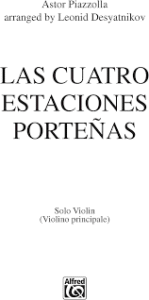
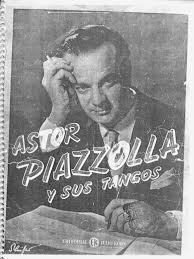
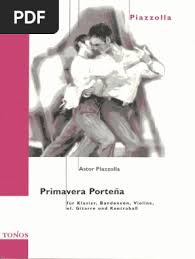
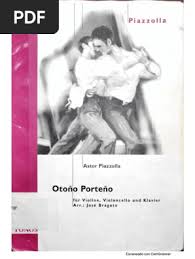
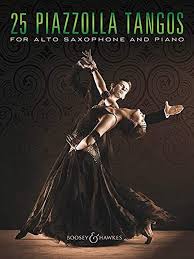
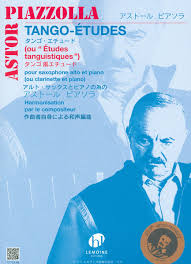
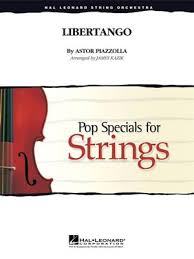
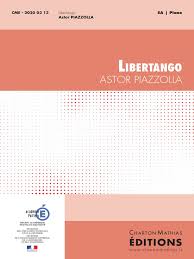
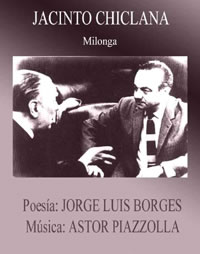
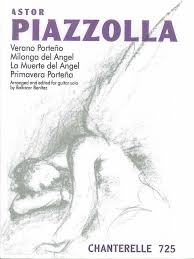
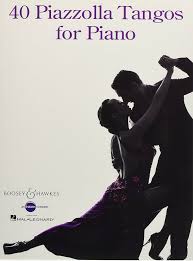
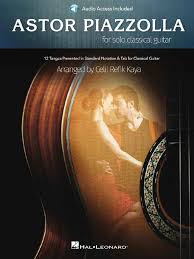

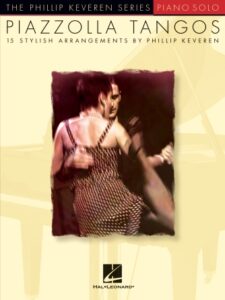
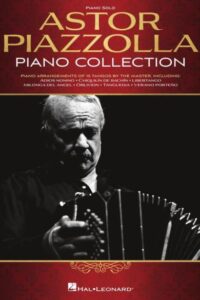
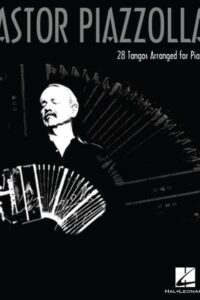


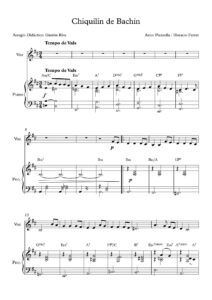

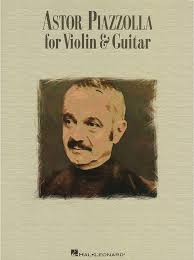
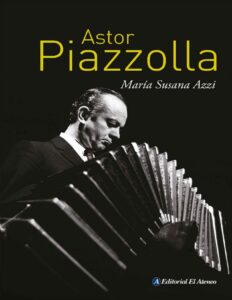


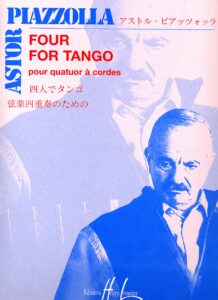
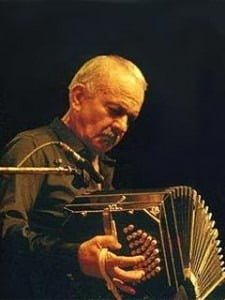

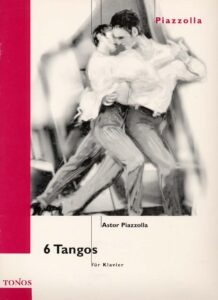
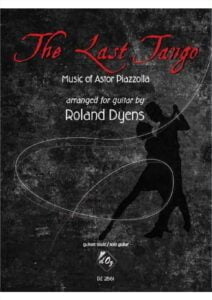


Best Sheet Music download from our Library.
Early Life and the Crucible of New York
Piazzolla’s story begins with a twist of fate. In 1925, when Astor was just four years old, his family moved to the gritty, vibrant melting pot of Greenwich Village in New York City . It was a far cry from the romanticized Buenos Aires of lore. Living in a tough neighbourhood, the young Astor learned to navigate the streets while carrying a physical limp, a malformation that kept him from sports but perhaps sharpened his other senses.
The most pivotal moment of his childhood came in 1929. His father, Vicente “Nonino” Piazzolla, nostalgic for his homeland, spotted a bandoneon in a pawn shop and bought it for his son for a mere $18 . This complex German-built instrument, a box of bellows and buttons that seemed to exhale the very soul of the River Plate, would become Astor’s lifelong voice and obsession.
In New York, he was immersed in a rich sonic stew. He listened to his father’s records of the great tango orchestras of Carlos Gardel and Julio de Caro. Simultaneously, he was exposed to the syncopated rhythms of jazz and the structured grandeur of classical music, particularly the works of Johann Sebastian Bach, which he studied with a Hungarian classical pianist, Béla Wilda, a student of Rachmaninoff . This early collision of genres—the formal counterpoint of Bach and the raw energy of jazz—planted the seeds for his future revolution.
A moment of mythic proportions occurred in 1934 when the legendary tango singer Carlos Gardel was filming in New York. The 13-year-old Piazzolla, a decent bandoneon player for his age, was invited to appear as a paperboy in Gardel’s film El día que me quieras . Gardel, impressed by the boy, invited him to join his orchestra on tour. It was the chance of a lifetime, but Astor’s father, deeming him too young, refused to let him go. It was a heartbreaking disappointment that proved to be a miraculous stroke of luck. In 1935, Gardel and his entire ensemble perished in a plane crash. Years later, Piazzolla would wryly joke that if his father had let him go, he would have been playing the harp instead of the bandoneon.
Browse in the Library:
Or browse in the categories menus & download the Library Catalog PDF:
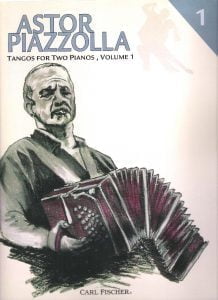
Descarga las mejores partituras de nuestra biblioteca.
Return to Buenos Aires and the Making of a Musician
In 1937, the Piazzolla family returned to Mar del Plata, Argentina, and soon after, a 17-year-old Astor made the life-changing decision to move to Buenos Aires, the undisputed capital of tango . In 1939, he achieved a young musician’s dream: he joined the orchestra of Aníbal Troilo, one of the most famous and beloved bandoneonists of the era. “Pichuco’s” orchestra was the pinnacle of traditional tango, and Piazzolla played fourth bandoneon and, crucially, began working as Troilo’s arranger .
This was a period of intense, dual education. By night, he was immersed in the visceral world of the dancehalls, feeling the rhythm and passion of tango in his bones. By day, he was a serious student of classical music. Following the advice of the legendary pianist Arthur Rubinstein, he began studying with Alberto Ginastera, Argentina’s foremost classical composer . For five years, Ginastera drilled him in orchestration, counterpoint, and the techniques of Stravinsky, Bartók, and Ravel. He also took piano lessons with Raúl Spivak for another five years . This grueling schedule—sleeping a few hours after playing until dawn, then rising early to study scores or hear the orchestra rehearse at the Teatro Colón—forged a musician with the soul of a tanguero and the mind of a classical composer.
However, tensions grew with Troilo, who felt Piazzolla’s increasingly complex and dissonant arrangements were not what dancers wanted. In 1944, Piazzolla left to lead the orchestra for singer Francisco Fiorentino, and by 1946, he formed his own Orquesta Típica, beginning his first serious experiments with the form . He was already moving away from the purely danceable, seeking music for the attentive listener.

The Paris Epiphany: Finding Himself in the Tango
By the early 1950s, Piazzolla was at a crossroads. Frustrated by the constraints of the tango world and the criticism of his work, he had nearly abandoned the genre to focus solely on classical composition. In 1953, he submitted his classically-oriented Buenos Aires Symphony for an award. The piece, which controversially included two bandoneons in a symphony orchestra, sparked a fistfight in the audience but won him a grant to study in Paris with the legendary pedagogue Nadia Boulanger .
This was the single most important event in his artistic life. Piazzolla arrived in Paris with a suitcase full of symphonies and sonatas, determined to hide his “shameful” tango past. He wanted to be a serious classical composer. For weeks, he played his academic works for Boulanger, who found them well-crafted but lifeless. Finally, she asked him what he played in his spare time, back home. Embarrassed, he admitted he played tango and played one of his own, Triunfal, for her.
Boulanger’s reaction changed the course of music history. She looked at him and said, “Astor, this is beautiful. This is where you are, this is the real Piazzolla. Don’t ever leave it behind” . In that moment, he accepted his identity. He realized his mission was not to abandon tango, but to pour everything he had learned—the fugues of Bach, the orchestral colors of Ravel, the dissonances of Bartók—into it. As he later said, “I had been saving all that learning for years, and I think the first thing I did that was worthwhile was in Paris” . He left France not as a classical composer, but as a revolutionary of the tango.

The Nuevo Tango: A Musical Analysis
Returning to Argentina in 1955, Piazzolla was armed with a new purpose and a new sound. He formed the Octeto Buenos Aires, an ensemble that was a direct assault on the traditional orquesta típica. Its lineup—two bandoneons, two violins, cello, bass, piano, and electric guitar—was revolutionary. It created a chamber music-like sound that prioritized texture, counterpoint, and improvisation over the danceable beat . The era of nuevo tango had begun.
So, what defined this new music?
Harmony: Piazzolla’s harmonic language was a departure from the straightforward, diatonic world of old tangos. He introduced extended chords (ninths, elevenths, thirteenths), bitonality (playing in two keys at once), and passages of intense dissonance . He described his method as working with “double chords or triple chords” while maintaining a rhythmic foundation that swung . This created a sense of tension and release, a modern, urban anxiety that mirrored the complexities of 20th-century Buenos Aires.
Rhythm: While he stripped away the danceable beat, rhythm became more complex, not less. Piazzolla revolutionized the marcato. He often displaced accents, shifting them from the traditional strong beats to weak ones, creating a jarring, syncopated feel that locked with the bass and piano to form a propulsive, almost aggressive rhythmic engine . This is the “machine gun” sound so distinctive in pieces like Libertango.
Form and Counterpoint: A Ginastera and Bach devotee, Piazzolla infused tango with the rigour of classical forms. He wrote fugues (Fuga y Misterio), toccatas, and suites. The instruments in his quintet didn’t just accompany a melody; they engaged in intricate, contrapuntal dialogues, weaving in and out of each other’s musical lines with the precision of a string quartet .
Instrumentation and Texture: Piazzolla reconceived the role of his ensemble. The piano and bass became a percussive, rhythmic powerhouse. The electric guitar added a new, edgy texture, often playing jazz-inspired chords. And the bandoneon was no longer just a harmonic instrument; under his fingers and through his standing-up playing style, it became a soaring, soloistic voice capable of heartbreaking lyricism and fierce technical prowess .
The Essential Works: Adiós Nonino, Libertango, and Beyond
Piazzolla’s catalogue is vast and profound, but certain works stand as cornerstones of his legacy.
- Adiós Nonino (1959): Perhaps his most deeply personal work. In October 1959, while performing in Puerto Rico, Piazzolla received news of his father’s death . Grief-stricken, he returned to his New York apartment and, at the piano, poured his sorrow into music. He took an earlier, happier piece called Nonino, and transformed it. The result is a masterpiece of melancholic beauty. The introductory piano chords evoke a somber procession, leading to a bandoneon melody of such profound sadness and resignation that it has become a universal anthem for loss and remembrance .
- Libertango (1974): If Adiós Nonino represents the past, Libertango was a declaration of the future. The very title is a portmanteau of “Libertad” (liberty) and “Tango,” signifying his liberation from the strictures of tradition . Recorded in Milan, its insistent, driving rhythm, catchy melody, and fusion of electric bass and drums made it an international sensation. It became his most famous piece, opening the door to collaborations with jazz and rock musicians and introducing his music to a whole new generation .
- Oblivion (1982): Composed for the film Enrico IV, Oblivion is the flip side of Libertango’s fiery energy. It is a piece of breathtaking, suspended beauty. A slow, descending melody of immense tenderness floats over a sparse, hypnotic rhythm. It perfectly captures the state of its title—a feeling of being lost in a dream, a memory fading, a bittersweet sense of longing .
Other masterpieces abound: the fiery intensity of Escualo (“Shark”), the poetic collaboration with Horacio Ferrer in the “operita” María de Buenos Aires and the beloved tango-waltz “Balada para un loco” (“Ballad for a Madman”), and the four seasons of Buenos Aires, Estaciones Porteñas, which vividly paint the city’s character.
Filmography and Jazz Collaborations
Piazzolla’s dramatic, visual music was a natural fit for cinema. He composed scores for nearly 40 films . His most notable work was with director Fernando E. Solanas on the revolutionary films Tangos, el exilio de Gardel (1985) and El Sur (1988) . These films were not just scored by his music; they were structured around it. He also composed for European directors like Alain Jessua (Armaguedon) and Jacques Rivette (Le Pont du Nord), his music adding a layer of intense, atmospheric drama to their images .
His music was a natural meeting point for jazz. In 1974, fresh from the success of Libertango, he recorded the album Summit with the legendary American baritone saxophonist Gerry Mulligan . Recorded in Milan with a rhythm section of Italian jazz musicians, the album is a perfect fusion. Mulligan’s cool, lyrical lines weave effortlessly with Piazzolla’s passionate bandoneon, creating a dialogue that is both a meeting of minds and a summit of two great musical traditions . The album, which included tracks like “20 Years Ago” and Mulligan’s own “Aire de Buenos Aires,” stands as a landmark of cross-cultural collaboration.
He later recorded The New Tango (1986) with the American jazz vibraphonist Gary Burton, a live album that captured the energy of his quintet interacting with Burton’s crystalline improvisations . These collaborations cemented his status not just as a tango composer, but as a world-class musician whose work could speak the language of jazz fluently.
Legacy: The Music of Buenos Aires for the World
For years, Piazzolla was a pariah in his own country. Traditionalists, who dubbed him “the killer of tango,” felt his music was un-danceable, too intellectual, and a betrayal of the genre’s roots. He faced insults, and there were even physical attacks at his concerts . But Piazzolla was unwavering, famously stating, “I am an enemy of tango… the tango as they understand it. They still believe in the compadrito, I do not. They believe in the little streetlight, I do not. If everything has changed, the music of Buenos Aires must change too” .
His vindication began in the 1970s and 80s, first in Europe and then in North America, where audiences embraced his music as a sophisticated and passionate art form. By the end of his life, he had been reclaimed by Argentina as one of its greatest cultural heroes. After a cerebral hemorrhage in 1990, he spent his final two years in a coma, passing away in Buenos Aires in 1992 .
His influence is monumental and continues to grow. He is not merely a composer; he is a starting point. The Kronos Quartet has recorded and championed his music, bringing it to the classical chamber music world. Cellist Yo-Yo Ma’s album Soul of the Tango introduced his melodies to millions . His compositions are now staples of the classical repertoire, performed by symphony orchestras and conservatory students worldwide. His fusion of jazz, classical, and folk elements paved the way for generations of world music artists.
Astor Piazzolla didn’t just create a new style; he created a new musical language that spoke of his city, his passions, and his sorrows. As he famously said, “It is contemporary music of Buenos Aires” . And through the haunting cry of his bandoneon, the soul of that city—its lights, its shadows, its frenetic energy, and its profound loneliness—will resonate for centuries to come. The “Gran Astor” gave tango a new heart, and in doing so, gave the world a timeless music.