Community Musicians, building a worldwide Community Music.
Scores
for all instruments: 15,000+
(active and growing),
over 231,000 pages.
All genres and levels: Jazz & Blues, Rock & Pop, Classical & Contemporary, Film & Musicals;
books & biographies; methods, études, play-along tracks (MP3) for Jazz & Rock.
Access & benefits: US$15.99 one-time payment, valid for lifetime, full Library access.
Table of Contents
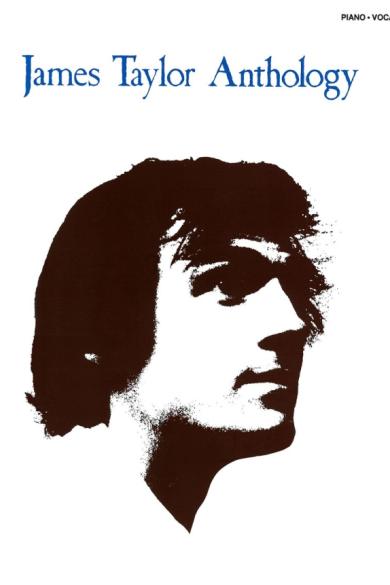
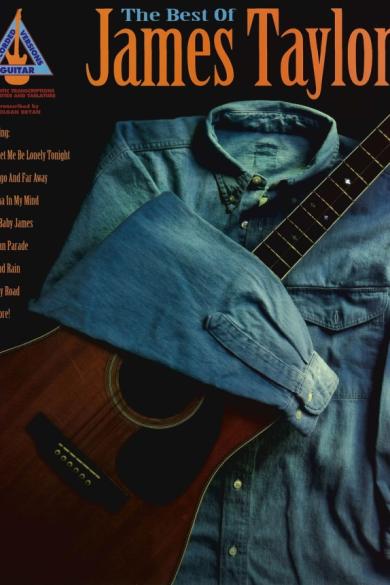

Please, subscribe to our Sheet Music Library.
If you are already a subscriber, please, check our NEW SCORES' page every month for new sheet music. THANK YOU!
Happy birthday, James Taylor, born on this day in 1948
James Taylor: The Sweet Baby James of Singer-Songwriter Folk
On March 12, 1948, James Vernon Taylor was born at Massachusetts General Hospital in Boston, entering a world he would one day help define through music . Today, as we celebrate his birthday, we honor an artist whose gentle tenor and introspective lyrics have served as the soundtrack to life's most poignant moments for over five decades. Taylor not only defined the singer-songwriter movement of the 1970s but continues to create and perform with a grace that has earned him six Grammy Awards, induction into the Rock and Roll Hall of Fame, the Presidential Medal of Freedom, and Kennedy Center Honors.
Best Sheet Music download from our Library.
Early Years: The Making of a Troubadour
Taylor's origin story reads like the prologue to one of his own songs—rich with detail, tinged with melancholy, and ultimately redemptive. He was the second of five musical children born to Isaac M. Taylor, a physician from a wealthy Southern family, and Gertrude Woodard Taylor, an aspiring opera singer who had studied at the New England Conservatory of Music . The family moved to Chapel Hill, North Carolina, in 1951, where Isaac joined the faculty of the UNC School of Medicine .
The North Carolina Piedmont left an indelible mark on young James. He later described it poetically: "Chapel Hill, the Piedmont, the outlying hills, were tranquil, rural, beautiful, but quiet. Thinking of the red soil, caused by local copper mining, plus the seasons, the way things smelled down there, I feel as though my experience of coming of age there was more a matter of landscape and climate than people" . This deep connection to place would later find expression in songs like "Copperline," a nostalgic salute to his childhood home.
The Taylor household was steeped in music. His mother's classical training and his father's love of folk and country provided rich soil for the children's musical development. James began with cello lessons before discovering the guitar at fourteen . His technique evolved uniquely—influenced by his bass-clef-oriented cello training and experimentation on his sister Kate's keyboards. He developed what he described as "a finger-picking style that was meant to be like a piano, as if my thumb were my left hand, and my first, second, and third fingers were my right hand" .
Summer holidays on Martha's Vineyard proved transformative. There he met Danny Kortchmar, an aspiring guitarist who would become a lifelong musical collaborator. The two bonded over blues and folk music, with Kortchmar immediately recognizing Taylor's gift: "I knew James had that thing"—a natural sense of phrasing where "every syllable beautifully in time" . By the summer of 1963, they were playing coffeehouses as "Jamie & Kootch" .
Yet beneath this idyllic surface, darker currents ran. Taylor struggled at Milton Academy, a prestigious boarding school where he felt out of place despite solid academic performance. The headmaster later observed, "James was more sensitive and less goal-oriented than most students of his day" . Depression descended, and in late 1965, Taylor committed himself to McLean Hospital, a psychiatric facility in Belmont, Massachusetts .
This nine-month stay proved paradoxical—both crisis and salvation. Treated with chlorpromazine and given structured days, Taylor began to heal. He earned his high school diploma from McLean's associated Arlington School and received a psychological rejection from the Selective Service as Vietnam escalated . He later viewed the experience as "a lifesaver… like a pardon or like a reprieve" . His brothers Livingston and sister Kate would later follow him as patients at McLean, underscoring the hereditary nature of their struggles .
The Road to Recognition: From Flying Machine to Apple Records
At Kortchmar's urging, Taylor left McLean and briefly attended Elon University before relocating to New York City to form a band. With Kortchmar on guitar, Joel O'Brien on drums, and childhood friend Zachary Wiesner on bass, they became the Flying Machine—named after Taylor rejected having the group called after himself . They played Taylor's McLean-inspired compositions like "Knocking 'Round the Zoo" and "Don't Talk Now" at Greenwich Village's Night Owl Cafe .
But New York offered temptations beyond musical expression. Taylor fell into heroin addiction, which "was as easy to get high in the Village as get a drink" . The Flying Machine recorded a single—"Night Owl" backed with "Brighten Your Night with My Day"—that received modest regional airplay but failed to chart nationally . After a disastrous Bahamian engagement left them unpaid, the band dissolved.
A desperate Taylor called his father, who drove through the night to rescue him. After six months of recovery and vocal cord surgery to repair damage from harsh singing, Taylor received a small family inheritance and made a bold decision . He would try London.
In late 1967, Taylor arrived in England, living variously in Notting Hill, Belgravia, and Chelsea . After recording demos in Soho, his connection to Kortchmar paid off again—Kortchmar's former band had once opened for Peter and Gordon, whose Peter Asher now served as A&R head for the Beatles' newly formed Apple Records . Asher heard something special in the young American and signed him, making Taylor one of the first non-Beatles artists on the iconic label .
His 1968 self-titled debut appeared on Apple, featuring "Carolina in My Mind" with backing vocals from George Harrison and bass from Paul McCartney . Though critically admired, the album sold poorly, and Taylor's heroin addiction resurfaced. He returned to the United States, committed himself to the Austen Riggs Center in Stockbridge, Massachusetts, and began the slow climb back to health .
Sweet Baby James and Breakthrough Success
Taylor's second album, Sweet Baby James (1970), changed everything. Produced by Peter Asher, who had left Apple to manage Taylor, the album showcased a maturing artist in full command of his gifts. Its centerpiece, "Fire and Rain," became an anthem of the singer-songwriter era .
The song's three verses address the traumatic experiences that had shaped Taylor's young life: the suicide of his childhood friend Suzanne Schnerr, his struggle with heroin addiction, and the dissolution of the Flying Machine . Its raw honesty, conveyed through Taylor's gentle tenor and deft acoustic guitar, created a template for confessional songwriting that influenced countless artists. As Acoustic Guitar magazine notes, the song's harmonic sophistication—including the use of the bVII chord (Gmaj7, sounding as Bbmaj7)—"lends a melancholy character and also reveals Taylor's deft ways with harmony" .
The album's title track, "Sweet Baby James," represented a different kind of artistry. Taylor wrote it for his infant nephew, crafting what he considers the best song of his career—a masterful blend of cowboy ballad and lullaby composed during a drive through Carolina to meet the baby for the first time . The album reached the Top 10 and established Taylor as the defining voice of the nascent singer-songwriter movement.
Bob Dylan had brought confessional poetry to folk rock, but as Britannica notes, "Taylor became the epitome of the troubadour whose life was the subject of his songs" .
Musical Style: The Architecture of Intimacy
James Taylor's musical style represents a distinctive synthesis of influences that he transformed into something entirely personal. Appalachian folk music, Hank Williams, early soul vocalists, and the Beatles all contributed to his sonic palette, but the resulting alchemy was uniquely his .
Harmonic Language and Guitar Technique
Taylor's approach to harmony reveals sophisticated musical thinking. His cello training gave him an unusual foundation for a guitarist, fostering an understanding of bass lines and counterpoint that enriches his compositions . His finger-picking style, as he described it, mimics a piano's independence of parts—thumb handling bass lines while fingers carry melody and inner voices .
Music scholar James E. Perone, in The Words and Music of James Taylor, examines how Taylor incorporates unusual musical forms and lyrical structures into his songs, using harmony to enhance his poetic messages . This is nowhere more evident than in "Fire and Rain," where the progression moves through unexpected harmonic territory. The song's outro, with its A9(no 3rd) and Asus2 chords, employs what Acoustic Guitar describes as "static harmony, basically no chord changes—harmony like this encountered more often in modal jazz (like Miles Davis's landmark album Kind of Blue) than in pop songs, makes for a wide-open kind of sound" .
His use of the capo—typically at the third fret for "Fire and Rain"—allows open strings to resonate against fretted notes, creating the rich, ringing textures that define his sound . This technique, combined with his nuanced attack and dynamic control, gives his guitar work an almost orchestral quality within an intimate frame.
Vocal Quality and Phrasing
Taylor's tenor voice—warm, slightly reedy, instantly recognizable—conveys vulnerability without self-pity. His phrasing, as Kortchmar noted early on, places "every syllable beautifully in time" . He possesses the rare ability to make carefully crafted lines sound like spontaneous utterances, as if the listener has accidentally overheard a private moment.
This quality serves his material perfectly. Whether delivering the devastating honesty of "Fire and Rain" or the reassuring promise of "You've Got a Friend," Taylor's voice carries emotional authenticity that transcends mere technique.
Lyrical Themes
Taylor's lyrics explore universal human experiences through specific personal detail. Mental illness, addiction, failed relationships, homesickness, the passage of time, and the redemptive power of human connection recur throughout his catalog. Yet he never descends into mere confession—his artistry transforms private pain into public solace.
Scholar Perone notes that Taylor played a crucial role in the introspective singer-songwriter movement of the 1970s, writing songs inspired by his own experiences that touched countless others . The evolution of his thematic concerns—from the desperate young man of "Fire and Rain" to the philosophical observer of "Secret O' Life"—charts both personal growth and generational maturation.
The Essential Songs: A Career in Music
Taylor's catalog spans more than sixteen studio albums, numerous live recordings, and several collections of standards. Certain songs, however, define his legacy.
"Fire and Rain" (1970)
The song that started it all remains his most recognizable and emotionally powerful composition. Its three verses address multiple traumatic experiences—Suzanne's suicide, Taylor's addiction, the band's dissolution—but the whole transcends autobiography. As Far Out Magazine observes, "The tune is quintessentially American in its design and backdrop" . It reached No. 3 on the Billboard charts and established Taylor as a major voice.
"You've Got a Friend" (1971)
Though written by Carole King for her masterpiece Tapestry, Taylor's version became his first No. 1 single and earned him his first Grammy . King wrote it partly in response to Taylor's line in "Fire and Rain" about lonely times when he couldn't find a friend. Their musical relationship—Taylor played on King's original recording—enriches his interpretation, which transforms King's composition into a promise of unwavering support . Far Out calls it "less a delivery based on technique, but one based on integrity and compassion" .
"Carolina in My Mind" (1968)
Written during his initial London sojourn, this homesick ode to North Carolina captures universal longing for place. The original Apple recording features George Harrison on backing vocals and Paul McCartney on bass, but the song truly shines in its stripped-down versions . Its gentle melody and heartfelt details—missing his family, his dog, his home—created one of America's most enduring geographical tributes .
"Sweet Baby James" (1970)
Taylor's own favorite among his songs, this lullaby for his nephew combines cowboy mythology with tender family feeling. Its narrative about a young cowboy settling down for the night demonstrates Taylor's gift for creating universal comfort from personal experience .
"Mexico" (1975)
If "You've Got a Friend" represents Taylor at his most comforting, "Mexico" shows him at his most playful. Featuring Graham Nash on backing vocals, the track balances wanderlust with emotional depth, its Latin-inflected rhythm creating "the closest thing in the songwriter's canon to a Friday night anthem: heavy on rhythm, light on subtext" .
"Shower the People" (1976)
This advocacy for open emotional expression features collaborations with an extraordinary roster—Art Garfunkel, Carly Simon, Stevie Wonder, David Crosby, Bonnie Raitt, and Linda Ronstadt . Its message of showing love freely reflects mid-1970s optimism while remaining timeless.
"Copperline" (1991)
A mature reflection on childhood and place, this song mentions Taylor's childhood dog Hercules and captures the sensory experience of growing up in North Carolina. In 2003, part of the road referenced in the song was renamed the James Taylor Bridge—a fitting honor for an artist who has spent his career building connections through music .
Covers and Interpretations
Taylor's interpretive gifts deserve special mention. His versions of "How Sweet It Is (To Be Loved by You)," "Handy Man" (another Grammy winner), and "Up on the Roof" reveal his ability to find new emotional dimensions in familiar material . His "Up on the Roof" gained particular resonance when he performed it at The Concert for New York City following 9/11, introducing it as representing "positive feelings for the city" .
Collaborations with Fellow Musicians
Taylor's career has been marked by fruitful collaborations with fellow artists. His relationship with Carole King proved especially significant—he played on her Tapestry sessions, she played piano on "Fire and Rain," and they duetted at their 1971 Carnegie Hall concert .
His 1975 album Gorilla featured an all-star cast including Graham Nash, David Crosby, and his then-wife Carly Simon . The couple's duet on "Mockingbird" became a memorable hit, with their genuine romantic connection animating the performance. As Far Out notes, "If the spark between the pair seems genuine, that's because it is" .
Taylor has also collaborated across generations, recording with artists as diverse as Yo-Yo Ma, B.B. King, and his brother Livingston. His 2018 collaboration with Charlie Puth on "Change" demonstrated his continued relevance, with the song becoming an anthem for the March for Our Lives movement .
Filmography and Acting Appearances
Taylor's artistic reach extends beyond music. His most significant film role came in 1971 as "The Driver" in Monte Hellman's existential road movie Two-Lane Blacktop, where he starred alongside Dennis Wilson of the Beach Boys and Warren Oates . The film has since achieved cult classic status.
He has appeared as himself in numerous documentaries and concert films, including No Nukes (1980), History of the Eagles (2013), and Troubadours (2011) . His television appearances span decades, from The Johnny Cash Show (1969) and Sesame Street (1969) to Saturday Night Live (fifteen times between 1975 and 2018), The Simpsons (1989), and The West Wing (1999) . His voice work on The Simpsons and his cameo in Judd Apatow's Funny People (2009) demonstrate his willingness to engage with popular culture playfully .
Jazz Connections and Standards
While Taylor is not primarily a jazz artist, his connections to the genre run deep. His harmonic sophistication reflects jazz influences, as noted in analyses of his modal harmonies . His series of standards albums—including contributions to the Harry Connick Jr.-inspired wave of traditional pop—showcase his interpretive skills in a jazz context.
Taylor has performed with jazz artists including Wynton Marsalis and Diana Krall, and his 2002 album October Road features jazz-influenced arrangements. His ability to inhabit classic American songs places him in a continuum with great popular interpreters while maintaining his distinctive identity.
Influences and Legacy
Taylor's influences span American musical history. He has cited Woody Guthrie, Hank Williams, the Beatles, and early soul vocalists as foundational . Appalachian folk music provided melodic templates, while his mother's classical training informed his harmonic thinking .
His own influence is incalculable. He virtually invented the template for the sensitive singer-songwriter that artists from Jackson Browne to John Mayer have followed. As Britannica notes, he "defined the singer-songwriter movement of the 1970s" .
George Harrison's use of Taylor's opening line from "Something in the Way She Moves" for the Beatles' "Something" represents perhaps the ultimate tribute—one master acknowledging another's inspiration . Taylor characteristically took it as a compliment rather than a grievance.
His legacy extends beyond musical influence. By speaking openly about mental illness and addiction in his songs, he helped destigmatize these struggles for millions of listeners. His ability to transform personal pain into universal art offered a model of redemptive creativity that continues to inspire.
Recognition and Later Career
Taylor's honors reflect his stature. Six Grammy Awards include wins for "You've Got a Friend," "Handy Man," and albums including Hourglass (1997) and October Road (2002) . His 1976 Greatest Hits album has sold over 11 million copies in the US alone, earning Diamond certification and ranking among the best-selling albums in American history .
The Rock and Roll Hall of Fame inducted him in 2000 . President Barack Obama awarded him the Presidential Medal of Freedom in 2015, and he received Kennedy Center Honors in 2016 . That same year, Before This World (2015) became his first album to top the Billboard 200—a remarkable achievement for an artist nearly five decades into his career .
His later work demonstrates continued vitality. Albums like Covers (2008) and Before This World show an artist still exploring, still growing. His live performances remain essential, his band tight, his voice remarkably preserved.
Personal Life
Taylor's personal life has provided both inspiration and challenge. His first marriage to Carly Simon (1972-1983) produced two children, including singer-songwriter Sally Taylor, and a body of songs reflecting their complex relationship . His second marriage to Kathryn Walker (1985-1995) ended in divorce. Since 2001, he has been married to Caroline Smedvig .
His family remains deeply musical. Brothers Alex (1947-1993), Livingston (b. 1950), and sister Kate (b. 1949) all pursued music careers, while youngest brother Hugh left the industry to operate an inn on Martha's Vineyard . The Taylor family's musical legacy continues through the next generation.
James Taylor's career represents one of the most remarkable trajectories in American popular music. From the depths of institutionalization and addiction to the heights of artistic achievement and popular acclaim, his journey mirrors the redemptive arc of his songs. He has sold over 100 million records worldwide, earned every major honor his profession bestows, and created a body of work that has comforted, challenged, and inspired generations .
Yet numbers and awards capture only the surface. Taylor's true legacy lies in the moments his music accompanies—the lonely nights when "Fire and Rain" provides solace, the friendships celebrated through "You've Got a Friend," the homesickness eased by "Carolina in My Mind." He has made vulnerability a strength, confession a gift, and personal struggle a source of universal connection.
On this March 12, as we celebrate his birthday, we celebrate not just an artist but an presence—a voice that has weathered decades without losing its essential humanity. James Taylor remains what he has always been: the troubadour whose life became our songs, the sweet baby James who grew up to cradle us all in music.
James Taylor - You've Got A Friend (Nice Jazz Festival, 1999)
James Taylor performing ‘You’ve Got A Friend’ live at the Nice Jazz Festival in 1999. James Taylor (vocals & guitar) Arnold McCuller (vocals) Jimmy Johnson (bass) Bob Mann (guitar) Clifford Carter (keyboard) Russ Kunkel (drums).
James Taylor - Full Show (BBC in Concert 1970)
In Concert was produced by the BBC in the early '70s and featured performances from legendary acts of the time. In November 1970, James was 22 years old and his second studio album ‘Sweet Baby James' had released earlier that same year.
Track List:
With A Little Help From My Friends 00:03:42 Fire And Rain 00:07:29 Rainy Day Man 00:11:30 Steamroller Blues 00:14:48 Greensleeves 00:17:03 Highway Song 00:21:16 Tube Rose Snuff 00:23:47 Sunny Skies 00:27:06 Carolina In My Mind 00:30:38 Sweet Baby James 00:34:14 Long Ago And Far Away 00:37:00 Riding On A Railroad 00:39:45 You Can Close Your Eyes