
Community Musicians, building a worldwide Community Music.
Scores
for all instruments: 15,000+
(active and growing),
over 231,000 pages.
All genres and levels: Jazz & Blues, Rock & Pop, Classical & Contemporary, Film & Musicals;
books & biographies; methods, études, play-along tracks (MP3) for Jazz & Rock.
Access & benefits: US$15.99 one-time payment, valid for lifetime, full Library access.
Table of Contents
Search Baden Powell's best sheet music, books, and transcriptions in the Library:
| Artist or Composer / Score name | Cover or sample | Contents (if available)* |
|---|---|---|
| Art Tatum As Time Goes By | 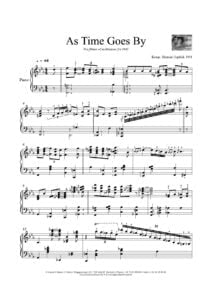 | |
| Art Tatum - Tiger Rag (Jazz Standard by the Original Dixieland Jass Band) (piano sheet music) | Art Tatum - Tiger Rag (Jazz Standard by the Original Dixieland Jass Band) (piano sheet music) | |
| Art Tatum - All The Things You Are | 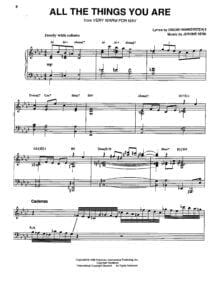 | |
| Art Tatum - Cherokee |  | |
| Art Tatum - Gershwin - The Man I Love (Piano as played by) | Art Tatum Gershwin The-Man-I-Love-Piano | |
| Art Tatum - Jazz Piano solos Vol. 2 | 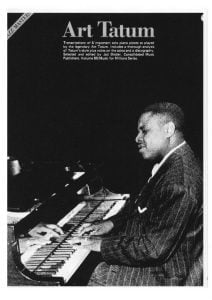 | Art Tatum Jazz piano solos vol. 2 |
| Art Tatum - New Beginnings A Piano Imrovisation | Art Tatum - New Beginnings A Piano Imrovisation | |
| Art Tatum - Tea For Two (Sheet Music) (Musescore File).mscz | ||
| Art Tatum - Tiger Rag (Sheet Music) (Musescore File).mscz | ||
| Art Tatum - Too Marvelous for Words The Life and Genius of Art Tatum (Book by James Lester) | 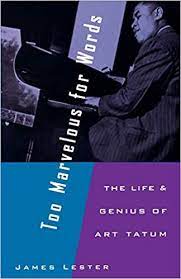 | |
| Art Tatum 5 Jazz Piano Solos transcribed By Frank Paparelli | 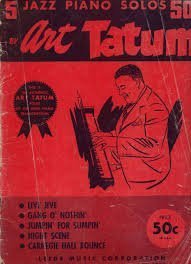 | Art Tatum 5 Jazz Solos By Frank Paparelli - 1944 Songbook |
| Art Tatum Artist Transcriptions Solo Book | 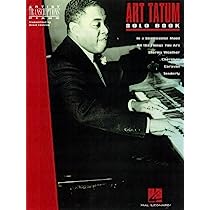 | Art Tatum |
| Art Tatum I Know That You Know Piano (1949) | Art Tatum I Know That You Know Piano (1949) | |
| Art Tatum Improvisations Piano sheet music | 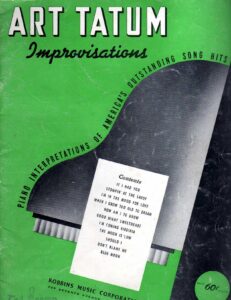 | Art Tatum Improvisations Piano sheet music |
| Art Tatum Jazz Arr. Begin The Beguine (Musescore File).mscz | ||
| Art Tatum Jazz Arr. Cole Porte Begin The Beguine | 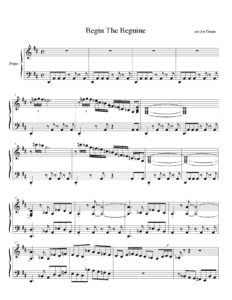 | |
| Art Tatum New Beginnings (Musescore File).mscz | ||
| Art Tatum Stormy Weather Ted Koehler - Harold Arlen | T.Koehler-H.Arlen - Stormy Weather (arr. A.Tatum) | |
| Art Tatum Tea For Two (Vincent Youmans) | 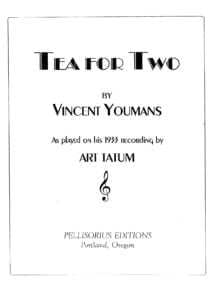 |
Baden Powell - Swings With Jimmy Pratt -1963 (FULL ALBUM)
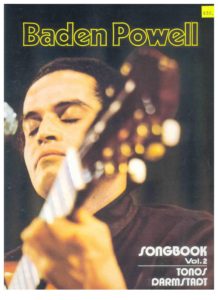
Best Sheet Music download from our Library.
Community Musicians, building a worldwide Community Music.
Scores
for all instruments: 15,000+
(active and growing),
over 231,000 pages.
All genres and levels: Jazz & Blues, Rock & Pop, Classical & Contemporary, Film & Musicals;
books & biographies; methods, études, play-along tracks (MP3) for Jazz & Rock.
Access & benefits: US$15.99 one-time payment, valid for lifetime, full Library access.
Please, subscribe to our Sheet Music Library.
If you are already a subscriber, please, check our NEW SCORES' page every month for new sheet music. THANK YOU!
Who was Baden Powell?
Baden Powell: The Architect of Modern Brazilian Guitar
Baden Powell de Aquino (1937-2000) is universally revered as one of the greatest guitarists in the history of music, and arguably the most important figure in the development of Brazilian instrumental music. More than a virtuoso, he was a composer, arranger, and visionary who synthesized the rich tapestry of Afro-Brazilian rhythms with the sophistication of jazz harmony and the structural clarity of classical music. His name, shared with the founder of the Scout movement, belied a life dedicated to exploring the deepest and most complex expressions of human emotion through his instrument. This article provides an exhaustive exploration of his life, his unique musical language, and his enduring legacy.
Biography: A Life in Six Strings
Early Life and Prodigious Talent (1937-1950s)
Born in Varre-Sai, a small town in the state of Rio de Janeiro, Baden Powell de Aquino moved with his family to the suburban neighborhood of São Cristóvão in Rio de Janeiro when he was just three months old. His father, Lilo de Aquino, was a amateur violinist and shoemaker who recognized his son's extraordinary musical gifts. He gave the young Baden a small guitar, the violão, when he was eight years old, and provided him with his first lessons.
Baden’s progress was nothing short of meteoric. By the age of 14, he was already performing professionally, appearing on radio programs and accompanying famous singers of the era. He absorbed the popular music of the time, including choro, samba, and baião, while simultaneously developing a deep, self-directed interest in classical composers like Heitor Villa-Lobos, Johann Sebastian Bach, and Frédéric Chopin. This early fusion of popular and classical idioms would become the cornerstone of his style.
The Bossa Nova Era and a Pivotal Partnership (1950s-1962)
In the late 1950s, Rio de Janeiro was the epicenter of a musical revolution that would become known as Bossa Nova. Baden was at its very core. He frequented the apartments and clubs of the emerging movement, playing with pioneers like João Gilberto, Tom Jobim, and Vinicius de Moraes. His guitar playing, with its sophisticated harmonies and precise rhythm, was perfectly suited to the new style.
His most significant partnership began in 1962 when he met the poet and lyricist Vinicius de Moraes. While Jobim had been Vinicius's main musical partner in the early years of Bossa Nova, the collaboration with Baden took on a different, more profound dimension. Together, they embarked on a project that would define both of their careers: a deep exploration into the Afro-Brazilian roots of their culture. The result was the legendary song cycle "Os Afro-sambas" (1966) . This work was a radical departure from the cool, sophisticated sound of Bossa Nova, delving into the raw, spiritual, and percussive world of Candomblé terreiros and the history of the African diaspora in Brazil.
International Acclaim and the Afro-Sambas (1960s)
The success of "Os Afro-sambas" catapulted Baden to international fame. He moved to Paris in 1968, a city that embraced him as a genius. In Europe, he found a new audience, performing in prestigious concert halls and jazz clubs. This period was one of intense creativity and recognition. He recorded prolifically, often accompanied by his son, the percussionist Philippe Baden Powell, and collaborated with European jazz musicians. He became known for his electrifying live performances, which could shift from a whisper-quiet, intimate valsa to a ferociously rhythmic and percussive samba.
Later Years and Legacy (1970s-2000)
Baden continued to record and perform throughout the 1970s and 80s, exploring different fusions, including forays into electric music. However, the intensity of his life, marked by heavy smoking, began to take a toll on his health. In his later years, he faced health challenges but remained a revered figure, a "master" to younger generations of musicians. He received numerous awards and honors, solidifying his status as a national treasure. On September 26, 2000, Baden Powell de Aquino died in Rio de Janeiro due to respiratory failure. He left behind a body of work that is the bedrock of Brazilian guitar and a source of endless inspiration for musicians worldwide.
Musical Style: The Trinity of Influences
Baden Powell's music is the result of a unique alchemy, blending three primary elements: the rhythms of Brazil, the harmony of jazz, and the structure of classical music.
- The Rhythmic Soul of Brazil: The foundation of his music is profoundly Brazilian. He didn't just play samba; he deconstructed and reinterpreted its myriad forms. His deep research into Afro-Brazilian culture, particularly for the Afro-sambas, led him to incorporate rhythms and atmospheres from Candomblé rituals. He masterfully employed rhythms like the Partido Alto (a form of samba with a syncopated, chant-like quality), the Baião (a rhythm from the Northeast of Brazil), and the Marcha-rancho. On the guitar, he was a one-man percussion section, using his thumb (pulgar) to create a deep, unyielding bass line that imitated the surdo drum, while his fingers plucked intricate, syncopated patterns on the higher strings, emulating the tamborim and pandeiro.
- The Harmonic Sophistication of Jazz: While his rhythmic base was Brazilian, his harmonic language was heavily influenced by American jazz, particularly the bebop of Charlie Parker and the impressionistic harmonies of Bill Evans. He was a master of chord extensions (9ths, 11ths, 13ths), altered chords, and sophisticated voicings. He moved beyond the simpler, cyclical harmonies of early Bossa Nova, creating rich, complex harmonic landscapes that provided a perfect backdrop for his improvisations and melodies.
- The Structural Rigor of Classical Music: From his self-taught study of Bach and Villa-Lobos, Baden brought a sense of architecture to his compositions. This is evident in his use of counterpoint, where two or more independent melodic lines weave in and out of each other, creating a rich, polyphonic texture. Many of his pieces, like the famous "Tristeza e Solidão," have a structure akin to a classical etude or prelude, with clearly defined sections and a logical, almost architectural, development of musical ideas.
Guitar Technique and Improvisational Licks
Baden Powell's guitar style is a universe unto itself, instantly recognizable for its blend of power, precision, and lyricism.
- The "Baixaria" (Bass Lines): His thumb was the engine of his music. He developed an incredibly independent and powerful thumb technique that played intricate, syncopated bass lines, often functioning as a complete melodic and rhythmic foundation. These walking bass lines were the "baixaria," a hallmark of choro and samba that he elevated to an art form.
- Melodic Phrasing: His melodies were sung with a vocal quality on the guitar. He had an uncanny ability to make the instrument cry, sing, or shout. His phrasing was deeply expressive, using subtle bends, slides (glissandi), and vibrato to imbue each note with emotion.
- Improvisational Licks: His improvisations were a seamless blend of Brazilian melodic motifs and jazz-based vocabulary. Common elements included:
- Bebop Lines: Fast, scalar runs based on arpeggios and chromatic passing tones, especially over dominant chords. He would often target the 3rd, 5th, or 7th of the chord with a chromatic approach.
- Pentatonic and Blues Inflections: Especially in pieces with a bluesy feel, he would mix minor and major pentatonic scales, bending notes for a soulful effect.
- Harmonic Arpeggios: He would frequently outline the changes by playing extended arpeggios, sweeping across the strings to create a cascading, harp-like effect. He would often add upper extensions like the 9th or 11th to these arpeggios.
- Rhythmic Syncopation: Even in his fastest, most complex runs, the rhythm was always rooted in Brazilian syncopation. He would phrase his lines to create tension against the underlying pulse, resolving them in unexpected places.
A classic "Baden-ism" is a phrase that starts on an upbeat, descends through a modified scale or arpeggio, incorporates a chromatic passing tone, and resolves on a strong chord tone (like the 3rd or 5th), all while his thumb maintains a steady, syncopated pulse in the bass.
Harmony and Chord Progressions
Baden's harmonic world is a treasure trove for any guitarist or composer. His progressions often involve:
- Modal Interchange: Borrowing chords from parallel minor or major keys. For example, in a piece in C major, he might use an Eb major7 or an Ab major7 chord (from C minor) to create a sudden shift in color.
- Secondary Dominants and Extended Dominants: He frequently used chains of dominant chords to create a powerful sense of forward motion and tension.
- Diminished Chords as Connective Tissue: He used diminished chords masterfully, often as passing chords to connect two diatonic chords a half-step apart, or as a substitute for a dominant 7b9 chord.
- Characteristic Progressions: Many of his compositions are built on descending or ascending bass lines. For instance, the harmony might move in a cycle of descending fifths, or a bass line might walk down chromatically while the upper voices create a static or moving harmony above it. The intro to "Samba Triste" is a perfect example of a sophisticated, jazz-infused harmonic progression setting up a simple, mournful melody.
Key Collaborations
While his partnership with Vinicius de Moraes was paramount, Baden collaborated with many other significant artists:
- Vinicius de Moraes: His most important collaborator. Their partnership produced "Os Afro-sambas," a landmark album that redefined Brazilian popular music.
- Paulo César Pinheiro: A brilliant young poet who became Baden's main lyricist in the late 1960s and 70s. Their partnership produced beautiful songs like "Lapinha" and "Valsa de Eurídice," often exploring themes of love, nature, and Brazilian folklore.
- Billy Blanco: An important composer with whom Baden co-wrote "Samba Triste," a song that became a jazz standard.
- Antonio Carlos Jobim: While not a constant duo, they were mutual admirers and part of the same inner circle of Bossa Nova pioneers. They performed together and influenced each other's work.
Influences and Legacy
Baden Powell was influenced by a vast spectrum of music. From Brazil: Pixinguinha (for choro), Luperce Miranda (for mandolin technique), and Dorival Caymmi (for the depiction of Bahian culture). From the classical world: Bach (for counterpoint), Villa-Lobos (for the Brazilian modernist spirit on the classical guitar), and Debussy (for harmonic color). From jazz: Django Reinhardt, Charlie Christian, and Barney Kessel.
His legacy is immense. He elevated the acoustic guitar from a mere accompanying instrument to a complete orchestra, capable of harmony, melody, rhythm, and counterpoint all at once. He opened the door for generations of Brazilian guitarists, including Raphael Rabello, Yamandu Costa, Guinga, and Romero Lubambo, all of who cite him as a primary influence. His compositions have become standards in both the jazz and world music repertoires, performed by artists ranging from Elis Regina to McCoy Tyner.
Major Works, Compositions, and Discography
Most Famous Compositions:
- "Samba Triste" (with Billy Blanco): A quintessential example of a "sad samba," with a haunting melody and sophisticated harmony.
- "Berimbau" (with Vinicius de Moraes): The opening track of "Os Afro-sambas," it's one of his most famous pieces, built on the rhythmic feel of the Capoeira berimbau.
- "Canto de Ossanha" (with Vinicius de Moraes): Another cornerstone of the Afro-sambas, this piece is dedicated to the orixá Ossanha and has a hypnotic, incantatory quality.
- "Tristeza e Solidão" (instrumental): A stunning guitar solo piece that perfectly demonstrates his fusion of classical structure, jazz harmony, and deep saudade (longing).
- "Consolação" (with Vinicius de Moraes): A beautiful and lyrical song of consolation and hope.
- "Samba da Benção" (with Vinicius de Moraes): A "samba of blessings," famously used in the film "A Man and a Woman."
- "Lapinha" (with Paulo César Pinheiro): A vivid musical portrait of a historic neighborhood in Salvador, Bahia.
Essential Discography:
This list is a starting point for exploring his vast catalog:
- Os Afro-sambas (1966) (with Vinicius de Moraes and Quarteto em Cy): The masterpiece. An essential, groundbreaking album.
- Baden Powell Swings with Jimmy Pratt (1963): An early gem showcasing his jazzier side with a great American drummer.
- Tristeza on Guitar (1966): A fantastic solo album that captures his virtuosity and compositional range.
- Tempo Feliz (1966): Another classic from his most creative period.
- Poema on Guitar (1968): A beautiful album that highlights his lyrical and poetic side.
- Estudos (1971): A series of "studies" for guitar that are both pedagogical tools and brilliant concert pieces.
- Solitude on Guitar (1971): A deeply introspective and beautiful album, recorded in Paris.
- Baden Powell (1975) - French album: Includes amazing versions of his classics and new compositions.
Filmography and Live Performances
- Film Appearances: He appeared in several films, often performing. The most famous is "A Man and a Woman" (Un homme et une femme) by Claude Lelouch (1966) , where "Samba da Benção" is prominently featured, introducing his music to a massive international audience. He also appeared in "Baden Powell: Ao Vivo no Rio de Janeiro" (Live in Rio) , a concert film capturing his powerful stage presence.
- Legendary Performances: His live performances were legendary for their intensity. A key one is his performance at the Berlin Philharmonic in 1969, a testament to his status as a classical-level artist. Videos of his appearances on French and German TV in the late 60s and 70s are widely available on platforms like YouTube and show a guitarist at the absolute peak of his powers, playing with breathtaking virtuosity and deep emotion.
In conclusion, Baden Powell was more than a guitarist; he was a musical force of nature who redefined the possibilities of his instrument and his nation's music. By weaving together the sacred and the secular, the African and the European, the popular and the erudite, he created a timeless body of work that continues to challenge, inspire, and move listeners around the world. His legacy is etched not only in the grooves of his records but in the DNA of every guitarist who has since attempted to unlock the secrets of the Brazilian violão.
Browse in the Library:
Or browse in the categories menus & download the Library Catalog PDF: