Community Musicians, building a worldwide Community Music.
Scores
for all instruments: 15,000+
(active and growing),
over 231,000 pages.
All genres and levels: Jazz & Blues, Rock & Pop, Classical & Contemporary, Film & Musicals;
books & biographies; methods, études, play-along tracks (MP3) for Jazz & Rock.
Access & benefits: US$15.99 one-time payment, valid for lifetime, full Library access.
Table of Contents
The Sonic Painter: The Life and Legacy of Bill Frisell

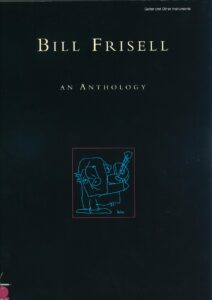
Best Sheet Music download from our Library.
Please, subscribe to our Sheet Music Library.
If you are already a subscriber, please, check our NEW SCORES' page every month for new sheet music. THANK YOU!
In the vast, often turbulent ocean of modern music, there are players whose virtuosity is measured by speed and complexity, and then there are those, like Bill Frisell, who redefine the instrument itself. Born on March 18, 1951, in Baltimore, Maryland, William Richard Frisell has spent over four decades not just playing the guitar, but painting with it. He has created a sonic universe where jazz harmony meets American roots music, where feedback and distortion coexist with the sweetest, most crystalline melody, and where the boundaries between composer and improviser, bandleader and collaborator, dissolve completely.
To call Bill Frisell a "jazz guitarist" is both accurate and profoundly limiting. He is an American original, a folksinger without words, a sonic impressionist whose canvas is the air itself. This article explores the full scope of his life, his deeply personal musical style, his essential recordings, his extensive collaborations, and the indelible legacy he continues to build.
Early Life and Formative Years
Frisell's journey to becoming one of the most influential guitarists of his generation was not a straight line. He grew up in a musical household in the Denver suburbs, where his parents introduced him to the sounds of the radio—classical, pop, and the early rock and roll of Elvis Presley. His first instrument was the clarinet, which he played in school bands, giving him an early foundation in melody and orchestral texture that would later profoundly influence his guitar playing.
He picked up the guitar at age 15, drawn initially to the pop and surf rock of the day—the clean, reverb-drenched tones of artists like The Ventures. After high school, he attended the University of Northern Colorado, initially studying clarinet and music education before finally committing to the guitar. It was here that he was introduced to jazz, and his world was forever changed.
The turning point came when he heard the music of guitarist Jim Hall. Hall’s melodic clarity, harmonic sophistication, and unerring sense of space offered a stark contrast to the sheer velocity of some of his contemporaries. Hall’s approach—that of a thoughtful, collaborative improviser—became Frisell's North Star. After graduating in 1973, he moved to Boston to study at the prestigious Berklee College of Music, where he immersed himself in theory, composition, and the vibrant local music scene.
His big break arrived in 1978. Legendary saxophonist and composer Pat Metheny, himself a Berklee alumnus, heard a tape of Frisell and was so impressed that he recommended him to his own idol, Jim Hall. Hall invited Frisell to New York to play in a duo concert, an experience that was both terrifying and validating. This endorsement from his hero opened doors, and soon Frisell was a sought-after guitarist on the downtown New York scene, a crucible of creative energy where jazz was colliding with punk, rock, and avant-garde music.
Musical Style and Harmonic Language
Describing Bill Frisell's musical style is like trying to describe a color that hasn't been invented yet. It is instantly recognizable, yet constantly evolving. At its core are several key elements:
1. The "Frisell Sound": This is arguably his most significant contribution to the guitar. His primary electric guitar for decades has been a Fender Telecaster or a custom Doug Irwin guitar, but the sound he coaxes from it is uniquely his own. Through the strategic use of volume pedals, delay, reverb, and harmonizers, he makes the guitar sound like a pedal steel, a choir of strings, a music box, or a gentle breeze. He often swells notes, creating a bowed, vocal-like quality that erases the percussive attack of the pick. This allows his lines to float ethereally over the music, blending seamlessly with other instruments.
2. Harmonic Americana: Frisell’s harmony is a blend of jazz sophistication and folk simplicity. He uses extended chords (ninths, elevenths, thirteenths) with the same ease as a simple major or minor triad. He frequently employs pedal points—a sustained or repeated low note—over which he layers shifting, impressionistic harmonies. This creates a sense of spaciousness and grounding, a sonic landscape that feels both rooted and expansive. His music often evokes a distinctly American sense of place—the wide-open spaces of the prairie, the quiet melancholy of a small town, the bustling energy of a city.
3. Melodic Storytelling: Frisell is a master melodist. His improvisations are not flurries of notes aimed at showcasing technique; they are carefully constructed narratives. He treats a melody like a photograph, zooming in on certain details, panning across the landscape, and introducing characters (counter-melodies) that interact with the main theme. Whether he's playing an original piece or interpreting a standard like "I'm So Lonesome I Could Cry" or a surf classic like "Pipeline," he finds the emotional core of the melody and reveals it in a new light.
4. Genre Alchemy: Perhaps his greatest gift is his ability to erase genre boundaries. A single Frisell set might move seamlessly from a Thelonious Monk composition to a haunting version of a Madonna song to an original folk waltz to a free improvisation. He treats all music as a shared language, finding the connections between Stephen Foster, Aaron Copland, Bob Dylan, John Lennon, and Muddy Waters. This is not postmodern irony; it is a sincere expression of a mind that hears music as a unified, continuous stream of American storytelling.
A Discography of Depth and Diversity: Key Compositions and Albums
With over 40 albums as a leader, and countless more as a sideman, Frisell's catalog is a treasure trove. Selecting the "best" is a fool's errand, but certain records and compositions stand as landmarks.
Essential Albums:
- In Line (1983): His debut solo album (mostly solo guitar with two tracks featuring bassist Arild Andersen) immediately established his aesthetic. Sparse, intimate, and deeply melodic, it featured early versions of his original compositions, including the now-standard "Throughout."
- Rambler (1984): His first album for the prestigious ECM label, featuring a stellar band with Kenny Wheeler (trumpet), Bob Stewart (tuba), and Paul Motian (drums). It perfectly captured his growing interest in layering sounds and blending composition with open improvisation.
- Have a Little Faith (1993): A landmark album and a manifesto for his inclusive musical vision. Frisell reimagines an astonishingly diverse set of American songs: Charles Ives, Copland, Bob Dylan's "Just Like a Woman," Muddy Waters' "I Can't Be Satisfied," and even Madonna's "Live to Tell." It's a stunning statement on the continuity of American music.
- This Land (1994): With his longtime quartet of the time (Kermit Driscoll on bass, Joey Baron on drums), Frisell delves further into American iconography, with pieces inspired by cowboys, cartoons, and the American landscape. The title track is a perfect example of his simple, haunting melodic genius.
- Gone, Just Like a Train / Good Dog, Happy Man (1998 / 1999): These two albums, part of a trio of records from this period, showcase his "country-jazz" sound at its most refined. With bassist Viktor Krauss and drummer Jim Keltner, the music is groove-based, twangy, and deeply soulful.
- The Intercontinentals (2003): Demonstrating his endless curiosity, this Grammy-nominated album brought together musicians from Greece, Brazil, and Mali, integrating their folk traditions into his own sonic world with breathtaking results.
- Dish (2004): A live album with his sublime trio featuring bassist Ron Carter and drummer Paul Motian. It's a masterclass in interaction, space, and telepathic communication between three giants.
- Disfarmer (2009): A stunning song cycle inspired by the life of photographer Mike Disfarmer. The music is poignant, evocative, and perfectly captures the essence of rural America through a series of impressionistic vignettes.
- When You Wish Upon a Star (2016): A beautiful duo album with vocalist Petra Haden, exploring the Great American Songbook and classic film themes. It's a testament to his lyrical sensitivity as an accompanist.
Notable Compositions:
While much of his work is in the moment, certain Frisell tunes have become vehicles for his ever-evolving bands. These include the beautiful and yearning "Throughout," the playful and angular "Strange Meeting," the haunting waltz "The Pioneers," and his radical reharmonizations of traditional tunes like "Shenandoah."
Filmography and Multimedia Work
Frisell's music is inherently cinematic, so it's no surprise that he has had a rich career composing for film. His scores are not mere background music; they are integral to the narrative and emotional fabric of the works.
- Finding Forrester (2000, dir. Gus Van Sant): His most high-profile film score. The music, for solo guitar and small ensemble, perfectly captures the film's themes of mentorship, isolation, and creativity in New York.
- The Mesmerist (2002): A collaboration with filmmaker Bill Morrison, creating a haunting soundscape for a silent film.
- Decasia (2002): He also composed a new score for Morrison's acclaimed found-footage film "Decasia," a perfect meeting of decaying visuals and Frisell's ethereal, slightly fractured sound.
Beyond these, he has scored numerous other films and documentaries, and his music has been used extensively in film and television for its unique ability to evoke mood and place. He also collaborated frequently with director and photographer Jim Woodring, creating soundscapes for Woodring's surreal animated films.
Collaborations: The Web of Creative Relationships
If Frisell's solo work is a series of self-portraits, his collaborations are group photos, capturing the essence of his creative community. He is the ultimate team player, a listener of almost supernatural ability. His key partnerships read like a who's who of creative music over the last 40 years.
- Paul Motian: The drummer and composer was perhaps his most significant mentor and collaborator after Jim Hall. Motian's loose, melodic, and endlessly inventive drumming was the perfect foil for Frisell. They played together in Motian's bands for decades, creating some of the most profound and free music of the era, alongside saxophonist Joe Lovano.
- Joe Lovano: The trio with Motian was the crucible, but Lovano and Frisell have a duo rapport that is equally deep. Their shared lyrical sensibility and adventurous spirits make every collaboration an event.
- John Zorn: A key figure in the downtown New York scene, Zorn enlisted Frisell for his avant-garde game-piece ensembles like Naked City. Frisell's ability to jump from country twang to screeching noise made him the perfect guitarist for Zorn's chaotic, genre-bending universe.
- Elvis Costello: Frisell's distinctive guitar is all over Costello's acclaimed 1989 album Spike and its follow-up, Mighty Like a Rose, adding layers of atmospheric color to Costello's songs.
- Ginger Baker: A seemingly unlikely pairing, Frisell played in the jazz-fusion band of the legendary Cream drummer. The collaboration pushed both musicians into unexpected territory.
- The Trio with Ron Carter and Paul Motian: This "dream team" of rhythm sections produced two sublime live albums. It's hard to imagine a more empathetic and powerful combination of musicians.
- The 858 Quartet: A long-term project with violinist Eyvind Kang, cellist Hank Roberts, and violist Eyvind Kang, exploring intricate, composed chamber music for strings and guitar.
His list of collaborators is nearly endless, including Brian Eno, Marianne Faithfull, David Sylvian, Ryuichi Sakamoto, and countless young lions of jazz who cite him as a primary influence.
Influences and Legacy
Frisell's influences are as diverse as his music. Jim Hall is the foundational pillar for his harmonic and melodic approach. He has also frequently cited the angular compositions of Thelonious Monk, the orchestral colors of Gil Evans, the raw emotion of bluesmen like Muddy Waters and Howlin' Wolf, the lyrical purity of Hank Williams, the sonic experimentation of Brian Wilson and The Beatles, and the ambient soundscapes of Brian Eno. He listens deeply and generously, absorbing everything into his singular vision.
His legacy is already secure and continues to grow.
- For Guitarists: He liberated the instrument. He showed that the electric guitar could be a tool for texture, atmosphere, and subtle expression just as much as for virtuosic speed and power. He inspired a generation of players (like Julian Lage, Mary Halvorson, and many others) to explore the poetic and textural possibilities of the guitar.
- For Jazz: He was a central figure in the "downtown" scene that broke down the walls between jazz, rock, and avant-garde music. More importantly, he broadened the definition of the jazz canon, showing that American vernacular music—folk, country, bluegrass, pop, rock—deserves the same depth of interpretation and improvisational exploration as the Great American Songbook.
- For Composition: He blurred the line between composer and improviser. His written music is often skeletal, a framework for the band to build upon collectively. This democratic, collaborative approach to composition has influenced countless ensembles.
- As an Artist: His greatest legacy may be the emotional honesty of his music. In a world that is often loud and chaotic, Bill Frisell's music offers a space for contemplation, beauty, and quiet connection. He finds the profound in the simple, and the simple in the profound.
On his birthday, we celebrate not just a guitarist, but a true artist. Bill Frisell has spent a lifetime listening—to his heroes, to his collaborators, and to the world around him. He has transformed that listening into a body of work of extraordinary depth, beauty, and humanity. From his humble beginnings with a clarinet in Colorado to his place as one of the most revered and influential musicians in the world, his path has been one of constant exploration and sincere expression.
He has taught us that music is not about categories or genres, but about storytelling and connection. Whether he is coaxing a folk melody from his Telecaster or conjuring a cloud of sound with his looping pedals, he invites us into his world—a world where the wind sounds like a guitar, a guitar sounds like a voice, and a simple melody can contain the whole of the American experience. Happy birthday to the sonic painter, Bill Frisell.
Search your favorite sheet music in the Sheet Music Catalog
Bill Frisell Trio [FULL CONCERT] - GroundUP 2025
Bill Frisell's Trio performs a seamless set at GroundUP 2025 in Miami Beach, Florida.