
Come join us now, and enjoy playing your beloved music and browse through great scores of every level and styles!
Can’t find the songbook you’re looking for? Please, email us at: sheetmusiclibrarypdf@gmail.com We’d like to help you!
Table of Contents
Who was Béla Bartók (1881-1945)?
Béla Bartók – Mikrokosmos Book 1 & 2 sheet music, Noten, partitura, spartiti, 楽譜, 乐谱
Search Béla Bartók’s best sheet music, books, and transcriptions in the Library:
| Name | Cover | List of Contents |
|---|---|---|
| Bartok – For Children, Sz. 42 Complete 1 to 43 Bela Bartok | 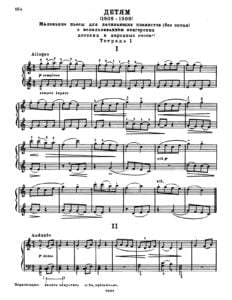 | |
| Bartok – Improvisations op 20 Bela Bartok |  | |
| Bartok – Mikrokosmos (Books 1 to 6) Bela Bartok | Bartok – Mikrokosmos (1-6) sheet music |  |
| Bartok – Mikrokosmos Vol. 2 Bela Bartok |  | |
| Bartok – Mikrokosmos Vol. 4 Bela Bartok |  | 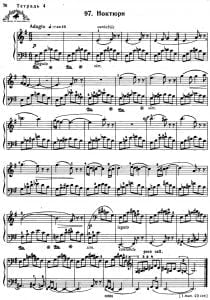 |
| Bartok – Mikrokosmos Vol.1 Bela Bartok | 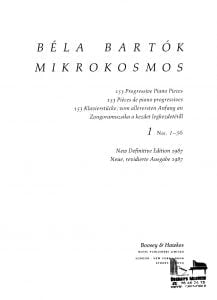 | |
| Bartok – Sonate For Piano Solo Bela Bartok | 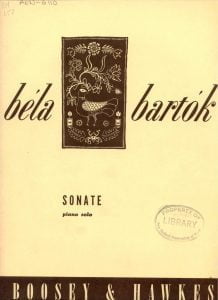 | |
| Bartok 6 Danses populaires roumaines Bela Bartok | Bartok.-.6.Danses.populaires.roumaines | |
| Bartok 44 Duos For Two Violins SZ. 98 | 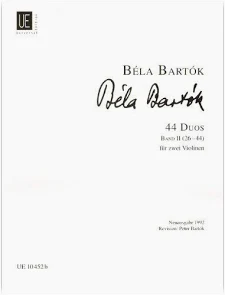 | |
| Bartok For Children Book 1 Based On Hungarian Folk Tunes Piano Solo |  | |
| Bartok For Children Book 2 after Slovakian Folk Tunes Piano Solo | Bartok For Children Book 2 after Slovakian Folk Tunes Piano Solo | |
| Bartok For Children Books 1 and 2 (Complete) | 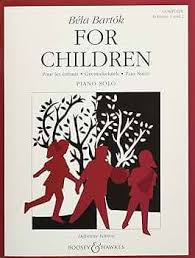 | |
| Bartok Improvisations op. 20 Bela Bartok |  | |
| Bartok Piano Sonata Bela Bartok |  | |
| Bartok Romanian Folk Dances For Cello And Piano | 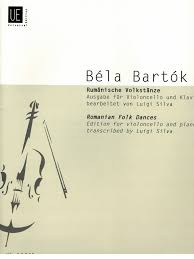 | |
| Bartok Romanian Folk Dances for clarinet and piano | 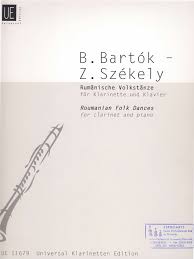 | |
| Bartok Romanian Folk Dances Henle Urtext | 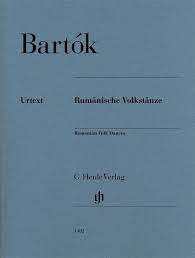 | |
| Bartok Ten Easy Pieces |  |
Please, subscribe to our Sheet Music Library.
If you are already a subscriber, please, check our NEW SCORES’ page every month for new sheet music. THANK YOU!
Best Sheet Music download from our Library.
Béla Bartók: A Comprehensive Exploration of the Composer’s Life, Art, and Legacy
Who was Béla Bartók?
Béla Bartók (1881-1945) stands as one of the twentieth century’s most formidable musical forces—a composer, pianist, ethnomusicologist, and pedagogue whose work fundamentally altered the trajectory of Western art music. Alongside figures like Igor Stravinsky and Arnold Schoenberg, Bartók forged a new musical language that synthesized the ancient folk traditions of Eastern Europe with the most advanced compositional techniques of his era. His achievement lies not merely in the fusion of these elements but in the creation of a unified system of pitch organization that brought coherence to what might otherwise have remained disparate influences.
This article explores the full scope of Bartók’s life and work: his biographical journey from provincial Hungary to American exile, the folk music research that transformed his compositional voice, the technical innovations that define his harmonic language, his relationships with other artists, and the enduring legacy of a body of work that continues to challenge and inspire musicians and listeners alike.

1. Biography: The Life of Béla Bartók
Early Years (1881-1898)
Béla Viktor János Bartók was born on March 25, 1881, in the small town of Nagyszentmiklós, then part of the Kingdom of Hungary (now Sânnicolau Mare, Romania). He came from a family with deep musical roots: his father, Béla Sr., was director of an agricultural school and an amateur musician, while his mother, Paula (née Voit), served as his first piano teacher. The young Bartók displayed extraordinary musical gifts from an early age, composing his first piano pieces at the age of nine.
Tragedy struck in 1888 when Bartók’s father died suddenly, leaving Paula to raise Béla and his younger sister, Elza, under difficult financial circumstances. The family moved first to Nagyszőlős (now Vynohradiv, Ukraine) and later to Pozsony (now Bratislava, Slovakia), where Bartók continued his musical education. By the age of eleven, he was already performing publicly as a pianist, presenting works by Beethoven and Mozart with a maturity that astonished audiences.

Formative Years and the Budapest Academy (1899-1905)
In 1899, Bartók enrolled at the Royal Academy of Music in Budapest, now known as the Franz Liszt Academy of Music. There, he studied piano with István Thomán (a pupil of Liszt) and composition with János Koessler. Though initially drawn to the late-Romantic tradition exemplified by Richard Strauss, Bartók soon began to chafe against the conservative academic environment. His graduation in 1903 marked not only the completion of formal studies but the emergence of an independent artistic voice.
The turning point came in 1904, when Bartók overheard a Hungarian peasant girl singing folk songs—a moment that ignited a lifelong passion for vernacular music. He soon recognized that the “Hungarian music” known in urban centers, primarily the popular verbunkos style, bore little relation to the ancient peasant traditions of the countryside. This revelation set him on a path that would define his life’s work.
The Folk Music Years (1905-1918)
In 1905, Bartók began his systematic study of Hungarian folk music in collaboration with his friend and fellow composer Zoltán Kodály. Together, they traveled through remote villages, collecting, transcribing, and recording thousands of folk melodies on Edison phonographs—a pioneering effort that laid the foundation for modern ethnomusicology. Bartók’s approach was rigorously scientific: he classified melodies according to their structural characteristics, identifying the pentatonic scales and ancient modal systems that formed the basis of authentic Hungarian peasant music.
This period also marked Bartók’s emergence as a concert pianist. In 1907, he was appointed professor of piano at the Budapest Academy, a position he held until 1934. His performing career took him across Europe, establishing a reputation as one of the finest pianists of his generation. Teaching provided financial stability, but Bartók often found administrative duties burdensome, preferring the solitary work of composition and research.
The 1910s brought increasing recognition as a composer. Works such as Allegro barbaro (1911), the Piano Suite Op. 14 (1916), and the ballet The Miraculous Mandarin (1918-1924) announced a mature style that fused folk elements with modernist techniques. However, the political upheavals following World War I—the collapse of the Austro-Hungarian Empire, the short-lived Hungarian Soviet Republic, and the subsequent conservative regime under Miklós Horthy—left Bartók increasingly disillusioned with Hungarian cultural life.
Middle Period and International Recognition (1919-1939)
The 1920s and 1930s represented Bartók’s most productive years as a composer. Major works from this period include the Dance Suite (1923), the Piano Concerto No. 1 (1926), the String Quartet No. 4 (1928), Music for Strings, Percussion, and Celesta (1936), and the Sonata for Two Pianos and Percussion (1937). Each work advanced his technical language, exploring the principles of symmetrical pitch organization that Elliott Antokoletz, the leading Bartók scholar, has described as “an all-encompassing system of pitch relations” bringing coherence to the composer’s diverse formations.
Bartók’s international reputation grew steadily during these years. He undertook concert tours in the Soviet Union, Switzerland, Germany, and elsewhere, though his political views—staunchly anti-fascist—made him increasingly unwelcome in Nazi-dominated Europe. After Hitler’s rise to power in 1933, Bartók refused to perform in Germany or allow his works to be published there, a principled stance that cost him significant income.
American Exile and Final Years (1940-1945)
As the European political situation deteriorated, Bartók reluctantly concluded that he must leave Hungary. In October 1940, he and his wife, Ditta Pásztory (his second wife, whom he had married in 1923 following a divorce from his first wife, Márta Ziegler), emigrated to the United States. They settled in New York City, where Bartók was offered a research position at Columbia University, working on a collection of Serbo-Croatian folk songs.
The American years were marked by declining health, financial insecurity, and feelings of cultural isolation. Bartók developed leukemia, a diagnosis that was initially withheld from him. Yet these years produced some of his most profound works, composed under the shadow of mortality. The Concerto for Orchestra (1943), commissioned by the Koussevitzky Foundation, became his most popular work. The Sonata for Solo Violin (1944) and the unfinished Piano Concerto No. 3 (1945), intended as a birthday gift for Ditta, represent the serene culmination of his life’s work.
Béla Bartók died in New York City on September 26, 1945, surrounded by friends and colleagues. He was buried in Ferncliff Cemetery in Hartsdale, New York. In 1988, his remains were repatriated to Hungary, where he now lies in Budapest’s Farkasréti Cemetery, at rest in the country whose folk heritage he had devoted his life to preserving.
2. Music Style: The Fusion of Folk and Modern
The Folk Music Foundation
Bartók’s style is inseparable from his folk music research. Unlike many nationalist composers who used folk melodies as decorative elements within conventional Western forms, Bartók absorbed the deeper structural principles of peasant music—its modal scales, asymmetrical rhythms, and varied phrase structures—and made them the generative basis of his compositional language.
The authentic Hungarian peasant music Bartók discovered differed radically from the urban verbunkos style. It was predominantly pentatonic, based on a five-note scale with intervals of major seconds and minor thirds. Bartók identified four distinct types of Hungarian folk melody, each with characteristic melodic contours and rhythmic patterns. This pentatonic foundation, combined with modal inflections from the Dorian, Phrygian, and Mixolydian modes, gave his music its distinctive flavor.
The Axis System and Golden Section
Bartók developed sophisticated compositional techniques that systematized his harmonic language. The Axis System represents his expansion of traditional tonal relationships, organizing pitches around symmetrical axes rather than conventional tonic-dominant hierarchies. This system allowed Bartók to maintain tonal centricity while employing highly chromatic and dissonant harmonies.
The Golden Section—a mathematical proportion found in natural growth patterns—appears throughout Bartók’s mature works. Research has shown that Bartók used this ratio to structure musical form at multiple levels, from the arrangement of large sections to the timing of individual phrases. As one scholar notes, the Golden Section is “understood as a rationalization of the Hungarian Pentatony and ultimately as a musical expression of the laws governing natural growth”.
Night Music and Barbarism
Bartók’s style encompasses two seemingly contradictory aesthetic poles. The “night music” idiom—first fully realized in the 1926 piano piece Night Music—evokes nocturnal landscapes through sparse textures, trills, glissandi, and the imitation of natural sounds. This mysterious, introspective manner appears in movements such as the third movement of Music for Strings, Percussion, and Celesta and the Adagio of the Piano Concerto No. 3.
At the opposite extreme stands Bartók’s barbaric manner, characterized by driving motoric rhythms, percussive piano writing, and aggressive dissonance. Allegro barbaro (1911) gave the style its name, but it recurs in works such as the first movement of the Piano Concerto No. 1 and the finale of the String Quartet No. 4. Bartók’s treatment of the piano as a percussion instrument—a technique reflecting both folk music practice and his own formidable pianism—became a hallmark of his style.
Formal Innovations
Bartók brought unprecedented formal sophistication to his works. His string quartets, in particular, demonstrate an evolving mastery of large-scale structure. The arch form—a symmetrical structure in which the middle movement serves as the keystone, with outer movements reflecting each other—appears in the String Quartet No. 4 (1928) and No. 5 (1934). This architectural clarity coexists with extraordinary textural invention, creating works of both intellectual rigor and expressive power.
Musical analysis
Paul Wilson lists as the most prominent characteristics of Bartók’s music from late 1920s onwards the influence of the Carpathian basin and European art music, and his changing attitude toward (and use of) tonality, but without the use of the traditional harmonic functions associated with major and minor scales.
Although Bartók claimed in his writings that his music was always tonal, he rarely used the chords or scales normally associated with tonality, and so the descriptive resources of tonal theory are of limited use. George Perle (1955) and Elliott Antokoletz (1984) focus on his alternative methods of signaling tonal centers, via axes of inversional symmetry. Others view Bartók’s axes of symmetry in terms of atonal analytic protocols. Richard Cohn (1988) argues that inversional symmetry is often a byproduct of another atonal procedure, the formation of chords from transpositionally related dyads. Atonal pitch-class theory also furnishes resources for exploring polymodal chromaticism, projected sets, privileged patterns, and large set types used as source sets such as the equal tempered twelve tone aggregate, octatonic scale (and alpha chord), the diatonic and heptatonia secunda seven-note scales, and less often the whole tone scale and the primary pentatonic collection.
He rarely used the simple aggregate actively to shape musical structure, though there are notable examples such as the second theme from the first movement of his Second Violin Concerto, of which he commented that he “wanted to show Schoenberg that one can use all twelve tones and still remain tonal”. More thoroughly, in the first eight measures of the last movement of his Second Quartet, all notes gradually gather with the twelfth (G♭) sounding for the first time on the last beat of measure 8, marking the end of the first section. The aggregate is partitioned in the opening of the Third String Quartet with C♯–D–D♯–E in the accompaniment (strings) while the remaining pitch classes are used in the melody (violin 1) and more often as 7–35 (diatonic or “white-key” collection) and 5–35 (pentatonic or “black-key” collection) such as in no. 6 of the Eight Improvisations.
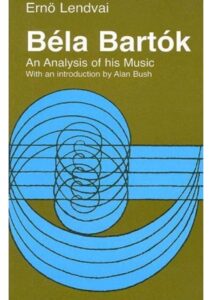
There, the primary theme is on the black keys in the left hand, while the right accompanies with triads from the white keys. In measures 50–51 in the third movement of the Fourth Quartet, the first violin and cello play black-key chords, while the second violin and viola play stepwise diatonic lines. On the other hand, from as early as the Suite for piano, Op. 14 (1914), he occasionally employed a form of serialism based on compound interval cycles, some of which are maximally distributed, multi-aggregate cycles. Ernő Lendvai analyses Bartók’s works as being based on two opposing tonal systems, that of the acoustic scale and the axis system, as well as using the golden section as a structural principle.
Milton Babbitt, in his 1949 review of Bartók’s string quartets, criticized Bartók for using tonality and non-tonal methods unique to each piece. Babbitt noted that “Bartók’s solution was a specific one, it cannot be duplicated”. Bartók’s use of “two organizational principles”—tonality for large scale relationships and the piece-specific method for moment to moment thematic elements—was a problem for Babbitt, who worried that the “highly attenuated tonality” requires extreme non-harmonic methods to create a feeling of closure.
3. Improvisational Licks and Techniques
The Eight Improvisations on Hungarian Peasant Songs
Bartók’s most direct exploration of improvisational practice appears in the Eight Improvisations on Hungarian Peasant Songs, Op. 20 (1920). This work represents a pivotal moment in his development, as the last composition to which he assigned an opus number—thereafter treating folk music and “artistic” composition as equal in stature.
Each movement takes a Hungarian peasant melody as its point of departure, subjecting it to transformations that suggest spontaneous elaboration. The composer Alexander Carpenter describes these pieces as “far from his folk pieces, with its abrasive harmonies and rhythms”. The improvisatory character emerges through several techniques:
Harmonic Unpredictability: In the first movement, the Dorian-mode melody is accompanied by triads unrelated to the melodic mode—each derived from the melody’s pitches but producing jarring dissonances. This technique mirrors the freedom of folk instrumentalists who might harmonize a melody with whatever chords seemed fitting at the moment.
Polytonality: The third movement employs polytonality, with different instrumental strata operating in different keys simultaneously. The effect is one of controlled chaos, as if multiple musicians were improvising concurrently.
Bitonality: The sixth movement presents a striking example of bitonal improvisation: one hand plays only on the black keys (producing a pentatonic melody), while the other uses all the white keys. The resulting clash of tonal systems evokes the spontaneity of improvisation within rigorous structural constraints.
Rhythmic Freedom: Movements such as the second feature “sudden tempo changes” and “much more syncopated” rhythms, creating an improvisatory ebb and flow that contrasts with the strict rhythmic organization of many Bartók works.
Ostinato and Pedal Point Techniques
Bartók frequently employed ostinato—repeated melodic or rhythmic patterns—as a foundation for improvisatory elaboration. In his Mikrokosmos, a six-volume collection of pedagogical pieces, ostinato patterns appear alongside “pedal point methods” that sustain a single pitch while harmonies shift above. These techniques, drawn from folk music practice, create spaces within which melodic lines can unfold with improvisatory freedom.
4. Cooperation with Other Artists
Zoltán Kodály
The collaboration between Bartók and Zoltán Kodály stands as one of the most significant artistic partnerships in twentieth-century music. They met in 1905 at a gathering of Hungarian composers and quickly recognized their shared interest in folk music. Together, they embarked on collecting expeditions that transformed Hungarian musicology.
Their relationship was one of mutual respect and complementary talents. While Bartók’s approach was more analytical and systematic, Kodály brought a broader cultural vision that shaped Hungarian musical education. The two composers influenced each other’s work—Kodály’s early compositions, such as the Psalmus Hungaricus, show Bartók’s influence, while Bartók’s later works reflect Kodály’s emphasis on text and vocal writing.
Ditta Pásztory
Bartók’s second wife, Ditta Pásztory (1903-1982), was a pianist and his performing partner during the 1930s and 1940s. The Sonata for Two Pianos and Percussion (1937) was written for performance with her, and they toured extensively with this work. Ditta’s presence provided Bartók with a trusted musical collaborator during his final, difficult years.
Other Collaborations
Bartók maintained professional relationships with numerous artists throughout his career. Violinist Joseph Szigeti championed his works, premiering the Rhapsody No. 1 and commissioning the Contrasts for violin, clarinet, and piano (1938). Clarinetist Benny Goodman commissioned Contrasts, bringing Bartók’s music to a new audience. Conductor Fritz Reiner, a fellow Hungarian, conducted Bartók’s works in the United States and later served as executor of his musical estate.
5. Chord Progressions and Music Harmony
The Axis System Explained
The Axis System represents Bartók’s most significant contribution to harmonic theory. Building on his analysis of folk music and his engagement with modernist techniques, Bartók developed a system that organizes pitches into symmetrical groups around central axes. As Elliott Antokoletz has demonstrated, this system allowed Bartók to maintain tonal centricity while expanding harmonic possibilities beyond traditional major-minor tonality.
In the Axis System, pitches are grouped according to their intervallic relationships around a central axis. A C major chord, for instance, might be balanced by an F-sharp chord—the relationship being determined not by conventional dominant function but by symmetrical opposition. This system appears throughout Bartók’s mature works, from the Piano Suite Op. 14 (1916) to the late concertos.
Quartal and Secundal Harmony
Bartók frequently constructed chords from intervals other than the traditional third. Quartal harmony—chords built from fourths—appears in works such as the Mikrokosmos, where harmonies are “mainly consisted of 9th harmony, 4th degree composition”. These fourth-based structures produce a more open, resonant sound than tertian chords.
Secundal harmony—clusters built from seconds—creates the dense, percussive textures characteristic of Bartók’s barbaric style. The combination of major and minor seconds produces both tonal ambiguity and striking coloristic effects.
Modes and Pentatonic Scales
The modal scales Bartók collected from Hungarian folk music form the melodic and harmonic foundation of much of his work. He employed the Dorian, Phrygian, Lydian, and Mixolydian modes—scales that, unlike major and minor, lack leading tones and therefore avoid the directed harmonic motion characteristic of classical tonality.
The pentatonic scale—five notes per octave—appears throughout Bartók’s music. This scale, which lacks semitones, produces melodies of remarkable flexibility. Bartók’s harmonization of pentatonic melodies often involves chords drawn from different pentatonic collections, creating the characteristic dissonances of his mature style.
Symmetrical Pitch Construction
Bartók’s harmonic language is unified by principles of symmetry. As Antokoletz explains, Bartók’s system encompasses “symmetrical transformation of the folk modes” and “construction, development, and interaction of intervallic cells”. These symmetrical structures—whether octatonic scales, whole-tone scales, or the axis system itself—provide coherence across Bartók’s varied output.
The octatonic scale—alternating whole and half steps—proved particularly important. This symmetrical scale contains both major and minor triads, diminished seventh chords, and other structures that Bartók employed in complex harmonic progressions.
6. Influences
Richard Strauss and the Late Romantic Tradition
Bartók’s early works reflect the influence of Richard Strauss, whose tone poems he encountered as a young composer. The symphonic poem Kossuth (1903) shows Strauss’s influence in its orchestral writing and programmatic structure. This Germanic inheritance—the tradition of Beethoven, Brahms, and Wagner—provided the technical foundation upon which Bartók built his mature style.
Claude Debussy and French Impressionism
The French composer Claude Debussy exerted a profound influence on the young Bartók. As one scholar notes, “Bartók’s music was very influenced by Debussy’s style when Bartók was a young composer”. Debussy’s modal harmonies, pentatonic scales, and fluid rhythms offered alternatives to German harmonic practice. Bartók acknowledged this debt in the seventh of the Eight Improvisations, dedicated to Debussy’s memory.
Debussy’s influence extended beyond harmony to include approaches to timbre and texture. The “night music” idiom owes much to Debussy’s nocturnal imagery, though Bartók transformed it into something distinctly his own.
Igor Stravinsky
The primitivism of Igor Stravinsky—particularly The Rite of Spring (1913)—resonated with Bartók’s interest in folk rhythms and percussive textures. Stravinsky’s treatment of rhythm as a structural element, independent of melody or harmony, parallels developments in Bartók’s own music. The driving ostinatos of works such as the Piano Concerto No. 1 show Stravinsky’s influence, though Bartók’s harmonic language remained distinct.
Arnold Schoenberg and the Second Viennese School
Bartók was aware of the developments of Arnold Schoenberg and his circle, though he never adopted twelve-tone technique. The “symmetrical formations as the basis of progression in free-atonal compositions” by the Schoenberg school influenced Bartók’s thinking about pitch organization. However, Bartók maintained tonal centricity—albeit of an expanded, non-traditional sort—throughout his career, distinguishing his path from that of the Second Viennese School.
Folk Music
Above all, the folk music of Hungary, Romania, Slovakia, and other Eastern European regions shaped Bartók’s musical identity. His scientific study of these traditions—collecting, transcribing, and analyzing thousands of melodies—provided material and principles that he internalized and transformed. The asymmetrical rhythms, modal scales, and varied phrase structures of folk music became the foundation of his personal style.
7. Legacy
Influence on Later Composers
Bartók’s influence extends across the second half of the twentieth century and into our own time. Composers as diverse as György Ligeti, Pierre Boulez, Witold Lutosławski, and Steve Reich have acknowledged their debt to his work. Ligeti, a fellow Hungarian, developed Bartók’s rhythmic innovations in his own micropolyphonic textures. Boulez drew on Bartók’s formal rigor and orchestral imagination.
Bartók’s ethnomusicological work established models for the systematic study of vernacular traditions. His transcriptions of folk melodies remain models of scholarly precision, and his analytical methods anticipated later developments in music theory.
Pedagogy and Mikrokosmos
The Mikrokosmos, a six-volume collection of progressive piano pieces completed in 1940, represents Bartók’s most direct contribution to music education. As one scholar notes, “This thesis not only covers Bartok’s musical features mainly through piano works but studies a variety of musical literatures and notes on musical scale, melody subject, rhythm and harmony used in his works”. The Mikrokosmos has become a standard pedagogical work, introducing students to twentieth-century techniques within a graduated curriculum.
Critical Reception and Scholarly Study
Bartók’s reputation has only grown since his death. Elliott Antokoletz’s foundational study, The Music of Béla Bartók: A Study of Tonality and Progression in Twentieth-Century Music (1984), established the theoretical framework for understanding Bartók’s harmonic language. Subsequent scholarship has explored Bartók’s compositional processes, his relationship to Hungarian culture, and the reception of his work in the postwar era.
Cultural Legacy in Hungary
In Hungary, Bartók occupies a place comparable to that of Liszt or Kodály—a national cultural hero whose work embodies Hungarian identity. The Bartók Archives in Budapest preserve his manuscripts, folk music recordings, and personal papers. The composer’s house in Budapest is maintained as a museum, and the annual Budapest Bartók Festival celebrates his legacy.
8. Works: A Chronological Overview
Stage Works
- Duke Bluebeard’s Castle (1911, premiered 1918) — A one-act opera setting Béla Balázs’s symbolist libretto
- The Wooden Prince (1914-1916) — A ballet in one act
- The Miraculous Mandarin (1918-1924, ballet; 1928, concert version)
Orchestral Works
- Kossuth (1903) — Symphonic poem
- Two Portraits (1907-1911)
- Two Pictures (1910)
- Dance Suite (1923)
- Piano Concerto No. 1 (1926)
- Piano Concerto No. 2 (1930-1931)
- Music for Strings, Percussion, and Celesta (1936)
- Violin Concerto No. 2 (1937-1938)
- Concerto for Orchestra (1943)
- Piano Concerto No. 3 (1945, unfinished at death)
Chamber Works
- Six String Quartets (1908, 1915-1917, 1927, 1928, 1934, 1939)
- Sonata for Two Pianos and Percussion (1937)
- Contrasts for violin, clarinet, and piano (1938)
- Sonata for Solo Violin (1944)
Piano Works
- Fourteen Bagatelles (1908)
- Allegro barbaro (1911)
- Piano Suite Op. 14 (1916)
- Eight Improvisations on Hungarian Peasant Songs (1920)
- Sonata for Piano (1926)
- Out of Doors (1926)
- Mikrokosmos (1926-1939, six volumes)
9. Works on Films
Bartók’s music has appeared in numerous films, often used to evoke dramatic tension or cultural specificity. The Concerto for Orchestra appears in films such as Being John Malkovich (1999). Music for Strings, Percussion, and Celesta has been particularly favored by filmmakers, with its eerie third movement used in Stanley Kubrick’s The Shining (1980). The String Quartet No. 4 appears in The Piano Teacher (2001), Michael Haneke’s adaptation of Elfriede Jelinek’s novel.
Bartók himself has been the subject of several documentary films, exploring both his life and his musical legacy.
10. Discography
Complete Recordings
The complete works of Bartók have been recorded multiple times. Significant complete editions include:
- Decca: The complete Bartók edition conducted by Antal Doráti and others
- Hungaroton: The Hungarian label’s complete edition, featuring many Hungarian performers
- Naxos: The budget label’s ongoing complete edition, including Jenő Jandó’s celebrated piano recordings
Notable Individual Recordings
| Work | Performers | Label | Significance |
|---|---|---|---|
| Concerto for Orchestra | Chicago SO/Fritz Reiner | RCA | A classic recording from the 1950s |
| String Quartets | Emerson String Quartet | DG | Grammy-winning complete cycle |
| Music for Strings, Percussion, Celesta | Berlin PO/Herbert von Karajan | DG | Definitive interpretation |
| Piano Concertos | Krystian Zimpert/Pierre Boulez | Sony | Modern recording with period instruments |
| Mikrokosmos | Jenő Jandó | Naxos | Complete recording of the pedagogical cycle |
11. Most Known Compositions and Performances
Concerto for Orchestra
The Concerto for Orchestra (1943) stands as Bartók’s most frequently performed work. Commissioned by Serge Koussevitzky and premiered by the Boston Symphony Orchestra in 1944, the work represents a synthesis of Bartók’s mature style within an accessible framework. Its five movements demonstrate Bartók’s mastery of orchestral color, while its folk-like melodies and dance rhythms appeal to a broad audience.
Music for Strings, Percussion, and Celesta
Composed in 1936, this work exemplifies Bartók’s formal ingenuity and expressive range. The third movement—the “night music”—has achieved particular fame through its use in film. The work’s symmetrical form, with a slow movement at the center flanked by faster movements, demonstrates Bartók’s architectural sophistication.
Six String Quartets
The string quartets are often described as the twentieth-century successor to Beethoven’s cycle. Each quartet explores different aspects of Bartók’s language, from the folk-inflected first quartet (1908) to the searing sixth (1939), written on the eve of Bartók’s departure from Europe. The quartets remain central to the chamber music repertoire.
Piano Concerto No. 3
The unfinished Piano Concerto No. 3 (1945) represents Bartók’s final return to serenity. Scored for a smaller orchestra than its predecessors, the concerto looks back to classical models while retaining Bartók’s distinctive harmonic voice. Its composition—intended as a birthday gift for Ditta—was interrupted by Bartók’s final illness.
12. Documentaries and Media
Significant Documentaries
- Bartók (1964) — Hungarian documentary exploring the composer’s life and work
- Béla Bartók: The Father of Ethnomusicology — Documentary focusing on his folk music research
- The Concerto for Orchestra: A Journey — Exploration of Bartók’s American years and final masterwork
Archival Resources
The Bartók Archives in Budapest preserve extensive materials: manuscripts, folk music recordings, correspondence, and photographs. The Paul Sacher Foundation in Basel holds additional materials from Bartók’s American years. Digital resources, including the Bartók Archive’s online catalog, make these materials increasingly accessible to scholars.
Béla Bartók’s achievement stands at the crossroads of the twentieth century’s most significant musical developments. He absorbed the folk traditions of Eastern Europe not as exotic ornament but as the generative basis of a new musical language. He transformed that language through systematic techniques—the axis system, the golden section, symmetrical pitch construction—that unified his diverse output. He created a body of work that spans opera, ballet, orchestral music, chamber music, and solo piano, maintaining exceptional quality across all genres.
From his early days as a prodigious pianist to his final years as an exile in America, Bartók remained committed to his artistic vision. His refusal to compromise with fascism, his principled stand against performing in Nazi Germany, and his dedication to preserving folk traditions reflect a moral integrity as remarkable as his musical achievement.
Today, Bartók’s music continues to challenge and inspire. The Concerto for Orchestra fills concert halls worldwide. The string quartets remain essential repertoire for chamber musicians. The Mikrokosmos introduces generations of students to twentieth-century techniques. And the folk melodies Bartók preserved—captured on wax cylinders in remote Hungarian villages—survive as both historical documents and living musical traditions.
In the words of Elliott Antokoletz, the “remarkable continuity of style in Bartók’s evolution is founded upon an all-encompassing system of pitch relations in which one can draw together the diverse pitch formations in his music under one unified set of principles”. This system—born of peasant songs and modernist innovation, folk practice and mathematical rigor—remains one of the great achievements of twentieth-century art, a testament to a composer who found in the traditions of his homeland a language that spoke to the world.
Search your favorite sheet music in the Sheet Music Catalog
Please, subscribe to our Sheet Music Library.
If you are already a subscriber, please, check our NEW SCORES’ page every month for new sheet music. THANK YOU!
Browse in the Library:
Or browse in the categories menus & download the Library Catalog PDF: