
Come join us now, and enjoy playing your beloved music and browse through great scores of every level and styles!
Can’t find the songbook you’re looking for? Please, email us at: sheetmusiclibrarypdf@gmail.com We’d like to help you!
Table of Contents
Happy birthday, George Benson, born on this day in 1943.

Best Sheet Music download from our Library.

Please, subscribe to our Sheet Music Library.
If you are already a subscriber, please, check our NEW SCORES’ page every month for new sheet music. THANK YOU!
George Benson: The Guitarist Who Sang His Way to Stardom
Born: March 22, 1943 – Pittsburgh, Pennsylvania
On a day that marks the birth of one of music’s most versatile and beloved artists, we celebrate George Washington Benson—a musician whose career defies easy categorization. He is a jazz guitarist of extraordinary technical prowess, a soul singer of remarkable warmth, a pop sensation who dominated the charts, and a Grammy-winning artist whose influence spans generations. From child prodigy in the Hill District of Pittsburgh to National Endowment for the Arts Jazz Master, Benson’s journey represents one of the most remarkable trajectories in American music history .
Early Life: The Prodigy Emerges
George Washington Benson was born on March 22, 1943, in the Hill District of Pittsburgh, Pennsylvania—a neighborhood that produced an astonishing number of jazz luminaries. Music was not merely an interest in the Benson household; it was a calling that would manifest itself with extraordinary precocity .
At the tender age of seven, Benson picked up a ukulele in a corner drug store and played for passersby, earning a few dollars for his efforts. By eight, he had graduated to guitar, performing on Friday and Saturday nights in an unlicensed nightclub—until police shut the establishment down. But the young prodigy was undeterred .
What happened next would foreshadow a career marked by both extraordinary talent and early brushes with the music industry. At age nine, Benson found himself in a New York recording studio, cutting four sides for RCA Victor’s rhythm and blues label, Groove Records. Two of these recordings were released: “She Makes Me Mad” backed with “It Should Have Been Me.” While some sources suggest the record appeared under the name “Little Georgie,” the 45rpm label bears the name George Benson—the first appearance of a name that would become legendary .
This early exposure to the recording industry had unexpected consequences. When school officials discovered his professional activities—combined with the commercial failure of his single—Benson’s guitar was confiscated. He spent time in a juvenile detention center, a setback that might have derailed a less determined spirit. But his stepfather built him a new guitar, and Benson resumed his musical education with renewed focus .
Benson attended Connelley Vocational High School on Bedford Avenue in the Hill District before eventually dropping out to pursue music full-time. (In a gesture of reconciliation and recognition, Pittsburgh Public Schools awarded him an honorary degree in 1987.)
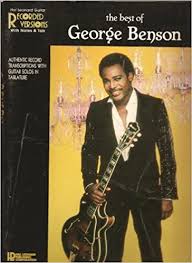
The Apprenticeship: Soul Jazz and the Organ Combo Scene
The early 1960s found Benson honing his craft in the most demanding laboratory available: the organ combo circuit. His association with organist Brother Jack McDuff proved transformative. For several years, Benson performed with McDuff’s group, learning the intricacies of straight-ahead instrumental jazz while developing the blistering technique and improvisational confidence that would define his playing .
This period was essential to Benson’s artistic development. The organ combo format—typically featuring organ, guitar, drums, and sometimes saxophone—was the crucible of soul jazz, a genre that combined the harmonic sophistication of bebop with the earthy grooves of rhythm and blues. In this setting, Benson absorbed the lessons of his guitar heroes, including the pioneering Charlie Christian and the influential country-jazz guitarist Hank Garland .
In 1964, at age 21, Benson recorded his first album as a leader: The New Boss Guitar of George Benson, which fittingly featured Jack McDuff. The album announced the arrival of a formidable talent—a guitarist whose command of the instrument seemed already fully formed.

Legendary Columbia Records talent scout John Hammond—the man who had discovered Billie Holiday, Count Basie, and Bob Dylan—signed Benson to the label. Under Hammond’s guidance, Benson released It’s Uptown (1966) with the George Benson Quartet, featuring organist Lonnie Smith, baritone saxophonist Ronnie Cuber, and drummer Marion Booker. The follow-up, The George Benson Cookbook (1967), solidified his reputation among jazz aficionados .
Jazz critic Gary Giddins described Benson’s playing from this era as “lean, [filled with] hungry dissonances, offhanded energy, whistling articulation, and arpeggiated flourishes”—a portrait of an artist already pushing beyond his influences toward something distinctive .
A significant validation came when Miles Davis employed Benson in the mid-1960s, featuring his guitar on “Paraphernalia” on the 1968 Columbia release Miles in the Sky. This association with the jazz icon positioned Benson at the forefront of the genre as it began exploring new directions.

The CTI Years: Artistic Maturity
Benson’s move to Creed Taylor’s CTI Records in the early 1970s marked a period of artistic consolidation and growing commercial visibility. CTI was known for its sophisticated production values, lush arrangements, and all-star session casts—an approach that suited Benson’s expanding ambitions .
His 1974 release, Bad Benson, climbed to the top of the Billboard jazz chart, showcasing his ability to balance instrumental virtuosity with accessible melodies. The album featured a rock-infused arrangement of Paul Desmond’s “Take Five” and the Latin-flavored original “My Latin Brother.” As one reviewer noted, the album represented “an excellent display of George Benson’s evolution toward more commercially successful music (more melodic and less technical skill oriented)” .
During his CTI tenure, Benson also became a core member of the CTI All-Stars collective, touring and recording with the label’s impressive roster. His guitar graced numerous sessions for other artists, including Freddie Hubbard’s Grammy-winning First Light (1971) and Stanley Turrentine’s acclaimed Sugar (1970)—the latter a landmark of the soul jazz genre .
Benson also demonstrated his eclectic tastes during this period, releasing The Other Side of Abbey Road (1970), an instrumental interpretation of the Beatles’ classic album, and a version of “White Rabbit,” the song made famous by Jefferson Airplane.
Browse in the Library:
Or browse in the categories menus & download the Library Catalog PDF:
The Breakthrough: Breezin’ and Superstardom
When Benson signed with Warner Bros. Records in the mid-1970s, few could have predicted the magnitude of what was about to unfold. Breezin’, released in 1976, would fundamentally alter Benson’s career and, in many ways, redefine the boundaries between jazz and popular music .
The album was a phenomenon. It reached No. 1 on the Billboard album chart—an almost unprecedented achievement for a jazz-oriented release—and was certified triple-platinum. Its success was driven by a single track: Benson’s vocal rendition of Leon Russell’s “This Masquerade.” Featuring a lush, romantic piano intro and solo by Jorge Dalto, the recording became a massive pop hit and won Grammy Awards for Record of the Year and Best Pop Instrumental Performance .
The irony was not lost on observers. Benson had been discouraged from singing early in his career, with label executives feeling his vocal abilities were insufficient and that he should focus on guitar. Breezin’ proved them spectacularly wrong .
The album’s title track, composed by Bobby Womack, became a cornerstone of what would later be called smooth jazz. As music writer Mark Anthony Neal notes, “No doubt ‘Breezin’, which has as much to do with the emergence of Smooth Jazz than anything that Kenny G tried to do, would give pause to many a fusion fan. Two generations later though, the Bobby Womack composition still holds up” .
Breezin’ was not Benson’s only significant work of 1976. That year, he toured with soul singer Minnie Riperton—who had recently been diagnosed with terminal breast cancer—on a tour called George & Minnie Live! He also contributed guitar and backing vocals to Stevie Wonder’s “Another Star” on the landmark album Songs in the Key of Life .
The follow-up live album, Weekend in L.A. (1978), cemented Benson’s crossover success. His live take on “On Broadway”—originally a hit for The Drifters—became another top-ten pop hit and earned him a Grammy for Best Male R&B Vocal Performance. The album’s title has become synonymous with a certain sophisticated, sun-drenched Southern California aesthetic that defined late-1970s pop culture .
An academic study of Weekend in L.A. describes its significance: “This piece is which possess such a great musicality including well-harmonized elements between musical components of 70’s Fusion style and George Benson’s unique style of performing, throughout the Jazz Music history” .
Also in 1977, Benson recorded the original version of “The Greatest Love of All” for the Muhammad Ali biopic The Greatest—a song that would later become Whitney Houston’s signature ballad .
The Quincy Jones Era: Give Me the Night
If Breezin’ established Benson as a pop star, his collaboration with producer Quincy Jones transformed him into an R&B icon. Jones’s Qwest Records—a Warner Bros. subsidiary—released Give Me the Night in 1980, an album that represented the pinnacle of sophisticated, mainstream Black pop .
The title track, written by former Heatwave keyboardist Rod Temperton, became a top-ten pop and R&B hit. But the album’s influence extended far beyond its commercial success. As Neal observes, Give Me the Night represents “the middle movement of Jones’ greatest production efforts bookended by Michael Jackson’s Off the Wall (1979) and Jones’s own The Dude (1981)—arguably the three best Black albums from that era” .
Jones encouraged Benson to explore his vocal roots, rediscovering his love for Nat King Cole, Ray Charles, and Donny Hathaway. This artistic reorientation produced a string of successful vocal albums throughout the 1980s, including While the City Sleeps, In Your Eyes, and 20/20. Hit singles followed: “Turn Your Love Around,” “Inside Love (So Personal),” “Lady Love Me (One More Time),” and “20/20” .
The commercial rewards were substantial: Benson accumulated three platinum LPs and two gold albums during this period, establishing himself as one of the most successful crossover artists of his generation .
Musical Style and Harmonic Innovation
Understanding George Benson’s significance requires examining his distinctive approach to guitar and harmony. His playing represents a synthesis of bebop vocabulary, soulful expression, and technical innovation that has influenced generations of guitarists.
The Benson Sound
Benson’s sound is immediately identifiable: a warm, rounded tone achieved primarily through his signature thumb-picking technique. Unlike most guitarists who use a pick, Benson employs his thumb for both single-note lines and chordal work—a technique he adopted from Wes Montgomery, his most significant instrumental influence .
This approach produces a softer attack and a more vocal quality to his phrasing. Benson’s lines are characterized by their fluidity, their blues-inflected vocabulary, and their remarkable rhythmic precision. He often plays in octaves—another Montgomery trademark—creating a full, horn-like sound that cuts through dense arrangements .
Harmonic Concepts
Benson’s harmonic sophistication is evident in his approach to improvisation. He navigates complex chord changes with bebop fluency while maintaining an accessible, melodic sensibility. His use of block chords—playing harmonized lines in parallel motion—demonstrates a deep understanding of voice leading and chord voicings .
An academic analysis of Benson’s work identifies several characteristic techniques: “Hook” applications that create memorable melodic phrases, expressive blue note inflections that connect his playing to the blues tradition, and a sophisticated swing feel that underpins even his most commercial recordings .
His soloing often employs:
- Single-note lines of breathtaking speed and clarity
- Block chord passages that create dense harmonic textures
- Parallel octaves that project power and clarity
- Pedal point techniques that create tension and release
- Raked arpeggios and pull-offs that add textural variety
The Scat-Guitar Connection
Perhaps Benson’s most distinctive contribution is the seamless integration of his vocal and instrumental voices. His scat singing—improvised vocal lines using nonsense syllables—mirrors his guitar phrasing with uncanny precision. When he sings a solo and then plays the same lines on guitar, the effect is breathtaking, demonstrating an instrumental-vocal unity rarely achieved in popular music .
This approach reflects Benson’s philosophy that music should communicate directly with listeners. As he has often stated, he doesn’t call his music “jazz” but rather “social music”—art meant to connect people .
Best Songs and Essential Recordings
George Benson’s catalog is remarkably deep, spanning more than five decades and multiple musical phases. Here are essential recordings that define his legacy:
The Jazz Period (1960s-1970s)
- The New Boss Guitar of George Benson (1964) – His debut as a leader
- It’s Uptown (1966) – Early quartet work with Lonnie Smith
- The George Benson Cookbook (1967) – Soul jazz at its finest
- Bad Benson (1974) – CTI-era peak
The Crossover Masterpieces (1976-1980)
- Breezin’ (1976) – The breakthrough album featuring “This Masquerade” and the title track
- Weekend in L.A. (1978) – Live recordings including the definitive “On Broadway”
- Give Me the Night (1980) – The Quincy Jones-produced pop masterpiece
Vocal Era Highlights (1980s)
- “Turn Your Love Around” (1981) – Grammy-winning single
- “Inside Love (So Personal)” (1983) – Sophisticated pop-R&B
- “20/20” (1985) – Title track from his platinum album
- “New Day” (1985) – A collaboration with Cecil and Linda Womack that Neal describes as “fashion[ing] a bit of Afrofuturism for a generation perhaps losing their hold on the value of that Soul harmony tradition”
Later Career (2000s-present)
- Absolute Benson (2000) – Featuring a cover of Donny Hathaway’s “The Ghetto”
- Guitar Man (2011) – A return to his instrumental roots
- Inspiration: A Tribute to Nat King Cole (2013) – Honoring one of his vocal heroes
- Dreams Do Come True: When George Benson Meets Robert Farnon (2024) – A recently completed project featuring recordings from 1989 with the London Symphony Orchestra
Notable Collaborations
- “Humility” (2018) – A surprising appearance on the Gorillaz single
- Collaboration (1987) – An album with fellow guitarist Earl Klugh
- “You Can Do It (Baby)” (1996) – A contribution to the Masters at Work Nuyorican Soul project that Neal calls “a punctuation on a career and legacy that remains remarkable”
Cooperations with Other Jazz Musicians
Throughout his career, Benson has collaborated with an extraordinary range of artists, reflecting his versatility and the respect he commands among fellow musicians.
Organists
His early career was defined by associations with organists:
- Jack McDuff – Benson’s mentor and employer during his formative years
- Lonnie Smith – A key collaborator on Benson’s early Columbia albums
- Jimmy Smith – The legendary organist with whom Benson recorded
Trumpeters
- Freddie Hubbard – Benson played on numerous Hubbard albums, including the Grammy-winning First Light (1971) and five other studio sessions
Saxophonists
- Stanley Turrentine – Benson contributed to Turrentine’s acclaimed Sugar (1970)
- Ronnie Cuber – The baritone saxophonist was a key member of Benson’s 1960s quartets
Guitarists
- Earl Klugh – The two guitarists released Collaboration in 1987, a platinum-selling album produced by Tommy LiPuma
Producers and Arrangers
- Creed Taylor – Guided Benson’s CTI years
- Tommy LiPuma – Produced Breezin’ and many other Warner Bros. albums
- Quincy Jones – Produced Give Me the Night and encouraged Benson’s vocal development
Contemporary Artists
- Gorillaz – Benson appeared on the band’s 2018 single “Humility,” introducing him to a new generation of listeners
Influences and Legacy
Primary Influences
Benson’s musical lineage is remarkably clear:
- Charlie Christian – The pioneering electric guitarist whose bebop vocabulary underlies all modern jazz guitar
- Wes Montgomery – Benson’s most direct instrumental influence; he adopted Montgomery’s thumb technique and octave style
- Hank Garland – The country-jazz guitarist whose facility and harmonic sophistication impressed the young Benson
- Nat King Cole – A parallel figure: an extraordinary instrumentalist whose smooth vocals eventually eclipsed his piano playing in popular consciousness. As writer Richard Ginnell notes, “Benson is the guitar-playing equivalent of Nat King Cole – a fantastic pianist whose smooth way with a pop vocal eventually eclipsed his instrumental prowess in the marketplace”
- Ray Charles and Donny Hathaway – Soulful vocalists who influenced Benson’s singing after Quincy Jones encouraged him to explore his vocal roots
Legacy
George Benson’s impact on music is multifaceted and profound:
For Jazz Guitar: Benson is regarded as one of the most influential jazz guitarists of the latter half of the 20th century. His technique, vocabulary, and approach to improvisation have been studied and emulated by countless players. As one assessment notes, “Benson is one of the most influential jazz guitarists of the later half of the 20th Century — the progeny of the great Wes Montgomery” .
For Crossover Music: Benson demonstrated that artistic integrity and commercial success need not be mutually exclusive. His ability to navigate jazz, pop, and R&B with equal authority paved the way for subsequent generations of genre-defying artists.
For Smooth Jazz: For better or worse, Breezin’ helped define the sound of smooth jazz—a genre that would become a radio staple in subsequent decades. As one critic notes, the album “has as much to do with the emergence of Smooth Jazz than anything that Kenny G tried to do” .
For Technique: Benson’s picking technique—using his thumb rather than a pick—has been adopted by many guitarists seeking a warmer, more vocal sound. His integration of singing and playing remains a model of instrumental-vocal unity.
For Longevity: With a career spanning more than sixty years—from his first recordings at age nine to his 2024 release Dreams Do Come True—Benson represents an extraordinary example of artistic evolution and sustained relevance .
Awards and Recognition
George Benson’s achievements have been recognized with numerous honors:
Grammy Awards (10 wins):
- 1977 – Best R&B Instrumental Performance (“Theme from Good King Bad”)
- 1977 – Best Pop Instrumental Performance (“Breezin’”)
- 1977 – Record of the Year (“This Masquerade”)
- 1979 – Best Male R&B Vocal Performance (“On Broadway”)
- 1981 – Best Jazz Vocal Performance, Male (“Moody’s Mood”)
- 1981 – Best R&B Instrumental Performance (“Off Broadway”)
- 1981 – Best Male R&B Vocal Performance (“Give Me the Night”)
- 1984 – Best Pop Instrumental Performance (“Being with You”)
- Additional awards in subsequent years
Other Honors:
- Star on the Hollywood Walk of Fame
- Honorary Doctorate of Music from Berklee College of Music (1990)
- National Endowment for the Arts Jazz Master (2009) – the nation’s highest honor in jazz
Personal Life
Benson has been married to Johnnie Lee since 1965—a remarkable partnership that has lasted more than half a century. Together they have raised seven children. Benson has cited his commitment to family and his religious faith—he is a Jehovah’s Witness—as shaping his musical choices, focusing his work on themes of love and romance rather than more controversial subjects .
He has been a longtime resident of Englewood, New Jersey, maintaining roots in the New York metropolitan area that has long been the center of the jazz world .
Recent Activity and Continuing Legacy
Even as he approaches his ninth decade, Benson remains active. In 2024, he released Dreams Do Come True: When George Benson Meets Robert Farnon, a remarkable project based on recordings with arranger Robert Farnon and the London Symphony Orchestra from 1989 that were thought lost until the masters were rediscovered. Had the album been released when recorded, it would have predated the wave of Great American Songbook albums that became popular in the late 1990s and 2000s .
He has announced plans for a four-night festival called “Breezin’ with the Stars” scheduled for January 2025, demonstrating his continued connection to the album that defined his career .
In 2018, Benson appeared on the Gorillaz single “Humility,” introducing his artistry to a new generation of listeners and demonstrating his continued relevance across musical boundaries .
George Benson’s career represents one of the most remarkable and influential trajectories in American music. Born a prodigy in Pittsburgh, he rose through the ranks of the jazz world, honed his craft alongside organists, earned the respect of Miles Davis, and then—against the advice of industry executives—sang his way to pop stardom. Along the way, he never abandoned the guitar playing that first brought him recognition, maintaining his jazz credentials even as he topped the pop charts.
His legacy is that of a boundary-crosser, an artist who refused to accept the artificial divisions between genres. He is simultaneously a jazz guitarist of the highest order and a pop singer of remarkable warmth; an instrumental virtuoso and a vocal interpreter; an innovator and a traditionalist; an artist who has sold millions of records and earned the highest honors his art form can bestow.
Perhaps the most fitting tribute comes from his own description of his music: “Don’t call it Jazz, it’s Social Music.” This philosophy—music as connection, music as communication—has guided him through six decades of creative evolution. As he sings on his 1996 collaboration with Masters at Work, “You know I’m back from the world”—a declaration of enduring relevance from an artist who has spent a lifetime bringing the world into his music and his music into the world .
On this day, March 22, we celebrate George Washington Benson—guitarist, singer, innovator, and living legend.
Search your favorite sheet music in the Sheet Music Catalog
George Benson – Tribute to Nat King Cole – Full Concert [HD] | Live at North Sea Jazz 2009
LINEUP
George Benson (vocals, guitar); Randy Waldman (conductor, piano, keys); Janey Clewer, Erwin van Motman, Tarif Heljanan, Russell Patawala, Dani Duzant, Anna Mackaloy (backing vocals); Michael O’Neill (guitar); Thom Hall (keys); Stanley Banks (bass); Teddy Campbell (drums); Babette Beertema, Maria Chiarizia, Eva Petrarca, Noa Eyl, Marianne Hutchinson, Hoei Lien The, Bas Treub, Nadia Frissen, Pieter van Loenen, Hadwijch Hofland, Esther Op t Land, Maria Claire Boel, Margot Kolodziej, Killian van Rooij, Koos Verhage, Annelies de Rooij (viola); Sophie Groote, David Lopez, Mirjam Klein, Estella Briceno Mesquita (alt viola); Jobine Siekman, Marjolein Nieuwenkamp, Anna Drijvers, Cristina Dulanto, Martijn Kortleve, Marijke van den Bergen (cello); Astrid Haring (harp); Vasilis Stefanopulos, Elma Dekker, Andor Horvath; Allan Eshuijs.
For years, George Benson has attracted large audiences at the North Sea Jazz Festival. This man from Pittsburgh grew up as a talented guitarist noticeably influenced by the legendary Wes Montgomery. In the 1960s, it was Miles Davis who first recognized his talent and asked him to play on the album Miles in the Sky. In the 70s, Benson took a more commercial direction and this delivered him immediate success.
Songs like On Broadway and Give Me the Night are among the classics that he still performs. But Benson is a man who is also slowly turning to styles like smooth jazz and R&B. In 2006, he recorded the album Givin’ It Up with Al Jarreau. They won a Grammy for the album and did a world tour together. At the festival, Benson will be focusing on the repertoire of Nat King Cole. Last year, he toured successfully with this project in his own country.During this tribute, Benson performs his own interpretations of classics like Stardust, Looking Back and Nature Boy. He is currently working on a new album together with the guitarist and keyboards player of Toto.