Come join us now, and enjoy playing your beloved music and browse through great scores of every level and styles!
Can’t find the songbook you’re looking for? Please, email us at: sheetmusiclibrarypdf@gmail.com We’d like to help you!
Table of Contents
Remembering Franco Battiato, born on this day in 1945
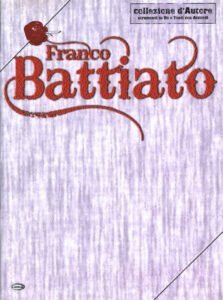
Best Sheet Music download from our Library.

Please, subscribe to our Sheet Music Library.
If you are already a subscriber, please, check our NEW SCORES’ page every month for new sheet music. THANK YOU!
Franco Battiato: The Alchemist of Italian Music
A Polymath Beyond Categories
Franco Battiato, born Francesco Battiato on March 23, 1945, in Ionia (now divided into Giarre and Riposto), Sicily, was far more than a singer-songwriter. He was a musical alchemist, a philosophical explorer, a cinematic visionary, and one of the most influential and unconventional artists Italy has ever produced . His passing on May 18, 2021, at the age of 76, marked the end of an era, but his vast and varied body of work continues to resonate, challenge, and inspire .
Battiato’s career, spanning over five decades, was characterized by a restless, almost compulsive, need to evolve. He defied easy categorization, moving seamlessly from avant-garde electronic music to progressive rock, from chart-topping synth-pop to operatic compositions and intimate chamber pop. His work was a constant dialogue between high and low culture, blending the esoteric teachings of G.I. Gurdjieff with catchy pop melodies, quoting philosophers like Nietzsche alongside lyrics about mundane Italian television. To understand Battiato is to understand a man who believed that a three-minute pop song could be a vessel for spiritual enlightenment and intellectual provocation .
This article celebrates the life and legacy of this “immortal artist,” exploring his complete biography, his unique musical style and harmonic approach, his essential compositions, his work in cinema, his collaborations, and the profound influences that shaped his singular vision .
Biography: From Riposto to the World Stage
Early Life and the Move to Milan
Franco Battiato’s story begins in the small Sicilian town of Riposto, a place that would remain a powerful undercurrent in his music throughout his life . Born to Salvatore Battiato, a truck driver and wine merchant who worked in the port of New York, and Grazia Patti, a seamstress, his early life was marked by a surprising detour. Before music claimed him, Battiato was a promising football player. A serious collision with a goalpost, which famously broke his nose, ended any sporting ambitions, setting him on a different path .
After obtaining his high school diploma from the Liceo Scientifico “Archimede” in Acireale and following his father’s death, Battiato moved first to Rome and then, in 1964, to Milan . This was the epicenter of Italian pop music and culture at the time. He found his footing in the city’s vibrant cabaret scene, performing at the legendary “Club 64.” “I opened the show with two or three Sicilian songs: pseudo-baroque, fake-ethnic music,” he recalled. This was a formative period where he shared stages with the likes of Paolo Poli, Enzo Jannacci, Lino Toffolo, and Bruno Lauzi .
It was in this milieu that he had a pivotal encounter with Giorgio Gaber, a titan of Italian songwriting. Gaber, impressed by the young Sicilian, took him under his wing. It was Gaber who suggested he use the name “Franco” to avoid confusion with another emerging singer-songwriter of the time, Francesco Guccini. “From that day on, everyone called me Franco,” Battiato later said, “even my mother”.
The First Recordings and the 1960s
Battiato’s initial forays into recording were modest. In the mid-1960s, he released two singles for the magazine Nuova Enigmistica Tascabile (NET), which included cover versions of songs by other artists under his birth name, Francesco Battiato . His first official single under the new name “Franco” was La torre/Le reazioni in 1967, produced by the Jolly label. Gaber helped him secure this contract, placing him within the then-popular genre of protest music. His national television debut came on May 1, 1967, on Gaber’s program Diamoci del tu, where he performed La torre alongside a then-unknown Francesco Guccini .
Despite this start, Battiato soon grew tired of the protest genre. Switching to the Philips label in 1968, he aimed for a more romantic, commercial sound to reach a wider audience. This period yielded his first genuine commercial success, È l’amore, which sold over 100,000 copies. However, this brief flirtation with mainstream pop was not his true calling. An entire album recorded in 1969 was shelved by Philips, a sign of the creative friction that would define his early career. The lure of experimentation was already proving too strong.
The Avant-Garde Years: Bla Bla and International Recognition (1970s)
The 1970s was the decade in which Franco Battiato became a true pioneer. Frustrated by the constraints of commercial pop, he found a home with the independent label Bla Bla, which became a haven for Italy’s nascent progressive rock and avant-garde scenes. His first album for the label, Fetus (1971), was a landmark. The cover, featuring a censored image of a fetus, signaled a move into controversial and provocative territory. The album was a concept piece exploring a society where humans are created in laboratories, blending electronic music, progressive rock, and psychedelia .
This was followed by a series of groundbreaking and challenging albums: Pollution (1972), Sulle corde di Aries (1973), Clic (1974), and M.elle le “Gladiator” (1975). This period saw Battiato fully immersed in electronic experimentation, tape loops, synthesizers, and dissonant harmonies. Tracks like Sequenze e Frequenze, the 16-minute opening suite from Sulle corde di Aries, exemplified his hypnotic, minimalist approach, creating vast sonic landscapes . This work earned him international recognition and the admiration of German avant-garde composer Karlheinz Stockhausen, who became a mentor figure, encouraging Battiato to deepen his theoretical musical knowledge. He also gained the respect of Frank Zappa, who famously gifted him a pair of winged boots as a symbol of encouragement.
In 1978, he released L’Egitto prima delle sabbie, a double album consisting of only two instrumental tracks. This work won him the prestigious Premio Stockhausen, cementing his status as a leading figure in European experimental music.
The Pop Revelation: Global Stardom and “La voce del padrone” (1980s)
Just when it seemed Battiato had established himself as a permanent resident of the musical avant-garde, he made one of the most unexpected and successful turns in Italian music history. “At my first meeting with EMI, I said: I’ve come here to succeed, tell me how to do it and I’ll do it,” he famously stated . In 1979, he released L’era del cinghiale bianco, his first album for a major label (EMI). This album marked a radical shift toward new wave, pop, and danceable rhythms, yet it was still unmistakably Battiato, with its cryptic lyrics and melodic sophistication .
This transition reached its apex in 1981 with the release of La voce del padrone (The Master’s Voice). The album was a cultural phenomenon, becoming the first Italian album to sell over one million copies . It spawned a series of now-iconic tracks: Bandiera bianca (White Flag), Centro di gravità permanente (Permanent Center of Gravity), and Cuccurucucù. The album’s success was built on a deceptively simple formula: irresistible synth-pop hooks, driving sequencers, layered with classical string arrangements, all held together by Battiato’s distinctive, emotionally resonant vocals. It was a masterclass in bringing high-concept art to a mass audience without compromising intellectual depth.
Throughout the 1980s, he continued this winning streak with albums like Patriots (1980), which contained Venezia-Istanbul and Up Patriots to Arms, and La voce del padrone‘s follow-ups, L’arca di Noè (1982) and Orizzonti perduti (1983). He also achieved great success at the Sanremo Music Festival, winning in 1984 with Per Elisa (a song he composed for Alice) and placing second in the same year at the Eurovision Song Contest with I treni di Tozeur, a duet with Alice . This decade cemented his role as Italy’s most beloved and idiosyncratic pop star.
Philosophical Dialogues and Later Career (1990s–2019)
The 1990s saw a new creative partnership that would define the rest of Battiato’s career. He began a deep and productive collaboration with the philosopher Manlio Sgalambro, who became his primary lyricist starting with the album L’ombrello e la macchina da cucire (1995) . Sgalambro’s complex, aphoristic texts provided a new intellectual framework for Battiato’s music, leading to some of his most emotionally resonant and philosophically profound work. The 1996 album L’imboscata featured La cura (The Cure), a song that has become one of his most beloved, a poetic exploration of unconditional love and care . In the same period, albums like Come un cammello in una grondaia (1991) and Gommalacca (1998) saw him experimenting with trip-hop, rock, and electronic textures, collaborating with a new generation of Italian alternative musicians.
The new millennium saw Battiato continue to explore. He returned to a more intimate sound with the Fleurs series (1999, 2008), albums of reimagined covers and duets that showcased his talent as an interpreter and arranger . He continued to release original material like Ferro battuto (2001) and Dieci stratagemmi (2004), and in 2012, he released his final studio album of original songs, Apriti sesamo (Open Sesame), before a final collection, Torneremo ancora (2019), which featured new recordings with the Royal Philharmonic Concert Orchestra .
Musical Style and Harmony: The Search for Beauty
The defining characteristic of Battiato’s music is its eclecticism, but this eclecticism was never random. It was driven by a singular philosophy: a “constant search for beauty, harmony, and the fluidity of solutions within each chosen language” .
The Avant-Garde Foundation
His early work was rooted in the European avant-garde tradition. Influenced by composers like Stockhausen, Battiato explored serialism, minimalism, and electronic music. Albums like Sulle corde di Aries are built on hypnotic repetitions, loops, and the interplay between organic instruments (like the violin of Giusto Pio) and synthetic sounds. His harmony in this period was often atonal and dissonant, designed to create unease and intellectual reflection rather than simple pleasure.
The Pop Synthesis
When he transitioned to pop, Battiato did not abandon his avant-garde sensibility; he smuggled it into the mainstream. The hallmark of his mature style is the seamless integration of disparate elements. A typical Battiato track from the 1980s might feature a driving, minimalist sequencer pattern reminiscent of Philip Glass, a soaring classical string arrangement, a traditional folk melody, and lyrics referencing obscure philosophers or Sufi mysticism, all wrapped in a catchy, danceable pop song . This is the “spiazzante armonia” (disarming harmony) that critics have often noted—an ability to combine the surreal, the spiritual, and the ironic into a coherent whole .
Harmonic Language
His harmonic language, even in his pop period, is distinctive. He often favored modal melodies, avoiding predictable chord progressions. Songs like Centro di gravità permanente are built on simple, repetitive basslines that create a hypnotic, meditative foundation over which complex melodies and arrangements can float. The use of classical counterpoint, often arranged by his long-time collaborator Giusto Pio, added a layer of sophistication rarely found in pop music. He was a master of texture, using the studio as an instrument to create deep, layered soundscapes where every detail, no matter how subtle, was meticulously placed .
Vocal Style
His vocal style is equally unique. Battiato was not a powerful singer in the traditional sense. His strength lay in his phrasing and emotional delivery, which a critic described as relying “on the height of the feeling, not on timbre and notation” . He possessed a unique ability to sing complex, philosophical texts with a conversational intimacy that made them feel personal and immediate.
The Best Songs and Compositions: A Curated Journey
Selecting the “best” from Battiato’s vast catalogue is a near-impossible task. Here, however, are some of the essential works that define his career, from massive hits to deeper cuts that showcase his genius.
The Essential Hits
- Centro di gravità permanente (1981): The quintessential Battiato anthem. A hypnotic bassline, a minimalist synth riff, and a lyric that uses the concept of a “permanent center of gravity” as a metaphor for finding one’s balance in the universe .
- La cura (1996): A stunningly beautiful song about love as a form of absolute protection and care. It remains one of his most beloved and covered songs, showcasing his later, more emotionally direct style .
- Bandiera bianca (1981): A new wave classic with an unforgettable melody. The lyrics are a surreal, existential surrender to the chaos of the world (“I raise the white flag/on this confused existence”) .
- I treni di Tozeur (1984): A hauntingly beautiful duet with Alice. The song, with its evocative lyrics about a train journey to a Tunisian desert town, won second place at Eurovision and remains a masterpiece of atmosphere and melody .
- Povera patria (1991): A powerful, angry, and melancholic critique of Italy during the “Clean Hands” corruption scandals. It won the Targa Tenco for Best Song and is one of his most direct political statements .
Hidden Gems and Artistic Milestones
- Stranizza d’amuri (1979): One of Battiato’s rare songs in the Sicilian language. A poignant, impressionistic painting of Sicilian life, it is a deeply personal and moving piece that predates his major pop success .
- Venezia – Istanbul (1980): A mesmerizing track from Patriots with a seductive guitar riff and a lyrical journey between two cities, rich with cultural and historical references .
- La musica è stanca (1983): A high-energy, hi-NRG track from Orizzonti perduti that sounds like it could have been a Depeche Mode B-side. Its lyrics are a sharp, self-referential critique of the music industry and the exhaustion of genres .
- Zai Saman (1988): A highlight from the album Fisiognomica. It features an extraordinary blend of Western and Middle-Eastern sonorities, with complex time changes and a prophetic lyric about the decline of the West: “void of meaning, the West collapses” .
- Il vuoto (2007): A late-career masterpiece that addresses modern anxieties—stress, traffic syndrome, primal emotional states—with a backdrop of swirling strings and skittering electronics .
- Sequenze e Frequenze (1973): For those wanting to explore his avant-garde roots, this 16-minute opening track from Sulle corde di Aries is a definitive statement. A hypnotic, psychedelic journey that demonstrates his mastery of early electronic music .
Filmography: The Cinematic Visionary
Franco Battiato’s relationship with cinema was deep and multifaceted. He was a composer of soundtracks, an actor, and a director with a distinct artistic vision .
As Director
Battiato’s directorial work is marked by the same philosophical and spiritual concerns as his music. He began by directing his own music videos in the 1980s, honing his craft . His feature films include:
- Perdutoamor (2003): His directorial debut, for which he won the Nastro d’Argento for Best New Director. The film is a surreal and episodic journey through the life of a Sicilian writer, exploring memory, identity, and artistic creation .
- Musikanten (2005): A highly unconventional biopic of Ludwig van Beethoven. In a stroke of genius, Battiato cast the Chilean-French filmmaker and spiritual guru Alejandro Jodorowsky to play the composer. The film blends reality and hypnosis in a metaphysical exploration of music and creativity .
- Niente è come sembra (2007): A philosophical road movie about an anthropology professor who, after being left by his wife, stumbles upon a strange, intellectual gathering in a remote villa .
- Documentaries: Battiato also directed three significant documentaries: La sua figura (2007), a heartfelt tribute to his friend and collaborator, singer Giuni Russo; Auguri don Gesualdo (2010), on the Sicilian writer Gesualdo Bufalino; and Attraversando il Bardo (2014), a documentary exploring the Buddhist concept of the bardo (the state between death and rebirth) .
As Actor and Composer
As an actor, he made a cameo in the 1973 erotic horror film Baba Yaga and later appeared as himself in various projects . His music has been used extensively in film, most famously by Nanni Moretti, who featured Scalo a Grado in Bianca (1983) and I treni di Tozeur in La messa è finita (1985) . Director Alfonso Cuarón, a great admirer, used Battiato’s cover of Ruby Tuesday in the 2006 film Children of Men, stating he found it “even more beautiful than the Rolling Stones’ version” .
Cooperations and Arrangements: The Maestro Behind the Scenes
Beyond his own work, Battiato was a highly sought-after arranger and producer. His ability to create unique sonic landscapes made him a key figure for many other Italian artists, often pushing them into new, more experimental territory.
He formed a legendary partnership with violinist and composer Giusto Pio in the mid-1970s. Together, they wrote and arranged over a hundred songs for Battiato and for other artists, creating a signature sound that blended classical strings with electronic instrumentation . This “factory” of collaborators included singer Alice, for whom they wrote Per Elisa and Il vento caldo dell’estate; Milva, for whom they arranged an entire album of Battiato songs; and Giuni Russo, for whom they crafted the summer hit Un’estate al mare .
His work as an arranger for others is legendary :
- Giorgio Gaber: Battiato and Pio arranged Gaber’s entire 1978 album Polli d’allevamento, using avant-garde techniques to underscore the album’s themes of social alienation and consumerism.
- Alfredo Cohen: He worked intensively on Cohen’s album Come barchette dentro un tram, with the track Tremilalire featuring a minimalist, Philip Glass-inspired arrangement that was years ahead of its time.
- Eugenio Finardi: Battiato’s touch is all over Finardi’s synth-pop masterpiece Amore diverso, a song dedicated to Finardi’s daughter, with its stark, emotional arrangement of synthesizers and electronic drums.
- Francesco De Gregori: He arranged Il cuoco di Salò for De Gregori’s 2001 album, crafting a delicate, atmospheric backdrop for a song about the final days of the Fascist regime.
- Denovo: He produced the album Venuti dalle cose for this Sicilian new wave band, helping shape their sound while respecting their artistic identity .
His interest in jazz, while not his primary focus, surfaced in projects like Fleurs 2 (2008). This album of covers featured a notable collaboration with Anne Ducros, a celebrated European jazz vocalist, on a version of Otis Redding’s Sittin’ On The Dock of the Bay. The album also included collaborations with international artists like Antony Hegarty (of Antony and the Johnsons) and Iranian singer Sepideh Raisadat, demonstrating his ongoing openness to diverse musical voices .
Influences and Legacy
Influences on Battiato
Battiato was a cultural sponge, drawing inspiration from a vast array of sources. Musically, his early work was shaped by the European avant-garde, particularly Karlheinz Stockhausen and the minimalism of Philip Glass . From the world of rock, he admired Frank Zappa, who reciprocated the respect . His lyrics and worldview were heavily influenced by the teachings of the Armenian-Greek mystic G.I. Gurdjieff, as well as Sufism, Buddhism, and the works of philosophers like Friedrich Nietzsche and his collaborator Manlio Sgalambro .
Legacy: An Immortal Artist
Franco Battiato’s legacy is immense and multifaceted. He is remembered as one of the greatest composers and most important cultural disseminators in Italian history . He proved that a pop song could be a vehicle for complex philosophy, spirituality, and social critique without sacrificing beauty or accessibility. He bridged the gap between the Italian cantautore (singer-songwriter) tradition and the international avant-garde, creating a uniquely personal and influential path.
His influence can be heard across generations of Italian musicians, from the alternative rock of the 1990s to the pop of today. Artists like Carmen Consoli, who duetted with him, and many others cite him as a crucial touchstone . His work as an arranger and producer helped shape the sound of Italian music for decades.
Beyond music, his forays into film, painting, and even a brief stint as an (unpaid) regional minister for tourism in Sicily in 2012-2013—an experience that ended with a typically frank comment about Italian politics—solidified his status as a true Renaissance man .
Franco Battiato was an artist who refused to stand still. From the experimental electronic studios of the 1970s to the pinnacle of the pop charts in the 1980s, and through the philosophical meditations of his later years, he remained in a state of perpetual evolution. His work was a testament to the belief that art should be a search for higher meaning, a “constant search for beauty,” as he put it .
He gave the world songs that are at once catchy and profound, simple and complex, playful and serious. He was a master of harmony in the truest sense—not just musical harmony, but a harmony of disparate ideas, cultures, and sounds. In his final album, Torneremo Ancora (We Will Return Again), he left a parting message that encapsulates his philosophy: “Many are the ways / But only one / That which leads to truth / Until we are free / We will return again / Again and again” .
Franco Battiato has passed, but his music, his films, and his restless spirit ensure that he will, indeed, return again and again.
Search your favorite sheet music in the Sheet Music Catalog
Franco Battiato – La Cura
Il meglio di FRANCO BATTIATO – Raccolta 10 Successi
01. 00:00 La cura 02. 04:01 Centro di gravità permanente 03. 07:51 Cuccurucucù 04. 12:01 Bandiera bianca 05. 16:41 Summer on a solitay beach 06. 21:36 Alexander Platz (Live) 07. 24:51 I treni di Tozeur (con Alice) 08. 27:58 La stagione dell’amore 09. 31:45 Prospettiva Nevski 10. 35:44 L’era del cinghiale bianco