Come join us now, and enjoy playing your beloved music and browse through great scores of every level and styles!
Can’t find the songbook you’re looking for? Please, email us at: sheetmusiclibrarypdf@gmail.com We’d like to help you!
Table of Contents
Happy birthday, Michael Nyman, born in this day in 1944
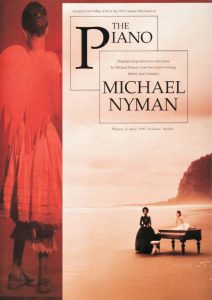
Best Sheet Music download from our Library.

Please, subscribe to our Sheet Music Library.
If you are already a subscriber, please, check our NEW SCORES’ page every month for new sheet music. THANK YOU!
Michael Nyman: The Minimalist Who Redefined Film and Concert Music
An Unavoidable Legacy
On 23 March 1944, in Stratford, East London, Michael Laurence Nyman was born—a composer whose influence would transcend the boundaries between classical music, minimalism, and cinema. Today, as we celebrate his legacy, we encounter a figure who not only composed some of the most iconic film scores in history but also coined the term that would define an entire musical movement.
Appointed Commander of the Order of the British Empire (CBE) in 2008 and honoured with the Lifetime Achievement Award at the World Soundtrack Awards in 2025, Nyman has built a career spanning more than five decades. During this time he has forged an unmistakable musical language that combines Baroque precision, minimalist repetition, and a deeply affecting melodic sensibility. His music, often described as “hypnotic” and “obsessively precise,” has achieved what few contemporary composers manage: it is simultaneously accessible to a wide public and rigorously respected by specialised critics.
Early Years and Academic Formation
Michael Nyman’s childhood in London’s East End, in a Jewish family of Polish origin, was marked by an early exposure to music. His formal education began at Sir George Monoux Grammar School in Walthamstow, but it was his entry into the Royal Academy of Music between 1961 and 1964 that laid the technical foundations of his future. There he studied composition with Dr. Peter Fletcher and Alan Bush, and honed his skills as a pianist and harpsichordist under Geraint Jones.
Yet Nyman did not limit himself to performance. Between 1964 and 1967 he became a doctoral student at King’s College London under the supervision of Thurston Dart, a pivotal figure in British musicology. This period proved fundamental to the composer’s intellectual development: he immersed himself in the study of English Baroque music, producing the first modern edition of Purcell’s Catches (Stainer and Bell, 1967) and a new edition of Handel’s Concerti Grossi, Op. 6 (Eulenberg, 1973). This deep engagement with Baroque contrapuntal structure would leave an indelible mark on his subsequent compositional style.

A decisive moment in his training came during the academic year 1965–1966, when he travelled to Romania as a British Council exchange student to collect folk music. That experience exposed him to the modal and rhythmic traditions of Eastern Europe—elements that, combined with his knowledge of the Baroque and his later fascination with American minimalism, would form the basis of his harmonic and melodic language.
The Critic Who Coined a Term: “Minimalism”
Before establishing himself as a composer, Nyman exerted considerable influence as a music critic. Between 1968 and 1978 he wrote for prestigious publications including The Spectator, New Statesman, The Listener, and Studio International. It was in 1968, in a review of Cornelius Cardew’s The Great Digest for The Spectator, that Nyman first used the term “minimal music” to describe an emerging current in the United States.
This seemingly anecdotal gesture carried immense importance. Nyman was not merely an observer but a theorist who helped define and legitimise a movement encompassing composers such as Steve Reich, Philip Glass, and Terry Riley. In 1974 he consolidated his academic standing with the publication of Experimental Music: Cage and Beyond, a seminal book analysing John Cage’s influence on the musical avant‑garde that remains an essential reference in contemporary musicology. In these early stages, Nyman already demonstrated a quality that would define his career: the ability to move fluidly between academic theory and creative practice.

Browse in the Library:
Or browse in the categories menus & download the Library Catalog PDF:
The Birth of a Sound: The Michael Nyman Band
The founding of the Michael Nyman Band in 1976 marked a turning point in his career. The ensemble’s origin was a commission from composer Harrison Birtwistle to write the music for Il Campiello by Carlo Goldoni, the opening production of London’s National Theatre. Nyman assembled an unusual instrumental group, including medieval instruments such as the rebec and shawm alongside more modern ones like soprano saxophone and banjo.
The initial idea was to achieve a powerful sound without amplification, but the ensemble soon evolved into an electrified formation that would become his trademark: a string quartet, three saxophones (soprano, alto, and baritone), bass trombone, electric bass, and piano. The Michael Nyman Band was no ordinary chamber orchestra; it was a sonic laboratory where the composer could experiment with the fusion of Baroque textures, propulsive rhythms, and an energy close to rock.
The eponymous 1981 album, Michael Nyman, was the band’s first release and a foundational document. It included pieces from his early collaborations with Peter Greenaway, such as “Bird Anthem” and “Bird List Song,” as well as “In Re Don Giovanni,” a work that already pointed to his interest in recontextualising materials from the past. Described by critics as “an innovative record that combined minimalism, experimental music, and jazz improvisation,” this album established Nyman as an original and unmistakable voice on the British musical scene.
Musical Style and Harmony: A Unique Synthesis
Michael Nyman’s musical language defies simple categorisation. Although associated with minimalism, his approach differs significantly from that of his American contemporaries.
The Repetition Machine
The most obvious characteristic of his style is the use of repetitive, rhythmically propulsive patterns. Like Philip Glass or Steve Reich, Nyman builds his pieces from short melodic cells that repeat with slight variations. However, whereas Glass tends toward more static harmony and Reich toward phasing processes, Nyman introduces a more defined harmonic direction, often with a clear sense of tonality.
Harmony: A Bridge Between Baroque and Pop
Nyman’s harmony is perhaps his most distinctive trait. His training as a musicologist specialising in English Baroque music (Purcell, Handel) provided him with a profound knowledge of harmonic progressions and counterpoint. This knowledge filters into his work in a very particular way: Nyman’s harmonic structures are simple yet extremely effective. He uses chord progressions that recall seventeenth‑century music but subjects them to the obsessive repetition of the minimalist aesthetic.
Furthermore, Nyman has incorporated elements of popular music and rock. The use of a rhythm section (electric bass, drums) alongside classical strings creates a hybrid texture that was unusual in concert music during the 1970s and 1980s. This synthesis, which some critics have called “punk minimalism,” allowed him to reach a far wider audience than typical contemporary classical music.
Analysing “The Heart Asks Pleasure First”
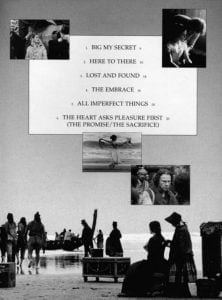
The soundtrack for The Piano (1993) represents the culmination of this style and offers a perfect example of his harmonic language. The main theme, “The Heart Asks Pleasure First,” has been analysed extensively for its emotional effectiveness. Its structure reveals several keys to Nyman’s method:
- Lyrical, memorable melody: The right hand of the piano presents a simple, almost vocal melody that becomes the emotional anchor of the piece.
- Minimalist accompaniment: The left hand unfolds a constant flow of semiquavers, creating a hypnotic texture and a sense of incessant motion.
- Minor tonality: The piece is in a minor key, reinforcing the yearning and melancholy that permeate the story of Ada, the mute protagonist.
- Contrast and hope: Nyman introduces a second section in a major mode that provides a contrast of light and hope—a device that intensifies the drama and catharsis.
- Circular structure: The piece does not develop in a linear fashion but continually returns to itself, creating an obsession and repetition that reflect the protagonist’s determination.
This approach—accessible tonal harmony, hypnotic repetitive structure, and deep dramatic sensitivity—constitutes the essence of his success as a composer for both film and concert.
Key Works: Beyond the Cinema
Although the general public knows Nyman primarily through his film scores, his catalogue of concert music is vast and significant.
Opera and Music Theatre
Nyman has often stated that opera is his preferred medium. The Man Who Mistook His Wife for a Hat (1986), based on the celebrated neurological case study by Oliver Sacks, is one of his most frequently performed works. This chamber opera explores the story of a man with visual agnosia and his relationship with music—a theme that resonated deeply with Nyman’s own preoccupations with perception and structure. Other important operas include Facing Goya (2000), a reflection on genetics and obsession, and Man and Boy: Dada (2003), which explores the Dada art movement.
Orchestral and Chamber Music
Among his most prominent orchestral works is MGV (Musique à Grande Vitesse), composed in 1993 to celebrate the inauguration of the Paris–Lille high‑speed train line. Conceived as five interconnected imaginary journeys, the piece has become a classic of the minimalist repertoire and has been choreographed by ballet companies worldwide.
His String Quartets (especially No. 2) and the concertos for saxophone (Where the Bee Dances) and for piano (based on the music from The Piano) demonstrate his mastery of classical form filtered through a minimalist sensibility.
Song Cycles
Nyman has shown a persistent interest in the human voice. Six Celan Songs (1990), written for singer Ute Lemper, is considered his most profound song cycle. Setting texts by Paul Celan—a poet who survived the Holocaust—the cycle explores “the emptiness of the writer in exile” with a musical language that attempts to “reinvent” an emotional world connected to Celan’s native Romania. This work demonstrates Nyman’s ability to address themes of extreme gravity with a sensitivity that avoids both sentimentality and coldness.
Filmography: Eye and Ear
Michael Nyman’s association with cinema is, for many, his most visible legacy. His film career divides into two major periods: the years of collaboration with filmmaker Peter Greenaway and the later period, defined by the worldwide success of The Piano.
The Greenaway Decade (1976–1991)
Nyman composed music for eleven films by Peter Greenaway, a collaboration that defined the aesthetic of both artists for fifteen years. Nyman’s music was never mere accompaniment; it was a central structural element. Greenaway often edited his images to the rhythm of music that had already been composed.
Key titles from this period include:
- The Draughtsman’s Contract (1982): One of the most emblematic scores, where rhythmic patterns and Baroque harmonic progressions establish the tone of intrigue and formalism.
- A Zed and Two Noughts (1985): A soundtrack reflecting the film’s obsession with symmetry and decay.
- Drowning by Numbers (1988): Famous for its structure based on Mozart’s “Canon of the Spheres”; Nyman built the score around a harmonic progression that repeats and varies throughout the film.
- The Cook, the Thief, His Wife & Her Lover (1989): Perhaps the peak of the collaboration, where the music accompanies the visual journey through a changing colour palette, moving from violence to elegy.
Global Success and Hollywood (1993–2000)
The leap to stardom came with The Piano (1993) directed by Jane Campion. The soundtrack sold over three million copies, won the Australian Film Institute Award, the Chicago Film Critics Award, and earned a Golden Globe nomination. The success of this score opened the doors of Hollywood to Nyman.
Among his subsequent works are:
- Gattaca (1997): Andrew Niccol’s science‑fiction film; the score received a Golden Globe nomination. The music combines orchestral grandeur with string intimacy to reflect the struggle between genetic determinism and the human spirit.
- Wonderland (1999): Directed by Michael Winterbottom, a more intimate score capturing everyday life in contemporary London.
- The End of the Affair (1999): Neil Jordan’s adaptation; a heartbreakingly beautiful score exploring love and faith.
- Ravenous (1999): A darker, more experimental work for a horror film about cannibalism, showcasing Nyman’s versatility.
Later Work and Silent Cinema
In recent years Nyman has devoted himself with passion to composing new scores for silent films from the Soviet avant‑garde, including Dziga Vertov’s Man with a Movie Camera (1929), Jean Vigo’s À propos de Nice, and Eisenstein’s Battleship Potemkin. This project reflects his ongoing interest in the relationship between music and image in its purest form, as well as his own work as a filmmaker, creating multimedia installations that combine his own images with his compositions.
Collaborations with Jazz Musicians and Other Genres
Although Nyman is not a jazz musician in the strict sense, his work has maintained a constant dialogue with avant‑garde jazz and improvisation. His debut album with the Michael Nyman Band included “Waltz in F,” a piece in which the composer invited two giants of European free jazz, Evan Parker (soprano saxophone) and Peter Brötzmann (tenor saxophone), to “destroy” the piece. The result was a fascinating superimposition of free improvisation over Nyman’s repetitive structure—a fusion that still sounds radical today.
Throughout his career he has collaborated with an impressive list of artists who cross genres:
- Jazz and avant‑garde: Besides Parker and Brötzmann, he has worked with Italian trumpeter Paolo Fresu, progressive rock drummer Mike Giles (King Crimson), and German vocalist Dagmar Krause.
- World music: His curiosity for other traditions led him to collaborate with the Orqestra Andalusi de Tetouan (Andalusian music), classical Indian singers Rajan and Sajan Misra, the virtuoso mandolinist U. Shrinivas, flamenco singer Estrella Morente, and Japanese musician Seijin Noborakawa.
- Pop and rock: He has collaborated with Sting, with Damon Albarn (Blur, Gorillaz) on the film Ravenous, and with David McAlmont. He also participated in the project of the experimental band The Flying Lizards.
These collaborations reveal a composer who, far from confining himself to the ivory tower of academic music, has constantly sought dialogue and hybridisation, enriching his own language with the energy and freedom of other traditions.
Influences and Legacy
Michael Nyman stands as a bridge between several traditions. His music draws from English Baroque (Purcell, Handel), American minimalism (Reich, Glass), the European avant‑garde (Cage, Cardew), and popular music and jazz.
His legacy is manifold:
- Musical terminology: By coining the term “minimalism,” he helped define and categorise a movement that would dominate late‑twentieth‑century classical music.
- Musicology: His book Experimental Music: Cage and Beyond remains an essential text for understanding the post‑war avant‑garde.
- Film music: He demonstrated that a film score could be rigorously contemporary and minimalist without sacrificing emotion or accessibility. His work paved the way for other composers working at the boundaries between classical music and cinema.
- Genre fusion: His use of rock instrumentation (electric bass) within a chamber context, and his collaborations with jazz and world musicians, expanded the boundaries of what was considered “classical music.”
- Influence on dance: His music has been adopted by choreographers worldwide, from Christopher Wheeldon (for the Royal Ballet) to the New York City Ballet, ensuring his presence in the world’s most important dance theatres.
In 2025 his career was recognised with the Lifetime Achievement Award at the World Soundtrack Awards, an honour that places his work alongside the greatest names in film music.
Michael Nyman – The piano (live on TV)
https://www.youtube.com/watch?v=lfkEyLgmeew
Michael Nyman has built a body of work that defies easy classification. He is a minimalist who composed operas, a musicologist who became a pop star, a critic who coined terms only to become the finest illustration of them.
Born in post‑war London, his journey from academic study of the Baroque to the most successful Hollywood soundtracks and collaborations with free‑jazz musicians is a story of intellectual curiosity and artistic intransigence. His music, instantly recognisable for its rhythmic propulsion, emotional harmony, and hypnotic structure, has demonstrated a unique ability to connect with diverse audiences.
Whether through the obsessive longing of “The Heart Asks Pleasure First,” the kinetic energy of MGV, or the restrained elegy of The End of the Affair, Nyman’s sound is unmistakable. In a musical world often fragmented between the popular and the academic, he has shown that repetition can be deeply expressive, that Baroque structure can be contemporary, and that minimalist music can speak directly to the heart. As we celebrate his anniversary, we celebrate a composer who not only defined a sound but also expanded the horizons of what music can be and achieve.
Search your favorite sheet music in the Sheet Music Catalog
Michael Nyman: Complete Piano Music (Full Album) played by Jeroen van Veen
Tracklist:
0:00:00 The Heart Asks Pleasure First I 0:04:16 Lost And Found 0:07:32 All Imperfect Things 0:11:14 The Promise 0:14:22 Big My Secret 0:18:24 The Mood That Passes Through You 0:21:43 Deep Sleep Playing 0:23:54 The Embrace 0:26:16 Silver-fingered Fling 0:30:39 Here to There 0:32:18 The Attraction of The Pedalling Ankle 0:38:22 The Heart Asks Pleasure First II 0:41:28 Jack 0:44:00 Franklyn 0:46:28 Nadia 0:49:52 Debbie 0:54:49 Bill 0:57:05 Odessa Beach
1:00:56 Diary of Love 1:04:23 Digital Tragedy 1:07:16 Fly Drive 1:08:14 The Morrow 1:12:41 The Departure 1:16:29 The Exchange 1:19:59 Why? 1:23:09 The Schoolroom 1:25:13 If 1:29:40 Goodbye Moortie 1:32:35 Chatterbox Waltz 1:35:03 Candlefire 1:38:33 Chasing Sheep Is Best Left to Shepherds 1:42:44 Sheep ‘N’ Tides 1:45:14 Time Lapse