Come join us now, and enjoy playing your beloved music and browse through great scores of every level and styles!
Can’t find the songbook you’re looking for? Please, email us at: sheetmusiclibrarypdf@gmail.com We’d like to help you!
Table of Contents
Happy birthday, Elton John, born on this day in 1947.
Elton John: The Pianist Who Redefined Pop Stardom
A Star Is Born
On March 25, 1947, at 55 Pinner Hill Road in Middlesex, England, Reginald Kenneth Dwight came into the world—a child who would grow to become one of the most monumental figures in the history of popular music. Today, on his birthday, we celebrate the life and work of Sir Elton Hercules John, an artist whose influence transcends generations, genres, and media.
With over 300 million records sold worldwide, Elton John is not merely one of the best-selling musicians of all time; he embodies the very essence of rock stardom: innate musical genius combined with an explosive stage persona, a relentless capacity for reinvention, and a humanitarian legacy that reaches far beyond the stage. His partnership with lyricist Bernie Taupin, which began in 1967, stands as one of the most prolific and successful collaborations in history, gifting the world some of the most iconic songs ever written.
This article traces the life of this living legend—from his first chords on his grandmother’s piano to his status as an EGOT winner (Emmy, Grammy, Oscar, Tony), exploring his harmonic technique, his filmography, his unexpected jazz collaborations, and an activism that has saved countless lives.
Best Sheet Music download from our Library.
Early Years and Classical Training (1947–1967)
Reginald Dwight’s childhood was defined by a duality that would later surface in his music: the discipline of a tense household and the creative freedom he found at the piano keys. His father, Stanley Dwight, was a Royal Air Force officer with semi‑professional jazz band aspirations; his mother, Sheila Eileen, was more vivacious and liberal. Growing up amid constant arguments, the young Reginald took refuge in music.

Please, subscribe to our Sheet Music Library.
If you are already a subscriber, please, check our NEW SCORES’ page every month for new sheet music. THANK YOU!
The Prodigy at the Royal Academy
His musical gift emerged early. At four, he could play “The Skater’s Waltz” by ear on his grandmother’s piano. This natural talent earned him a scholarship to the prestigious Royal Academy of Music at age eleven. For five years, he attended Saturday classes, immersing himself in the works of Chopin, Bach, and other classical masters. His instructors described him as a model student, capable of playing a four‑page Handel piece from memory after hearing it only once.
Yet this classical education was not entirely satisfying. Years later, he admitted that he often played truant to ride the London Underground, longing for the freedom of popular music. That tension—between classical structure and pop’s expressive liberty—became the hallmark of his style: melodies with Chopin‑esque sophistication driven by the raw energy of rock and roll.
Leaving the Nest and the Birth of Elton John
At fifteen, encouraged by his mother and stepfather, he began playing piano at the Northwood Hills Hotel, calling himself “Reggie.” His first serious band was Bluesology, a rhythm‑and‑blues group that backed artists such as the Isley Brothers, Major Lance, and Patti LaBelle. This experience gave him a solid grounding in soul and R&B—a foundation that would later enrich his own sound.
A decisive turn came in 1967 when he answered an advertisement in New Musical Express placed by record executive Ray Williams. At that meeting, Williams handed him a sealed envelope filled with lyrics written by an unknown young poet named Bernie Taupin. That same day, Reginald set those verses to music and mailed the result back to Taupin, marking the start of a creative partnership that endures to this day. Taking his stage name from two Bluesology bandmates—saxophonist Elton Dean and singer Long John Baldry—he became Elton John. In 1972 he legally added “Hercules” (inspired by a horse from the comedy Steptoe and Son), becoming Elton Hercules John.
The Magic Formula: Elton John and Bernie Taupin
The collaboration between Elton John and Bernie Taupin is the cornerstone of his career. Their dynamic is unusual: Taupin writes the lyrics, often in under an hour, then hands them to John, who typically turns them into songs in about half an hour, discarding any lyric for which a melody does not come immediately. This method, sustained for more than five decades, has produced a catalog touching on rural Americana (Tumbleweed Connection), autobiography (Captain Fantastic and the Brown Dirt Cowboy), and urban fantasy (Goodbye Yellow Brick Road).
Because they rarely worked in the same room during the early years, their collaboration developed an almost telepathic quality. Taupin supplied imagery and emotion; John provided the musical vehicle. This partnership reached its commercial and critical peak in the 1970s, producing seven consecutive US number‑one albums: Honky Château (1972), Don’t Shoot Me I’m Only the Piano Player (1973), Goodbye Yellow Brick Road (1973), Caribou (1974), Captain Fantastic and the Brown Dirt Cowboy (1975), and Rock of the Westies (1975).
Musical Analysis: Harmony, Style, and Virtuosity
Elton John’s musical style has been the subject of academic study, including Phillip James Allcock’s doctoral thesis at the University of Huddersfield, which analyzes his work from an interdisciplinary perspective. The consensus is that John developed a unique pop‑song formula combining elements that seem contradictory yet coexist with masterful control.
Harmony and Melody
The Royal Academy training is unmistakable in his harmonic language. Unlike most rock musicians, John employs passing chords, unexpected modulations, and progressions reminiscent of classical composition. “Your Song” (1970) appears simple on the surface, but its harmonic structure—with subtle key shifts—elevates the emotional weight of Taupin’s lyric beyond the standard pop ballad.
His piano style is equally distinctive. He fuses energetic boogie‑woogie (“The Bitch Is Back,” “Saturday Night’s Alright for Fighting”) with grand orchestral ballads (“Don’t Let the Sun Go Down on Me,” “Goodbye Yellow Brick Road”). His classical training allows him to improvise freely while maintaining an indelible melodic sense. Collaborations with arranger Paul Buckmaster in the early 1970s added layers of strings and brass, creating sonic landscapes of uncommon ambition in rock music.
Voice and Stage Presence
His voice—an expressive tenor—evolved from the gentle croon of the early seventies to a more raspy, energetic delivery later in the decade. But equally important was his visual presentation. At a time when progressive rock dominated stages with solemnity, John burst onto the scene wearing flamboyant costumes designed by Bob Mackie: sequined glasses, feathers, platform boots, and outlandish suits. This stage alter ego, he later admitted, was a way to shed the rigidity of his childhood and project a confidence that eluded him offstage.
The Best Songs and Compositions
Selecting the “best” songs from an artist who has amassed more than fifty Top 40 hits in both the UK and the US is a formidable task. Yet certain compositions stand out not only for their popularity but also for their cultural impact.
The Golden Era (1970–1975)
- “Your Song” (1970): His first major statement. A piano ballad that defined Elton John’s style for a generation. The simplicity of Taupin’s lyric (“I hope you don’t mind that I put down in words / How wonderful life is while you’re in the world”) combined with John’s soaring melody makes it a modern standard.
- “Tiny Dancer” (1971): Initially a modest hit in the US, time has crowned it one of his most beloved works. It paints a vivid portrait of 1970s California, building from a gentle opening to a cathartic, choral finale.
- “Rocket Man (I Think It’s Going to Be a Long, Long Time)” (1972): A meditation on isolation and loneliness, inspired by Ray Bradbury’s story “The Rocket Man.” The combination of electric piano and synthesizer effects created a unique, space‑age sonic landscape.
- “Goodbye Yellow Brick Road” (1973): The title track from his best‑selling double album. It serves as a declaration of principle, rejecting the superficiality of fame (“I’m going back to my plough”) with a melody evoking both nostalgia and determination.
- “Don’t Let the Sun Go Down on Me” (1974): A dramatic ballad with one of his most demanding vocal melodies. The live duet with George Michael in 1991 introduced the song to a new generation.
- “Candle in the Wind” (1974): Originally a tribute to Marilyn Monroe. Its 1997 reworking, “Candle in the Wind 1997” , honoring Diana, Princess of Wales, became the best‑selling single of all time, with over 33 million copies sold.
Maturity and the 21st Century
- “I Guess That’s Why They Call It the Blues” (1983): One of his biggest hits of the 1980s, demonstrating his ability to adapt to new sounds without losing his core identity.
- “The One” (1992): Following a period of rehabilitation, this song marked a triumphant return to the charts, with a more hopeful, romantic tone.
- “Can You Feel the Love Tonight” (1994): From The Lion King soundtrack, it earned him an Academy Award and proved that his gift for timeless melody remained undiminished.
Filmography: Beyond Music
Elton John’s influence extends to film and television, both as a composer and as a memorable screen presence.
Composing for Film and Theatre
His work as a soundtrack composer is vast. He won the Academy Award for Best Original Song for “Can You Feel the Love Tonight” (1994) and “(I’m Gonna) Love Me Again” (2019, from Rocketman), and received a third, honorary Oscar for his overall contribution.
- The Lion King (1994): Collaborating with lyricist Tim Rice, he created one of the most iconic animated soundtracks in history. “Circle of Life” and “Hakuna Matata” are universally recognized.
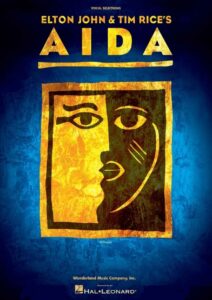
- Aida (2000): His continued partnership with Rice for this Broadway musical earned him a Tony Award for Best Original Score.
- Billy Elliot the Musical (2005): He composed the music with lyricist Lee Hall, winning a Laurence Olivier Award.
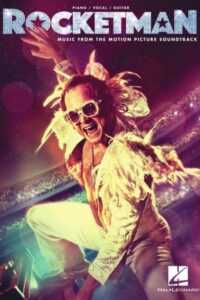
- Rocketman (2019): This fantastical biographical film, which he produced, revisited his life through his songs. It won the Oscar for best original song for “(I’m Gonna) Love Me Again,” co‑written with Taupin.
Acting Appearances
Elton John has shown a notable sense of humor by lending his image to various productions. He played the Pinball Wizard in Ken Russell’s Tommy (1975). More recently, he appeared as himself in Kingsman: The Golden Circle (2017), participating in an absurd fight while wearing his characteristic attire. He has also voiced characters and appeared in episodes of The Simpsons and South Park.
Collaborations with Jazz Musicians
Though primarily known as a rock superstar, Elton John’s musical roots and influences connect him deeply with jazz.
The Bluesology Years
His first band, Bluesology, was rooted in rhythm and blues and the jazz‑adjacent sounds of the era. Backing artists such as Patti LaBelle and the Isley Brothers gave him an intensive education in the harmonic and rhythmic language of R&B and soul—genres closely related to jazz.
Notable Jazz Collaborations
- “Come Down in Time” (Jazz Version): In 2020, to celebrate the 50th anniversary of the album Tumbleweed Connection, John released an unreleased jazz version of “Come Down in Time.” Recorded on March 20, 1970, at Trident Studios, this version runs over seven minutes (double the original) and features improvisational interplay between John’s piano and Caleb Quaye’s guitar, with a rhythm section including David Glover (bass) and Roger Pope (drums). Producer Gus Dudgeon can be heard exclaiming “Very nice!” as the track unfolds in a free‑flowing improvisation, demonstrating John’s affinity for jazz’s improvisational spirit.
- Elton John and Leon Russell: The Union (2010): This is his most significant collaboration with a musician deeply rooted in jazz, soul, and gospel. Leon Russell, a legendary pianist, composer, and arranger who worked with Frank Sinatra, the Rolling Stones, and the Beach Boys, was a major early influence on John. The Union, produced by T Bone Burnett, is an album of reunion and dialogue between two complementary piano styles. Critics praised the chemistry between the two, describing it as a “piano conversation” spanning gospel, soul, and rhythm & blues. Songs like “Hey Ahab” showcase Russell’s characteristic syncopation and swing, while “When Love Is Dying” features choral arrangements reminiscent of Brian Wilson. John declared at the time that he wanted Leon Russell’s name “written in stone” and for him to be inducted into the Rock and Roll Hall of Fame—a goal achieved in 2011.
Through these collaborations and his Bluesology roots, Elton John has maintained a consistent connection to the improvisation and groove of jazz, enriching his music far beyond conventional pop.
Influences and Legacy
Elton John’s style is a kaleidoscope of influences that he absorbed and transformed.
Key Influences
- Rock and Roll Piano: He has repeatedly acknowledged the decisive influence of Jerry Lee Lewis, whose piano‑pounding style he tried to emulate in early school concerts. He also admired Little Richard and Fats Domino.
- Singer‑Songwriters: The melodic sensitivity of Laura Nyro and the lyrical depth of Randy Newman and Joni Mitchell shaped his shift toward a more introspective style in the late 1960s.
- Classical: His Royal Academy training gave him a technical foundation that few rock musicians possess. The structure of his ballads often reflects classical forms.
- Leon Russell: As noted, Russell was an early influence. Before their 2010 collaboration, John opened for Russell in the United States in the early 1970s and always acknowledged his stylistic debt.
Legacy
Elton John’s legacy is monumental and multifaceted:
- Visual Pioneer: He helped normalize the idea that rock stars could be flamboyant and theatrical, paving the way for artists like David Bowie, Queen (Freddie Mercury), and later Lady Gaga.
- Compositional Excellence: He is the only solo artist to have a UK Top 10 in six consecutive decades (from the 1970s to the 2020s)—a testament to his enduring relevance.
- Institutional Recognition: He is the 19th person to achieve EGOT status (Emmy, Grammy, Oscar, Tony), reflecting his versatility. He was knighted as Sir (Knight Bachelor) in 1998 and appointed a member of the Order of the Companions of Honour in 2020 for services to music and charity.
- Activism: His work in the fight against AIDS is perhaps his most important legacy outside music. After overcoming his own addictions (he has been clean and sober since 1990), he founded the Elton John AIDS Foundation in 1992, which has raised over £300 million for research and support for those affected. His annual Academy Awards viewing party for the foundation is one of Hollywood’s most significant social events.
Elton John—the boy from Pinner who became a global superstar—represents the culmination of the American Dream seen through British eyes. His story is one of extraordinary talent finding its perfect counterpart in Bernie Taupin, of mastering the art of the pop song like few others, of defying gender norms with clothing and presence, and of using his fame to fight one of the most devastating pandemics of the twentieth century.
His music—from the sophisticated harmonies of “Tiny Dancer” to the rock‑and‑roll piano of “Saturday Night’s Alright for Fighting”—forms part of the sonic landscape of our culture. His farewell tour, Farewell Yellow Brick Road (2018–2023), became the highest‑grossing tour in history at the time, undeniable proof that his popularity has not faded with the years but has solidified into a cross‑generational phenomenon.
On this anniversary, we celebrate not only the musician but also the symbol: Elton John, the man who demonstrated that one could be different, brilliant, generous, and eternally human while wearing outsized sequined glasses and platform boots.
Search your favorite sheet music in the Sheet Music Catalog


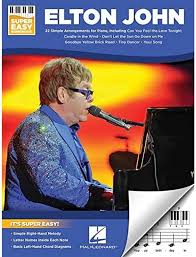
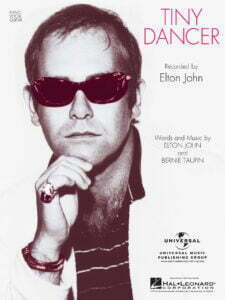
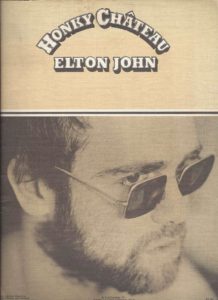
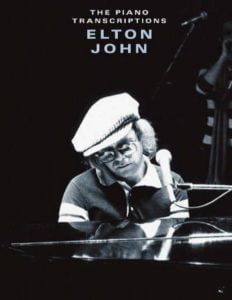


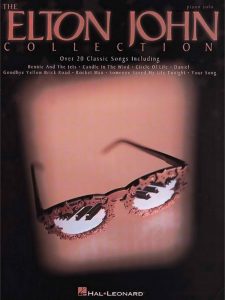

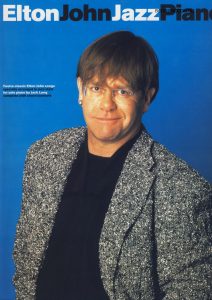

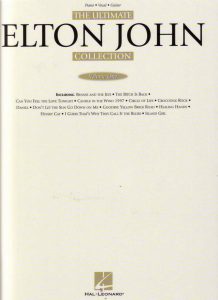
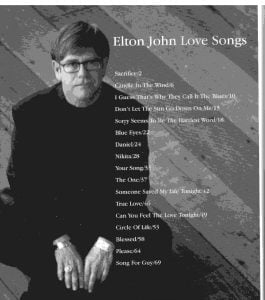
Elton John Greatest Hits Playlist Full Album – Best Songs Of Elton John Collection
Songs timecode:
00:00:00 – Bennie and the Jets 00:03:46 – Candle In The Wind 00:07:38 – Sacrifice 00:12:39 – Little Jeanne 00:17:52 – I Guess That’s Why 00:23:02 – Something About 00:26:44 – Skyline Pigeon 00:30:19 – Rocket man 00:37:52 – Your Song 00:41:29 – Circle Of Life 00:45:42 – Sorry Seems To Be 00:49:15 – Can You Feel The Love Tonight 00:53:00 – I Want Love 00:58:29 – I Don’t Wanna Go On 01:03:42 – Nikita 01:10:01 – The One 01:15:36 – Im Still Standing