Come join us now, and enjoy playing your beloved music and browse through great scores of every level and styles!
Can’t find the songbook you’re looking for? Please, email us at: sheetmusiclibrarypdf@gmail.com We’d like to help you!
Table of Contents
Remembering Paul Motian, born on this day in 1931.
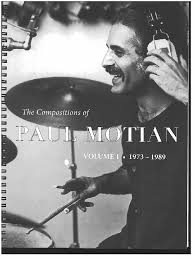
Best Sheet Music download from our Library.
Please, subscribe to our Sheet Music Library.
If you are already a subscriber, please, check our NEW SCORES’ page every month for new sheet music. THANK YOU!
Paul Motian: The Drummer Who Redefined Rhythm, Space, and Freedom in Jazz
Born March 25, 1931 — A Centennial Tribute to a Percussion Visionary
On a night in 1957, Art Taylor failed to show up for a Thelonious Monk gig. In his place sat a relative unknown—a drummer from Providence, Rhode Island, whose name would eventually become synonymous with innovation, subtlety, and artistic integrity. That man was Stephen Paul Motian, and over the next six decades, he would evolve from an obscure sideman into one of the most extraordinary jazz bandleaders and composers of his generation.
When Paul Motian passed away on November 22, 2011, at the age of 80, he left behind a legacy that stretched far beyond those historic evenings at the Village Vanguard in 1961 with Bill Evans. He had become something much more than “Bill Evans’ drummer”—he was a composer of singular vision, a bandleader who nurtured generations of young talent, and a rhythmic innovator who helped free jazz drummers from the strict confines of time-keeping.

Born on March 25, 1931, in Philadelphia and raised in Providence, Rhode Island, Paul Motian was the son of Armenian immigrants from Turkey. His journey from a troubled youth—arrested three times before the age of thirteen—to becoming a master musician who would influence countless jazz artists is a testament to the redemptive power of music. “Less is more” was his guiding philosophy, and through his precision, economy of expression, and unwavering commitment to creative exploration, Motian carved a path unlike any other in jazz history.

Early Life: From Juvenile Delinquent to Naval Musician
Paul Motian’s early years were marked by struggle. Growing up poor in Providence, Rhode Island, he earned the label of “juvenile delinquent” after being arrested three times before his thirteenth birthday. It was at the age of twelve that he received his first drum lesson—an intervention that would prove life-changing. Later in life, Motian would credit music with keeping him both alive and out of jail.
While still in high school, Motian began playing with local swing bands, absorbing the fundamentals of rhythm and ensemble playing. His musical journey took a significant turn when he joined the Navy, where he performed in a Naval School of Music Unit Band. Fate intervened when he was stationed in Brooklyn prior to his discharge in 1954. Rather than return to New England, Motian chose to make New York City his home for the rest of his life.
The mid-1950s New York jazz scene was a crucible of innovation, and Motian immersed himself completely. He absorbed the performances of his idols—Art Blakey, Max Roach, and Philly Joe Jones—while jamming with musicians throughout the city. These were formative years, years when bebop was evolving into hard bop and the avant-garde was beginning to stir. Motian was present at the creation.

The 1950s and Early 1960s: A Sideman’s Apprenticeship
Throughout the late 1950s and early 1960s, Motian established himself as a highly sought-after sideman, playing with an astonishing array of jazz luminaries. His collaborators during this period included Lennie Tristano, Mose Allison, Oscar Pettiford, Stan Getz, Zoot Sims, Paul Bley, Lee Konitz, and Charles Lloyd. He was always learning, simultaneously an influence and an influencer, absorbing the lessons of the masters while developing his own distinctive voice.
In 1955, a crucial meeting took place when Motian toured as a sideman for clarinetist Jerry Wald alongside pianist Bill Evans. Five years later, in 1959, Evans invited Motian and the brilliant young bassist Scott LaFaro to form his first groundbreaking trio. This ensemble would go on to redefine the jazz piano trio format, transforming it from a soloist-with-rhythm-section model into a collective of three equal improvisers.
The Bill Evans Trio with LaFaro and Motian is best known for an extraordinary series of live recordings made at the Village Vanguard in June 1961—albums that remain among the most celebrated documents in jazz history. On these recordings, Motian’s playing was often described as “unobtrusive,” a term that belied his profound contribution. Working within the hushed intimacy of Evans’s aesthetic, Motian demonstrated that a drummer could be both supportive and subtly autonomous, using silence as a photographer might use negative space—to give added definition and depth to his patterns.
As Joe Lovano would later reflect, “New Jazz Conceptions was the first of all the timeless, historic masterpiece recordings of the Bill Evans Trios with Paul through 1964. Paul’s contributions make these trio performances different and special. The trio format was a real home base for him. His roots and influences—Kenny Clarke and Max Roach, in particular—come through loud and clear”.
The tragic death of Scott LaFaro in a car accident just ten days after the Vanguard sessions devastated the trio. Motian remained with Evans until 1964, working with bassist Chuck Israels, but the magic of that original configuration would never be replicated.
The Paul Bley and Keith Jarrett Years: 1963–1976
Following his tenure with Evans, Motian worked with pianist Paul Bley from 1963 to 1964. This collaboration proved significant, as Bley’s groups were exploring the frontiers of free jazz while tempering its excesses of sound and fury by scaling down its maximalist impulses. For Motian, this meant absorbing the innovations of Sunny Murray—who had likened his persistent cymbal chatter behind Albert Ayler to “the continuous cracking of glass”—while retaining the entire bebop stylebook of paradiddles and pirouettes that Murray had either renounced or never mastered.
But perhaps the most consequential association of Motian’s career began in 1967, when he started playing with pianist Keith Jarrett. Initially working in a trio with bassist Charlie Haden, Motian then joined Jarrett’s “American Quartet,” which added saxophonist Dewey Redman. This relationship would last for nearly a decade, until 1976, and the two musicians became lifelong friends.
Joe Lovano recalls hearing the Keith Jarrett Quartet live in Boston at the Jazz Workshop, just before they recorded the album Fort Yawuh. “Before his explosive solo, Paul is swinging so hard in his accompaniment and yet playing free as a bird. Pure music!” Lovano wrote.
It was during this period that Jarrett encouraged Motian to begin composing his own music. In a gesture of profound generosity, Jarrett sold Motian his old piano. Motian, then in his forties, described learning to play the instrument with characteristic humility: “I was in my 40s and felt like a school kid. With my piano books under my arm, once a month, I would walk the ten blocks to Deborah’s (Greene) for my lesson”. One day, he recalled, a remarkable moment occurred: “I glanced down at my hands as I was playing and I didn’t recognize them. It was as if they were the hands of a stranger. They were playing the piano by themselves and playing quite well”.
A Bandleader Emerges: The ECM Years (1972–1984)
Motian’s first album as a bandleader, Conception Vessel, was released in 1972 on ECM Records, beginning a 39-year relationship with the German label. He was already 41 years old—a late start for a bandleader, but one that would yield an extraordinary body of work over the remaining four decades of his life.
Joe Lovano describes this album as pivotal: “This album was Paul’s first as a leader and put into motion the amazing body of work that resulted over the next 40 years or so. This duet with Keith Jarrett speaks volumes to me and is one of my favorite compositions of Paul’s”.
The six albums Motian recorded for ECM between 1972 and 1984—Conception Vessel, Tribute, Dance, Le Voyage, Psalm, and It Should’ve Happened a Long Time Ago—effectively set the direction for all his subsequent work. What’s striking about these recordings is Motian’s deliberate avoidance of piano in his ensembles. Despite his important associations with pianists, his work as a leader rarely included a pianist, relying instead on guitars—perhaps because guitar had been his first instrument.
The early ECM albums featured shifting lineups anchored by Motian, bassist Charlie Haden, and guitarist Sam Brown. Brown’s soft, flamenco-styled acoustic guitar graced such numbers as “Georgian Bay,” “Victoria,” and “Song for Che”. On these recordings, Motian often played with low but steady fire, dispensing with timekeeping altogether at times and showering the others with textures both harmonious and exotic, without relying on a particularly large array of percussion instruments.
Dance (1977) and Le Voyage (1979) found Motian working in strict trio formats with saxophonist Charles Brackeen and bassists David Izenzon and J.F. Jenny-Clark. By this time, all songs were exclusively Motian-penned, and the albums explored loosely defined motifs and group improvisation.
But it was the final two albums of this period that proved most significant. Psalm (1981) and It Should’ve Happened a Long Time Ago (1984) introduced a new ensemble that included two then-unknown musicians who would go on to become household names in jazz: guitarist Bill Frisell and saxophonist Joe Lovano. These albums were sonically groundbreaking, not only due to the new digital recording techniques of the time but also because of Frisell’s idiosyncratic guitar work, which added a spacious, lonesome quality that would define Motian’s sound for the next three decades.
The Classic Trio: Motian, Lovano, and Frisell
The 1984 album It Should’ve Happened a Long Time Ago marked the beginning of a musical partnership that would last for the rest of Motian’s life. The bass-less trio of Motian on drums, Joe Lovano on tenor saxophone, and Bill Frisell on guitar became his signature ensemble—a configuration that presented the most possibilities for Motian’s unique vision.
Joe Lovano reflects on this period: “This recording was a springboard for the next 28 years of the trio featuring Paul, Bill Frisell and myself. We recorded and played hundreds, if not thousands, of gigs all over the world with celebration. ‘It Should’ve Happened’ was one of our signature tunes of Paul’s. It’s a timeless folksong. Paul could sustain a mood like no other—a true master of time, space and music”.
The absence of a bass player in this trio was revolutionary. Without a traditional bottom end, the harmonic responsibilities shifted to Frisell’s guitar and Lovano’s saxophone, while Motian’s drums provided not only rhythmic propulsion but also harmonic color and melodic commentary. As one critic noted, “The title song exemplifies a new order in trio music where no bottom exists and the melodic illumination of Frisell is the vehicle for delivering Motian’s uniquely dispersed harmonies, while Lovano firmly holds down the main thematic lines”.
This trio format allowed Motian to fully realize his philosophy of “less is more.” He wasn’t a timekeeper in the traditional sense; he didn’t set a tempo behind a soloist or mark the chorus or even imply a basic beat. Instead, he set a path for improvisation—perhaps not always a straightforward one, but a path nonetheless.
The Electric Bebop Band and Mentorship
In the early 1990s, Motian formed The Electric Bebop Band, a project that demonstrated his deep respect for tradition even as he pushed boundaries. This ensemble gave new life to bebop standards with an electrified lineup of two tenor saxophones, two guitars, electric bass, and drums.
Perhaps even more significant than the music itself was Motian’s role as an incubator of young talent. His bands served as launching pads for many young and then-unknown jazz performers, including Joshua Redman, Chris Potter, Wolfgang Muthspiel, and Kurt Rosenwinkel. As his nephew and biographer David McGuirl wrote, “Along with his music, this is his lasting legacy”.
This commitment to nurturing younger musicians continued throughout his career. In his later years, Motian formed a trio with pianist Jason Moran and saxophonist Chris Potter—both more than four decades his junior—and recorded the stunning Lost in a Dream at the Village Vanguard in 2009. At the age of 78, Motian was still pushing forward, still exploring new possibilities, still creating music that challenged and inspired.
Musical Style: Harmony, Color, and “Less Is More”
Paul Motian’s approach to the drums was fundamentally different from that of his predecessors and contemporaries. Where many drummers focused on power and propulsion, Motian emphasized color, texture, and space. His precision and economy of expression were matched by an unwavering commitment to creative exploration.
Motian once summed up his philosophy simply: “Less is more”. This principle manifested in every aspect of his playing. He was a colorist, not a timekeeper—a distinction that sometimes led to difficulties with musicians of his own generation who expected more conventional support. But for those willing to follow his path, the results were transcendent.
Critics noted that Motian “uses silence as a photographer or painter would negative space—to give added definition and depth to drum patterns that were both a rhythmic complement to solos and independent melodic phrases in themselves”. This approach showed that a discontinuous percussion accompaniment could be just as effective—perhaps even more so—than a continuous one.
As a composer, Motian displayed remarkable range and depth. His pieces often balanced convention with defiance—employing AABA forms and swing rhythms while introducing angular phrasing and unexpected harmonies. Take his composition “For the Love of Sarah”: it’s a piece that balances convention (AABA form, swing, melody developed through repetition) with defiance (angular phrasing and harmony, expressed without the aid of a bass line). Despite its title, few would identify it as a love song—but it was one, after a fashion. Sarah was the name of Motian’s sister.
Best Songs and Essential Compositions
Paul Motian’s recorded legacy is vast, spanning more than four decades as a leader and countless sideman appearances. Here are some of his most essential compositions and recordings:
“Conception Vessel” (from Conception Vessel, 1972): The title track of his debut as a leader, featuring Keith Jarrett in a duet that Joe Lovano calls “one of my favorite compositions of Paul’s”.
“It Should’ve Happened a Long Time Ago” (from It Should’ve Happened a Long Time Ago, 1984): The signature tune of his classic trio with Lovano and Frisell—”a timeless folksong,” according to Lovano, that demonstrates Motian’s ability to sustain a mood like no other.
“For the Love of Sarah” (from One Time Out, 1990): One of Motian’s most memorable pieces, balancing convention with defiance in a way that defines his compositional voice.
“Psalm” and “Fantasy” (from Psalm, 1981): Early examples of his work with Frisell and Lovano, where the usual abstractions are given new perspectives from Frisell’s twisted ambiences and the twin sax drones of Lovano and Billy Drewes.
“Casino” (from Lost in a Dream, 2010): A late-period masterpiece whose suspense and thrust recall both Ornette Coleman’s “Lonely Woman” and Miles Davis’s “Flamenco Sketches”.
The On Broadway Series: A collection of standards from the Great American Songbook, recorded across five volumes, featuring Motian’s unique reinterpretations of classic material. Volume 5, recorded in 2009, is particularly notable for its deeply melancholic readings of “Just a Gigolo,” “A Lovely Way to Spend an Evening,” and “Something I Dreamed Last Night”.
Filmography
While primarily a musician, Paul Motian did contribute to film over the course of his career. His filmography includes:
- Camera Three (1955): An early appearance in this television series
- Punishment Park (1971): A controversial Peter Watkins film for which Motian contributed music
- Bill Evans/Time Remembered (2015): A documentary about his former bandleader, released posthumously
- Motian in Motion (2020): A documentary focused on Motian himself
Additionally, Motian’s music was featured in “The Mysterious Human Heart” (2007-08).
Key Collaborations
Paul Motian’s career was defined by the extraordinary musicians he worked with. His collaborative network reads like a who’s who of jazz history:
Bill Evans (1959-1964): The classic trio with Scott LaFaro remains one of the most celebrated groups in jazz history.
Paul Bley (1963-1964): A crucial association that helped shape Motian’s approach to free improvisation.
Keith Jarrett (1967-1976): A decade-long collaboration that included the American Quartet with Dewey Redman and Charlie Haden.
Joe Lovano and Bill Frisell (1981-2011): The legendary trio that became Motian’s signature ensemble.
Charlie Haden: A lifelong musical partner, with whom Motian recorded extensively, including with the Liberation Music Orchestra.
Lee Konitz: A relationship that stretched from the late 1950s through the end of Motian’s life, documented on recordings like Live at Birdland.
Carla Bley: Motian was an important part of the development of her collaborations with Charlie Haden, beginning in the late 1960s.
Younger Generations: In his later years, Motian worked extensively with younger musicians including Jason Moran, Chris Potter, Kurt Rosenwinkel, Joshua Redman, and many others.
Influences and Legacy
Motian’s primary influences were the great bebop drummers of the 1940s and 1950s: Kenny Clarke, Max Roach, and Philly Joe Jones. But he synthesized these influences into something entirely his own, absorbing the innovations of free jazz pioneers like Sunny Murray while retaining the technique and vocabulary of bebop.
His legacy is multifaceted. As a drummer, he helped free jazz percussionists from strict time-keeping duties, demonstrating that drums could function as a melodic and harmonic voice within an ensemble. As a composer, he created a body of work that continues to inspire interpretations by younger musicians. As a bandleader, he nurtured generations of talent, providing launching pads for musicians who would go on to become stars in their own right.
Perhaps Motian’s own words best sum up his career trajectory: “I was Bill Evans drummer in the 1960s, Keith Jarrett’s drummer in the 1970s, and Paul Motian’s drummer in the 1980s”. This progression—from sideman to bandleader—captures the essence of an artist who never stopped evolving.
Joe Lovano, reflecting on his decades-long partnership with Motian, wrote: “Paul could sustain a mood like no other—a true master of time, space and music”. This mastery is evident across Motian’s vast discography, from the hushed intimacy of the Evans trio to the spacious explorations of his own ensembles.
Later Years and Death
In his final years, Motian remained active and creative. In 2010, CAM Jazz released a box set titled Paul Motian compiling his Soul Note albums. In 2011, he appeared on a number of new recordings, including Live at Birdland (with Lee Konitz, Brad Mehldau, and Charlie Haden), Samuel Blaser’s Consort in Motion, and Further Explorations with Chick Corea and Eddie Gómez. His final album as bandleader was The Windmills of Your Mind, featuring Bill Frisell, Thomas Morgan, and Petra Haden.
On November 22, 2011, Paul Motian died at Mount Sinai Hospital in Manhattan at the age of 80, from complications of myelodysplastic syndrome. His death marked the end of an era, but his influence continues to reverberate through jazz.
Posthumous Recognition and Tributes
Since Motian’s death, his legacy has been honored through numerous recordings and tributes:
- Paul Motian (2013): An ECM box set compiling his six albums for the label between 1972 and 1984
- Motian Sickness – The Music of Paul Motian (2011): A tribute album featuring Jeff Cosgrove, John Hebert, Mat Maneri, and Jamie Masefield
- String Choir: The Music of Paul Motian (2011): Joel Harrison’s arrangements for string quartet and guitars
- Drum Music: Music of Paul Motian (Solo Piano) (2012): Russ Lossing’s solo piano interpretations
- Motian in Motion (2020): A documentary film about Motian’s life and music
- Paul Motian Songbook (2020): Haşmet Asilkan’s arrangements for solo guitar
Paul Motian was, in many ways, a paradox. A drummer who de-emphasized time-keeping, a bebop musician who embraced free improvisation, a bandleader who avoided pianos despite his most famous associations being with pianists, an innovator who remained deeply connected to tradition. His career spanned six decades, from the golden age of bebop to the avant-garde explorations of the twenty-first century.
Born on March 25, 1931, Motian emerged from a troubled youth to become one of the most distinctive voices in jazz history. His philosophy of “less is more” challenged conventional notions of what a drummer could be, while his compositions expanded the possibilities of small-group jazz. As a mentor, he nurtured generations of younger musicians who now carry forward his legacy.
Perhaps most importantly, Motian demonstrated that artistic growth need not end with age. He was 41 when he released his first album as a leader, 53 when he formed his classic trio with Lovano and Frisell, and 78 when he recorded Lost in a Dream at the Village Vanguard. Throughout his life, he remained curious, open, and committed to creative exploration.
As his nephew David McGuirl wrote, “Always a maverick in his performances and compositions, the closest thing Paul had to a rule was, as he would often say, ‘Less is more.’ His precision and economy of expression were matched by a commitment to creative exploration. He was a generous composer in that he was not threatened by, and in fact encouraged, creative freedom and spontaneity in the playing of his works”.
On this day, the anniversary of his birth, we celebrate not just a great drummer, but a true artist—one who found his voice, trusted it, and used it to expand the possibilities of his art form. Paul Motian’s music continues to speak to us, as fresh and vital as when it was first created, a testament to a life lived in service of sound, space, and freedom.
Search your favorite sheet music in the Sheet Music Catalog
Paul Motian – Bill Evans
Tracks: 1 Show-Type Tune 00:00 2 Turn Out The Stars 06:16 3 Walkin’ Up 13:32 4 Very Early 19:11 5 Five 25:06 6 Time Remembered 28:41 7 34 Skidoo 36:10 8 Re: Person I Knew 44:27 9 Children’s Play Song 51:41
Credits: Drums – Paul Motian Guitar – Bill Frisell Tenor Saxophone – Joe Lovano Double Bass – Marc Johnson Composed By – Bill Evans
Recorded at Sorcerer Sound, NYC, May 1990.