| Community Musicians, building a worldwide Community Music. | |
| All the music you want to play on one site. Sharing the world’s best Contemporary, jazz, Popular, and classical Sheet Music. | |
| Scores: >15,000 (active and growing every day), over 231,000 pages All genres and Categories: Jazz & Blues, Rock & Pop, classical & contemporary, film & musicals’ scores; books & biographies; methods, études, and exercises; play along background MP3 audios & PDFs for Jazz & Rock Music Access and benefits: Subscription fee: $15.99 one-time payment, valid for lifetime (Secure Payment via Paypal, or Stripe) How to join the Sheet Music Library 🔍 Search in the Library Catalog — FAQs — Join us |
Table of Contents
Hiromi Uehara: The Cosmos in 88 Keys
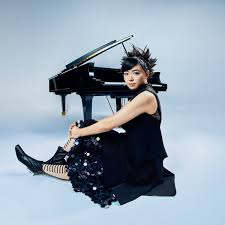
When discussing virtuosity in jazz piano at the dawn of the 21st century, few names ignite as much excitement as Hiromi Uehara. Born on March 26, 1979, in Hamamatsu, Japan, this pianist and composer has spent the last two decades redefining the boundaries of jazz fusion, becoming one of the most electrifying and respected instrumentalists in the world. Known to audiences simply as “Hiromi,” her music is a whirlwind of energy, technique, and raw emotion—a sound that defies easy categorization, blending post‑bop, progressive rock, classical music, and even touches of electronic music into a singular, unmistakable voice.
Today, on her birthday, we explore her journey, her distinctive style, and the legacy of an artist who learned to “play in red” long before she learned to read notes.
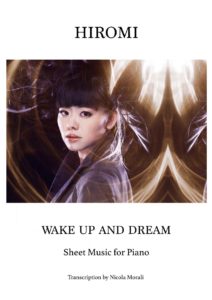
Best Sheet Music download from our Library.
Early Life and Formative Years: A Chance Encounter with Jazz
Hiromi Uehara’s musical journey began at an unusually early age. She started classical piano lessons at six, but her life took a decisive turn when she was eight. Her teacher, Noriko Hikida, introduced her to jazz, but instead of teaching her through traditional theory, Hikida used a revolutionary method for a young child: colors. “If the piece was passionate, she would tell me to ‘play red’,” Hiromi later recalled. “If it was calm, she would say ‘play blue’ … I could really play from the heart, not just from the ears.” This early association between emotion and sound became the foundation of her improvisational approach.
Her talent blossomed rapidly. By the age of 12, she was already performing publicly, and at 14, she had the rare opportunity to perform with the prestigious Czech Philharmonic Orchestra. But the moment that would change her life—almost like a fairy tale—arrived when she was 17. At a jazz club in Tokyo, she happened to meet the legendary pianist Chick Corea, one of her idols. Corea, impressed by her playing, invited her to sit in with him the following night. That meeting not only marked the beginning of a lifelong friendship and musical partnership but also solidified her determination to pursue jazz professionally.
Before moving to the United States, Hiromi spent some time in Japan working as a commercial composer, writing jingles for major companies such as Nissan. Yet the call of jazz was too strong. She enrolled at the Berklee College of Music in Boston on a full scholarship. There, she came under the tutelage of pianist Ahmad Jamal, who became another crucial mentor. The Berklee environment was transformative. “It expanded my way of seeing music so much,” she said. “I can listen to metal, classical, or anything else—it all becomes part of my world.” Her ability was so evident that even before graduation, she signed a recording contract with the prestigious Telarc International label.
Please, subscribe to our Sheet Music Library.
If you are already a subscriber, please, check our NEW SCORES’ page every month for new sheet music. THANK YOU!
Discography and Artistic Evolution: Beyond the Trio
Hiromi’s discography is a testament to her restless creativity. From her explosive debut to her most recent projects, she has repeatedly reinvented her sound, shifting lineups and stylistic approaches with remarkable freedom.
Browse in the Library:
Or browse in the categories menus & download the Library Catalog PDF:
The Debut: Another Mind and Brain (2003–2004)
Her debut album, Another Mind (2003), produced by Ahmad Jamal, was a stunning statement of intent. It presented a young pianist with jaw‑dropping technical control and a compositional maturity well beyond her years. The album was an immediate success: it earned gold certification in Japan and won the Jazz Album of the Year award from the Recording Industry Association of Japan. Her follow‑up, Brain (2004), solidified her reputation, winning multiple accolades, including Album of the Year from the influential Swing Journal magazine in Japan. Both albums introduced a core trio format—later expanded—where Hiromi’s interplay with bassist Tony Grey and drummer Martin Valihora set a new standard for high‑energy jazz piano trios.
Sonicbloom: The Electric Experiment (2007–2008)
With Time Control (2007) and Beyond Standard (2008), Hiromi introduced a new band: Hiromi’s Sonicbloom. This lineup included avant‑fusion guitarist David “Fuze” Fiuczynski, whose microtonal bends and distorted textures added a psychedelic rock edge to the trio’s core. The result was a rawer, more aggressive sound that demonstrated Hiromi’s refusal to be boxed in by the “clean” jazz piano tradition. Tracks like “Time Out” and “Desert on the Moon” featured complex unison lines between piano and guitar, often dissolving into free‑form improvisation that blurred the lines between jazz fusion and progressive rock.
The Trio Project: A Decade of Power (2011–2016)
Arguably the most celebrated period of her career came with the formation of the Trio Project, featuring two absolute giants: bassist Anthony Jackson, known for his work with Steely Dan, Paul Simon, and Chick Corea; and drummer Simon Phillips, whose résumé includes stints with The Who, Toto, and Jeff Beck. Together they created a series of albums that defined Hiromi’s sound for a generation: Voice (2011), Move (2012), Alive (2014), and Spark (2016). Spark reached No. 1 on the Billboard Jazz Chart. This trio combined extreme rhythmic complexity with overflowing energy; Jackson’s six‑string contrabass guitar and Phillips’ powerful drumming gave Hiromi a platform to explore everything from thunderous fusion epics to delicate, impressionistic ballads. Their live performances became legendary, with extended improvisations that showcased an almost telepathic rapport.
Maturity and New Horizons (2019–Present)
The 2020s have revealed an even more versatile Hiromi. Spectrum (2019) was a return to solo piano—a format where she could explore her technique in its purest form. The album showcased her ability to build entire musical worlds with just two hands, ranging from intricate contrapuntal passages to moments of meditative stillness.
During the pandemic, she undertook a remarkable feat: 32 solo concerts in 16 days at the Blue Note Tokyo, demonstrating not only her stamina but her ability to keep each performance fresh and spontaneous.
In 2021, she released Silver Lining Suite, a surprising project where she accompanied her piano with a classical string quartet (two violins, viola, and cello). The album revealed a chamber‑music side to her artistry, with JazzTimes noting that it was “intensely percussive and staccato” while evoking textures ranging from the Penguin Café Orchestra to the soundtrack of Downton Abbey.
In 2023, she returned to an electrified band setting with Sonicwonderland, introducing her new group Hiromi’s Sonicwonder. This quartet features trumpeter Adam O’Farrill, adding a brass voice to the fusion palette, and bassist Hadrien Feraud, known for his work with John McLaughlin. The album, released on Telarc, reaffirmed her status as a leading force in contemporary fusion, blending funk grooves, intricate ensemble writing, and her signature explosive solos.
Musical Style, Harmony, and Technique
Hiromi’s music is a storm of contrasts. One of her most distinctive characteristics is the seamless integration of harmony and rhythm. In compositions such as “In a Trance” or “Spark,” her right hand may be executing fluid, lyrical melodies while her left hand maintains complex, often percussive ostinatos—frequently creating a sensation of polyrhythm that feels like two musicians playing simultaneously.
Jazz Journal has described her as “one of the most unabashedly virtuosic jazz pianists of her generation.” Her technique draws from multiple traditions: the stride piano of Harlem stride masters, the lightning speed of bebop, the raw energy of progressive rock, and the structural precision of classical music (especially Beethoven, whose works she often quotes or reimagines).
Her use of synthesizers and keyboards—notably the Clavia Nord Lead, Nord Electro, and Korg microKORG—allows her to expand her sonic palette far beyond the acoustic piano. In live settings, she frequently switches between a grand piano and a bank of synths within a single piece, creating dramatic contrasts between organic warmth and electronic textures.
Harmonically, Hiromi’s music is rooted in jazz, but she freely incorporates modal harmony, quartal voicings, and at times, densely chromatic passages reminiscent of 20th‑century classical music. Yet what sets her apart is her refusal to let complexity overshadow melody. Her compositions are rarely mere vehicles for improvisation; they are architecturally complex but always anchored by memorable, often hummable themes. In the Trio Project era, the sound was characterized by a “willingness to challenge listener boredom,” with frequent meter changes, extended forms, and solos that evolved as genuine conversations rather than showy displays.
Best Songs and Essential Compositions
Given Hiromi’s extensive discography, selecting “best” songs is a challenge, but certain tracks are essential to understanding her evolution.
- “XYZ” (2003) – From her debut Another Mind. The title plays on the phrase “examine your zipper” (a quirky nod to its driving, relentless energy). It remains one of her signature pieces: a high‑velocity tour de force that opens with a unison bass and piano line before exploding into a furious improvisation. It established her as a force to be reckoned with.
- “Time Out” (2007) – A standout from the Sonicbloom era. The track showcases the interplay between Hiromi and guitarist David Fiuczynski, blending odd time signatures (hence the title) with wah‑pedal effects and microtonal bends, pushing the fusion genre into experimental territory.
- “Beethoven’s Piano Sonata No. 8 – Pathetique” (2011) – From Voice, this is a radical reimagining of the famous classical sonata. Hiromi doesn’t simply play the notes; she uses Anthony Jackson’s contrabass guitar and Simon Phillips’ drums to create a dramatic tension that makes Beethoven sound as if it were written for a power‑trio. The result is both respectful and audaciously original.
- “Move” (2012) – The title track from the Trio Project’s third album. It captures the perfect chemistry between Hiromi, Jackson, and Phillips. Built on a hypnotic bass riff, the piece builds from a simmer to a boil, with Hiromi’s solo showcasing her ability to weave lightning‑fast runs into a cohesive narrative.
- “Cantina Band” (2017) – Recorded live with Colombian harpist Edmar Castañeda. Her version of the Star Wars theme is a masterclass in spontaneous arrangement, transforming John Williams’ original into a jazz‑fusion tour de force that swings, soars, and surprises.
- “Ribera del Duero” (2021) – A highlight from Silver Lining Suite. Composed for string quartet and piano, it reveals Hiromi’s lyrical, introspective side. The piece evokes a Spanish landscape, with shimmering strings supporting a piano melody that builds from delicate introspection to a passionate climax.
- “Bonus Stage” (2023) – From Sonicwonderland, this track was described by Jazz Journal as the album’s best, with a “semi‑Dixieland” feel that closes the record on a playful, joyous note, demonstrating that even after two decades, she still finds room for humor and surprise in her music.
Filmography and Soundtrack Work
Although her primary output remains discographic, Hiromi has made significant contributions to film. In 2023, she composed and performed the score for the animated feature Blue Giant, based on the popular jazz manga by Shinichi Ishizuka. The film tells the story of a young saxophonist striving for greatness, and Hiromi’s music serves as both the emotional core and the sonic representation of the protagonist’s journey. Her involvement introduced her to a new generation of listeners and demonstrated her ability to write music that serves a narrative, not merely a concert setting.
She has also appeared in several concert films and documentaries, including Hiromi: Live at the Blue Note (2005) and Hiromi’s Sonicbloom: Live in Concert (2008), which capture the raw energy of her live performances.
Collaborations with Other Jazz Musicians
Hiromi’s career is rich with remarkable collaborations. The most significant is undoubtedly her ongoing partnership with Chick Corea. Their friendship began with that chance meeting in Tokyo, and it culminated in the 2008 live album Duet, recorded at the Blue Note Tokyo. The album features two pianists trading ideas with telepathic ease, blending compositions by both artists. Corea often spoke of Hiromi as one of the few musicians who could match his energy and sense of adventure on stage.
She also worked closely with bassist Stanley Clarke, appearing on his Grammy‑winning album The Stanley Clarke Band (2010). Her track “Take the ‘A’ Train” on that album won her a Grammy Award for Best Contemporary Jazz Album—her first Grammy. She has also been a frequent collaborator with bassist Anthony Jackson (beyond the Trio Project) and drummer Simon Phillips, forming a core rhythm section that appeared on numerous recordings and tours.
Other notable collaborations include:
- Akiko Yano – The two Japanese pianist‑vocalists have shared the stage for several concerts, blending their distinctive styles in a celebration of jazz and pop.
- Edmar Castañeda – Their 2017 album Live in Montreal (released as a DVD) captures an extraordinary duo of piano and harp, blending jazz, Latin, and classical influences.
- Michel Camilo – Another pianist with Caribbean roots; they have performed together in various festival settings, showcasing the vibrant interplay between Latin jazz and Hiromi’s fusion style.
- John McLaughlin – She has occasionally sat in with the legendary guitarist, a nod to her deep roots in the Mahavishnu Orchestra side of fusion.
Influences and Legacy
Hiromi’s music is the product of an alchemical blend of influences. Her jazz pillars are her mentors: Chick Corea, for his exploration of fusion and his boundless energy; Ahmad Jamal, for his masterful sense of space and dynamics; and Oscar Peterson, for his virtuosity and swing. But her ears have always been wide open. She frequently cites Beethoven as a major influence, particularly his ability to create dramatic narrative arcs. In rock, she draws from King Crimson, Yes, and the progressive rock world—unsurprising given her longtime partnership with Simon Phillips. She has also spoken of her admiration for Frank Zappa’s compositional complexity and humor.
Her legacy lies in her ability to connect with audiences without sacrificing complexity. In an era where jazz can sometimes be perceived as academic or inaccessible, Hiromi acts as an ambassador of joy and technical brilliance. She broke molds as a Japanese woman in a jazz world still predominantly male, proving that stage presence and raw energy transcend gender and geography.
The New York Times highlighted her ability to “create intricate melodies and fuse several genres of jazz into a coherent whole.” Her influence can be heard in a new generation of pianists—from the jazz competition circuit to social media—who have adopted her blend of classical precision and rock‑star charisma. Moreover, her constant reinvention serves as a model: she has shown that a jazz artist can move from acoustic trios to electric bands to string quartets without losing artistic identity.
Additional Information: Instruments and Personal Life
Equipment
Although primarily an acoustic pianist, Hiromi is known for her distinctive setup. In a 2010 interview, she detailed her gear: a Yamaha CFIIIS concert grand piano, accompanied by a Clavia Nord Lead 2, Nord Electro 2 73, Nord Stage Piano, and a Korg microKORG synthesizer. This combination allows her to shift seamlessly from warm, resonant acoustic sounds to cutting‑edge electronic textures within the same piece.
Personal Life
Hiromi has been married since 2007 to fashion designer Yasuhiro Mihara. They met after she performed at one of his fashion shows in Milan. She maintains a busy touring schedule but considers Japan her home base.
Recognition
Beyond her Grammy, Hiromi has received numerous awards, including the Jazzman Award (France) and multiple Swing Journal awards in Japan. She performed at the opening ceremony of the Tokyo 2020 Olympic Games, a testament to her status as a cultural icon in her home country.
Hiromi Uehara is a force of nature. From the young girl who learned to “play red” to the international superstar who headlines festivals around the world, her journey is a testament to the power of boundless creativity. With a discography ranging from solo piano to electric quartets to chamber ensembles, her music remains unpredictable and electrifying. She has taken the language of jazz—with its roots in improvisation, swing, and blues—and expanded it into a universe where Beethoven, Chick Corea, and progressive rock coexist in thrilling harmony.
Today, on her birthday, we celebrate not only her inhuman technique or her extensive discography but her ability to transmit pure emotion through the most complex musical vocabulary. As she herself said: “I don’t want to name my music. Other people can name it … It’s just the union of everything I’ve been listening to and everything I’ve been learning.” That union, over more than two decades, has given us some of the most exhilarating music of our time—and promises much more to come.