Come join us now, and enjoy playing your beloved music and browse through great scores of every level and styles!
Can’t find the songbook you’re looking for? Please, email us at: sheetmusiclibrarypdf@gmail.com We’d like to help you!
Table of Contents
Remembering Ben Webster, born on ths day in 1919

Best Sheet Music download from our Library.
Please, subscribe to our Sheet Music Library.
If you are already a subscriber, please, check our NEW SCORES’ page every month for new sheet music. THANK YOU!
Ben Webster: The Warm, Breathful Giant of the Tenor Saxophone
A Centennial Reflection
March 27, 1919, marks a date that would eventually become significant in the annals of jazz history—the birth of Benjamin Francis Webster. While the year sometimes causes confusion (some sources cite 1909, and the ambiguity stems from the era’s lax record-keeping), what remains undisputed is that Ben Webster emerged from Kansas City, Missouri, to become one of the most distinctive and emotionally resonant tenor saxophonists jazz has ever produced. His death on September 20, 1973, in Amsterdam, Netherlands, closed the chapter on a career that spanned the evolution of jazz from the territorial bands of the Midwest to the European jazz scenes where he spent his final decade.
Webster’s journey—from a young violinist to the “brute” of the tenor saxophone, from a hot-headed member of Duke Ellington’s orchestra to a revered elder statesman of European jazz—represents a quintessential American jazz narrative. His sound, often described as breathy, warm, and simultaneously powerful and tender, has become a benchmark for saxophone expression. This article explores the full arc of Webster’s life, his musical innovations, his most significant recordings, and the enduring legacy that continues to inspire musicians and captivate listeners decades after his passing.
Browse in the Library:
Or browse in the categories menus & download the Library Catalog PDF:
Biography
Early Life in Kansas City
Benjamin Francis Webster was born in Kansas City, Missouri, a city that would prove crucial to the development of jazz in the 1920s and 1930s . Growing up in this vibrant musical environment, young Benjamin initially pursued the violin—an instrument whose lyrical qualities may have subconsciously influenced his later approach to the tenor saxophone. He also studied piano, learning the blues from the legendary Pete Johnson, a master of the boogie-woogie style .
Ben Webster’s transition to saxophone came under the tutelage of Budd Johnson, a respected saxophonist who helped shape the young musician’s foundational technique. This period also brought Webster into contact with another future giant: Lester Young. The two played together in the Young Family Band, an early experience that exposed Webster to the competitive, creative ferment of Kansas City jazz .
The Kansas City of Webster’s youth was a crucible of jazz innovation. It was a town where musicians played all night in clubs along 18th and Vine, where Count Basie was developing his signature brand of swing, and where the territory bands—itinerant orchestras that traveled the Midwest—provided steady work for aspiring musicians. Webster immersed himself in this world, cutting his teeth in bands led by Blanche Calloway (Cab’s sister) and, crucially, the Bennie Moten Orchestra . This latter association brought him into the orbit of Count Basie, Hot Lips Page, and Walter Page—musicians who would define the Kansas City sound.
Throughout the 1930s, Webster’s reputation grew as he moved through the upper echelons of the swing era. He played in bands led by Willie Bryant, Benny Carter, Cab Calloway, Fletcher Henderson, Andy Kirk, and Teddy Wilson . This period was essential for Webster’s development, exposing him to diverse arranging styles and soloistic approaches while honing his ability to function within both small groups and large orchestras.
The Ellington Years (1940-1943)
The year 1940 marked a pivotal moment in Webster’s career when he joined the Duke Ellington Orchestra. This was no ordinary band—Ellington’s ensemble was widely considered the most sophisticated orchestra in jazz, a collection of individual voices that somehow coalesced into a unified artistic vision. Webster entered this rarefied company alongside two other brilliant newcomers: bassist Jimmy Blanton and composer-arranger Billy Strayhorn .
Webster’s tenure with Ellington produced some of his most celebrated recorded work. His solo on “Cotton Tail”—an up-tempo blues that showcased his robust tone and inventive phrasing—became an instant classic . The piece demonstrated Webster’s ability to navigate complex harmonies while maintaining a blues-drenched sensibility, a combination that would become his trademark.
Yet Webster’s personality often clashed with Ellington’s famously genteel leadership style. According to Mercer Ellington, Duke’s son, it was impossible for the two men to be in the same room without an argument developing . Webster’s struggles with alcohol exacerbated tensions, though they also revealed his emotional depth. When Jimmy Blanton died of tuberculosis in 1942, Webster wept openly—a moment that baritone saxophonist Harry Carney recalled decades later, adding that “after he had a drink or two, he’d change” .
Webster’s departure from the Ellington orchestra in 1943 was dramatic. Accounts vary—some say he cut one of Ellington’s sports jackets with a razor as a final act of defiance, while trumpeter Clark Terry claimed Webster slapped Ellington . Whatever the precise details, the split was acrimonious, and Webster would not return to Ellington’s fold until 1948, when he rejoined briefly for a few months.
The 52nd Street Years and Post-Ellington Career
Following his departure from Ellington, Webster established himself on New York’s 52nd Street—the legendary strip of jazz clubs that defined the city’s nightlife during the 1940s and 1950s. Here, he worked extensively as both a leader and sideman, recording prolifically and collaborating with a who’s who of jazz . His associates during this period included Raymond Scott, John Kirby, guitarist Bill DeArango, drummer Sid Catlett, pianist Jay McShann, and blues shouter Jimmy Witherspoon.
The 1950s brought Webster into a productive relationship with impresario Norman Granz, the founder of Verve Records and the organizer of the Jazz at the Philharmonic concert series. Granz paired Webster with pianist Oscar Peterson for a series of recordings that began with The Consummate Artistry of Ben Webster (1953)—later reissued as King of the Tenors—and continued throughout the decade . These sessions captured Webster at the peak of his powers, his sound maturing into the breathy, romantic style that would define his later work.
A landmark recording occurred on December 16, 1957, when Webster entered the studio with Coleman Hawkins, the man widely credited with establishing the tenor saxophone as a jazz instrument. Coleman Hawkins Encounters Ben Webster brought together two titans who had first met in Kansas City decades earlier . The album remains a high-water mark of tenor saxophone duets, showcasing the contrasting approaches of two masters: Hawkins, the aggressive, harmonically adventurous pioneer, and Webster, the warm-toned, lyrically inclined romantic.
In the late 1950s, Webster formed a quintet with baritone saxophonist Gerry Mulligan, and the group became regulars at the Renaissance Club in Los Angeles. This collaboration produced several notable recordings, including a live album backing Jimmy Witherspoon and the classic Gerry Mulligan Meets Ben Webster (1959) . The Renaissance Club recordings, recently reissued by Craft Recordings, capture Webster in an intimate club setting, his playing alternately “breathy, sometimes growling, but inevitably inventive” .
European Exile (1964-1973)
By the early 1960s, Webster’s career in America, while respected, had begun to feel stagnant. The rise of rock and roll, changing musical tastes, and the diminishing opportunities for older jazz musicians prompted many of his peers to seek work abroad. In late 1964, Webster joined this expatriate community, moving first to London, then to various locations in Scandinavia, and finally settling in Copenhagen in 1969 .
Europe proved rejuvenating for Webster. He played when he pleased, worked with both American expatriates and local musicians, and found an audience that revered him as a living legend. His years in Denmark were particularly fruitful; he recorded extensively for European labels like Black Lion, Storyville, and Steeplechase, producing some of his most intimate and introspective work.
The European period also yielded a curious footnote in Webster’s filmography. He appeared as a saxophone player in a low-rent cabaret club in the 1970 Danish film Quiet Days in Clichy, a blue movie based on Henry Miller’s novel . It was a small role, but it represented Webster’s only substantial screen appearance as a jazz musician (distinct from the British actor of the same name who had a lengthy silent film career).
In 1971, Webster reunited with Duke Ellington for a series of concerts at the Tivoli Gardens in Copenhagen . Whatever tensions had existed between them three decades earlier seemed to have dissolved; the performances were reportedly warm and musically satisfying, a fitting coda to their complicated relationship. Webster also recorded live in France with pianist Earl Hines during these years, continuing to produce vital music until the very end.
Final Days and Death
In September 1973, Webster performed at a club called Twee Spieghels in Leiden, the Netherlands. Following the performance, he suffered a stroke and was taken to Amsterdam, where he died on September 20, 1973 . He was 64 years old.
Webster’s body was cremated in Copenhagen, and his ashes were interred in Assistens Cemetery in the Nørrebro section of the city . It was a fitting final resting place for a man who had found such deep connection with Denmark and its people during his final years.
Musical Style and Harmony
The Webster Sound
Ben Webster’s sound is instantly recognizable—a warm, breathy tone that seems to envelop the listener like a velvet blanket. Critics often describe it as “fat,” “round,” and “expressive,” adjectives that capture its physicality but not its emotional depth. Webster’s approach to the saxophone involved a distinctive embouchure that produced a certain amount of air mixed with the tone, creating a vocal quality that made his playing sound almost human.
This sound evolved over time. Early in his career, particularly during his Ellington years, Webster played with more edge and aggressiveness. The “Cotton Tail” solo displays a robust, almost rough-hewn tone that swings ferociously. But as his career progressed, Webster increasingly focused on ballads, developing what Gunther Schuller called a “pushed-away-from-his-original-inspiration” style that owed more to Johnny Hodges’s lyricism than to Coleman Hawkins’s brawn .
The ballad style that emerged in the 1950s and dominated his later career was characterized by long, sustained notes, carefully controlled vibrato, and an almost conversational phrasing. Webster would often play behind the beat, creating a sense of relaxed, unhurried expression that gave each note room to breathe. His approach to standards like “Stardust” and “Chelsea Bridge” became definitive interpretations that younger saxophonists studied as masterclasses in melodic improvisation.
Harmonic Approach
Harmonically, Webster operated within the swing tradition but pushed its boundaries. Unlike the bebop musicians of the 1940s who sought to extend harmonic complexity, Webster focused on exploring the emotional content of standard chord progressions. His solos often emphasized chord tones and blues inflections, but his choices of altered notes and his use of implied harmonies revealed a sophisticated understanding of harmony.
The pianist Jimmy Rowles, who worked extensively with Webster, provided perfect harmonic support for the saxophonist’s “sometimes implied harmonies” . Rowles’s subtle voicings and touch complemented Webster’s approach beautifully, as heard on recordings like At the Renaissance (1960). Similarly, Webster’s collaborations with Oscar Peterson and Art Tatum—two of jazz’s most harmonically advanced pianists—demonstrated his ability to navigate complex harmonic landscapes while maintaining his signature melodic clarity .
Webster’s work with string sections, documented on albums like The Warm Moods (1961) and the ballads compilation, revealed his sensitivity to harmonic texture. The string arrangements by Ralph Burns and others provided lush backgrounds that Webster floated over effortlessly, his improvisations weaving through the orchestral colors with natural grace . As one critic noted, “Webster’s way with a ballad meshes almost perfectly with the string backing” .
Rhythm and Phrasing
Rhythmically, Webster was a master of swing. His time feel—the way he placed notes in relation to the underlying pulse—was relaxed yet propulsive, creating a sense of forward motion without rushing. He often used rhythmic displacement, accenting unexpected beats and creating cross-rhythms that added interest to his solos.
Webster’s phrasing was deeply influenced by the blues. Even when playing complex chord progressions, he maintained a blues sensibility that grounded his improvisations in the African-American musical tradition. His use of bent notes, growls, and subtone effects—techniques borrowed from blues singers—gave his playing a vocal quality that communicated emotion directly.
Best Songs and Essential Recordings
Top 10 Essential Performances
- “Cotton Tail” (1940) – Recorded with Duke Ellington, this up-tempo blues showcases Webster at his most aggressive and inventive. His solo is a masterclass in swing-era improvisation, building logically from simple blues phrases to complex, exciting climaxes .
- “Stardust” – Hoagy Carmichael’s classic became one of Webster’s signature pieces. His version features his characteristic breathy tone and an emotional depth that makes the melody feel newly discovered .
- “Chelsea Bridge” – Billy Strayhorn’s haunting composition receives a definitive interpretation from Webster. His playing on this ballad demonstrates his ability to convey deep emotion through dynamics and phrasing .
- “Soulville” (1957) – The title track from Webster’s Verve album, this performance features his warm, soulful tone and relaxed phrasing. The Oscar Peterson Trio provides perfect accompaniment .
- “Cry Me a River” – Webster’s instrumental version of this vocal standard transforms the song into a showcase for his expressive capabilities. His rich tone and impeccable control create an evocative listening experience .
- “Georgia on My Mind” – From the At the Renaissance sessions, this performance features Webster with Jimmy Rowles’s understated accompaniment. The track demonstrates Webster’s ability to reinvent standards with fresh interpretation .
- “My Funny Valentine” – Webster’s version of this Rodgers and Hart standard reveals his gift for melodic improvisation. His solos take the listener on an emotional journey .
- “In a Mellow Tone” – Another Ellington association, this performance captures Webster’s swinging style and his ability to create a relaxed, laid-back atmosphere .
- “Perdido” – Webster’s solo on this Ellington classic showcases his technical prowess and his melodic approach to improvisation .
- “Come Rain or Come Shine” – Webster’s interpretation of the Harold Arlen standard demonstrates his ability to infuse familiar material with his distinct personality .
Essential Albums
- King of the Tenors (1953) – Originally released as The Consummate Artistry of Ben Webster, this album with Oscar Peterson established Webster’s mature style .
- Coleman Hawkins Encounters Ben Webster (1957) – The meeting of two tenor giants, backed by Peterson, Herb Ellis, Ray Brown, and Alvin Stoller .
- Soulville (1958) – A classic Verve session featuring Webster with the Oscar Peterson Trio .
- Gerry Mulligan Meets Ben Webster (1959) – A superb collaboration between two of jazz’s most distinctive saxophonists .
- At the Renaissance (1960) – Live recordings from the Los Angeles club, recently reissued, capturing Webster in an intimate setting .
- The Warm Moods (1961) – Webster’s controversial but beautiful album with string arrangements, demonstrating his ballad mastery .
- Ben Webster Meets Don Byas (1968) – A late-career European recording pairing Webster with another tenor great .
Filmography
Ben Webster the jazz musician had a minimal film career, which is easily confused with the extensive work of a British actor who shared his name. The British Ben Webster (1864-1947) appeared in dozens of silent and early sound films, including Lassie Come Home (1943), Mrs. Miniver (1942), and Suspicion (1941) . This actor was the husband of Dame May Whitty and a theatrical figure in his own right.
The jazz musician’s sole significant screen appearance came in the 1970 Danish film Quiet Days in Clichy, based on Henry Miller’s novel. Webster appeared as a saxophone player in a low-rent cabaret club, essentially playing himself . It was a small role, but it captured Webster during his European period, showing him in the kind of intimate setting where he thrived.
Beyond this acting credit, Webster’s film presence is limited to documentary appearances and performance footage. Several European television broadcasts from his years in Denmark and the Netherlands survive, offering glimpses of Webster in his final years. These recordings have been circulated among jazz collectors and occasionally appear on DVD compilations of European jazz performances.
Cooperations with Other Jazz Musicians
Duke Ellington (1940-1943, 1948, 1971)
Webster’s association with Ellington was the most significant of his career, producing some of his finest recorded work. Despite their personal conflicts, the musical collaboration yielded timeless recordings, including “Cotton Tail,” “All Too Soon,” and “Cottontail” . Their 1971 reunion in Copenhagen demonstrated that time had healed old wounds, allowing two jazz giants to share a stage one last time.
Oscar Peterson (1950s)
Norman Granz paired Webster and Peterson frequently throughout the 1950s, creating some of the most celebrated recordings in both artists’ discographies. Peterson’s virtuosic accompaniment provided Webster with harmonic sophistication and rhythmic drive, while Webster’s warm tone balanced Peterson’s occasionally aggressive technique. Their collaborations include King of the Tenors, Soulville, and Ben Webster Meets Oscar Peterson .
Coleman Hawkins
The 1957 Coleman Hawkins Encounters Ben Webster album brought together the two most important tenor saxophonists of the swing era. Hawkins, the pioneer, and Webster, the romantic, created a classic of jazz duets. The session reportedly had the relaxed atmosphere of old friends catching up, with the music reflecting their mutual respect .
Art Tatum (1956)
Webster recorded an album with the legendary pianist Art Tatum, supported by bassist Red Callender and drummer Bill Douglass. Released as The Art Tatum-Ben Webster Quartet, the album features Webster navigating Tatum’s sophisticated harmonic inventions with characteristic melodic clarity .
Gerry Mulligan (Late 1950s)
Webster’s collaboration with baritone saxophonist Gerry Mulligan resulted in the classic Gerry Mulligan Meets Ben Webster album, as well as live performances at the Renaissance Club. The contrast between Mulligan’s cool, cerebral approach and Webster’s warm, emotional style created a compelling musical dialogue .
Teddy Wilson (1954)
The elegant pianist Teddy Wilson accompanied Webster on several sessions, including the ballads recording that featured Wilson in a quartet setting. Their collaboration produced some of Webster’s most refined ballad performances .
Jimmy Rowles (1960)
Pianist Jimmy Rowles was Webster’s partner on the At the Renaissance sessions, and his “touch, timbre, and voicings” proved to be “a perfect complement to Webster’s sometimes implied harmonies” . Rowles’s modest brilliance provided ideal support for Webster’s impressionistic solos.
Johnny Hodges
Though they rarely recorded together, Webster frequently cited Ellington’s alto saxophonist Johnny Hodges as a major influence. According to Webster, Hodges’s lyrical approach and beautiful tone pushed him away from his early Coleman Hawkins-inspired style toward a more personal sound .
Influences
Early Influences
Webster’s earliest musical training came on violin and piano, instruments that shaped his understanding of melody and harmony. The violin, in particular, may have influenced his approach to sustained notes and lyrical phrasing. His study of blues piano with Pete Johnson grounded him in the African-American blues tradition that would inform all his subsequent work .
Coleman Hawkins was the dominant influence on early tenor saxophonists, and Webster was no exception. Hawkins’s robust tone, aggressive attack, and harmonic adventurousness set the standard for the instrument, and Webster’s early style reflected this influence .
Johnny Hodges
Webster considered alto saxophonist Johnny Hodges a major influence on his playing . Hodges’s beautiful tone, lyrical phrasing, and emotional directness pushed Webster away from Hawkins’s model toward a more personal style. Gunther Schuller noted in 1989 that Hodges’s influence was decisive in Webster’s development .
Lester Young
Though often contrasted with Webster, Lester Young was an early associate. The two played together in the Young Family Band, and Webster absorbed some of Young’s relaxed phrasing and melodic approach, though he never adopted Young’s lighter tone .
The Kansas City Tradition
The Kansas City jazz tradition—with its emphasis on blues feeling, riff-based arrangements, and relaxed swing—was fundamental to Webster’s development. His early work with Bennie Moten, Count Basie, and other Kansas City bands embedded these qualities deep in his musical personality.
Billy Strayhorn
Webster’s close relationship with composer-arranger Billy Strayhorn during the Ellington years influenced his approach to melody and harmony. Strayhorn’s sophisticated compositions, including “Chelsea Bridge,” provided Webster with harmonic landscapes that suited his developing ballad style perfectly .
Legacy
Influence on Saxophonists
Ben Webster’s influence on subsequent generations of saxophonists is incalculable. His warm tone, emotional directness, and masterful ballad playing set a standard that younger players continue to study and emulate. Tenor saxophonists as diverse as Archie Shepp, Scott Hamilton, and Joe Lovano have acknowledged Webster’s influence, and his approach to ballads remains a model for jazz musicians of all instruments.
The Ben Webster Foundation
After Webster’s death, his friend Billy Moore Jr. and the trustee of Webster’s estate established the Ben Webster Foundation, a non-profit organization based in Denmark . Webster’s sole legal heir, Harley Robinson of Los Angeles, assigned his rights to the foundation, which was confirmed by the Queen of Denmark’s Seal in 1976.
The foundation’s mission, as stated in its trust deed, is “to support the dissemination of jazz in Denmark” . It channels Webster’s annual royalties to musicians in both Denmark and the United States, and awards an annual Ben Webster Prize to an outstanding young musician. Though the prize is modest in monetary terms, it is considered highly prestigious in Danish jazz circles.
The foundation has also supported visits by American musicians to Denmark, concerts, recordings, and other jazz-related events. The Board of Trustees carefully monitors Webster’s artistic rights and the reissues of his music, ensuring the quality and validity of recordings released under his name .
Physical Legacy
Webster played the same saxophone from 1938 until his death in 1973—a Selmer tenor that became an extension of his musical voice. He left specific instructions that the horn was never to be played again after his death. Today, it is on display at the Institute of Jazz Studies at Rutgers University in Newark, New Jersey, where it serves as a tangible connection to Webster’s artistry .
Webster’s private collection of jazz recordings and memorabilia is archived at the University Library of Southern Denmark in Odense, preserving his legacy for future generations of researchers and enthusiasts .
Honors and Memorials
In Copenhagen, a street bears Webster’s name: Ben Websters Vej, located in the southern part of the city . The street serves as a permanent reminder of the affection Danes held for the expatriate saxophonist who made their country his home.
The annual Copenhagen Jazz Festival regularly features events honoring Webster, and the Ben Webster Foundation continues to present its prize each year. In 2009, Ernie Wilkins’s Almost Big Band opened the festival with a concert at the Copenhagen Jazzhouse that included an “All Time Battle of Tenor Saxophones” presented by the foundation .
Critical Reassessment
Recent years have seen a renewed interest in Webster’s work, particularly his European period recordings. Reissues like At the Renaissance by Craft Recordings have introduced Webster’s music to new audiences, and critical appreciation for his contributions continues to grow . The 2024 reissue of At the Renaissance on vinyl has been particularly well-received, with reviewers noting that it captures Webster “as he was meant to be heard: up close, yearning, hard swinging, sometimes mean, but always personal” .
Cultural Impact
Beyond jazz, Webster’s influence extends to other art forms. The score of the 2017 feature film Phantom Thread was inspired by Webster’s recordings, demonstrating his continued relevance in contemporary culture . His recordings are regularly sampled by hip-hop artists, and his ballads appear in film soundtracks, introducing his music to audiences who might never have encountered it otherwise.
Ben Webster: an unique sound
Ben Webster was not merely a jazz musician but a voice—a singular instrumental presence that communicated emotion with directness and honesty. From his early days in Kansas City to his final years in Copenhagen, he remained true to his musical vision, developing a sound that was unmistakably his own and that continues to resonate with listeners today.
His career spanned the golden age of swing, the bebop revolution, and the expansion of jazz into a global art form. He worked with the greatest musicians of his era—Ellington, Hawkins, Peterson, Tatum, Holiday—and left a recorded legacy that ranks among the finest in jazz history. His ballad playing, in particular, represents a high-water mark of instrumental expression, a model of how technique can serve emotional communication.
The Ben Webster Foundation ensures that his legacy lives on, supporting young musicians and preserving his artistic rights. The saxophone he played for 35 years rests at Rutgers, a sacred object for jazz pilgrims. And the music—the warm, breathy tones, the inventive improvisations, the soulful interpretations—continues to find new listeners, carrying Webster’s voice into a future he could not have imagined.
Born on March 27 in the early years of the 20th century, Ben Webster gave jazz a sound that was uniquely his—a sound of warmth and power, of tenderness and strength, of Kansas City blues and Ellingtonian sophistication. It is a sound that, more than 50 years after his death, still moves us, still teaches us, and still reminds us of music’s power to communicate the deepest human emotions.
Additional Information
The Birth Date Question
There remains some confusion about Webster’s birth year. While this article follows the commonly accepted date of March 27, 1909 , some sources have suggested 1919. The discrepancy likely results from inconsistent record-keeping in early 20th-century Missouri, where birth certificates were not always filed promptly. The consensus among jazz scholars favors 1909, as this aligns with documented events in Webster’s early career.
Webster and the British Actor
Jazz researchers sometimes encounter confusion between Ben Webster the musician and Ben Webster the British actor (1864-1947), who was the husband of Dame May Whitty and the father of stage actress Margaret Webster . The actor appeared in films such as Lassie Come Home, Mrs. Miniver, and Suspicion, often playing elderly character roles. Despite sharing a name and being active during some of the same years, the two men were unrelated, and the jazz musician’s film credits are minimal compared to the actor’s extensive filmography.
Recording for the Future
In his final years, Webster recorded extensively for European labels, leaving a rich legacy of live performances and studio sessions from the 1960s and early 1970s. These recordings—many of which have been reissued on CD and vinyl in recent years—document Webster’s continued musical growth and his deep connection to European audiences. They serve as a reminder that even in his final decade, Webster remained a vital, creative force in jazz.
A Lasting Legacy
Ben Webster once told an interviewer that he wanted his music to “make people feel good.” By that modest measure, he succeeded beyond his wildest dreams. His recordings have brought joy to millions of listeners across the globe, and his influence continues to shape the way saxophonists approach their instrument. As long as people listen to jazz, Ben Webster’s warm, breathy tone will be heard—a voice from the past that speaks directly to the present, carrying with it the soul of Kansas City, the sophistication of Ellington, and the heart of a man who found in music the truest expression of himself.
This article was written in commemoration of Ben Webster’s birth date, celebrating a life and legacy that continue to inspire and move listeners around the world.
Search your favorite sheet music in the Sheet Music Catalog
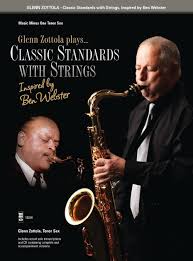
Ben Webster – Ben Webster Plays Ballads (1988 – Album)
Tracklist:
[00:00] A1. Stardust Bass – Niels-Henning Ørsted Pedersen/ Drums – Makaya Ntsoko/ Piano – Teddy Wilson/ Recorded By – Danmarks Radio [06:18] A2. Cry Me A River Bass – Niels-Henning Ørsted Pedersen/ Conductor – Niels Jørgen/ SteenDrums – William Schiöppfe/ Guitar – Ole Molin/ Piano – Ole Koch Hansen/ Producer – Erik Moseholm/ Reeds – Bent Nielsen, Erling Christensen (2), Flemming Madsen, Jesper Thilo, Uffe Karskov/ Trombone – Helmuth Hjort Hansen, Ole Kurt Jensen, Per Espersen, Poul Jørgensen, Torolf Mølgård/ Trumpet – Allan Botschinsky, Henry Henkel, Palle Bolvig, Palle Mikkelborg, Perry Knudsen [10:29] A3. For Heavens Sake Bass – Hugo Rasmussen/ Drums – Bjarne Rostvold/ Guitar – Ole Molin/ Piano – Ole Koch Hansen [18:16] A4. Greensleeves Bass – Niels-Henning Ørsted Pedersen/ Drums – Al Heath/ Piano – Kenny Drew/ Producer – Steen Bramsen/ Reeds – Bent Nielsen, Jesper Thilo, Sahib Shihab, Uffe KarskovStrings – Aage Bertelsen, Anton Kontra, Børge Madsen, Erling Christensen, Finn Ziegler, H. Bjerregaard Jensen, Hans Christian Schwenger, Helge Willer-Nielsen, Holger Bjerre, Kurt Jensen, Mogens Holm Larsen, Ove Winther, Per Lüdolph, Stanley Carlson, Svend Aage Blankholm, Svend Aage Jensen [20:37] B1. My Romance Bass – Niels-Henning Ørsted Pedersen/ Drums – Al Heath/ Piano – Kenny Drew [29:09] B2. Willow Weep For Me Bass – Niels-Henning Ørsted Pedersen/ Drums – Al Heath/ Piano – Kenny Drew/ Producer – Børge Roger Henrichsen [34:24] B3. Old Folks Bass – Niels-Henning Ørsted Pedersen/ Drums – Bjarne Rostvold/ Piano – Ole Koch Hansen
Credits: A collection of not previously released recordings from 1967 to 1971 Tenor Saxophone – Ben Webster
Listen to Ben Webster music on Spotify
Ben Webster – Master Of Jazz (Full Album)
1 – You’d Be So Nice To Come Home To 2 – Stompy Jones 4:16 3 – Going Home 7:47 4 – I Got It Bad 11:34 5 – Cottontail 19:53 6 – Come Sunday 23:23 7 – Our Blues 27:11 8 – Sunday 33:34 9 – Old Folks 39:39
BEN WEBSTER: tenor sax KENNY DREW: piano Al HEATH: drums HUGO RASMUSSEN: bass NIELS-HENNING ØRSTED PEDERSEN: bass OLE MOLIN: guitar OLE STREENBERG: drums