
Come join us now, and enjoy playing your beloved music and browse through great scores of every level and styles!
Can’t find the songbook you’re looking for? Please, email us at: sheetmusiclibrarypdf@gmail.com We’d like to help you!
Table of Contents
Happy heavenly birthday, Paul Whiteman, born on this day in 1890
Best Sheet Music download from our Library.
Best Sheet Music download from our Library.
Please, subscribe to our Sheet Music Library.
If you are already a subscriber, please, check our NEW SCORES’ page every month for new sheet music. THANK YOU!
Please, subscribe to our Sheet Music Library.
If you are already a subscriber, please, check our NEW SCORES’ page every month for new sheet music. THANK YOU!
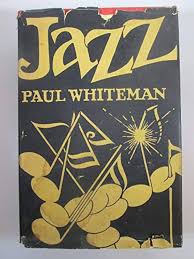
Paul Whiteman: The Controversial “King of Jazz” Who Bridged Two Musical Worlds
A Musical Paradox
On March 28, 1890, a boy was born in Denver, Colorado who would grow to become one of the most paradoxical figures in American musical history. Paul Samuel Whiteman would be celebrated as the “King of Jazz” during the Roaring Twenties, commanding the most popular dance band in America and earning over a million dollars annually at his peak. Yet he would also become one of the most controversial figures in jazz history—criticized by purists for orchestrating a music they believed demanded improvisation, while simultaneously championing Black musicians and commissioning works that defined the Jazz Age .
Paul Whiteman—a classically trained violist who became the unlikely monarch of America’s most vibrant musical genre, a bandleader who hired the era’s finest musicians, and a visionary who gave the world George Gershwin’s Rhapsody in Blue.
Early Life and Musical Formation
Paul Whiteman was born into a deeply musical family. His father, Wilburforce James Whiteman, served as the supervisor of music for the Denver Public Schools—a position he held for an astonishing fifty years. His mother, Elfrida (née Dallison), was a former opera singer who had performed with the Metropolitan Opera . This environment of disciplined classical musicianship would profoundly shape Whiteman’s approach to music throughout his career.
His father insisted that young Paul learn an instrument, preferably the violin. In a small act of teenage rebellion that would foreshadow his career-long tendency to chart his own course, Paul chose the viola instead . This decision proved fortuitous; his skill on the instrument led to a position with the Denver Symphony Orchestra by 1907, when he was just seventeen years old.
Whiteman’s classical credentials continued to grow when he joined the San Francisco Symphony in 1914 . This experience immersed him in the world of large-scale orchestral performance, giving him firsthand knowledge of orchestration, ensemble balance, and the power of carefully arranged music—elements that would later define his jazz orchestra’s distinctive sound.
The Navy Years and the Birth of a Bandleader
World War I marked a turning point in Whiteman’s career trajectory. During his service in the United States Navy, he was assigned to conduct a 12-piece band at the Mare Island Naval Training Camp Symphony Orchestra . This experience proved transformative; for the first time, Whiteman found himself not as an orchestral player following someone else’s direction, but as a leader shaping musical performances.
The Navy band gave Whiteman practical experience in arranging, conducting, and managing musicians. More importantly, it exposed him to the emerging musical styles that would define the postwar era. The syncopated rhythms and blues inflections that would become jazz were beginning to permeate American popular music, and Whiteman—with his classical training but populist instincts—saw possibilities that more traditional musicians missed.
The Rise of an Empire: New York and Early Recordings
After the war, Whiteman formed his own dance band and established himself as a popular attraction. In 1920, he made the crucial move to New York City, where he began recording for the Victor Talking Machine Company . His first recordings for Victor, made between August and October 1920, used the name “Paul Whiteman and His Ambassador Orchestra”—a reference to the Ambassador Hotel in Atlantic City where he had been performing. From November 3, 1920, he simplified the billing to “Paul Whiteman and His Orchestra” .
The recordings made during these sessions would change American popular music forever. On August 23, 1920, Whiteman and his Ambassador Orchestra recorded “Whispering” and “The Japanese Sandman” at Victor’s studios in Camden, New Jersey. Ferde Grofé—who would become Whiteman’s indispensable arranger—arranged the composition and played piano on the session.

“Whispering” became an eleven-week number-one hit in the United States, remaining on the charts for twenty weeks and selling more than two million copies . In 2020, the Library of Congress selected this recording for preservation in the National Recording Registry, recognizing it as “culturally, historically, or aesthetically significant” . This commercial success established Whiteman as a national phenomenon and set the pattern for his career: carefully arranged recordings that brought sophisticated musicality to popular dance music.
By 1922, Whiteman’s organizational empire had grown to include some 28 ensembles operating on the East Coast, generating over $1,000,000 annually—an extraordinary sum for the era . The “King of Jazz” had begun his reign.
The “King of Jazz” Controversy
The title “King of Jazz” was not self-appointed. Beginning in 1923, after the Buescher Band Instrument Company symbolically placed a crown on his head, the media began referring to Whiteman by this grandiose title . The press notices of the era consistently used the phrase, cementing Whiteman’s public image as the monarch of America’s most exciting musical genre.
Yet from the beginning, this title generated controversy. Whiteman’s approach to jazz differed fundamentally from the genre’s origins in New Orleans and the improvisational traditions of Black musicians. Where traditional jazz emphasized collective improvisation, individual expression, and rhythmic freedom, Whiteman saw jazz as raw material that could be refined, orchestrated, and elevated through formal written arrangements.
The guitarist and bandleader Eddie Condon famously criticized Whiteman for trying to “make a lady” out of jazz—attempting to sanitize and civilize a music that derived its power from its raw, improvisational energy . This critique would follow Whiteman throughout his career and beyond, shaping how subsequent generations of jazz historians and enthusiasts viewed his contributions.
Whiteman himself was unapologetic about his approach. He believed that jazz could be improved by orchestrating the best of it, using formal arrangements to highlight the music’s strengths while providing the structure and precision that larger ensembles required . His orchestras typically numbered 35 musicians or more—far larger than the six to ten players typical of dance bands in the early 1920s—and such large groups necessarily required written arrangements to achieve the cohesion Whiteman demanded.
Browse in the Library:
Or browse in the categories menus & download the Library Catalog PDF:
The Gershwin Collaboration and “An Experiment in Modern Music”
The most significant moment in Whiteman’s career came through his collaboration with a young composer named George Gershwin. Following the success of an experimental classical-jazz concert with Canadian singer Éva Gauthier on November 1, 1923, Whiteman decided to attempt an even more ambitious event: a concert showcasing the artistic possibilities of jazz, to be presented at Aeolian Hall in New York City .
Whiteman asked Gershwin to compose a concerto-like piece for the concert. Gershwin initially declined, citing insufficient time to complete the work properly. But fate intervened in the form of a newspaper article. On January 4, 1924, the New-York Tribune published an unsigned piece announcing that Gershwin had begun “work on a jazz concerto” for Whiteman’s upcoming concert .
The announcement caught Gershwin by surprise—he had, after all, declined the commission. But when Whiteman explained that his rival Vincent Lopez was planning a similar experimental concert and that time was of the essence, Gershwin relented . With only five weeks until the premiere, he set to work.
Gershwin later described the composition process to biographer Isaac Goldberg:
“It was on the train, with its steely rhythms, its rattle-ty bang, that is so often so stimulating to a composer … I frequently hear music in the very heart of the noise. And there I suddenly heard—and even saw on paper—the complete construction of the rhapsody, from beginning to end. No new themes came to me, but I worked on the thematic material already in my mind and tried to conceive the composition as a whole. I heard it as a sort of musical kaleidoscope of America, of our vast melting pot, of our unduplicated national pep, of our metropolitan madness.”
Gershwin began composing on January 7, tentatively titling the piece American Rhapsody. His brother Ira suggested the final title, Rhapsody in Blue, after visiting a gallery exhibition of James McNeill Whistler’s paintings, which bore titles like Nocturne in Black and Gold: The Falling Rocket and Arrangement in Grey and Black .
Ferde Grofé, Whiteman’s brilliant arranger, received Gershwin’s score and completed the orchestration on February 4—just eight days before the concert . The piece was scored for Whiteman’s jazz band: 23 musicians including reeds, brass, banjo, strings, and piano.
The Premiere
The concert, titled “An Experiment in Modern Music,” took place on a snowy Tuesday afternoon, February 12, 1924, at Aeolian Hall in Manhattan . The program was ambitious—26 separate musical movements divided into two parts, bearing titles like “True Form of Jazz” and “Contrast—Legitimate Scoring vs. Jazzing” . Gershwin’s Rhapsody in Blue was scheduled as the penultimate piece, followed only by Elgar’s Pomp and Circumstance March No. 1.
The audience represented a cross-section of New York’s musical world: vaudevillians, Tin Pan Alley songwriters, symphony patrons, composers, flappers, and critics—”all mixed up higgledy-piggledy,” as one observer noted . Notable figures included composer Victor Herbert, conductor Walter Damrosch, and jazz pianist Willie “the Lion” Smith .
The early numbers underwhelmed the audience, and the hall’s ventilation system malfunctioned. Some listeners had departed by the time Gershwin made his inconspicuous entrance for the Rhapsody. According to contemporary accounts, the audience was irritable and restless—until the opening clarinet glissando .
That famous glissando was created almost by accident. During rehearsals, Whiteman’s virtuoso clarinetist, Ross Gorman, played the opening measure with a noticeable glissando, “stretching” the notes and adding what he intended as a jazzy, humorous touch. Gershwin, far from objecting, reacted favorably and asked Gorman to keep the effect—and to add as much “wail” as possible .
The effect was electrifying. Gershwin played the piano part, incorporating improvised elements that he would not fully notate until after the concert. Whiteman’s orchestra accompanied, following Gershwin’s nods for cues to resume playing after his solo passages .
Aftermath and Legacy
The audience’s response was tumultuous. Despite the concert’s financial losses, the premiere made Rhapsody in Blue an instant sensation and established Gershwin’s reputation as a composer of serious concert works . By the end of 1927, Whiteman’s band had performed the piece approximately 84 times, and their recording sold a million copies . Whiteman adopted Rhapsody in Blue as his band’s theme song, opening his radio programs with the slogan “Everything new but the Rhapsody in Blue” .
For Whiteman, the Rhapsody represented the culmination of his vision for symphonic jazz—a fusion of classical forms and jazz rhythms that could elevate popular music to artistic legitimacy. The piece remains his most enduring legacy and a landmark in American music history.
Musical Style and Harmony
Paul Whiteman’s musical style represented a distinctive fusion of classical orchestral techniques with jazz rhythms and instrumentation. A detailed analysis of the Whiteman style reveals a carefully crafted approach to arrangement and performance .
Melodic Treatment
Whiteman’s melodic approach emphasized what researchers describe as a “sweet, lyrical quality,” using both diatonic and chromatic materials. Countermelodies often played prominent roles, and arrangements included numerous spots for improvised solos—despite Whiteman’s reputation for orchestration, he consistently provided space for his virtuoso players to shine . Melodies were typically constructed in eight-bar segments with four- or eight-bar interludes, creating a sense of structural clarity.
Harmonic Language
The harmonic vocabulary of Whiteman’s arrangements employed progressions that remained “acceptable” by later popular music standards, including circle-of-fifths sequences, half-step movements, and whole-step modulations . Key modulations occurred during pieces, often with four- to eight-bar interludes to transition smoothly into new keys—a technique borrowed from classical practice but applied to popular dance music.
Rhythmic Approach
Rhythmically, Whiteman’s style predominantly used whole notes, half notes, quarters, and eighths, with meters most characteristically in 4/4 or 2/4. Straight rhythms prevailed, generally aligning with the meter. Occasionally, arrangements featured a “rhythmic surge” as a setting for soloists, along with quarter- and eighth-note triplets that added subtle syncopation without overwhelming the dance-oriented pulse .
Instrumentation and Voicing
The Whiteman orchestra of the late 1920s typically employed a distinctive instrumentation: three violins, five reeds (with various doublings), three cornets, three trombones, banjo, string bass, tuba, drums, and piano. Notably, Whiteman sometimes incorporated off-beat instruments such as bagpipes or heckelphone, adding exotic color to his palette .
Voicing was generally close throughout, with much line doubling in thick densities. Violins sometimes played close harmonies but were also frequently used in unisons or octaves, creating textural variety .
This carefully crafted approach to arrangement and orchestration distinguished Whiteman’s recordings from those of his contemporaries. While other dance bands focused primarily on rhythm and melody, Whiteman brought the full resources of orchestral technique to popular music, creating a sound that was both sophisticated and accessible.
Major Recordings and Compositions
Whiteman’s recorded catalog includes hundreds of titles, many of which became significant hits and enduring standards .
“Whispering” (1920)
Whiteman’s breakthrough recording set the template for his early success. The arrangement by Ferde Grofé transformed a simple popular song into a sophisticated orchestral performance. The recording’s success—over two million copies sold—demonstrated the commercial potential of carefully arranged dance music . The song’s chord changes later became the basis for Dizzy Gillespie’s 1945 bebop classic “Groovin’ High,” a contrafact that used “Whispering’s” harmonic structure for new melodic improvisation .
“Three O’Clock in the Morning” (1922)
This waltz became one of Whiteman’s most beloved recordings, its sentimental charm and dreamy atmosphere capturing the romantic mood of the early 1920s. The arrangement showcased Whiteman’s ability to imbue popular songs with orchestral warmth and sophistication .
“Valencia” (1926)
Whiteman’s recording of José Padilla’s Spanish-flavored composition became a massive hit, demonstrating his willingness to incorporate international influences into his repertoire .
“Rhapsody in Blue” (1924)
Beyond the premiere performance, Whiteman’s recordings of Gershwin’s masterpiece—particularly the 1927 recording with Gershwin at the piano—remained definitive interpretations for decades. The piece’s fusion of classical form with jazz vocabulary perfectly embodied Whiteman’s musical philosophy .
“Grand Canyon Suite” (1931)
Ferde Grofé’s orchestral depiction of the Arizona landmark, premiered by Whiteman’s orchestra, represented another ambitious attempt to create serious concert music using jazz-influenced orchestral techniques. The suite remains a staple of American orchestral repertoire .
Other Notable Recordings
Whiteman’s catalog includes “Wang Wang Blues,” “Mississippi Mud,” “Wonderful One,” “Hot Lips (He’s Got Hot Lips When He Plays Jazz),” “Mississippi Suite,” and the 1942 recording of “Trav’lin’ Light” featuring Billie Holiday—billed as “Lady Day” due to her contract with another label . He co-wrote the 1925 jazz classic “Flamin’ Mamie” .
Collaborations with Jazz Musicians
Despite the controversy surrounding his “King of Jazz” title, Whiteman consistently employed some of the finest musicians of the era. His orchestra served as a showcase for extraordinary talent .
Instrumental Virtuosos
Whiteman hired many of the most esteemed white jazz musicians of the 1920s and 1930s. Cornetist Bix Beiderbecke, one of the most influential jazz soloists of his generation, joined the Whiteman orchestra in the late 1920s, and his solos with the group remain among his finest recorded work . Saxophonist Frankie Trumbauer, Beiderbecke’s frequent collaborator, also played in Whiteman’s band.
Violinist Joe Venuti and guitarist Eddie Lang—the pioneering jazz string duo—both worked with Whiteman, as did trombonists Jack Teagarden and Tommy Dorsey, trumpeter Bunny Berigan, and drummer Gene Krupa. Bassist Steve Brown, banjoist Mike Pingitore, and cornetist Red Nichols all passed through Whiteman’s organization .
The Rhythm Boys and Bing Crosby
In 1925, Whiteman’s attention was directed to two young singers, Bing Crosby and Al Rinker, who would join his orchestra and later form part of the Rhythm Boys trio. Crosby’s tenure with Whiteman provided crucial exposure and experience that launched his legendary solo career .
Vocalists
Whiteman’s bands featured numerous vocalists, including the Mound City Blue Blowers’ leader Red McKenzie and cabaret singer Ramona Davies, billed as “Ramona and her Grand Piano.” In 1933, Whiteman had a hit with Ann Ronell’s “Willow Weep for Me” .
Working with Black Musicians
One of the most complex aspects of Whiteman’s legacy involves his relationship with Black jazz musicians. Whiteman genuinely encouraged and promoted African American musical talent and reportedly wanted to hire Black musicians for his orchestra. However, his management persuaded him that doing so would destroy his career, given the racial tensions and segregation of the era .
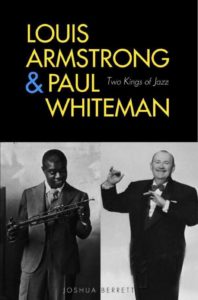
Contemporary scholarship has explored this aspect of Whiteman’s career in depth. A 2024 collection of essays, Beyond the Bandstand: Paul Whiteman in American Musical Culture, edited by W. Anthony Sheppard, confronts the racial implications of Whiteman’s career directly, exploring how his “oversized presence eclipsed Black jazz musicians while his middlebrow music prompted later generations to jettison him from jazz history” . This critical examination recognizes both Whiteman’s genuine appreciation for jazz and his problematic position as a white bandleader who achieved commercial success with a style derived from Black musical innovation.
Filmography and Media Appearances
Whiteman’s popularity extended to the screen, where he appeared in numerous films throughout the 1930s and 1940s .
King of Jazz (1930)
Whiteman’s most significant film appearance was in King of Jazz, a lavish revue musical produced by Universal Pictures. The film, presented in early Technicolor, showcased Whiteman’s orchestra and featured elaborate production numbers designed to display the “King of Jazz” in his element .
Rhapsody in Blue (1945)
Whiteman appeared as himself in this biographical film about George Gershwin, which dramatized the creation and premiere of the Rhapsody in Blue. The film cemented Whiteman’s place in the Gershwin narrative and introduced a new generation to the story of the Aeolian Hall concert .
Other Film Appearances
Whiteman’s filmography includes appearances in The Fabulous Dorseys (1947), a biopic starring Jimmy and Tommy Dorsey; Strike Up the Band (1940); Thanks a Million (1935); Atlantic City (1944); The Great American Broadcast (1941); and Birth of the Blues (1941) .
He also appeared in the short film The Lambertville Story (1949) and various television programs throughout the 1950s .
Radio and Television
Whiteman was an early adopter of radio as a medium for reaching audiences. On January 4, 1928, he and his troupe starred in The Victory Hour, a nationwide NBC broadcast sponsored by Dodge Brothers Automobile Company. The program represented the most widespread radio hookup attempted at that time, featuring Will Rogers as MC from the West Coast and Al Jolson joining from New Orleans .
In the 1950s, Whiteman experienced a revival through television. He hosted Paul Whiteman’s Goodyear Revue, which ran for three seasons on ABC, and in 1954 he hosted the talent contest show On the Boardwalk with Paul Whiteman .
Later Career and Legacy
The Swing Era and Decline
The rise of swing music in the mid-1930s gradually eclipsed Whiteman’s style. The new generation of bandleaders—Benny Goodman, Artie Shaw, Glenn Miller—developed a more rhythmically driving approach that appealed to younger dancers and listeners. Whiteman’s sophisticated, orchestrated style seemed increasingly dated .
By the 1940s, Whiteman had largely retired from active bandleading, though he remained involved in music. He became musical director for the American Broadcasting Company, a position he held into the 1960s . In 1942, he began recording for the newly formed Capitol Records, co-founded by songwriters Buddy DeSylva and Johnny Mercer. Whiteman’s recording of “I Found a New Baby” and “The General Jumped at Dawn” became Capitol’s first single release .
Revival and Final Years
Whiteman experienced a comeback in the 1950s through his television work and occasional performances. He continued to assemble his orchestra for special engagements, including appearances in Las Vegas during the early 1960s .
Paul Whiteman died on December 29, 1967, in Doylestown, Pennsylvania, at the age of 77 .
Critical Reassessment
Whiteman’s legacy has been subject to ongoing reassessment. Critics have often been harsh. Scott Yanow, in his review of Whiteman’s recordings, acknowledges the criticism while offering a more balanced view:
“His superior dance band used some of the most technically skilled musicians of the era in a versatile show that included everything from pop tunes and waltzes to semi-classical works and jazz. … Many of his recordings (particularly those with Bix Beiderbecke) have been reissued numerous times and are more rewarding than his detractors would lead one to believe.”
Perhaps the most significant defense of Whiteman comes from Duke Ellington, one of the most important composers and bandleaders in jazz history. In his autobiography, Ellington wrote:
“Paul Whiteman was known as the King of Jazz, and no one as yet has come near carrying that title with more certainty and dignity.”
Ellington’s endorsement carries particular weight. As a Black bandleader who created some of the most sophisticated music of the twentieth century, Ellington understood both the artistry and the politics of jazz. His acknowledgment of Whiteman suggests a recognition of genuine musical achievement beneath the controversy.
The Arrangers: Ferde Grofé and Others
No discussion of Whiteman’s music would be complete without acknowledging the crucial role of his arrangers, particularly Ferde Grofé. Grofé’s arrangements gave Whiteman’s orchestra its distinctive sound, transforming popular songs and original compositions into sophisticated orchestral performances .
Grofé’s orchestration of Rhapsody in Blue—completed in just eight days—remains his most famous work, but he also arranged countless other pieces for Whiteman and composed original works such as the Grand Canyon Suite and Mississippi Suite, which Whiteman premiered .
Whiteman’s arrangements, numbering over 3000 during his career, represented a massive organizational achievement that required collaboration with numerous arrangers and copyists .
The Racial Complexity of Whiteman’s Legacy
Contemporary scholarship has deepened our understanding of Whiteman’s complex position in American musical history. Beyond the Bandstand: Paul Whiteman in American Musical Culture (2024) brings together essays that explore Whiteman’s impact on popular culture, tracking his work and influence in American marketing, animated films, the Black press, Hollywood, and music publishing .
The contributors confront the uncomfortable truth that Whiteman’s success as a white bandleader performing a style derived from Black musical innovation inevitably contributed to the marginalization of Black jazz musicians. Yet they also acknowledge Whiteman’s genuine commitment to jazz and his efforts to promote Black musicians within the constraints of his era .
This nuanced view recognizes Whiteman neither as a villain who stole Black music nor as an innocent popularizer, but as a figure whose career reflects the complexities of race, commerce, and culture in twentieth-century America.
Paul Whiteman was, by any measure, one of the most influential figures in American popular music. As a bandleader, he built the most successful dance orchestra of the 1920s, created a distinctive style that blended classical orchestration with jazz rhythms, and provided a showcase for some of the era’s finest musicians. As a patron, he commissioned George Gershwin’s Rhapsody in Blue, one of the most important American compositions of the twentieth century. As an entrepreneur, he pioneered radio broadcasting, recorded prolifically, and expanded the commercial possibilities of popular music.
Yet his legacy remains contested. The title “King of Jazz”—conferred by press agents and accepted by the public—has always been more burden than blessing. For critics who define jazz as fundamentally improvisational and rooted in African American culture, Whiteman’s orchestrated, written-arrangement approach represents something other than authentic jazz.
Perhaps the most appropriate assessment acknowledges both Whiteman’s genuine achievements and his limitations. He was a superb orchestra builder, a gifted arranger of popular music, and a visionary who saw possibilities for jazz beyond the dance hall. His recordings with Bix Beiderbecke and other jazz greats reward listening today, and his commission of Rhapsody in Blue alone would secure his place in music history.
But he was not, in the deepest sense, a jazz musician. His music, however sophisticated and beautifully performed, lacked the improvisational spontaneity and rhythmic freedom that defined the music of Louis Armstrong, Duke Ellington, and the Black innovators who created jazz.
Paul Whiteman died on December 29, 1967, but his influence continues to resonate. The debates his career sparked—about authenticity, commerce, race, and artistry in American music—remain relevant. And his greatest contribution, Rhapsody in Blue, continues to delight audiences, its opening clarinet glissando as fresh and thrilling today as it was on that snowy afternoon in 1924.
In the end, Whiteman was what he was: a brilliant bandleader who brought classical discipline to popular music, a white musician who genuinely loved jazz and did as much as he could to promote it within the constraints of his time, and a showman whose “King of Jazz” title, however controversial, captured the imagination of an era. As Duke Ellington said, no one has come near carrying that title with more certainty and dignity .
Additional Information
Selected Discography
- “Whispering” / “The Japanese Sandman” (Victor, 1920)
- “Wang Wang Blues” (Victor, 1920)
- “Three O’Clock in the Morning” (Victor, 1922)
- “Rhapsody in Blue” (with George Gershwin, piano; Victor, 1924, 1927)
- “Valencia” (Victor, 1926)
- “Mississippi Mud” (with Bing Crosby; Victor, 1928)
- “Grand Canyon Suite” (Victor, 1931)
- “Trav’lin’ Light” (with Billie Holiday; Capitol, 1942) Notable Band Members
- Cornet/Trumpet: Bix Beiderbecke, Red Nichols, Bunny Berigan, Henry Busse
- Saxophone/Woodwinds: Frankie Trumbauer, Jimmy Dorsey, Tommy Dorsey
- Trombone: Jack Teagarden, Tommy Dorsey
- Violin: Joe Venuti
- Guitar: Eddie Lang
- Piano: Ferde Grofé, Roy Bargy
- Vocals: Bing Crosby, Al Rinker, The Rhythm Boys, Billie Holiday, Ramona Davies
- Drums: Gene Krupa Selected Broadway Productions
Whiteman provided music for six Broadway shows, though specific titles are less documented than his recording and concert work .
Further Reading
- Beyond the Bandstand: Paul Whiteman in American Musical Culture, edited by W. Anthony Sheppard (University of Illinois Press, 2024)
- Paul Whiteman: Pioneer of American Music (biography)
- The King of Jazz (film, 1930) – available for historical study
- Rhapsody in Blue (film, 1945) – Whiteman appears as himself Awards and Recognition
- 1920s: Press-dubbed “King of Jazz”
- 1972: “Whispering” inducted into Music Hall of Fame
- 1998: “Whispering” inducted into Grammy Hall of Fame
- 2020: “Whispering” selected for National Recording Registry, Library of Congress
Search your favorite sheet music in the Sheet Music Catalog
Paul Whiteman King Of Jazz | Golden Age Swing Big Band Dance Music
Track List:
Paul Whiteman King Of Jazz | Golden Age Swing Big Band Dance Music
Recaptació de fonsClassical Tunes 846 k subscriptors 6.050 visualitzacions 17 d’abr. 2024 #jazz#ClassicalMusic#swing Subscribe and turn on notifications to be alerted of our uploads! https://bit.ly/3l3yzDc00:00:00 Wang-Wang Blues 00:03:22 Everybody Step 00:06:44 I’ll Build a Stairway to Paradise 00:09:53 Way Down Yonder in New Orleans 00:12:36 Nuthin’ But 00:15:21 Just One More Chance 00:18:32 Learn to Do the Strut 00:21:47 San 00:25:00 Dixie’s Favorite Son 00:27:34 Hard Hearted Hannah 00:30:42 Charleston 00:33.24 Footloose 00:36:49 The Rhythm Rag 00:39.22 Charlestonette 00:42:12 Bell Hoppin’ Blues 00:45:17 St. Louis Blues 00:48:33 Wistful and Blue 00:51:14 Muddy Water 00:54:23 I’m Coming Virginia 00:57:28 Side by Side 01:00:28 Love and Kisses 01:03:01 Magnolia
Browse in the Library:
Or browse in the categories menus & download the Library Catalog PDF: