
Come join us now, and enjoy playing your beloved music and browse through great scores of every level and styles!
Can’t find the songbook you’re looking for? Please, email us at: sheetmusiclibrarypdf@gmail.com We’d like to help you!
Table of Contents
Remembering Tete Montoliu, born on this day in 1933
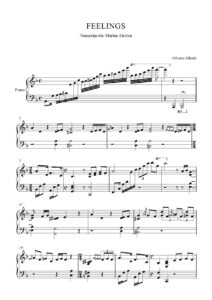
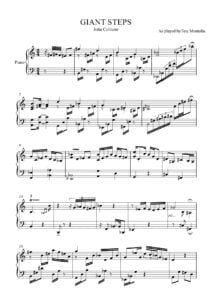
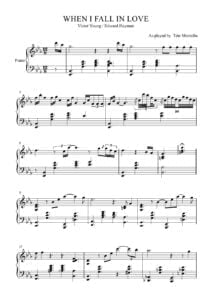

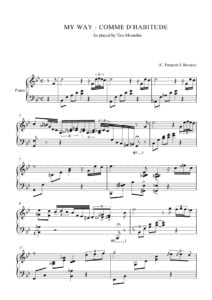


Best Sheet Music download from our Library.
Tete Montoliu: The Blind Virtuoso Who Defined European Jazz
Introduction: A Giant from Barcelona
On March 28, 1933, in the Eixample district of Barcelona, a child was born who would grow to become Spain’s most internationally celebrated jazz musician. Vicente Montolíu Massana—known to the world as Tete Montoliu—overcame the challenge of congenital blindness to develop a piano style that ranked among the finest in jazz history . For over five decades, he served as a bridge between American jazz and European sensibilities, collaborating with legends from Lionel Hampton to Dexter Gordon while maintaining a distinctive Catalan identity that infused his music with uncommon depth.
Unlike Paul Whiteman, the commercially dominant “King of Jazz” who preceded him in this series of birthday tributes, Montoliu represents a different jazz archetype: the virtuoso’s virtuoso, celebrated by fellow musicians rather than mass audiences, whose legacy rests on artistic integrity rather than popular acclaim. Yet both men share the distinction of being born on March 28—Whiteman in 1890, Montoliu in 1933—and both fundamentally shaped how jazz developed beyond American shores.
This article explores the life, music, and enduring legacy of Tete Montoliu—a pianist who transformed personal adversity into artistic triumph, who brought hard bop to Spain and Spanish soul to jazz, and who recorded over 60 albums as a leader while accompanying virtually every major American jazz musician who toured Europe during his long career.
Please, subscribe to our Sheet Music Library.
If you are already a subscriber, please, check our NEW SCORES’ page every month for new sheet music. THANK YOU!
Early Life and Education: A Musical Destiny
A Family of Musicians
Tete Montoliu was born into an environment steeped in music. His father, Vicenç Montoliu, was a professional musician who provided the household with a foundation of technical knowledge and performance experience. His mother, Àngela Massana, was a jazz enthusiast whose passion for the music would prove decisive in shaping her son’s artistic direction .
The nickname “Tete” became his artistic identity throughout his career—a Catalan diminutive that reflected his deep connection to Barcelona and the surrounding region . This regional identity would remain central to his work, influencing everything from his collaborations to his repertoire choices.
Education at the School for Blind Children
Born blind, Montoliu’s first formal musical training began at the private school for blind children he attended from 1939 to 1944. There, under the tutelage of Enric Mas, he began experimenting with the piano and, at age seven, learned to read and write music in Braille—a skill that would prove essential for his development as a musician capable of engaging with the full jazz repertoire .
The challenges of blindness shaped Montoliu’s musicianship in fundamental ways. Without visual access to written scores or the ability to watch other pianists’ hands, he developed extraordinary powers of aural comprehension and memory. He could hear a complex piece of music once and reproduce it with remarkable fidelity—a gift that served him well in the improvisational world of jazz.
In 1944, Montoliu’s mother arranged for Petri Palou to provide him with formal piano lessons, beginning a period of intensive classical training that would establish his technical foundation .
Conservatory Years
From 1946 to 1953, Montoliu studied music at the Conservatori Superior de Música del Liceu in Barcelona, one of Catalonia’s most prestigious musical institutions . During these years, he received rigorous classical training while simultaneously discovering jazz through recordings and, crucially, through personal contact with visiting musicians.
The conservatory environment introduced Montoliu to the formal structures of Western music—harmony, counterpoint, and composition—while his extracurricular explorations introduced him to the improvisational freedom of jazz. This dual education would define his mature style: a classical pianist’s technique deployed in service of jazz expression.
Discovering Jazz
Montoliu’s introduction to jazz came through two formative experiences. First, he listened extensively to recordings of Art Tatum and Duke Ellington, absorbing the harmonic sophistication and rhythmic drive of American jazz . Second, and perhaps more significantly, the saxophonist Don Byas stayed at the Montoliu family home for a period, giving the young pianist direct exposure to a major jazz artist and the opportunity to play in jam sessions that Byas organized .
The influence of Art Tatum—himself a pianist with extremely limited vision—proved particularly significant. Tatum’s technical brilliance, harmonic complexity, and ability to transform popular songs into virtuoso performances set a standard that Montoliu would spend his career pursuing. Yet Montoliu never became a mere imitator; from these early influences, he forged a distinctive voice that reflected both his Catalan heritage and his personal musical vision.
The Early Career: From Barcelona to International Recognition
First Professional Gigs
Montoliu’s professional career began in May 1954, when he joined the orchestra of Venezuelan bolero musician Lorenzo González . This experience provided practical performance skills and introduced him to Latin rhythms that would appear throughout his career—from bossa nova to Afro-Cuban jazz.
At Barcelona’s Hot Club, a vital center for jazz in post-war Spain, Montoliu played frequently, often accompanying visiting musicians and participating in jam sessions. These performances brought him into contact with Don Byas and other expatriate musicians who passed through Barcelona, establishing his reputation among the city’s small but dedicated jazz community.
The Lionel Hampton Discovery
The turning point in Montoliu’s career came on March 13, 1956, when Lionel Hampton heard him playing at a Barcelona pub . Hampton, one of jazz’s most dynamic vibraphonists and bandleaders, immediately recognized Montoliu’s exceptional talent. He invited the young pianist to join his band for a tour of Spain and France, an opportunity that would transform Montoliu from a local musician into an international artist.
During this tour, Montoliu recorded Jazz Flamenco with Hampton’s ensemble—a session that represented his first major recording and established a pattern of combining jazz with Spanish musical elements . The collaboration with Hampton launched Montoliu’s international career and introduced him to audiences far beyond Barcelona.
Early Recordings
Following the Hampton tour, Montoliu recorded with his own ensembles. In 1956 and 1957, he led his “Conjunto Tropical” for Columbia Records in Spain, recording tracks that appeared under the leadership of singer Pilar Morales . These early recordings reveal a pianist already in full command of his instrument, navigating between jazz, Latin rhythms, and popular song with equal facility.
The 1960s: European Consolidation and American Experiments
Copenhagen and the European Jazz Scene
During the 1960s, Montoliu established himself as a fixture of the European jazz circuit, with particular connections to Copenhagen’s thriving jazz scene. Denmark had become a haven for American jazz musicians who found greater acceptance and more consistent work in Europe than in the United States, and Montoliu’s collaborations with these expatriates would define much of his career.
In Copenhagen, Montoliu played with tenor saxophonist Dexter Gordon, recording several sessions in 1963 and 1964 that would eventually be released on the SteepleChase label under titles including Cheese Cake, King Neptune, I Want More, Love for Sale, and Billie’s Bounce . These recordings, some not released until the late 1970s and early 1980s, capture Montoliu in the company of one of jazz’s great tenor players, his piano providing both rhythmic drive and harmonic sophistication.
Collaborations with American Masters
The 1960s brought Montoliu into contact with numerous American jazz musicians who toured Europe or relocated there permanently. He recorded with Roland Kirk in 1963 for the album Kirk in Copenhagen, a session that paired Montoliu’s precise piano with Kirk’s multi-instrumental virtuosity . He worked with trumpeter Kenny Dorham, saxophonists Lucky Thompson and Archie Shepp, and trombonist Albert Mangelsdorff, among others.
Montoliu also maintained a connection to Berlin, where he played frequently with saxophonist Sahib Shihab, altoist Herb Geller, and trumpeter Chet Baker . These performances established his reputation among European audiences while providing the experience of accompanying jazz’s leading improvisers.
The Madrid Years: Whiskey Jazz Club
During the 1960s, Montoliu frequently appeared in Madrid at the Whiskey Jazz Club, performing with saxophonist Pedro Iturralde and singer Donna Hightower . Madrid, despite being the capital of Francisco Franco’s dictatorship, maintained a vibrant jazz scene that provided Montoliu with regular work and artistic stimulation.
The 1967 American Concerts
In 1967, Montoliu traveled to New York City for a series of concerts that represented his most significant American exposure. Working with bassist Richard Davis and drummer Elvin Jones—two of the most in-demand rhythm section players in jazz—Montoliu performed at the Village Gate in April. The concert was recorded for the Impulse! label, one of jazz’s most prestigious imprints, though the recordings have never been released .
This American sojourn represented the culmination of Montoliu’s 1960s activity and demonstrated his ability to perform at the highest level of international jazz. Yet despite the Impulse! session and his growing reputation, Montoliu remained based in Europe throughout his career, recording primarily for European labels and building his audience across the continent.
The 1970s: Maturity and Prolific Recording
The SteepleChase Years
The 1970s marked Montoliu’s emergence as a prolific recording artist in his own right. The Danish label SteepleChase, founded by Nils Winther, became a primary outlet for his work, beginning with sessions recorded in 1971 but released later in the decade. Albums such as That’s All (released 1985), Lush Life (released 1986), and Tootie’s Tempo (released 1979) established Montoliu as a leader capable of sustaining creative work across a range of contexts .
His association with SteepleChase produced some of his finest recordings, including Catalonian Fire (1974), Music for Perla (1974), and the three-volume Catalonian Nights series recorded in 1980 but released over nearly two decades . These albums document Montoliu’s development as a soloist and ensemble player, revealing his deepening engagement with the hard bop tradition.
European Tours
Throughout the 1970s, Montoliu traveled extensively across Europe, performing at festivals and clubs from Scandinavia to Italy. This period solidified his reputation as Europe’s preeminent jazz pianist and brought him into contact with a new generation of European musicians who viewed him as a mentor and inspiration .
Exploring Spanish and Latin Traditions
The 1970s also saw Montoliu exploring the musical traditions of Spain and Latin America more explicitly. In 1973, he recorded Temas Latinoamericanos (Latin American Themes), an album that demonstrated his command of Afro-Cuban rhythms and Brazilian styles . The following year, he collaborated with Jordi Sabatés on Vampyria, an album that pushed into more experimental territory .
These explorations were not mere stylistic exercises. For Montoliu, who remained deeply connected to his Catalan roots, incorporating Spanish and Latin elements represented a way of claiming jazz as a universal language capable of expressing his own cultural identity—not merely imitating American models.
Solo Piano Recordings
Montoliu’s solo piano recordings from this period reveal his complete artistic personality. Catalonian Folksongs (1978), recorded for the Dutch Timeless label, presented his interpretations of ten Catalan songs, most composed by singer-guitarist Joan Manuel Serrat, alongside traditional Catalan melodies . The album demonstrates Montoliu’s ability to find jazz expression in folk material without compromising either the source or the idiom.
Scott Yanow’s review of Catalonian Folksongs for AllMusic captures the album’s achievement: “The melodies are sometimes haunting, sometimes just sentimental, but Montoliu consistently brings out their beauty during his concise interpretations” .
The 1980s: International Recognition
Return to America
In 1979 and 1980, Montoliu returned to the United States for his most sustained American engagement. These visits produced two important recordings: Lunch in L.A. (1979) for the Contemporary label, and the Boston Concert (1980) for SteepleChase . Lunch in L.A. remains notable as one of the few albums Montoliu recorded for an American label during his career.
The American tours brought Montoliu into contact with musicians who had long admired his work from recordings. He performed with vibraphonist Bobby Hutcherson, saxophonists George Coleman and Joe Henderson, trumpeter Dizzy Gillespie, and pianist Chick Corea, among others .
The Soul Note Recordings
During the 1980s, Montoliu began recording for the Italian Soul Note label, producing a series of albums that rank among his most accomplished work. The Music I Like to Play, released in four volumes between 1986 and 1992, served as a comprehensive statement of his artistic philosophy . These albums present Montoliu in solo and small group contexts, performing standards, original compositions, and pieces associated with jazz masters from Duke Ellington to Thelonious Monk.
Face to Face with Niels-Henning Ørsted Pedersen
One of Montoliu’s most celebrated collaborations emerged in 1982 with Face to Face, an album recorded with Danish bassist Niels-Henning Ørsted Pedersen for SteepleChase . The duo format stripped away everything but the essentials, revealing the telepathic communication between two of Europe’s greatest jazz musicians. Their performance on standards like “Stella by Starlight” and “All the Things You Are” represents the summit of Montoliu’s art.
Continuing Collaborations
Throughout the 1980s, Montoliu continued to collaborate with American musicians visiting Europe. He recorded with tenor saxophonist Johnny Griffin, trumpeter Roy Hargrove, drummer Idris Muhammad, and bassist Herbie Lewis. He also worked with the innovative saxophonist Anthony Braxton, demonstrating his openness to avant-garde developments within jazz .
The 1990s: Final Years and Legacy
A Spanish Treasure
In 1991, Montoliu recorded A Spanish Treasure for the American Concord Jazz label, an album that brought his music to new audiences in the United States . The album presented his interpretations of Spanish and Latin American pieces alongside jazz standards, serving as an introduction to his work for listeners unfamiliar with his European recordings.
The Man from Barcelona
The Man from Barcelona, recorded in 1990 for Timeless, stands as one of Montoliu’s definitive statements from his final years . The album, recorded in Lisbon with a rhythm section of bassist George Mraz and drummer Billy Higgins, includes performances of “Concierto de Aranjuez,” “Stella by Starlight,” “Autumn Leaves,” “Django,” and “A Night in Tunisia,” alongside Montoliu’s original blues composition “Please I Like to Be Gentle” .
AllMusic reviewer Ken Dryden praised the album, noting that Montoliu “throws quite a few twists into his complex setting of ‘Stella by Starlight,’ shows off his chops in an intense workout of ‘Autumn Leaves,’ and pulls out all stops with the furious rendition of ‘A Night in Tunisia’” .
The 1996 Tribute
In 1996, shortly before his death, Spain paid public tribute to Montoliu for his fifty-year career in jazz . The recognition came late—Montoliu had spent most of his career working in relative obscurity outside jazz circles—but it acknowledged his status as Spain’s most important jazz musician and a figure of European significance.
Illness and Death
Montoliu died on August 24, 1997, at the Hospital Clínico in Barcelona, at the age of 64, from lung cancer . His death marked the end of an era in European jazz, closing the career of a musician who had bridged the generation of post-war modern jazz with the contemporary scene.
Following his death, the Bienal Premios Tete Montoliu de Jazz was established in his honor, creating a lasting tribute that continues to support jazz in his native Catalonia .
Musical Style and Harmony
Influences and Development
Montoliu’s style developed from a rich array of influences. The foundational influence of Art Tatum—the blind virtuoso whose technical command and harmonic sophistication redefined jazz piano—provided a model of pianistic excellence that Montoliu pursued throughout his career . From Tatum, Montoliu absorbed an approach to harmony that emphasized extended chords, chromatic substitution, and the transformation of simple tunes into complex vehicles for improvisation.
The influence of Bud Powell, the architect of modern jazz piano, shaped Montoliu’s right-hand lines and his approach to bebop phrasing . Powell’s linear conception—melodic improvisation derived from the harmonic structures of popular songs—became central to Montoliu’s playing, particularly in his faster tempos.
Duke Ellington, John Coltrane, and Thelonious Monk also numbered among Montoliu’s acknowledged influences . From Ellington, he absorbed a sense of compositional architecture; from Coltrane, harmonic density and spiritual intensity; from Monk, rhythmic angularity and structural wit.
Technical Characteristics
Critics consistently noted the percussive quality of Montoliu’s playing—a rhythmic drive that gave his performances exceptional swing feel . This percussive approach, combined with extraordinary technical facility, allowed him to navigate complex harmonic progressions at rapid tempos without sacrificing clarity or groove.
Montoliu’s left hand deserves particular attention. Like many jazz pianists, he developed a distinctive approach to left-hand voicings, using rootless chords, stride patterns, and walking bass lines to create a complete pianistic texture. In trio settings, his left hand often interacted with the bassist to create polyrhythmic complexity.
His harmonic language drew on the full vocabulary of modern jazz: altered dominants, tritone substitutions, chord extensions beyond the ninth, and modal structures derived from Miles Davis’s innovations. Yet Montoliu never sacrificed lyricism for harmonic density; his playing always served the melody and the emotional content of the music.
The “Tete Sound”
What distinguished Montoliu from other hard bop pianists was his ability to fuse American jazz vocabulary with European—specifically Catalan—sensibility. This fusion manifested in several ways:
Melodic Treatment: Montoliu’s interpretations of ballads often featured a singing quality that owed something to Catalan folk traditions, with an emphasis on lyrical phrasing and emotional directness .
Rhythmic Approach: While his swing feel was impeccable by American standards, Montoliu occasionally incorporated rhythms derived from Spanish and Latin music, creating a personal synthesis that set his playing apart.
Repertoire: Throughout his career, Montoliu returned to Catalan folk songs and Spanish classical repertoire, treating these pieces with the same improvisational freedom he applied to American standards. His recordings of Joan Manuel Serrat’s songs, in particular, represent a unique contribution to jazz literature .
Best Songs and Compositions
Essential Recordings as Leader
Montoliu’s discography as a leader includes over sixty albums, making selection of “best” works necessarily subjective. However, several recordings stand out as essential listening:
Catalonian Fire (SteepleChase, 1974): A trio date with bassist Niels-Henning Ørsted Pedersen and drummer Albert “Tootie” Heath that captures Montoliu at the height of his powers. The title track and “Blues for Perla” are particularly noteworthy .
Lunch in L.A. (Contemporary, 1979): Montoliu’s American label debut, recorded with bassist John Heard and drummer Billy Higgins. The album presents Montoliu in a relaxed California context, demonstrating his ability to swing in any setting .
Catalonian Folksongs (Timeless, 1978): Montoliu’s solo interpretations of Catalan songs, including Joan Manuel Serrat’s “Cançó de Matinada” and “Manuel,” alongside traditional pieces like “Els Segadors” (The Reapers), the Catalan national anthem .
The Man from Barcelona (Timeless, 1991): A late-career masterpiece featuring Montoliu with George Mraz and Billy Higgins, including definitive versions of “Stella by Starlight,” “Autumn Leaves,” and “A Night in Tunisia” .
Face to Face (SteepleChase, 1984): Duo album with Niels-Henning Ørsted Pedersen demonstrating the telepathic communication between two European masters .
Notable Compositions
While Montoliu was primarily known as an interpreter, he contributed original compositions that deserve recognition:
- “Please I Like to Be Gentle” – A blues composition from The Man from Barcelona that showcases his sense of form and swing
- “Tete’s Blues” – A recurring vehicle for improvisation across his recordings
- “Music for Anna” – A ballad dedicated to a family member, recorded in 1992
- “Cigales al Ven” – An original included on Catalonian Folksongs, demonstrating his ability to write in folk idioms
Notable Sideman Appearances
Montoliu’s work as a sideman documents his interactions with jazz’s leading figures:
- Dexter Gordon: Multiple albums recorded in the 1960s and 1970s, including Cheese Cake, King Neptune, and Bouncin’ with Dex
- Roland Kirk: Kirk in Copenhagen (1963), pairing Montoliu’s precise piano with Kirk’s multi-instrumental virtuosity
- Ben Webster: Ben Webster Meets Don Byas (1968) and Gentle Ben (1972), capturing Montoliu with two tenor saxophone legends
- Archie Shepp: The House I Live In (1963), demonstrating Montoliu’s ability to accompany avant-garde players
- Buddy Tate: Tate a Tete (1975), a rare pairing with the Texas tenor master
- Núria Feliu: Multiple albums with the Catalan singer, including Tot l’Enyor de Dema (1976), representing his deep involvement with local musical culture
Filmography
Unlike Paul Whiteman, who appeared in Hollywood films and hosted television programs, Tete Montoliu’s career was centered entirely on music rather than visual media. No significant filmography exists; his legacy rests on recordings and live performances rather than screen appearances. However, some later recordings were captured on video for European television broadcasts, and documentary footage exists of his performances, though these have not been widely distributed.
Collaborations with Other Jazz Musicians
American Masters
Montoliu’s most significant collaborations were with American jazz musicians who toured Europe. The list reads as a who’s who of jazz:
Saxophonists: Dexter Gordon (multiple sessions), Ben Webster, Don Byas, Lucky Thompson, Roland Kirk, Johnny Griffin, George Coleman, Joe Henderson, Archie Shepp, Charlie Mariano, Peter King, Barney Wilen, and Jesse Davis
Trumpeters: Kenny Dorham, Dizzy Gillespie, Chet Baker
Vibraphonists: Lionel Hampton (his first major collaboration), Bobby Hutcherson
Pianists: Chick Corea, Hank Jones
Bassists: Niels-Henning Ørsted Pedersen, Richard Davis, George Mraz, John Heard, Herbie Lewis
Drummers: Elvin Jones, Albert “Tootie” Heath, Billy Higgins, Idris Muhammad
European Collaborations
Within Europe, Montoliu worked with the continent’s leading jazz musicians:
- Albert Mangelsdorff: The German trombonist, with whom Montoliu frequently performed in Berlin
- Pedro Iturralde: The Spanish saxophonist, with whom Montoliu played regularly in Madrid
- Núria Feliu: The Catalan singer, with whom Montoliu recorded extensively and maintained a long artistic partnership
- Lars Gullin: The Swedish baritone saxophonist
Spanish Connections
Montoliu’s role in Spanish jazz was analogous to Martial Solal’s in French jazz—a foundational figure who established the standards by which later musicians would be judged . He served as a mentor to younger Spanish musicians and his trio with bassist Horacio Fumero became one of the most respected working groups in European jazz .
Influences
Primary Influences
Montoliu’s musical development was shaped by several key figures:
Art Tatum: The most significant influence, particularly in terms of technical command and harmonic sophistication. The fact that Tatum was also blind may have provided Montoliu with a model for how a visually impaired musician could achieve the highest level of pianistic excellence .
Bud Powell: The architect of modern jazz piano, whose right-hand lines and bebop phrasing shaped Montoliu’s approach to improvisation .
Duke Ellington: Not a pianist influence per se, but a compositional and conceptual influence who demonstrated that jazz could achieve the complexity and emotional depth of classical music .
Thelonious Monk: A model of rhythmic individuality and structural wit, though Montoliu’s playing never approached Monk’s radical angularity .
John Coltrane: An influence in terms of harmonic density and spiritual intensity, particularly evident in Montoliu’s more exploratory recordings .
Cultural Influences
Beyond specific musicians, Montoliu drew on his Catalan heritage as a source of musical identity. His interpretations of Catalan folk songs and his engagement with the Nova Cançó movement—the Catalan singer-songwriter movement that emerged during the Franco years—demonstrate a commitment to regional identity that distinguished him from other European jazz musicians .
The dictatorship of Francisco Franco, which ruled Spain from 1939 to 1975, created a complex environment for jazz. The music was often stigmatized as foreign and potentially subversive, yet Montoliu managed to build a career despite these obstacles . His success under difficult circumstances became an inspiration for later generations of Spanish jazz musicians.
Legacy
The International Figure
Tete Montoliu established himself as the first Spanish jazz musician to achieve genuine international recognition . His recordings for labels like SteepleChase, Enja, Soul Note, and Timeless reached audiences across Europe and North America, and his collaborations with American masters placed him on an equal footing with the finest pianists of his generation.
His legacy in this regard is analogous to that of pianists like Martial Solal in France or Joachim Kühn in Germany—musicians who demonstrated that European jazz could achieve the same level of excellence as its American model while maintaining its own cultural identity.
The Spanish Pioneer
Within Spain, Montoliu’s legacy is even more profound. He established jazz as a serious musical form in a country where it had been marginalized during the Franco years . His success demonstrated that Spanish musicians could compete at the highest levels of international jazz, and his willingness to incorporate Catalan and Spanish elements into his playing provided a model for how to reconcile jazz with local identity.
The Bienal Premios Tete Montoliu de Jazz, established after his death, continues his work of supporting jazz in Catalonia .
The Blind Musician
Montoliu’s blindness was a defining aspect of his career, and his achievement carries particular significance in the context of disability studies. As recent scholarship has emphasized, Montoliu’s career challenges assumptions about the relationship between disability and musical achievement . His success demonstrates that blindness need not limit musical expression and that, in some respects, the enhanced aural perception that often accompanies blindness can be an advantage in the improvisational context of jazz.
The European Voice in Jazz
More broadly, Montoliu’s career contributed to the establishment of jazz as a genuinely international art form. By demonstrating that European musicians could achieve the highest level of jazz expression without abandoning their cultural heritage, he helped to transform jazz from a uniquely American music into a global language.
His recordings of Catalan folk songs, in particular, represent a model for how jazz can engage with local traditions without compromising its essential character . This approach—jazz as a universal language capable of expressing any culture’s musical identity—has become increasingly influential in the decades since his death.
Critical Reassessment
In recent years, Montoliu’s legacy has been the subject of renewed scholarly attention. Benjamin Fraser’s book Beyond Sketches of Spain: Tete Montoliu and the Jazz Atlantic (Oxford University Press, 2022) positions Montoliu as a central figure in understanding European jazz and its relationship to American traditions . This academic recognition reflects a growing appreciation for Montoliu’s achievement and a willingness to place him in the first rank of jazz pianists.
Additional Information
Personal Life
Montoliu was married to a woman known as “Khe,” though details of his personal life remain private . He lived most of his life in Barcelona, maintaining connections to his native city even as his career took him across Europe and to North America.
Catalan Identity
Throughout his career, Montoliu maintained a strong Catalan identity. His nickname “Tete” is itself a Catalan diminutive, and his repertoire included numerous Catalan folk songs and compositions by Catalan songwriters . His recording of “Els Segadors” (The Reapers), the Catalan national anthem, on Catalonian Folksongs represents a particularly explicit statement of cultural identity .
The “Tete” Nickname
The origin of Montoliu’s nickname is not definitively documented, but it follows a common Catalan pattern of forming diminutives from first names. Throughout his career, he was known to jazz audiences worldwide simply as “Tete”—a single name that carried the weight of his artistic identity.
Legacy Recordings
Since Montoliu’s death, several archival recordings have been released, including Momentos Inolvidables de una Vida (1997) and Palau de la Musica Catalana (1997) . These releases have continued to expand his discography and introduce his work to new audiences.
Honorary Recognition
In 1983, Montoliu was awarded the Cross of Saint George (Creu de Sant Jordi), one of Catalonia’s highest honors, in recognition of his contributions to music .
Tete Montoliu
Tete Montoliu was more than Spain’s greatest jazz musician. He was a figure whose career embodied the transformation of jazz from a distinctly American art form into a universal musical language capable of expressing the identity of any culture. Born blind in Barcelona in 1933, he overcame personal adversity and political obstacles to achieve international recognition, collaborating with the leading figures of jazz while maintaining a deep connection to his Catalan roots.
His playing combined the technical brilliance of Art Tatum with the harmonic sophistication of Bud Powell, filtered through a sensibility shaped by Catalan folk music and Spanish culture. The result was a voice unlike any other in jazz—percussive yet lyrical, harmonically dense yet emotionally direct, grounded in American traditions yet unmistakably European.
His discography, comprising over sixty albums as a leader and countless sideman appearances, documents a career of extraordinary consistency and growth. From his early recordings with Lionel Hampton through his final albums of the 1990s, Montoliu maintained the highest standards of musicianship while exploring the full range of jazz expression—from hard bop to solo piano, from Latin rhythms to avant-garde explorations.
But Montoliu’s legacy extends beyond his recordings. He established jazz as a serious musical form in Spain, mentored younger musicians, and demonstrated that European jazz could achieve the same level of excellence as its American model. His willingness to incorporate Catalan folk songs and Spanish classical music into his repertoire provided a model for how jazz could engage with local traditions without losing its essential character.
In the years since his death, Montoliu’s reputation has only grown. Scholars have begun to recognize his importance in the development of European jazz, and new generations of listeners have discovered his recordings through reissues and digital distribution. The Bienal Premios Tete Montoliu de Jazz continues his work of supporting jazz in Catalonia, ensuring that his influence will extend far into the future.
As Duke Ellington said of Paul Whiteman—the other March 28 jazz figure—no one has carried a certain title with more certainty and dignity. For Tete Montoliu, the title would be “the man from Barcelona,” the blind pianist who brought the world’s greatest music to his native city and brought his native city’s soul to the world’s greatest music.
Selected Discography
As Leader (Essential Albums)
| Year | Title | Label |
|---|---|---|
| 1965 | A Tot Jazz | Concentric |
| 1968 | Piano for Nuria | SABA |
| 1971 | Body & Soul | Enja |
| 1974 | Catalonian Fire | SteepleChase |
| 1976 | Tête à Tete | SteepleChase |
| 1978 | Catalonian Folksongs | Timeless |
| 1979 | Lunch in L.A. | Contemporary |
| 1980 | Boston Concert | SteepleChase |
| 1982 | Face to Face (with Niels-Henning Ørsted Pedersen) | SteepleChase |
| 1986 | The Music I Like to Play Vol. 1 | Soul Note |
| 1990 | The Man from Barcelona | Timeless |
| 1991 | A Spanish Treasure | Concord Jazz |
As Sideman (Essential Collaborations)
| Year | Artist | Album |
|---|---|---|
| 1956 | Lionel Hampton | Jazz Flamenco |
| 1963 | Roland Kirk | Kirk in Copenhagen |
| 1964 | Dexter Gordon | Cheese Cake / King Neptune / I Want More |
| 1968 | Ben Webster & Don Byas | Ben Webster Meets Don Byas |
| 1975 | Buddy Tate | Tate a Tete |
| 1976 | Dexter Gordon | Bouncin’ with Dex |
| 1976 | Núria Feliu | Tot l’Enyor de Dema |
Further Reading
- Fraser, Benjamin. Beyond Sketches of Spain: Tete Montoliu and the Jazz Atlantic. Oxford University Press, 2022
- Jurado, Miquel. Tete, casi autobiografía. Fundación Autor, Madrid, 2005
- Jakupi, Gani (ed.). Montoliu plays Tete (musical selections by Miquel Jurado). Discmedi, Barcelona, 2006
Awards and Recognition
- 1983: Cross of Saint George (Creu de Sant Jordi), Government of Catalonia
- 1996: Public tribute from Spain for fifty-year career in jazz
- Posthumous: Bienal Premios Tete Montoliu de Jazz established in his honor
Tete Montoliu – Tete Montoliu en San Juan (Audio Oficial)
01. Balada de Pedro 02. Muntaner 83 A 03. T’estimo Tant 04. Waltz For Tete 05. Montserrat 06. Balada de la mañana 07. Pont Aeri-Acuarela 08. Blues del San Juan Evangelista
Tete Montoliu Trio – The Shadow Of Your Smile
Tete Montoliu (p), Horacio Fumero (b), Peer Wyboris (d).