| Community Musicians, building a worldwide Community Music. | |
| All the music you want to play on one site. Sharing the world’s best Contemporary, jazz, Popular, and classical Sheet Music. | |
| Scores: >15,000 (active and growing every day), over 231,000 pages All genres and Categories: Jazz & Blues, Rock & Pop, classical & contemporary, film & musicals’ scores; books & biographies; methods, études, and exercises; play along background MP3 audios & PDFs for Jazz & Rock Music Access and benefits: Subscription fee: $15.99 one-time payment, valid for lifetime (Secure Payment via Paypal, or Stripe) How to join the Sheet Music Library 🔍 Search in the Library Catalog — FAQs — Join us |
Table of Contents
Happy birthday, Eric Clapton, born on this day in 1945.
Who is Eric Clapton?
Eric Clapton: God, Slowhand, and the Architect of Blues Rock
Eric Patrick Clapton, CBE (born 30 March 1945), is a name synonymous with the electric guitar . For over six decades, he has been a titan of popular music, a virtuoso whose career has not only spanned the history of rock but actively shaped it . From his early days as a purist blues guitarist in the British Invasion to his status as a multi-platinum solo artist, Clapton’s journey is one of immense musical achievement, personal tragedy, and extraordinary reinvention. Uniquely, he is the only performer to have been inducted into the Rock and Roll Hall of Fame three times: once as a member of The Yardbirds, once with the supergroup Cream, and once as a solo artist . Widely regarded as one of the most important and influential guitarists in history, Rolling Stone magazine ranked him number two on its list of “100 Greatest Guitarists of All Time” in 2003.
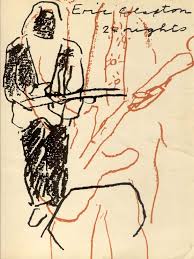


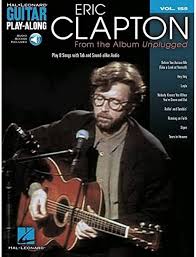
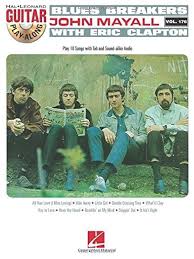
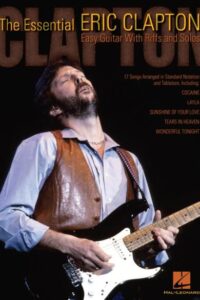
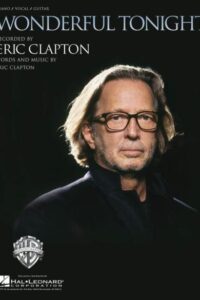
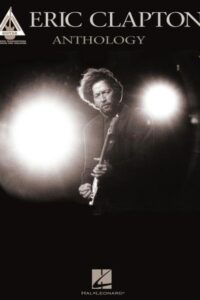
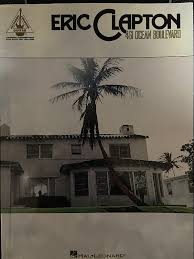
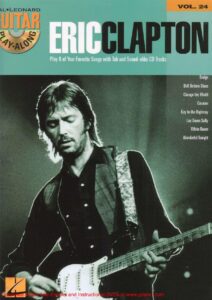



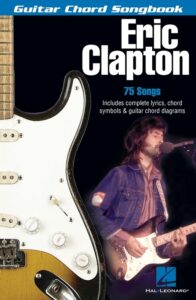


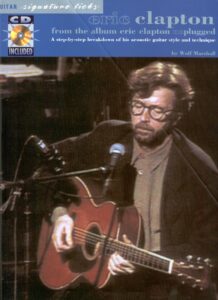

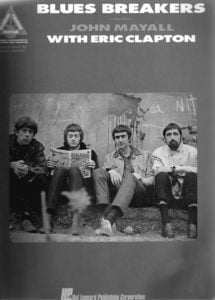
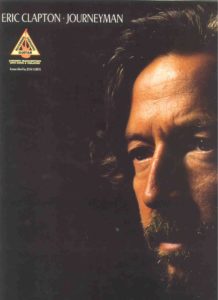

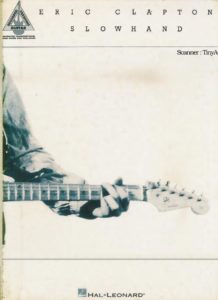
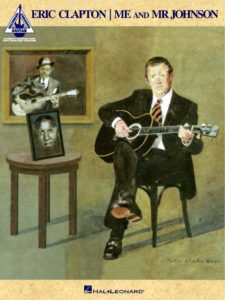
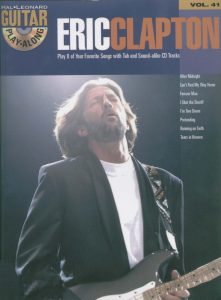
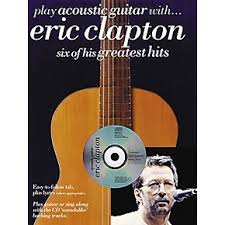
Best Sheet Music download from our Library.
Biography: From Surrey to Superstardom
Please, subscribe to our Sheet Music Library.
If you are already a subscriber, please, check our NEW SCORES’ page every month for new sheet music. THANK YOU!
Early Life and the Birth of an Obsession
Eric Patrick Clapton was born in Ripley, Surrey, England, on March 30, 1945 . His early life was marked by complexity and secrecy. His mother, Patricia, was only 16 when he was born, and his father, a Canadian soldier named Edward Fryer, had already returned to his wife in Canada after the war. Unable to bear the social shame of raising an illegitimate child in post-war Britain, Patricia left Eric to be raised by his grandparents, Rose and Jack Clapp (Rose having been previously married to a man named Clapton). For much of his childhood, Clapton believed his grandparents were his parents and his biological mother was his sister, a truth his grandmother did not reveal until he was nine years old .
A polite and above-average student, Eric Clapton’s life changed forever when he saw rock and roll pioneer Jerry Lee Lewis on television, sparking a desire to learn the guitar . His obsession with the instrument, particularly the blues, grew to the point where he was expelled from the Kingston College of Art for playing guitar in class . He began working as a labourer, spending his free time practicing, eventually joining local bands like The Roosters and Casey Jones & The Engineers .
The Yardbirds, The Bluesbreakers, and “Clapton is God”
In 1963, Clapton joined The Yardbirds, a burgeoning R&B band in London. It was here he earned the nickname “Slowhand.” While one story attributes the name to the audience’s slow handclap while he changed a broken string—a common occurrence due to his forceful string-bending—others attribute it to his relaxed stage demeanor . Despite the band’s success, Clapton was growing frustrated with their shift towards a more pop-oriented sound. His commitment to the blues led him to leave in 1965 .
His departure marked a pivotal moment. He joined John Mayall’s Bluesbreakers, a band that served as a finishing school for British blues guitarists. It was here that Clapton’s talent truly exploded. His work on the 1966 album Blues Breakers with Eric Clapton (often called the “Beano” album for the cover of Clapton reading a Beano comic) is considered a landmark recording. His ferocious, fluid, and deeply expressive playing set a new standard for the electric blues guitar. It was during this period that fans in London began spray-painting the now-legendary slogan “Clapton is God” on walls, a testament to his growing status as a cult hero .
Cream: The First Supergroup
In mid-1966, Clapton left the Bluesbreakers to form what would become rock’s first “supergroup”: Cream, with bassist Jack Bruce and drummer Ginger Baker . The band’s name reflected their status as the top of the session musician hierarchy in England. Cream was a powerhouse, fusing blues, psychedelia, and hard rock with extended improvisations that became the blueprint for the power trio format . They produced iconic hits like “Sunshine of Your Love,” “White Room,” and “Crossroads”—a high-octane reinterpretation of the Robert Johnson blues standard that showcased Clapton’s rapid-fire pentatonic runs and mastery of string bending . It was during this period that Clapton developed his signature “woman tone,” a thick, vocal-like sound achieved by playing a Gibson Les Paul or SG through a cranked Marshall amplifier with the tone control rolled back . Despite their immense popularity and influence, Cream was short-lived, plagued by internal tensions between Bruce and Baker and the members’ escalating drug use, leading to their breakup in 1969 .
Blind Faith, Delaney & Bonnie, and Derek and the Dominos
After Cream, Clapton formed Blind Faith with Steve Winwood, Ginger Baker, and Rick Grech. The supergroup released one self-titled album and toured before dissolving . Seeking a simpler, more roots-oriented sound, Clapton joined Delaney & Bonnie and Friends as a sideman, a move that helped him shed the “guitar god” persona and rediscover the joy of ensemble playing .
In 1970, he formed Derek and the Dominos with Bobby Whitlock (keyboards/vocals), Carl Radle (bass), and Jim Gordon (drums)—all alumni of Delaney & Bonnie . The band’s only studio album, Layla and Other Assorted Love Songs, was a monumental achievement. The title track, “Layla,” was a tortured, impassioned plea written for Pattie Boyd, the wife of his close friend, George Harrison . Clapton’s unrequited love for Boyd fueled the album’s raw emotional power, and the song’s iconic guitar riff and coda, featuring Duane Allman of the Allman Brothers Band on slide guitar, cemented its place in rock history . The Dominos, like Cream, were undone by internal conflicts and the members’ struggles with heroin addiction, leading to their dissolution in 1971 .
Solo Success and Personal Turmoil
Clapton’s addiction deepened, leading to a period of seclusion. He made a triumphant return in 1974 with the album 461 Ocean Boulevard, which featured his hit reggae-infused cover of Bob Marley’s “I Shot the Sheriff” . This marked the beginning of his successful solo career. Albums like Slowhand (1977), featuring the enduring love song “Wonderful Tonight” (written for Pattie Boyd), established him as a commercial powerhouse.
He married Pattie Boyd in 1979 after her divorce from Harrison, though their relationship was strained by Clapton’s alcoholism, and they divorced in 1989 . The early 1990s brought a devastating tragedy: on March 20, 1991, his four-year-old son, Conor (from a relationship with Italian actress Lory Del Santo), fell from the 53rd-floor window of a New York City apartment . Clapton channeled his profound grief into the song “Tears in Heaven,” a hauntingly beautiful acoustic ballad that became his best-selling single . The song and the Unplugged album (1992), on which it appeared, were massive successes, winning multiple Grammy Awards and introducing Clapton to a new generation of fans .
Later Career and Legacy
In the following decades, Clapton continued to explore his blues roots, releasing albums dedicated to his idols like Robert Johnson (Me and Mr. Johnson, 2004) and collaborating with fellow legend B.B. King (Riding with the King, 2000) and his long-time influence J.J. Cale (The Road to Escondido, 2006) . After decades of struggle, he overcame his addictions to alcohol and heroin, becoming a pillar of the recovery community and founding the Crossroads Centre, a drug and alcohol rehabilitation facility in Antigua . In 2002, he married Melia McEnery, with whom he has three daughters.
Eric Clapton – Wonderful Tonight [Official Live]
Music Style, Improvisational Licks, and Harmony
Clapton’s musical style, though rooted in the blues, has proven remarkably versatile, encompassing psychedelic rock, hard rock, pop, and reggae .
The “Woman Tone” and Blues Phrasing
Perhaps Clapton’s most famous sonic innovation is the “woman tone.” As described by guitar instructor Jeff Massey, this is a thick, sustaining, and vocal-like sound achieved by playing a Gibson Les Paul or SG through a cranked Marshall amplifier with the guitar’s tone control rolled all the way off . This sound defined his Cream-era solos, giving them a unique, singing quality.
His approach to improvisation is a masterclass in blues-rock vocabulary. In his playing, especially with Cream, he demonstrated a pure talent for turning a simple pentatonic or blues scale into an all-out blazing guitar solo . Live performances often saw the band stretch three-minute studio tracks into 20-minute improvisational journeys . Key techniques that define his style include:
- String Bending: A hallmark of Clapton’s expressive, vocal-like phrasing, used to add emotional depth and dynamic intensity .
- Vibrato: A rich, singing vibrato that gives life and personality to sustained notes .
- Bluesy Bends: Microtonal nuances that define the blues feel and are central to his soulful style .
- Hammer-ons, Pull-offs, and Slides: Used to create fluid, fast-paced licks and lyrical phrasing .
- Double Stops: Intervals of two notes played simultaneously to add harmonic depth and rhythmic complexity .
Chord Progressions and Harmony
Clapton’s harmonic language is predominantly rooted in the blues and traditional rock. He often utilizes standard 12-bar blues forms but frequently incorporates substitutions and modulations. His use of major and minor pentatonic scales, often mixed with blues notes (flattened fifth), forms the core of his melodic and improvisational vocabulary. Songs like “Tears in Heaven” showcase his ability to write sophisticated, emotional chord progressions that blend major and relative minor tonalities, moving between C, G, Em, and F to create a poignant, yearning effect . His soloing over these changes is characteristically melodic, prioritizing emotional delivery over technical flash.
Relationship with Other Artists
Clapton’s career is a map of rock history, defined by his collaborations with virtually every major artist of his era.
- George Harrison: Their friendship was one of the most significant in rock. Clapton played the iconic lead guitar on “While My Guitar Gently Weeps” for The Beatles’ White Album in 1968 . He later performed on Harrison’s landmark solo album All Things Must Pass and was a key figure at the Concert for Bangladesh . Their friendship survived the romantic triangle with Pattie Boyd, with Clapton later helping organize the Concert for George following Harrison’s death in 2001 .
- Jimi Hendrix: A friendly rival and contemporary, Hendrix’s explosive arrival in London in 1967 pushed Clapton to new creative heights. They shared the stage on several occasions .
- Bobby Whitlock: The co-writer of six songs on Layla, Whitlock was a crucial collaborator during Clapton’s peak creative period, co-writing classics like “Bell Bottom Blues” .
- B.B. King: Clapton revered King as a mentor and father figure. Their mutual admiration culminated in the collaborative album Riding with the King .
- Other Collaborators: Clapton played with John Lennon in the Plastic Ono Band, recorded with Roger Waters on The Pros and Cons of Hitch Hiking, and has worked extensively with artists like Phil Collins, Stephen Stills, and Jeff Beck .
Influences
Clapton’s primary and most profound influence is the blues. He was a key figure in the British blues revival of the 1960s, acting as a conduit for bringing the music of American bluesmen to a global audience. His earliest influences included the raw, energetic rock and roll of Jerry Lee Lewis, but he quickly gravitated to the deeper emotional resonance of blues artists like:
- Robert Johnson: The legendary Delta bluesman whose song “Crossroads” became a cornerstone of Clapton’s repertoire .
- B.B. King: Whose fluid, single-note style and impeccable vibrato are echoed throughout Clapton’s playing.
- Muddy Waters, Howlin’ Wolf, and Freddie King: Other titans of Chicago and Delta blues whose sound Clapton absorbed and amplified through his Marshall stacks .
Legacy and Works
Eric Clapton’s legacy is that of a survivor and an innovator. He didn’t just play the blues; he helped popularize it, setting a template for blues-rock guitarists that persists to this day. His influence is audible in the playing of Jeff Beck, Jimmy Page, Brian May, Mark Knopfler, and countless others .
Discography (Selected Highlights)
With The Yardbirds:
- Five Live Yardbirds (1964)
- For Your Love (1965)
With John Mayall & the Bluesbreakers:
- Blues Breakers with Eric Clapton (1966)
With Cream:
- Fresh Cream (1966)
- Disraeli Gears (1967)
- Wheels of Fire (1968)
- Goodbye (1969)
With Blind Faith:
- Blind Faith (1969)
With Derek and the Dominos:
- Layla and Other Assorted Love Songs (1970)
Solo:
- Eric Clapton (1970)
- 461 Ocean Boulevard (1974)
- Slowhand (1977)
- Backless (1978)
- Unplugged (1992)
- From the Cradle (1994)
- Pilgrim (1998)
- Riding with the King (with B.B. King, 2000)
- Reptile (2001)
- Me and Mr. Johnson (2004)
Most Known Compositions and Performances
- “Layla”: The quintessential Clapton track, a dual-guitar masterpiece of unrequited love .
- “Tears in Heaven”: A tender, heartbreaking ballad that captured global grief and won three Grammy Awards .
- “Wonderful Tonight”: A standard of romantic pop-rock, written for Pattie Boyd .
- “Crossroads” (Live): A definitive live performance with Cream that set the bar for blues-rock improvisation .
- “Sunshine of Your Love”: Cream’s signature song, built on one of rock’s most recognizable bass riffs .
Works on Films
Clapton’s music has been featured in numerous films. His most notable contributions include:
- Rush (1991): The soundtrack, co-written with director Lili Fini Zanuck, featured “Tears in Heaven.”
- Runaway Bride (1999): Contributed the song “Blue Eyes Blue” to the soundtrack .
- Goodfellas (1990): Features the “Layla” coda in a famous montage sequence.
- The Last Waltz (1978): Appeared with The Band in Martin Scorsese’s iconic concert film .
Documentaries
Clapton’s life has been the subject of several documentaries, most notably:
- Eric Clapton: Life in 12 Bars (2017): Directed by Lili Fini Zanuck, this deeply personal documentary tells Clapton’s story through his own words, exploring his traumatic childhood, addiction, the loss of his son, and how he found healing in music. It features extensive interviews with Clapton, his family, and musical contemporaries like B.B. King and George Harrison .
Eric Clapton’s career is a testament to the enduring power of the blues and the electric guitar. From the streets of Surrey to the Rock and Roll Hall of Fame, his journey has been marked by extraordinary artistic peaks, harrowing personal lows, and an unwavering commitment to his craft. As the biographer Philip Norman wrote, “Clapton is God” is a consensus that, remarkably, still holds after sixty years .
Search your favorite sheet music in the Sheet Music Catalog
The Guitars of Eric Clapton: A Comprehensive Guide
Eric Clapton’s career spans over six decades, and his choice of guitars has been as varied and influential as his music. From his early days with The Yardbirds to his current status as a guitar icon, Clapton’s instruments have shaped not only his sound but also the broader landscape of popular music. Here is a detailed exploration of the guitars that have defined “Slowhand’s” legendary career.
Browse in the Library:
Or browse in the categories menus & download the Library Catalog PDF:
Quick Reference: Clapton’s Most Iconic Guitars
| Guitar | Era | Significance |
|---|---|---|
| 1960 Kay Jazz II K775 | 1962-1963 | First electric guitar, gifted by his grandmother |
| 1963 Fender Telecaster | 1963-1965 | Main guitar with The Yardbirds; inspired his “Slowhand” nickname |
| 1960 Gibson Les Paul Standard (“Beano”) | 1965-1966 | The legendary “Beano” Les Paul that defined British blues rock |
| 1964 Gibson ES-335-TDC | 1965-1970s | Cherry red semi-hollow; used in Yardbirds and Cream; sold for $847,500 |
| 1964 Gibson SG (“The Fool”) | 1967-1968 | Psychedelic painted guitar from Cream era |
| 1956 Fender Stratocaster (“Brownie”) | 1967-1970 | Used on Layla and Other Assorted Love Songs; sold for $497,500 |
| Composite Fender Stratocaster (“Blackie”) | 1970-1985 | Most famous Clapton guitar; built from three Strats; sold for $959,500 |
| Fender Eric Clapton Signature Stratocaster | 1988-present | First signature model guitar ever released by Fender |
| 1939 Martin 000-42 | 1992 | Used on MTV Unplugged; sparked acoustic guitar revival |
The Early Years: First Guitars and The Yardbirds
1960 Kay Jazz II K775 (1962-1963)
Clapton’s journey began with this humble instrument. His grandmother purchased it for approximately $10 from a used shop, marking the start of his guitar-playing career . The Kay was a versatile guitar featuring four control knobs and impressive durability for its price point. Clapton used this guitar during his first band, The Roosters, before upgrading to more professional instruments .
1963 Fender Telecaster (1963-1965)
When Clapton joined The Yardbirds, the band’s management provided him with a cherry red 1963 Fender Telecaster featuring a rosewood fingerboard . This guitar became his main instrument throughout his Yardbirds tenure. Interestingly, this period gave birth to his famous nickname “Slowhand”—when Clapton would break a string during performances, he would remain on stage to change it, prompting an impatient audience to give him a “slow handclap” .
When Clapton left The Yardbirds, he reportedly returned the Telecaster to the band’s manager, and it was later used by his successor, Jeff Beck .
The Gibson Era: Bluesbreakers and Cream
1960 Gibson Les Paul Standard (“The Beano” Les Paul) (1965-1966)
This is arguably one of the most significant guitars in rock history. Clapton acquired this sunburst Les Paul Standard while playing with John Mayall’s Bluesbreakers and used it on the landmark album Blues Breakers with Eric Clapton .
The nickname “Beano” came from the album cover, which featured Clapton reading a Beano comic book . The guitar’s thick, sustaining tone through a cranked Marshall amplifier effectively invented the overdriven blues-rock guitar sound that countless players would chase for decades .
There is some debate among guitar historians whether this was a 1959 or 1960 model . Regardless, the “Beano” Les Paul became so influential that it sparked Gibson’s decision to put the Les Paul model back into production in 1968 after discontinuing it in 1960 .
Tragically, this guitar was stolen shortly after the recording sessions and has never been recovered .
1964 Gibson ES-335-TDC (1965-1970s)
Clapton purchased this cherry red semi-hollow body guitar during his Yardbirds days, and it became the oldest guitar in his collection . He was drawn to this model after seeing his blues hero Freddie King playing one on an album cover .
Clapton described the ES-335 in his own words:
“This was the instrument of my dreams… It was a rock guitar, a blues guitar—the real thing. It had all the finish you would ever want and all the credibility a guitar needed at that time.”
The guitar featured a double cutaway thinline semi-hollow maple body with f-holes and a maple center block, finished in cherry red . It had a mahogany neck with a rosewood fingerboard featuring block inlays, and was equipped with two humbucking pickups .
This guitar served Clapton for many years, appearing on recordings with both The Yardbirds and Cream. In 2004, it was sold at Christie’s auction for an astounding $847,500, setting a world auction record for a Gibson guitar at that time .
1964 Gibson SG (“The Fool”) (1967-1968)
During his Cream years, Clapton became known for his visually striking instruments, and none was more memorable than this 1964 Gibson SG . The guitar was painted in vibrant psychedelic colors by the Dutch art collective known as The Fool, who were inspired by the paint job on George Harrison’s Mini Cooper .
This SG featured Alnico III humbuckers, an Indian rosewood fingerboard, and a lightweight mahogany body and neck . It became Clapton’s primary guitar during Cream’s most creative period, heard on albums including Disraeli Gears and Wheels of Fire .
After Clapton left the guitar at George Harrison’s apartment, it passed through several owners. Since 1971, American multi-instrumentalist Todd Rundgren has owned and used this historic instrument .
1958 Gibson Les Paul Custom (1967-1968)
Clapton acquired this three-pickup Les Paul Custom in 1967 and used it during recording sessions for Cream’s landmark Disraeli Gears album . This guitar had a distinctive black finish with gold hardware and three humbucking pickups—a configuration that gave Clapton additional tonal options.
In 2025, the Gibson Custom Shop released an extremely limited edition replica of this instrument (only 150 worldwide), featuring forensic-level detail including 3D scanning of the original guitar (now owned by Albert Lee) and Murphy Lab aging to recreate the exact patina .
1957 Gibson Les Paul “Lucy” (1966-1968)
This gold-top Les Paul became part of one of rock’s most famous stories. Clapton played “Lucy” throughout the Cream years before giving it to his close friend George Harrison . The guitar was reportedly part of a complicated personal exchange related to Clapton’s infatuation with Harrison’s then-wife, Pattie Boyd .
Harrison played “Lucy” throughout his career with The Beatles, and the guitar remained in his possession until his death. The instrument featured a maple top with gold finish, a mahogany body, and PAF humbucker pickups .
Other Cream-Era Guitars
Gibson Firebird I (1968): Clapton experimented with this distinctive reverse-body guitar, appreciating its powerful mini-humbuckers and straightforward sound . He used it frequently in 1968 before retiring it as a backup .
Gibson “Korina” Explorer (1970s): Though more commonly associated with later rock players, Clapton owned one of these rare guitars and used it as a backup instrument until 1977, when he gifted it to Jr. Marvin .
The Stratocaster Revolution: Brownie and Blackie
1956 Fender Stratocaster “Brownie” (1967-1970)
Clapton’s move toward Fender Stratocasters marked a significant turning point in his career. He purchased “Brownie” at London’s Sound City shop on May 7, 1967, while touring with Cream, for approximately $400 .
Brownie featured:
- An alder body with a two-tone sunburst finish
- A maple neck with black dot inlays and skunk-stripe routing
- Three single-coil pickups
- Serial number 12073
This guitar appeared on Clapton’s self-titled debut solo album (visible on the cover) and became most famous for its use on Layla and Other Assorted Love Songs with Derek and the Dominos . Clapton also used Brownie during the 1967 Cream US tour and various live shows with Derek and the Dominos .
In 1999, Clapton auctioned Brownie through Christie’s in New York to benefit his Crossroads Centre treatment facility. It sold for $497,500, becoming the most expensive guitar ever sold at that time . The guitar now resides at the Experience Music Project in Seattle, Washington .
The Creation of “Blackie” (1970-1985)
Perhaps the most famous guitar associated with Clapton, Blackie represents a perfect example of practical customization. While on tour with Derek and the Dominos, Clapton visited Sho-Bud Music in Nashville and purchased six mid-1950s Stratocasters for approximately $100 each .
Upon returning to the UK, he gave one guitar each to George Harrison, Pete Townshend, and Steve Winwood . From the remaining three, Clapton selected the best components:
- The body from a black 1956 Stratocaster
- The neck from a 1957 Stratocaster (chosen for its comfortable feel)
- The electronics-loaded pickguard from another Stratocaster (chosen for its superior sound)
The resulting composite instrument became Clapton’s main stage guitar throughout the 1970s and early 1980s, appearing on countless tours and recordings . He first used Blackie live in 1973, and it remained his primary instrument until its retirement due to heavy wear in 1985 .
In 2004, Blackie was sold at Christie’s auction for $959,500, with all proceeds benefiting the Crossroads Centre .
Fender Eric Clapton Signature Stratocaster (1988-present)
In 1985, Fender approached Clapton about creating a signature model—the first such collaboration in the company’s history . Clapton specified two key requirements:
- A soft “V”-shaped neck, inspired by his Martin acoustic guitars
- A “compressed” sound from the pickups to achieve thicker tones
Fender built two prototypes: one with measurements taken from Blackie’s neck and another with a slightly softer V shape, which Clapton ultimately preferred .
Key Features of the Signature Stratocaster:
- Select alder body
- One-piece soft “V”-shaped maple neck with 22 vintage-style frets and 9.5″ radius
- Active MDX mid-boost circuit providing up to 25 dB of boost at 500 Hz
- TBX tone control for extended tonal range
- “Blocked” synchronized tremolo (a piece of wood wedged into the bridge cavity since Clapton never used the tremolo arm)
Pickup Evolution:
- 1988-2000: Gold Lace Sensor pickups
- 2001-present: Fender Vintage Noiseless pickups (Clapton began using these on his personal guitars in March 2000)
The Eric Clapton Signature Stratocaster remains in production today and is available in various colors including Pewter, Torino Red, Black, Olympic White, and limited edition finishes .
Custom Shop Variations
Over the years, the Fender Custom Shop has produced numerous special versions of Clapton’s signature model:
Gold Leaf Stratocaster (1996): Built for Clapton during Fender’s 50th anniversary, featuring gold-plated hardware and a distinctive gold leaf finish. Clapton used it during his 1997 Far-Eastern tour before it sold at auction for $455,000 .
“Crashocasters” (2001-2004): A series of Stratocasters hand-painted by New York graffiti artist John “Crash” Matos. One example, “Crash-3,” sold at Christie’s in 2004 for $321,000 .
Crossroads “Sun Strat” (2007): A limited run of 100 guitars featuring a “Crossroads Antigua” smiling sun graphic designed by Clapton himself .
EC Grey and Daphne Blue (2009): Limited editions replicating guitars Clapton used during his 2006-2009 world tours .
Acoustic Guitars: The Martin Partnership
1939 Martin 000-42
This pre-World War II Brazilian rosewood guitar became the centerpiece of Clapton’s acoustic sound after his legendary MTV Unplugged performance in 1992 . The rare 000-42 model was a limited production line even in its time, making it exceptionally valuable .
Clapton’s Unplugged performance, featuring this guitar, sparked a massive resurgence of interest in acoustic music and Martin guitars specifically . The stripped-down version of “Layla” performed with this instrument became just as iconic as the original electric version .
Martin Signature Models
Following the Unplugged phenomenon, Martin released several Clapton signature models:
000-42EC (1995): The first Clapton signature model, limited to 461 guitars (matching the title of his 461 Ocean Boulevard album). This luxurious model sold out immediately at The NAMM Show .
000-28EC (1996): A more affordable follow-up that became one of Martin’s most enduring artist collaborations. The prototype of this guitar—which Clapton called “pretty much the best acoustic guitar he ever played”—is now housed in the Martin Guitar Museum .
The prototype features a Modified V neck profile (which Clapton prefers even on his electric guitars), a 1¾-inch nut width, 2¼-inch string spacing at the bridge, a Sitka spruce top with East Indian rosewood back and sides, and a striking sunburst finish with herringbone top trim .
Bellezza Nera (2008): A custom black acoustic designed by Clapton and his friend Hiroshi Fujiwara, featuring pearl inlays with both men’s initials .
Other Acoustic Instruments
Guild Acoustic Guitars (1970s-1980s): During this period, Clapton endorsed and used Guild acoustics .
Gibson L-5: Clapton occasionally plays this jazz-oriented electric-acoustic model for certain numbers in concert .
Resonator Guitars: Clapton owns an old resonator guitar that is a composite of two instruments—a Dobro neck fitted to an unknown body type .
Rare and Notable Appearances
Danelectro 3021 (1969)
This guitar remains something of a mystery. Clapton was photographed with a distinctive splatter-effect Danelectro 3021 during a Blind Faith rehearsal in 1969, but there is no confirmation he actually used it for recordings or performances . The guitar featured an eye-catching paint job in yellow, orange, red, and blue, though its playability was questionable due to a painted fretboard .
Gibson Byrdland (1971)
Clapton has cited this guitar as one of his favorites, praising its massive sound and sturdy construction . The earliest documentation of Clapton playing a Byrdland comes from the 1971 Concert for Bangladesh organized by George Harrison and Ravi Shankar. He used it during the first of two performances at that historic charity event .
Clapton’s Guitar Philosophy
Clapton’s approach to guitars has been remarkably practical and artistically focused. As he explained about his early collection habits:
“Maybe once a month throughout The Yardbirds I bought a guitar. The unfortunate thing was I didn’t keep them. In those days, I was less of a collector. I didn’t have the money or facilities. I wasn’t really sure where I was living half the time, and it would have been cumbersome to have had more than two or three guitars.”
His preference for worn-in necks reveals his focus on playability: he preferred to buy necks with worn fretboards rather than new ones, believing that a worn neck had obviously been favored by players and was likely to play very well .
Of the Fender Stratocaster, Clapton has said:
“I don’t think there’s anything on the Stratocaster that doesn’t come from pure logic. I would challenge anybody to come up with a better design for a guitar. The Stratocaster is as good as it gets, isn’t it?”
The Crossroads Legacy
Many of Clapton’s most famous guitars—including Brownie, Blackie, and his 1964 ES-335—have been sold at auction to benefit the Crossroads Centre, a drug and alcohol treatment facility Clapton founded in Antigua in 1997 . These auctions have raised millions of dollars for addiction treatment, reflecting Clapton’s commitment to using his musical legacy to help others.
In describing his relationship with his instruments, Clapton offered this poignant reflection:
“One by one these guitars were the chapters of my life. They belong to a very well-loved family.”
Eric Clapton’s guitars represent not just a collection of instruments but a chronicle of modern popular music. From the stolen “Beano” Les Paul that defined British blues-rock to the homemade “Blackie” that became rock’s most famous Stratocaster, each guitar marks a chapter in Clapton’s extraordinary career. His partnership with Fender produced the company’s first-ever signature model, while his acoustic work with Martin sparked a global resurgence of interest in fingerstyle blues.
Whether playing a psychedelic SG with Cream, a sunburst Stratocaster with Derek and the Dominos, or a vintage Martin on an intimate stage, Clapton’s guitar choices have consistently demonstrated his unwavering commitment to tone, feel, and musical expression above all else.
Eric Clapton – Tears In Heaven (Unplugged)
Browse in the Library:
Or browse in the categories menus & download the Library Catalog PDF: