Come join us now, and enjoy playing your beloved music and browse through great scores of every level and styles!
Can’t find the songbook you’re looking for? Please, email us at: sheetmusiclibrarypdf@gmail.com We’d like to help you!
Table of Contents
Happy birthday, Norah Jones, born on this day in 1979.
Norah Jones: The Voice That Redefined a Generation
Norah Jones is one of the most distinctive and successful artists of the 21st century, a singer-songwriter and pianist whose debut album Come Away with Me unexpectedly became a global phenomenon in 2002 . With a voice that Billboard has called “enchanting” and a musical style that defies easy categorization, she has sold over 53 million records worldwide and won ten Grammy Awards . She was named the top jazz artist of the 2000s decade by Billboard and ranked 60th on the magazine’s list of artists of the decade . This exhaustive article explores her life, music, collaborations, and enduring legacy.




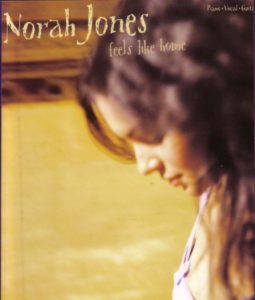

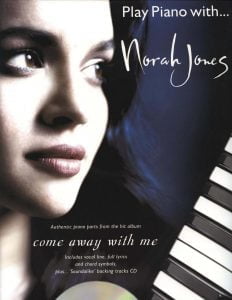
Best Sheet Music download from our Library.
Biography: From Texas Roots to Global Stardom
Early Life and Musical Foundations
Norah Jones was born Geethali Norah Jones Shankar on March 30, 1979, in Manhattan, New York City . She is the daughter of Indian sitar virtuoso and composer Ravi Shankar and American concert producer Sue Jones . Her heritage is a blend of Indian Bengali and American—a background that would later inform her artistic openness to diverse musical traditions. She is the half-sister of fellow musicians Anoushka Shankar and Shubhendra Shankar.
When her parents separated in 1986, seven-year-old Norah moved with her mother to Grapevine, Texas, where she would spend most of her childhood . It was in Texas that her musical journey began in earnest. As a child, she sang in the local Methodist church, where she regularly performed solos, and began taking piano and voice lessons .
Jones attended Grapevine Middle School and Grapevine High School before transferring to the prestigious Booker T. Washington High School for the Performing and Visual Arts in Dallas . During her high school years, she sang in the school choir, participated in band, and played alto saxophone. She also spent summers at the Interlochen Center for the Arts in Michigan, a formative experience that deepened her commitment to music . Her talent was recognized early: she won the DownBeat Student Music Award for Best Jazz Vocalist twice (in 1996 and 1997) and for Best Original Composition in 1996 .
At the age of 16, with her parents’ consent, she officially changed her name to Norah Jones—dropping her father’s famous surname to forge her own identity . This decision reflected a desire to be recognized on her own merits, separate from her father’s legendary status.
Please, subscribe to our Sheet Music Library.
If you are already a subscriber, please, check our NEW SCORES’ page every month for new sheet music. THANK YOU!
University Years and the Move to New York
Jones enrolled at the University of North Texas in Denton, where she majored in jazz piano and sang with the UNT Jazz Singers . It was during this time that she had a serendipitous encounter with future collaborator Jesse Harris. She gave a ride to a band playing at the university whose members were friends with Harris. When Harris stopped by to see the band play, he met Jones and began sending her lead sheets of his songs—a connection that would prove pivotal to her career .
In 1999, Jones left Texas for New York City, the cultural crossroads where her career would truly begin. Less than a year after arriving, she had formed a band with Harris, and their recordings quickly gained attention . Before her solo breakthrough, Jones performed as a lounge singer and collaborated with various artists, including the band Wax Poetic, guitarist Peter Malick, and jazz guitarist Charlie Hunter .
The Demo That Changed Everything
Jones’s path to Blue Note Records began when she performed as lead singer for the JC Hopkins Biggish Band. Shell White, who worked for EMI Publishing, obtained a three-track demo of Jones’s work and passed it to Bruce Lundvall, president of Blue Note Records, and A&R agent Brian Bacchus . The demo contained two jazz standards and a song by Jesse Harris. Despite uncertainty about the commercial direction of her music, the executives recognized her extraordinary potential and signed her, allowing her the creative freedom to develop her sound .
Producer and engineer Jay Newland was brought on board. His experience across jazz, blues, rock, country, and folk music gave him a deep appreciation for Jones’s eclectic style . Together, they recorded nine demo tracks, four of which appeared on the sampler First Sessions (2001). The rest would form the core of her debut album .
Search your favorite sheet music in the Sheet Music Catalog
Musical Career: A Discography of Evolution
2002: Come Away with Me – A Cultural Phenomenon
When Come Away with Me was released on February 26, 2002, few could have predicted its impact. At a time when pop music was dominated by the likes of Britney Spears and Christina Aguilera, the 22-year-old Jones entered with a sound that was “fresh, calming and completely unexpected” . The album was a fusion of jazz, country, blues, folk, and pop—a genre-defying blend that came to define the early 2000s’ “coffee house” aesthetic .
The album debuted at No. 139 on the Billboard 200 but climbed steadily through word of mouth and critical acclaim, eventually reaching No. 1 . It has since sold over 27 million copies worldwide, earning diamond certification from the RIAA . The single “Don’t Know Why,” written by Jesse Harris, became Jones’s signature song, reaching No. 30 on the Billboard Hot 100 and No. 1 on the Adult Contemporary chart .
At the 45th Grammy Awards in 2003, Jones received eight nominations and won five, including Album of the Year, Record of the Year (“Don’t Know Why”), Best New Artist, Best Pop Vocal Album, and Best Female Pop Vocal Performance . This tied the record for most Grammy Awards won by a female artist in one night, a feat previously achieved by Lauryn Hill and Alicia Keys .
2004–2009: Feels Like Home, Not Too Late, and The Fall
Jones’s second album, Feels Like Home, was released in February 2004 and debuted at No. 1 in at least 16 countries, including the United States, Germany, and the United Kingdom . It sold over 13 million copies worldwide. The lead single “Sunrise” won Jones her sixth Grammy Award for Best Female Pop Vocal Performance . The album also featured a duet with Ray Charles on “Here We Go Again,” which earned Grammy Awards for Record of the Year and Best Pop Collaboration with Vocals .
Her third album, Not Too Late (2007), was the first for which Jones wrote or co-wrote every song. Recorded primarily at her home studio, the album reflected a darker, more introspective mood than her previous work . The song “My Dear Country” was a political commentary written before the 2004 U.S. presidential election . The album reached No. 1 in twenty countries and sold over 4 million copies worldwide .
The Fall (2009) marked a departure from her earlier sound, incorporating more pop and rock elements . It debuted at No. 3 on the Billboard 200, her first album not to reach No. 1 in the U.S., but still sold over 1.5 million copies and earned critical acclaim . The lead single “Chasing Pirates” became a radio hit.
2010–Present: Experimentation and Return to Roots
In 2010, Jones released …Featuring Norah Jones, a compilation of her collaborations with other artists from 2001 to 2010 . The album showcased her remarkable versatility, featuring duets with Ray Charles, Willie Nelson, Dolly Parton, Herbie Hancock, OutKast, Q-Tip, Foo Fighters, and Belle and Sebastian, among others .
Her 2012 album Little Broken Hearts, produced by Danger Mouse, represented a significant stylistic shift toward a more cinematic, atmospheric sound. 2016’s Day Breaks marked a return to her jazz roots, featuring appearances by saxophonist Wayne Shorter and organist Dr. Lonnie Smith . The album was described as “supremely moody” and “thick with atmosphere,” with Jones humming an entire track rather than singing—a testament to her confidence and artistry .
After a series of collaborative projects and holiday recordings, Jones released her ninth studio album, Visions, in 2024 . Created in partnership with producer and multi-instrumentalist Leon Michels, the album was inspired by “half-asleep” creative states and marked a departure from her previous work. Critics described it as “full of joy and fun,” with a “garage band” rawness that stood in contrast to the polished production of her earlier albums . Tracks like “Paradise” and “I’m Awake” explored psychedelic and indie rock influences, demonstrating that after two decades, Jones continued to evolve .
Music Style and Artistry
Vocal Style and Delivery
Jones’s voice is instantly recognizable: a warm, smoky, and intimate instrument that has often drawn comparisons to jazz legends like Billie Holiday. As one critic noted, she “never actually sings” on certain tracks, instead humming entire melodies “in a serene, leisurely confiding way, leaving space for conversation” with instrumentalists . Her approach is characterized by restraint and nuance rather than vocal pyrotechnics. She is a singer who invites listeners in rather than demanding their attention.
Piano and Instrumental Approach
Trained in jazz piano at the University of North Texas, Jones brings a sophisticated harmonic sensibility to her playing. Her piano style is often sparse and melodic, with a focus on creating atmosphere rather than displaying technical virtuosity. She frequently switches between acoustic piano, Wurlitzer electric piano, and organ, adapting her instrumental approach to the mood of each song .
Songwriting and Themes
Jones’s songwriting has evolved significantly over her career. Early albums featured a mix of her own compositions, covers, and songs by collaborators like Jesse Harris and her longtime bassist Lee Alexander. Beginning with Not Too Late, she took greater control of the songwriting process, crafting lyrics that often explore themes of love, loss, longing, and personal reflection . Her songs are notable for their emotional directness and lyrical economy—she conveys complex feelings with seemingly simple words.
Improvisational Approach
While Jones is not typically known for extended instrumental solos, her improvisational sensibility manifests in her phrasing and vocal delivery. Like the jazz singers she admires, she often subtly alters melody lines, stretches syllables, and shifts rhythmic placement to create fresh interpretations of familiar material. Her live performances often feature extended instrumental passages where her band—including virtuoso musicians like drummer Brian Blade—takes center stage, with Jones’s piano and vocals weaving in and out of the ensemble texture .
Chord Progressions and Music Harmony
Jones’s harmonic language is rooted in her jazz education but incorporates elements of country, folk, and pop. Her early work, particularly Come Away with Me, features sophisticated jazz harmonies that never overwhelm the listener. Songs like “Don’t Know Why” employ classic ii-V-I progressions with added extensions (9ths, 11ths, 13ths), creating a rich harmonic palette that supports her melodies .
As her career progressed, Jones experimented with simpler, more folk-influenced harmonic structures on albums like The Fall, while Day Breaks returned to more complex jazz harmonies. On Day Breaks, tracks like “Flipside” incorporate Motown-era chord progressions, while “Tragedy” evokes a hymn-like simplicity . Her 2024 album Visions explores non-traditional harmonies, with “octave harmony” and “unconventional vocal harmonies” that push against her earlier stylistic boundaries .
Jones frequently employs modal harmony, particularly Dorian and Mixolydian modes, which give her music its characteristic blend of warmth and melancholy. Her use of extended chords—major 7ths, minor 9ths, and altered dominants—creates a sophisticated harmonic foundation that sets her apart from mainstream pop artists.
Relationships with Other Artists
One of the most remarkable aspects of Jones’s career is the breadth and diversity of her collaborations. She has worked with artists across virtually every genre of popular music, from jazz and country to rock and hip-hop. Her 2010 compilation …Featuring Norah Jones documents this extraordinary range .
Jazz and Blues Collaborations
- Ray Charles: Their duet on “Here We Go Again” from Charles’s album Genius Loves Company won Grammy Awards for Record of the Year and Best Pop Collaboration with Vocals .
- Herbie Hancock: Jones contributed vocals to “Court and Spark” on Hancock’s Joni Mitchell tribute album .
- Willie Nelson: The two recorded a classic rendition of “Baby It’s Cold Outside” .
- Dolly Parton: Jones and Parton duetted on “Creepin’ In,” a standout track from Feels Like Home .
Rock and Indie Collaborations
- Foo Fighters: Jones sang on “Virginia Moon” from the band’s album In Your Honor .
- Belle and Sebastian: She contributed vocals to “Little Lou, Ugly Jack, Prophet John” .
- Ryan Adams: The two recorded “Dear John” together .
- Danger Mouse: Produced her 2012 album Little Broken Hearts.
Hip-Hop Collaborations
Perhaps most surprising to casual fans are Jones’s hip-hop collaborations:
- OutKast: She appeared on “Take Off Your Cool” from the duo’s double album Speakerboxxx/The Love Below .
- Q-Tip: Jones sang on “Life Is Better” from the former A Tribe Called Quest member’s album The Renaissance .
- Talib Kweli: She contributed to “Soon the New Day” .
Jones has also performed with the Dirty Dozen Brass Band, Sean Bones, M. Ward, and countless others . This extraordinary range of collaborators speaks to her versatility and the respect she commands across musical genres.
Influences
Jones has cited several key influences on her musical development:
- Billie Holiday: Jones has spoken of listening to her mother’s eight-album Billie Holiday set repeatedly as a child, saying she “picked out one disc that I liked and played that over and over again” .
- Bill Evans: The legendary jazz pianist’s harmonic sophistication and lyrical approach to improvisation have deeply influenced Jones’s piano playing.
- Willie Nelson: Jones has called Nelson a mentor, and his laid-back phrasing and country-blues sensibilities are audible in her work .
- Nina Simone: Jones’s cover of “Turn Me On” shows the influence of Simone’s ability to blend jazz, blues, and pop .
- Jesse Harris and Lee Alexander: Her early collaborators provided crucial songwriting support and helped shape her debut album’s sound.
Legacy
Norah Jones’s legacy is multifaceted. She arrived at a moment when pop music was dominated by glossy production and youth-oriented marketing, offering an alternative that was sophisticated, intimate, and timeless. Her success opened doors for a generation of singer-songwriters who followed—artists like Adele, Sara Bareilles, and countless others who embraced piano-based, emotionally direct pop.
With over 53 million records sold worldwide, she remains one of the best-selling artists of the 21st century . Her ten Grammy Awards place her among the most honored artists of her generation . Billboard’s recognition as the top jazz artist of the 2000s decade underscores her impact on the genre .
Perhaps most significantly, Jones has demonstrated that commercial success need not come at the expense of artistic integrity. Throughout her career, she has followed her creative instincts—whether exploring country, rock, hip-hop, or avant-garde jazz—while maintaining a devoted global audience.
Works on Film and Television
Acting Career
Jones made her feature film acting debut in Wong Kar-wai’s My Blueberry Nights (2007), the acclaimed Hong Kong director’s first English-language film . The film was the opening night selection at the 2007 Cannes Film Festival . Jones played Elizabeth, a young woman traveling across America after a breakup, alongside an ensemble cast including Jude Law, Natalie Portman, and Rachel Weisz.
She later appeared in the adventure-drama Wah Do Dem (2009) and had a memorable cameo in the hit comedy Ted (2012), playing herself . She has also appeared on television shows including 30 Rock and the animated series In the Know (2024) .
Documentary Appearances
Jones has appeared in several music documentaries, including:
- Blue Note Records: Beyond the Notes (2018), a history of her record label
- Echo in the Canyon (2018), a celebration of 1960s Los Angeles music
- CMT Crossroads (2002), the acclaimed series pairing artists across genres
Soundtrack Contributions
Jones’s music has been featured extensively in film and television. “Don’t Know Why” appeared in Maid in Manhattan (2002) and The West Wing . “Turn Me On” was memorably used in Love Actually (2003) during a key romantic scene . “Shoot the Moon” appeared in Alias and the British film Once Upon a Time in the Midlands . “Seven Years” was featured in Dawson’s Creek . In 2007, she performed “American Anthem” for Ken Burns’s documentary The War .
Discography
Studio Albums
| Year | Album | Worldwide Sales | Grammy Awards |
|---|---|---|---|
| 2002 | Come Away with Me | 27+ million | 5 |
| 2004 | Feels Like Home | 13+ million | 2 |
| 2007 | Not Too Late | 4+ million | – |
| 2009 | The Fall | 1.5+ million | – |
| 2012 | Little Broken Hearts | – | – |
| 2016 | Day Breaks | – | – |
| 2020 | Pick Me Up Off the Floor | – | – |
| 2024 | Visions | – | – |
Compilations and Live Albums
- First Sessions (2001) – Demo EP
- New York City (2003) – with the Peter Malick Group
- …Featuring Norah Jones (2010) – Collaboration compilation
- Live in 2004 (2004) – DVD and CD release
With The Little Willies
- The Little Willies (2006)
- For the Good Times (2012)
Most Known Compositions and Performances
Essential Songs
- “Don’t Know Why” – Her signature song, a Jesse Harris composition that won three Grammys and became one of the defining tracks of the 2000s .
- “Come Away with Me” – The title track, a wanderlust-filled ballad that remains a concert favorite .
- “Sunrise” – The Grammy-winning lead single from Feels Like Home .
- “Turn Me On” – A sensual cover of the Mark Dinning song, famous for its use in Love Actually .
- “Chasing Pirates” – The lead single from The Fall, showcasing her pop-rock evolution.
- “Here We Go Again” – Her Grammy-winning duet with Ray Charles .
- “Creepin’ In” – A fan-favorite duet with Dolly Parton .
- “Seven Years” – A stripped-back ballad written by Lee Alexander about Jones’s childhood .
Notable Live Performances
Jones’s 2004 concert film Norah Jones & the Handsome Band: Live in 2004 captured her touring behind Feels Like Home, featuring guest appearances by Dolly Parton, Gillian Welch, and David Rawlings . Her 2024 tour in support of Visions featured an eclectic setlist spanning her entire career, with drummer Brian Blade anchoring her band and guest appearances by Emily King .
Documentaries
While no feature-length documentary dedicated solely to Jones has been released, she has been extensively featured in music documentaries:
- Blue Note Records: Beyond the Notes (2018) – A comprehensive history of her record label featuring extensive interviews with Jones .
- Echo in the Canyon (2018) – A documentary about the 1960s Laurel Canyon music scene in which Jones participated .
- CMT Crossroads (2002) – Her episode with various country artists captured her early rise .
- Norah Jones & the Handsome Band: Live in 2004 includes behind-the-scenes documentaries: The Handsome Band Biography: From the Beginning and 24 Hours on the Handsome Bus .
Norah Jones emerged at the dawn of the 21st century as an unexpected phenomenon—a jazz-trained pianist with a smoky voice and a quiet demeanor who conquered the pop world on her own terms. Twenty years and over 53 million albums later, she remains an artist of extraordinary range and integrity . She has collaborated with legends like Ray Charles and Willie Nelson, ventured into hip-hop with OutKast and Q-Tip, acted for Wong Kar-wai, and continued to evolve with adventurous albums like Visions .
Her legacy is not merely commercial but artistic: she expanded the possibilities of popular music, demonstrating that sophistication and nuance could coexist with mass appeal. As one critic noted, she has become “one of the most in-demand and tasteful musical connectors in music”—a rare artist equally at home in jazz clubs, rock festivals, and the upper reaches of the charts . Her journey from a Texas childhood to global superstardom is a testament to the enduring power of a singular voice, both literally and artistically.
Norah Jones – Greatest Hits Best Songs Playlist
Browse in the Library:
Or browse in the categories menus & download the Library Catalog PDF: