| Community Musicians, building a worldwide Community Music. | |
| All the music you want to play on one site. Sharing the world’s best Contemporary, jazz, Popular, and classical Sheet Music. | |
| Scores: >15,000 (active and growing every day), over 231,000 pages All genres and Categories: Jazz & Blues, Rock & Pop, classical & contemporary, film & musicals’ scores; books & biographies; methods, études, and exercises; play along background MP3 audios & PDFs for Jazz & Rock Music Access and benefits: Subscription fee: $15.99 one-time payment, valid for lifetime (Secure Payment via Paypal, or Stripe) How to join the Sheet Music Library 🔍 Search in the Library Catalog — FAQs — Join us |
Table of Contents
Happy birthday, Tracy Chapman, born on this day in 1964.
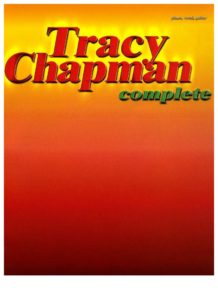
Best Sheet Music download from our Library.

Please, subscribe to our Sheet Music Library.
If you are already a subscriber, please, check our NEW SCORES’ page every month for new sheet music. THANK YOU!
Tracy Chapman: The Quiet Revolutionary Who Changed Music
Born on March 30, 1964, in Cleveland, Ohio, Tracy Chapman emerged as one of the most distinctive and influential singer-songwriters of her generation. With her haunting voice, acoustic guitar, and unflinching social consciousness, she carved a unique path through the late 1980s pop landscape—a landscape dominated by hair metal, dance-pop, and power ballads. Her self-titled debut album became an instant classic, selling over 20 million copies worldwide and earning her three Grammy Awards. More than three decades later, Chapman’s music remains as relevant and powerful as ever, her songs continuing to resonate with new generations of listeners .
Early Life and Education
Tracy Chapman’s journey began in Cleveland’s working-class neighborhoods. Raised primarily by her mother after her parents divorced when she was four, Chapman showed musical aptitude from an early age. Her mother bought her a ukulele at age three, and by eight, she had begun playing guitar and writing songs. She credits the television show “Hee Haw” as an early inspiration for picking up the guitar .
Chapman’s childhood was not without hardship. Growing up in Cleveland, she experienced frequent bullying and racially motivated assaults—experiences that would later inform her empathetic understanding of struggle and injustice . Despite these challenges, she excelled academically. Raised Baptist, she attended an Episcopal high school and was accepted into the A Better Chance program, which sponsors promising students at college preparatory schools away from their home communities. She graduated from Wooster School in Connecticut before enrolling at Tufts University, where she majored in anthropology .
During her university years, Chapman immersed herself in music. She busked in Harvard Square and on MBTA Red Line platforms, developing her craft in front of live audiences. At Tufts’ radio station, WMFO, she recorded demos for copyright purposes, trading the recordings for the station’s right to play her songs. These early recordings would prove fateful .
The Discovery
Chapman’s major-stage debut came on May 3, 1985, when she opened for women’s music pioneer Linda Tillery at Boston’s Strand Theatre . Among those in attendance or who later heard her work was Brian Koppelman, a Tufts student who recognized something extraordinary. Koppelman brought a demo tape—smuggled from the college radio station—containing the song “Talkin’ ’bout a Revolution” to his father, Charles Koppelman, who ran SBK Publishing.
Charles Koppelman signed Chapman in 1986, and after she graduated from Tufts in 1987, he helped secure a contract with Elektra Records . The industry would soon discover what street audiences in Boston already knew: Tracy Chapman was something special.
Breakthrough: The Debut Album
Released in 1988, Tracy Chapman announced an artist fully formed. The album’s acoustic-based sound, rooted in folk and blues traditions, stood in stark contrast to the production-heavy pop of the era. Critics immediately recognized its quality, praising Chapman’s poetic lyrics, distinctive vocals, and remarkable songcraft .
The album’s trajectory changed dramatically on June 11, 1988, at the Nelson Mandela 70th Birthday Tribute concert at Wembley Stadium in London. Chapman initially performed a short afternoon set, but when Stevie Wonder experienced technical difficulties that prevented him from taking the stage, she was called as a last-minute replacement. Her performance of “Fast Car” reached a massive global audience, and the single and album sales accelerated almost overnight .
“Fast Car” became a Top 10 hit on the Billboard Hot 100, peaking at No. 6 in August 1988 . The follow-up singles “Talkin’ ’bout a Revolution” and “Baby Can I Hold You” also charted, cementing Chapman’s place in the mainstream. The album itself reached No. 1 on the Billboard 200 and achieved 6× platinum certification in the United States .
The critical acclaim culminated in six Grammy Award nominations, with Chapman winning three: Best New Artist, Best Female Pop Vocal Performance for “Fast Car,” and Best Contemporary Folk Album. In a remarkable recognition of its lasting significance, the Library of Congress preserved the album in the National Recording Registry in 2025 .
Later in 1988, Chapman joined the worldwide Amnesty International Human Rights Now! Tour, performing alongside artists like Bruce Springsteen, Sting, and Peter Gabriel—a fitting role for an artist whose music already demonstrated deep social consciousness .
Subsequent Albums and Career Evolution
Crossroads (1989)
Chapman’s second album, Crossroads, followed in 1989. Dedicated to Nelson Mandela, the album featured protest anthems like “Freedom Now” and the poignant “Subcity,” a lament for America’s disenfranchised underclass. While it didn’t match the monumental success of her debut, Crossroads still achieved platinum status in the U.S. and earned Chapman another Grammy nomination for Best Contemporary Folk Album .
Matters of the Heart (1992)
Her third album, Matters of the Heart, represented a notable shift. Produced with Jimmy Iovine rather than her previous collaborator David Kershenbaum, the record incorporated subtle elements of world music, blues, and jazz . Entertainment Weekly’s David Browne noted that Chapman “seems more reconciled to balancing her public life with her private one, and she sounds a lot more human as a result” . The album’s remarkable seven-minute title track found Chapman “bluntly picking over an obsessive love affair that has left her both confused and enlightened” . Though it achieved gold certification, it represented a quieter period in her career .
New Beginning (1995)
Chapman’s commercial resurgence came with New Beginning in 1995. The album became a worldwide success, selling over five million copies in the U.S. alone and achieving 5× platinum certification . Its hit single, “Give Me One Reason,” became her most successful U.S. single, peaking at No. 3 on the Billboard Hot 100 and earning her the Grammy Award for Best Rock Song in 1997 .
Later Albums
Five years passed before Telling Stories appeared in 2000, followed by Let It Rain in 2002, Where You Live in 2005, and Our Bright Future in 2008. Each album maintained Chapman’s commitment to thoughtful songwriting and acoustic-based arrangements, though they received less commercial attention than her early work .
In 2015, Chapman curated and released Greatest Hits, a compilation spanning her career . She has not released a new studio album since 2008, though her music continues to reach new audiences through covers and cultural moments.
Tracy Chapman’s Discography
Musical Style and Harmony
Tracy Chapman’s musical style defies easy categorization, drawing from folk, blues, gospel, rock, and reggae traditions . At its core, her sound is acoustic-based, centered on her remarkable voice and guitar playing. Her arrangements, while sometimes fully produced, maintain a characteristic sparseness and airiness that keeps the focus on her lyrics and vocal delivery .
Vocal Approach
Chapman’s voice is one of the most distinctive in popular music—an earthy, contralto instrument capable of both gentle vulnerability and fierce conviction. Critics have described it as “wise” and “knowing,” with a quality that conveys authenticity and emotional depth . Her delivery is often understated, allowing the power of her words to resonate without melodramatic excess.
Harmonic Structure
Harmonically, Chapman’s songs tend toward accessibility without sacrificing sophistication. Her chord progressions often draw from folk and blues traditions, creating frameworks that support both her storytelling and her memorable melodies. The simplicity of her harmonic approach serves her lyrics, never overwhelming the message with unnecessary complexity.
As noted in reviews of Matters of the Heart, Chapman mastered “the art of folk-pop that’s fully produced, yet still sparse and airy. There are plenty of instruments on each track, but you’d never know it. Everything is centered on her voice, a strummed guitar or two, and light percussion” .
Lyrical Themes
Chapman’s lyrics address both personal and political subjects with equal gravity. Her social commentary—tackling racism, poverty, domestic violence, and materialism—never feels preachy or didactic. Instead, she weaves these themes into narratives that connect individual struggles to larger systemic issues. At the same time, her love songs and introspective pieces demonstrate remarkable emotional intelligence, exploring the complexities of relationships with honesty and nuance.
The Best Songs and Compositions
Fast Car
Chapman’s signature song, “Fast Car,” stands as one of the most acclaimed compositions in popular music. Rolling Stone ranked it at No. 167 on their 2010 list of the 500 Greatest Songs of All Time . The song tells the story of a woman seeking escape from poverty and an alcoholic father, only to find that the fast car and the man driving it lead to more of the same struggles. Its structure—building through four verses before finally reaching the chorus—was form-breaking at the time. Music critic Greg Vellante calls it “both an absolute jam and one of the saddest tales ever committed to melodic storytelling” .
Talkin’ ’bout a Revolution
The opening track from her debut album begins with iconic guitar chords before Chapman’s voice enters, singing, “Don’t you know / They’re talkin’ about a revolution / It sounds like a whisper.” The song grows in intensity as Chapman belts “Don’t you know you better run, run, run,” creating a sense of urgent hope. Vellante notes that the song “grows (sadly so) in relevance even 34 years later, where talkin’ ’bout a revolution still sounds like a whisper, only now it’s drowned out even more by the systematic, deafening roar of why we still better run… run… run…” .
Behind the Wall
One of Chapman’s most striking compositions, “Behind the Wall” is performed entirely a cappella. The song describes hearing domestic violence through apartment walls, capturing the helplessness of being on the periphery of abuse. Its stark arrangement strips away all artifice, leaving only Chapman’s voice to convey the horror and frustration of the situation .
Give Me One Reason
Chapman’s biggest U.S. hit, “Give Me One Reason,” showcases her blues influences more directly than much of her catalog. The song’s straightforward structure and memorable guitar riff made it a radio staple, while its lyrics about a failing relationship maintain the emotional depth characteristic of her work. The song earned her a Grammy for Best Rock Song in 1997 .
Mountains o’ Things
This track from her debut album examines greed and consumerism with hypnotic percussion and densely packed lyrics. Chapman contrasts those who “deserve the best in life” with “those whose sole misfortune / Was having mountains of nothing at birth,” critiquing the arbitrary distribution of wealth and opportunity .
Matters of the Heart
The seven-minute title track from her third album represents some of her most emotionally raw writing. With congas adding tension to each verse, Chapman sings of obsessive love that has left her “confused and enlightened,” spitting out lyrics like “I’ve made myself sick / I can’t think of anything else / I can’t sleep at night” .
Why?
A short but powerful track from her debut album, “Why?” asks a series of devastating questions: “Why do the babies starve when there’s enough food to feed the world? / Why when there’s so many of us are there people still alone?” The song serves as a rallying cry against injustice, its directness making it one of the album’s most effective protest statements .
Filmography and Television Appearances
While primarily a recording artist, Chapman has appeared in numerous television specials and contributed music to film projects. Her television appearances include:
- The 31st Annual Grammy Awards (1989)
- Freedomfest: Nelson Mandela’s 70th Birthday Celebration (1988)
- The Human Rights Now Tour (1988-89)
- Motown 30: What’s Goin’ On! (1990-91)
- Farm Aid V (1991-92)
- The Bob Dylan 30th Anniversary Celebration (1992-93)
- The 39th Annual Grammy Awards (1997)
- The 28th NAACP Image Awards (1997)
- The 35th Annual Kennedy Center Honors (2012-13)
Chapman has also made rare acting appearances, including roles in “New York Undercover” (1994-98) and “Reverb” (1996-2002) .
As a composer, Chapman created music for “MTV Rewind” (1989-1990) and contributed songs to film soundtracks, including “The Prince of Tides” (1991) and “The First Wives Club” (1996) . She was commissioned by the American Conservatory Theater to compose music for Athol Fugard’s “Blood Knot,” a play about apartheid in South Africa, staged in early 2008 .
More recently, her music has appeared in the Anne Hathaway dramatic adaptation “One Day” (2011) . In 2015, her performance of Ben E. King’s “Stand By Me” on the “Late Show with David Letterman” became a viral sensation, introducing her to new audiences .
Cooperations with Other Musicians
While Chapman is primarily known as a solo artist, her albums feature collaborations with numerous distinguished musicians, particularly in her rhythm sections and instrumental arrangements.
Notable collaborators include:
- Vernon Reid (Living Colour) – contributed electric guitar to “Bang Bang Bang” on Matters of the Heart
- Bobby Womack – played acoustic guitar on “Matters of the Heart”
- Manu Katché – drums on multiple tracks from Matters of the Heart
- Omar Hakim – drums on Matters of the Heart
- Tony Levin – bass guitar on tracks from Matters of the Heart
- Randy Jackson – bass guitar on tracks from Matters of the Heart
- Larry Klein – bass guitar on Matters of the Heart
- Mike Campbell (Tom Petty and the Heartbreakers) – bouzouki, mandolin, and electric guitar on Matters of the Heart
- Roy Bittan (Bruce Springsteen’s E Street Band) – accordion and keyboards on Matters of the Heart
- Emmylou Harris – backing vocals on “The Only One” from Telling Stories
- Marc Cohn – piano on Crossroads
- G.E. Smith – acoustic guitar, mandolin, electric guitar on Crossroads
- Neil Young – acoustic guitar and piano on Crossroads
Chapman has also performed notable duets, including a critically acclaimed performance with Luciano Pavarotti of “Baby Can I Hold You Tonight” at the Pavarotti & Friends for Cambodia and Tibet concert on June 6, 2000 .
Influences and Legacy
Musical Influences
Chapman’s influences reflect the folk and blues traditions that shaped her sound. She has cited the television show “Hee Haw” as an early inspiration for picking up the guitar . Her music draws from folk pioneers, blues artists, and socially conscious singer-songwriters who used music as a vehicle for commentary and change.
Artists She Has Influenced
Chapman’s influence extends across genres and generations. Her commitment to authenticity, stripped-back arrangements, and socially conscious songwriting has inspired numerous artists:
Luke Combs – The country star’s cover of “Fast Car” became a massive hit in 2023, introducing Chapman to a new generation of listeners. Combs has spoken about how the song “meant a lot to me since then—for my whole life” . His version made Chapman the first Black woman to score a country number one with a solo composition and won the Country Music Association Award for Song of the Year in 2023—making her the first Black woman to win a CMA Award and the first Black songwriter to win that category .
Khalid – The R&B star has named Chapman as a major influence on his songwriting. “For me, Tracy Chapman was just someone who inspires me in terms of songwriting,” he told Forbes. “When I think about songwriting just how she can make you feel like you’re in that moment” .
Lisa Marie Presley – The late singer cited Chapman as a formative influence, telling Rolling Stone India, “I’ve never met Tracy, but she’s always been a huge influence on me; I don’t even know if she knows that. From her first album until everything, she’s been such an influence on me as a singer-songwriter” .
Brandi Carlile – The multiple Grammy winner has frequently acknowledged Chapman’s influence, incorporating Chapman’s songs into her sets and celebrating her as a queer icon. Carlile has called Chapman an essential artist and expressed hope for new music from her .
Tori Amos – Amos has credited Chapman’s debut album with fundamentally changing her artistic direction. “It woke me up and took me back to my 5-year-old self, who was creating from a pure place of intention of music being magic,” Amos told Pitchfork. Following Chapman’s example, Amos abandoned her synth-pop image and followed her artistic instincts .
Valerie June – The Grammy-nominated singer-songwriter has been described as “the missing link between Memphis Minnie and Tracy Chapman.” Growing up in Tennessee, June saw Chapman as proof that someone from a small town could succeed as an artist .
Sam Smith, Justin Bieber, and Jonas Blue – All have covered “Fast Car,” with Jonas Blue’s dance version returning the song to the Hot 100 in 2015 .
Cultural Legacy
Chapman’s legacy extends beyond her musical influence. She represents a model of artistic integrity, maintaining her distinctive voice and refusing to compromise her values for commercial success. Her privacy and avoidance of celebrity culture have only enhanced her mystique, while her commitment to social activism has inspired generations of artists who see music as a vehicle for change.
The 2023 revival of “Fast Car” through Luke Combs’ cover demonstrated the timelessness of her songwriting. A song about poverty, dreams, and disappointment—written from the perspective of a working-class woman—found new life in country music, proving that great songwriting transcends genre boundaries. Chapman’s appearance at the 2024 Grammy Awards to perform the song with Combs marked a rare public moment for the famously private artist .
Social Activism
Chapman’s activism has been consistent throughout her career. In 1988, she performed on the Amnesty International Human Rights Now! Tour, commemorating the 40th anniversary of the Universal Declaration of Human Rights . That same year, she performed at Nelson Mandela’s 70th birthday tribute, supporting the anti-apartheid movement .
Her songwriting often addresses social issues directly, but she also engages in quieter forms of activism. She has supported Cleveland’s elementary schools, producing an educational music video highlighting achievements in African-American history, and sponsored “Crossroads in Black History,” an essay contest for high school students .
Chapman received an honorary doctorate from Saint Xavier University in Chicago in 1997 and an honorary doctorate in Fine Arts from Tufts University in 2004, recognizing both her artistic achievements and her commitment to social activism .
In her own words: “I’m fortunate that I’ve been able to do my work and be involved in certain organizations, certain endeavors, and offered some assistance in some way. Whether that is about raising money or helping to raise awareness, just being another body to show some force and conviction for a particular idea” .
On April 16, 2023, the South African Presidency announced that Chapman would be bestowed with the National Order of the Companions of O. R. Tambo in Silver, recognizing “eminent foreign nationals for friendship shown to South Africa” .
Personal Life and Privacy
Chapman has maintained remarkable privacy throughout her career. She rarely gives interviews and has carefully controlled her public image. During the mid-1990s, she was romantically linked to writer Alice Walker, author of “The Color Purple” .
In 2018, Chapman made news when she sued rapper Nicki Minaj over copyright infringement, alleging that Minaj had sampled “Baby Can I Hold You” without permission. The lawsuit was eventually settled in January 2021, with Minaj paying Chapman $450,000 .
Honors and Recognition
Chapman’s career has been marked by significant honors:
- Three Grammy Awards (1989): Best New Artist, Best Female Pop Vocal Performance, Best Contemporary Folk Album
- Grammy Award for Best Rock Song (1997): “Give Me One Reason”
- National Recording Registry (2025): Tracy Chapman album preserved by the Library of Congress
- CMA Award for Song of the Year (2023): “Fast Car” (first Black woman to win a CMA Award, first Black songwriter to win this category)
- Order of the Companions of O. R. Tambo in Silver (2023): South African national order
- Honorary Doctorates: Saint Xavier University (1997), Tufts University (2004)
Tracy Chapman emerged from Cleveland’s working-class neighborhoods to become one of the most distinctive voices in American music. Her self-titled debut album announced an artist of extraordinary gifts—a songwriter capable of addressing the most profound social issues with the same emotional intelligence she brought to matters of the heart. Her voice, her guitar, and her unflinching honesty created music that has proven timeless.
In a career spanning more than three decades, Chapman has released eight studio albums, won four Grammy Awards, and influenced generations of artists across genres. Her songs continue to resonate because they speak to fundamental human experiences—the desire for escape, the pain of injustice, the complexity of love, and the hope for something better.
The revival of “Fast Car” in 2023 demonstrated what her fans have always known: Tracy Chapman’s music transcends time and genre. Her songs remain urgent because the questions she asks—about poverty, race, violence, and the American Dream—remain unanswered. As she sang on “If Not Now” from her debut album: “If not now, what then / We all must live our lives / Always feeling, always thinking / The moment has arrived” .
On this day, her birthday, we celebrate not just the artist but the legacy she has built—one song, one truth, one quiet revolution at a time.Happy birthday, Tracy Chapman, born on this day in 1964.