
| Community Musicians, building a worldwide Community Music. | |
| All the music you want to play on one site. Sharing the world’s best Contemporary, jazz, Popular, and classical Sheet Music. | |
| Scores: >15,000 (active and growing every day), over 231,000 pages All genres and Categories: Jazz & Blues, Rock & Pop, classical & contemporary, film & musicals’ scores; books & biographies; methods, études, and exercises; play along background MP3 audios & PDFs for Jazz & Rock Music Access and benefits: Subscription fee: $15.99 one-time payment, valid for lifetime (Secure Payment via Paypal, or Stripe) How to join the Sheet Music Library 🔍 Search in the Library Catalog — FAQs — Join us |
Table of Contents
Happy birthday, Herb Alpert, born on this day in 1935.
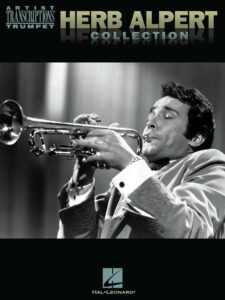
Best Sheet Music download from our Library.

Please, subscribe to our Sheet Music Library.
If you are already a subscriber, please, check our NEW SCORES’ page every month for new sheet music. THANK YOU!
Herb Alpert: The Trumpet Virtuoso Who Redefined American Pop Music
On March 31, 1935, in the Boyle Heights neighborhood of Los Angeles, a musician was born who would fundamentally reshape the landscape of American popular music. Herb Alpert—trumpeter, bandleader, record executive, painter, sculptor, and philanthropist—has built a legacy that spans nearly seven decades, encompassing 28 albums on the Billboard 200, five number-one albums, 14 platinum records, nine Grammy Awards, and over 72 million records sold worldwide . He remains the only artist in history to reach number one on the Billboard Hot 100 as both a vocalist and an instrumentalist—a distinction that speaks to his remarkable versatility and enduring appeal .
Early Life and Musical Foundations
Herb Alpert was born into a family that breathed music. His father, Louis Leib Alpert, was a tailor by trade but a mandolin player by passion; his mother, Tillie, taught violin; his older brother David played drums; and his sister Mimi was a pianist . This rich musical environment proved formative for the young Herb, who began playing trumpet at the age of eight. The instrument would become his voice, his signature, and his passport to global stardom.
Alpert’s formal education began at Fairfax High School, where he initially pursued gymnastics—specializing in the rings—until an appendectomy sidelined his athletic ambitions. By his senior year in 1953, he had redirected his focus entirely to music . He continued his studies at the University of Southern California, where he spent two years as a member of the USC Trojan Marching Band before his education was interrupted by military service.
During the Korean War, Alpert served in the U.S. Army and played in the 6th Army Band—an experience that honed his skills as a disciplined musician . After his service, he began appearing in uncredited film roles as a musician, including a brief appearance as a nightclub horn player in Love Me or Leave Me (1955) and as a drummer on Mount Sinai in Cecil B. DeMille’s epic The Ten Commandments (1956).
The Songwriter Years
Before becoming a household name, Alpert established himself as a formidable songwriter. In 1957, he partnered with Lou Adler at Keen Records, and the duo produced a string of Top 20 hits. Among their most notable compositions was “Wonderful World” for Sam Cooke and “Baby Talk” for Jan and Dean . These early successes demonstrated Alpert’s keen understanding of pop songcraft—a sensibility that would later inform his own recordings and his work as a producer.
In 1960, Alpert briefly pursued a vocal career under the pseudonym Dore Alpert at RCA Records, but it was a chance trip to Tijuana, Mexico, that would change the course of his life.
The Birth of the Tijuana Brass
The story of Herb Alpert’s signature sound begins with frustration. He had been trying to record a song called “Twinkle Star,” written by his friend Sol Lake, but the results left him dissatisfied . Seeking inspiration, Alpert traveled to Tijuana to attend a bullfight. As he later recalled:
“That’s when it hit me! Something in the excitement of the crowd, the traditional mariachi music, the trumpet call heralding the start of the fight, the yelling, the snorting of the bulls, it all clicked.”
Alpert returned to the studio with a new vision. He reimagined the tune with a mariachi-inspired trumpet arrangement, overdubbing his own trumpet slightly out of sync to create the illusion of a full brass section, and mixed in crowd cheers and other ambient sounds. The result was “The Lonely Bull”—a recording that sounded unlike anything else on the radio .
Released in 1962 as the first single on A&M Records—the label Alpert had just co-founded with Jerry Moss—”The Lonely Bull” climbed to number six on the Billboard pop chart . Originally, the “Tijuana Brass” existed only in Alpert’s imagination and his overdubbing technique; the band was entirely his own multitracked trumpet. But the record’s success necessitated the formation of an actual touring ensemble.
A&M Records: The “A” in the Industry
The founding of A&M Records represents one of the great entrepreneurial success stories in music history. Alpert and Jerry Moss started the company in Alpert’s garage with a modest investment, naming it Carnival Records before discovering the name was already taken and rebranding as A&M (Alpert and Moss) . The label’s first release was “Tell It to the Birds,” but it was “The Lonely Bull” that put A&M on the map.
What followed was nothing short of remarkable. A&M Records grew into one of the most successful independent labels in history, signing artists such as The Carpenters, Cat Stevens, Carole King, Joe Cocker, and later, The Police, Janet Jackson, and countless others . The label became known for treating artists with respect and allowing them creative freedom—a philosophy that Alpert and Moss maintained throughout their ownership.
In 1989, Alpert and Moss sold A&M Records to PolyGram for a reported $500 million, though they retained ownership of the publishing company, Rondor Music . The sale cemented their status as two of the most successful figures in music industry history.

The Tijuana Brass Phenomenon
The mid-1960s saw Herb Alpert and the Tijuana Brass ascend to unprecedented heights. The 1965 album Whipped Cream & Other Delights became a cultural phenomenon. It was the number-one album of 1966, outselling The Beatles, Frank Sinatra, and The Rolling Stones . The album’s iconic cover—featuring model Dolores Erickson seemingly draped in whipped cream (which Alpert later revealed was actually shaving cream)—became one of the most recognizable album covers in history .
But the album’s success was not merely a matter of provocative packaging. As music journalist Bruce Handy noted in Billboard, two other Tijuana Brass albums—Going Places (1965) and What Now My Love (1966)—held the third and fifth spots on the 1966 year-end chart despite having far more conservative covers . The music itself had struck a nerve with the American public.
The Tijuana Brass sound was characterized by several distinctive elements. Alpert’s trumpet tone was clean, warm, and immediately identifiable—a bright but not brassy sound that sat perfectly in the mix. The arrangements often featured multiple trumpets playing in harmony (achieved through overdubbing), crisp percussion, and tasteful string sections. The repertoire mixed original compositions with reimagined standards, all filtered through what came to be called the “Ameriachi” style—a blend of mariachi influences, easy-listening arrangements, and rock production values .
The Brass became such a commercial juggernaut that at one point, the group had five albums simultaneously in Billboard’s Top 20—an achievement matched only by The Beatles . Their music became ubiquitous, with songs like “Spanish Flea” and “Tijuana Taxi” serving as the theme music for ABC’s The Dating Game .
In 1966, the group’s cultural reach extended to animation when John and Faith Hubley created A Herb Alpert and the Tijuana Brass Double Feature, a short animated film featuring “Tijuana Taxi” and “Spanish Flea.” The film won the Academy Award for Best Animated Short Film in 1967 . That same year, the Tijuana Brass performed the title cut for the first movie version of Casino Royale, composed by Burt Bacharach .
The Vocal Hit That Wasn’t Supposed to Happen
In 1968, Alpert achieved something no instrumental artist had done before—he reached number one on the Billboard Hot 100 as a vocalist. The song was “This Guy’s in Love with You,” written by Burt Bacharach and Hal David . The song was never intended for commercial release. It was recorded for a CBS Television special titled Beat of the Brass, with Alpert singing the song to his first wife on a Malibu beach. When the special aired, thousands of viewers called CBS asking about the song. Two days later, Alpert released it as a single .
Despite Alpert’s limited vocal range, the song’s technical demands suited him perfectly. As the BBC later noted, “Alpert’s fragile vocal is perfect for the song, which still sounds like a shy groom singing to his bride at his wedding for the first and only time ever in public” . The recording remains a testament to the power of emotional authenticity over technical perfection.
Crisis and Transformation
Despite his extraordinary success, Alpert experienced a profound personal crisis in 1969. The pressure of constant touring, recording, and managing A&M Records had taken its toll. He later told The New York Times, “The trumpet is my enemy.” He disbanded the Tijuana Brass and stopped performing in public .
The path to recovery came through an unlikely teacher: Carmine Caruso, a trumpet instructor who had never played trumpet a day in his life. As Alpert explained:
“What I found is that the thing in my hands is just a piece of plumbing. The real instrument is me, the emotions, not my lip, not my technique, but feelings I learned to stuff away—as a kid who came from a very unvocal household.”
After a four-year sabbatical, Alpert returned to recording with You Smile – The Song Begins (1974). The results were immediately noticeable. As critic Richard S. Ginell wrote in AllMusic, Alpert emerged “creatively refreshed, his trumpet sounding more soulful and thoughtful, his ears attuned more than ever to jazz” .
“Rise” and the Disco Era
In 1979, Alpert attempted to record a disco album of rearranged Tijuana Brass hits, but the results displeased him. “It just sounded awful to me,” he later admitted. “I didn’t want any part of it” . However, studio time had already been booked, so Alpert recorded other material—including an instrumental track with a distinctive bassline that his nephew Randy “Badazz” Alpert and friend Andy Armer had developed.
That track, “Rise,” became a phenomenon. After being featured repeatedly on the soap opera General Hospital, it climbed to number one on the Billboard Hot 100, making Alpert the only artist to reach the top as both a vocalist and an instrumentalist—a distinction he still holds . In the UK, the song also became a hit, albeit in a speeded-up version due to British DJs playing the American 12-inch single at the wrong speed .
“Rise” gained a second life decades later when its iconic bassline was sampled by The Notorious B.I.G. for his 1997 hit “Hypnotize,” which also reached number one on the Hot 100 . The sample introduced Alpert’s music to a new generation of listeners and demonstrated the timeless quality of his work.
Musical Style and Harmonic Approach
Herb Alpert’s musical style defies easy categorization. While often labeled as pop, jazz, or easy listening, his work encompasses elements of all these genres while maintaining a distinctive voice. His approach to harmony is rooted in accessibility—he favors clear, memorable melodies supported by sophisticated but not overly complex harmonic structures.
The “Tijuana Brass sound” that emerged in the 1960s was revolutionary for its time. Alpert’s use of multitracked trumpets—recording the same part multiple times and layering the performances—created a lush, ensemble-like quality that became his trademark. This technique, combined with his careful attention to arrangement and production, produced recordings that sounded both intimate and grand.
Alpert’s trumpet playing is characterized by a warm, rounded tone that prioritizes melodic expression over technical display. He cites Louis Armstrong as a primary influence—not for Armstrong’s virtuosity, but for his ability to make the trumpet sound like an extension of his personality. As Alpert told Grammy.com:
“The sound that was coming out of Louis’ trumpet was Louis Armstrong’s personality. Period. It was him. It was just the guy I met who was lovely, who was smart, who was creative, and it was right there. That’s the goal I think, for all artists, is to find your own voice.”
In his later career, Alpert’s playing has become more introspective and jazz-oriented. His work since 2009—following a ten-year hiatus—has been characterized by a “soulful, lyrical” approach that bridges his pop-oriented past with more contemplative material . His harmonic vocabulary has expanded to include Brazilian influences (as on his bossa nova-inflected version of Michael Jackson’s “Human Nature”) and sophisticated jazz harmonies .
Best Songs and Compositions
Herb Alpert’s catalog contains dozens of classic recordings. The following represent some of his most significant and enduring works:
“The Lonely Bull” (1962): The recording that started everything—a moody, atmospheric piece that created an entire genre. Its innovative use of ambient sounds and overdubbed trumpets established the template for the Tijuana Brass sound.
“A Taste of Honey” (1965): The song that won the Grammy Award for Record of the Year in 1965. Its elegant melody and sophisticated arrangement made it one of the most recognizable instrumentals of the decade .
“Spanish Flea” (1966): Perhaps the most famous Tijuana Brass recording, thanks in part to its use as the theme for The Dating Game. Its catchy melody and playful arrangement have made it a cultural touchstone .
“This Guy’s in Love with You” (1968): Alpert’s vocal masterpiece, written by Burt Bacharach and Hal David. Its emotional vulnerability and understated delivery make it a unique entry in the pop canon .
“Rise” (1979): A sleek, sophisticated instrumental that became a number-one hit and later provided the foundation for The Notorious B.I.G.’s “Hypnotize.” Its subtle groove and memorable bassline have made it a DJ favorite for decades .
“Ladyfingers” (1965): A gentle, romantic piece from the Whipped Cream & Other Delights album. Written by jazz harmonica legend Toots Thielemans, the song experienced a remarkable revival in 2022 when it went viral on TikTok, accumulating over 100 million streams .
“I’ll Remember You” (2022): A late-career highlight, recorded as a tribute to songwriter Kui Lee and at the request of his longtime partner Jerry Moss. The song demonstrates Alpert’s continued ability to find emotional depth in a melody .
“Dancing Down 50th Street” (2024): From his 50th studio album 50, this upbeat original composition showcases Alpert’s continued vitality and his ability to create music that feels both contemporary and timeless .
Cooperations with Other Jazz Musicians
While Alpert is best known for his work with the Tijuana Brass, he has collaborated with numerous significant jazz musicians throughout his career. One of his most important collaborations was with South African trumpeter Hugh Masekela.
The 1978 album Herb Alpert / Hugh Masekela brought together two of the world’s most distinctive trumpeters for a set of jazz-infused recordings . The album, produced by Caiphus Semenya, Stewart Levine, and Alpert himself, featured an impressive roster of musicians including guitarists Lee Ritenour and Arthur Adams, percussionist Paulinho Da Costa, and bassist Louis Johnson . Tracks like “Skokiaan,” “Moonza,” and the seven-minute “I’ll Be There for You” showcased the complementary styles of the two trumpeters—Alpert’s warm, melodic approach contrasted with Masekela’s more earthy, African-inflected sound .
Alpert has also worked extensively with Brazilian musicians and composers. His recording of Edu Lobo’s “El Lobo (The Wolf)” on the Masekela collaboration demonstrated his affinity for Brazilian rhythms and harmonies . More recently, his 2016 album Human Nature featured a Brazilian Mardi Gras-infused reworking of Michael Jackson’s title track, further exploring the intersection of pop and Brazilian music .
Throughout his career, Alpert has maintained relationships with the highest caliber of studio musicians. He holds the Los Angeles session musicians known as the Wrecking Crew—who played on most of the Tijuana Brass recordings—in particularly high regard . These musicians, including drummers Hal Blaine and Earl Palmer, bassist Carol Kaye, and guitarist Tommy Tedesco, provided the rhythmic foundation for countless classic recordings.
Influences and Legacy
Herb Alpert’s influences trace a broad arc across American music. He has cited trumpeters Harry James, Louis Armstrong, Miles Davis, and Clifford Brown as formative influences . Armstrong, in particular, shaped his understanding of how an instrumentalist’s personality could be expressed through their instrument. The young Alpert was nearly discouraged by Clifford Brown’s virtuosity, but persistence led him to develop his own voice rather than trying to match the technical achievements of others .
Les Paul’s pioneering work with multitrack recording also profoundly influenced Alpert’s approach. As he recalled, “When I heard Les Paul multitrack his guitar on recordings, I tried that with the trumpet. Boom—that sound came out” .
Alpert’s legacy extends far beyond his own recordings. As the “A” in A&M Records, he helped shape the careers of countless artists and created a model for artist-friendly independent labels that continues to influence the industry. The label’s roster reads like a who’s who of popular music from the 1960s through the 1980s: The Carpenters, Cat Stevens, Carole King, Joe Cocker, Quincy Jones, The Police, Janet Jackson, and many more .
His influence can be heard in the work of later artists who sampled his recordings—most famously The Notorious B.I.G.’s use of “Rise” in “Hypnotize”—and in the “lounge music” revival of the 1990s, when a new generation discovered the sophisticated pleasures of the Tijuana Brass catalog . The BBC noted that “when easy listening became dubbed lounge-core to compliment Britpop in the 90s, Alpert’s breezy rendition of A Taste of Honey was adopted by Chris Evans in his first, more notorious stint as a BBC breakfast DJ” .
Alpert’s 2024 album 50, his 50th studio release, demonstrates his enduring relevance. Recorded at age 89 in his Malibu home studio, the album features covers ranging from Elvis Presley’s “Are You Lonesome Tonight?” to the Chords’ doo-wop classic “Sh-Boom” to Duke Pearson’s hard bop composition “Jeannine” . The album debuted at number four on the Billboard Top Contemporary Jazz Albums chart, proving that there remains an audience for Alpert’s distinctive trumpet sound .
Filmography
Herb Alpert’s screen appearances span more than six decades, beginning with uncredited roles in the 1950s and continuing through recent documentaries:
Acting Roles:
- Love Me or Leave Me (1955) – Nightclub Horn Player (uncredited)
- The Ten Commandments (1956) – Drummer on Mt. Sinai (uncredited)
- Say One for Me (1959) – Nightclub Trumpet Player
- Blue Denim (1959) – Trumpet Player
- Mr. Hobbs Takes a Vacation (1962) – Player in Dance Band (uncredited)
Documentary Appearances:
- The Wrecking Crew! (2008) – Himself
- Always at The Carlyle (2018) – Himself
- Herb Alpert Is… (2020) – Self (documentary)
Television Appearances:
Alpert has appeared as a musical guest or performer on numerous television programs, including The Ed Sullivan Show, The Tonight Show Starring Johnny Carson, The Dean Martin Show, Rowan & Martin’s Laugh-In, Soul Train, Top of the Pops, and Later… with Jools Holland . He has also made more recent appearances on The Tonight Show Starring Jimmy Fallon, CBS Mornings, and Tavis Smiley .
Produced Works:
As a theater producer, Alpert has brought several productions to Broadway, demonstrating his artistic interests beyond music .
Philanthropy and Other Artistic Pursuits
In the 1980s, Alpert established the Herb Alpert Foundation, which has since become a major force in arts education and philanthropy . The foundation has provided substantial support to institutions including UCLA, CalArts, and the Harlem School of the Arts, enabling students to pursue their creative passions .
Beyond music, Alpert has pursued careers as an abstract expressionist painter and sculptor. His interest in visual art began during his travels with the Tijuana Brass in the 1960s. Visiting museums around the world, he found himself questioning why certain works were considered art and began experimenting with acrylic paints when he returned home .
His approach to painting mirrors his approach to music. As he told Grammy.com:
“I started moving colors around with acrylic paint, like a monkey, just kind of pushing it around to see if I could get it into a shape that pleased me. I was having an enormous amount of fun painting. Like a kid in a candy shop.”
His work has been exhibited publicly, and he continues to maintain active practices in both painting and sculpture alongside his musical career.
Personal Philosophy and Approach to Art
What emerges from interviews with Herb Alpert is a portrait of an artist who has remained remarkably grounded despite extraordinary success. His philosophy centers on authenticity and emotional truth:
“I see music as impressions through the horn. That’s the way I try to do it. I’m basically a jazz musician, and I don’t plan it, I just do it. You know, when it feels good I stop. I’m not making music for anybody else. I’m making music for myself. And when I feel good playing it, it gives me energy, I feel great about it. If someone else happens to like it, it’s a big win for me.”
He applies the same approach to evaluating his own work, describing a technique of becoming “an audience to my music”—listening not as the performer but as an innocent bystander judging the overall feeling .
Alpert’s views on art are similarly instinctual. Recalling his experience standing before a Jackson Pollock painting, he noted:
“I tried to analyze it trying to see what his motivation was… You won’t get it. You have to just let it seep in. And if it grabs you, it’ll grab you. If it doesn’t grab you, that’s the way it goes.”
This philosophy—prioritizing emotional connection over analysis—has guided his work across multiple artistic disciplines.
Awards and Recognition
Herb Alpert’s contributions to music have been recognized with numerous awards:
- Grammy Awards: 9 competitive awards, including Record of the Year for “A Taste of Honey” (1965) and Best Pop Instrumental Performance for “Rise” (1979), plus a Grammy Lifetime Achievement Award
- Rock and Roll Hall of Fame: Inducted in 2006
- National Medal of Arts: Presented by President Barack Obama in 2012
- Tony Award: For his work as a theater producer
- Platinum and Gold Records: 14 platinum albums and 15 gold albums
Herb Alpert: The Ongoing Journey
Herb Alpert celebrated his 90th birthday on March 31, 2025, having released his 50th studio album just months earlier. His career spans the entire history of the modern recording industry, from wire recorders to digital streaming. Yet he approaches each new project with the enthusiasm of a beginner, guided by a simple principle: make music that feels good.
His legacy is multifaceted. As a performer, he created some of the most recognizable instrumental recordings in popular music history. As an entrepreneur, he built one of the most successful and artist-friendly independent labels ever. As a philanthropist, he has enabled countless young artists to pursue their creative dreams. And as a creative artist in his own right, he continues to explore new sounds, new techniques, and new ways of expressing himself.
When asked in 2024 what inspired him to keep making music at age 89, Alpert told NPR:
“Music is a healing vibration that fills me. I believe people as well when they hear a song they like, it does something for you. When you get into art or you hear a great piece of music, your life kind of just gets into that very moment that you’re living in. And that’s really beautiful.”
That ability to inhabit the present moment—to find beauty and meaning in the act of creation itself—may be the most enduring lesson of Herb Alpert’s remarkable career. From the garages of Boyle Heights to the heights of the pop charts, from the bullrings of Tijuana to the stages of Broadway, he has remained true to his own voice, making music that transports listeners and brings them into the moment. In doing so, he has earned his place among the most significant figures in American popular music.
Search your favorite sheet music in the Sheet Music Catalog
Herb Alpert & The Tijuana Brass – “Whipped Cream & Other Delights”
Tracks
-A Taste of Honey 00:00 -Green Peppers 02:43 -Tangerine 04:16 -Bittersweet Samba 07:01 -Lemon Tree 08:47 -Whipped Cream 11:08 -Love Potion No.9 13:42 -El Garbanzo 16:35 -Ladyfingers 18:49 -Butterball 21:32 -Peanuts 23:46 -Lollipops And Roses 25:54
Browse in the Library:
Or browse in the categories menus & download the Library Catalog PDF: