| Community Musicians, building a worldwide Community Music. | |
| All the music you want to play on one site. Sharing the world’s best Contemporary, jazz, Popular, and classical Sheet Music. | |
| Scores: >15,000 (active and growing every day), over 231,000 pages All genres and Categories: Jazz & Blues, Rock & Pop, classical & contemporary, film & musicals’ scores; books & biographies; methods, études, and exercises; play along background MP3 audios & PDFs for Jazz & Rock Music Access and benefits: Subscription fee: $15.99 one-time payment, valid for lifetime (Secure Payment via Paypal, or Stripe) How to join the Sheet Music Library 🔍 Search in the Library Catalog — FAQs — Join us |
Table of Contents
Happy heavenly birthday, Sergei Rachmaninoff, born on this day in 1873.
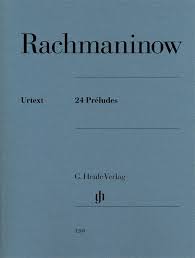
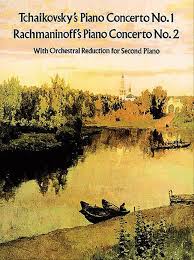
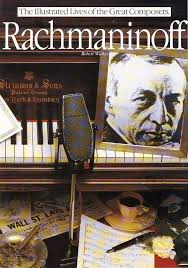
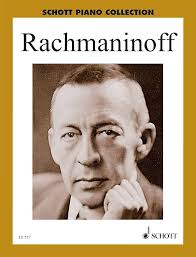

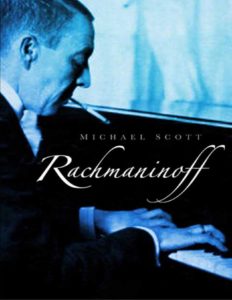

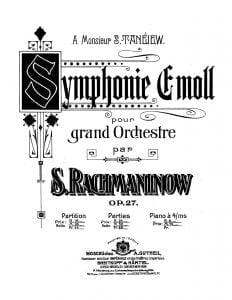

Best Sheet Music download from our Library.
Sergei Rachmaninoff: The Last Great Voice of Russian Romanticism
Sergei Vasilyevich Rachmaninoff (1873–1943) occupies a singular position in the history of Western music. A composer, pianist, and conductor of almost superhuman technical gifts, he was celebrated in his lifetime as one of the greatest pianists of the twentieth century. Today, his reputation rests equally on his achievements as a composer—one who, despite living well into the modern era, distilled the essence of Russian Romanticism into a musical language of unparalleled emotional power, sweeping melody, and sumptuous harmony .
Born into the twilight of the Russian Empire and dying in exile in Beverly Hills during the Second World War, Rachmaninoff’s life spanned one of the most turbulent periods in modern history. His music, however, remained a steadfast continuation of the tradition of Tchaikovsky, Rimsky-Korsakov, and the Russian nationalists, even as his contemporaries—Stravinsky, Prokofiev, and Schoenberg—were dismantling the very foundations of tonality. For this, his music was sometimes dismissed by mid-century critics as anachronistic. Yet the passage of time has vindicated Rachmaninoff’s artistic vision; his works—the Second and Third Piano Concertos, the Rhapsody on a Theme of Paganini, the Symphonic Dances—have entered the universal canon, beloved by audiences for their profound emotional resonance and virtuosic brilliance.
Please, subscribe to our Sheet Music Library.
If you are already a subscriber, please, check our NEW SCORES’ page every month for new sheet music. THANK YOU!
Part I: Life and Career
Ancestry and Early Years (1873–1885)
Sergei Vasilyevich Rachmaninoff was born on 1 April 1873 (Old Style 20 March) into a family of Russian aristocracy in the Novgorod Governorate. The family’s origins were steeped in legend, claiming descent from a supposed grandson of Stephen III of Moldavia, but their more immediate history revealed a lineage of military service and musical inclination . His paternal grandfather, Arkady Alexandrovich, was a musician who had studied with the Irish composer John Field, the inventor of the nocturne .
Rachmaninoff’s father, Vasily, was an amateur pianist and retired army officer whose financial incompetence would eventually dismantle the family’s fortunes. His mother, Lyubov Petrovna Butakova, was the daughter of a wealthy army general who provided five estates as dowry. The young Sergei, the fourth of six children, spent his early childhood on the Oneg estate, about 110 miles north of Semyonovo, a place he would later mistakenly cite as his birthplace .
It was his mother who first recognized his prodigious musical gift. She began teaching him piano at age four, and his ability to reproduce passages from memory without error was immediately apparent. Recognizing the need for formal training, the family engaged Anna Ornatskaya, a recent graduate of the Saint Petersburg Conservatory, as a live-in piano teacher. Rachmaninoff would later dedicate his famous romance “Spring Waters” to her .
The family’s stability, however, was crumbling. Vasily’s reckless financial management forced the sale of the five estates one by one. In 1882, the last estate was auctioned, and the family moved to a cramped flat in Saint Petersburg . Two years later, tragedy struck: his sister Sofia died of diphtheria at thirteen, and his father abandoned the family for Moscow. Amidst this chaos, his maternal grandmother, Sofia Litvinova Butakova, assumed a stabilizing role, overseeing the children’s upbringing and instilling in Sergei a deep devotion to the Russian Orthodox Church. The liturgical chants and, most importantly, the resonant pealing of church bells he heard during this period left an indelible mark on his musical consciousness .
In 1885, another sister, Yelena, died of pernicious anemia. Yelena had been a crucial musical influence, introducing him to the works of Tchaikovsky. Now a desultory student at the Saint Petersburg Conservatory, failing general education classes and playing truant, Sergei’s prospects seemed dim. His mother, upon the advice of their accomplished nephew, the pianist Alexander Siloti (a student of Franz Liszt), decided to transfer him to the Moscow Conservatory to study under the strict disciplinarian Nikolai Zverev .
Moscow Conservatory and First Compositions (1885–1894)
The move to Moscow marked a decisive turning point. For nearly four years, Rachmaninoff lived in Zverev’s home, a demanding environment where he shared a room with three other students and endured three hours of daily piano practice. The regime was spartan but effective. It was here that he befriended a fellow pupil, the future mystical composer Alexander Scriabin .
In 1889, a rift developed between Rachmaninoff and Zverev. The young composer, increasingly drawn to composition, requested more privacy and a piano for composing, a request Zverev—who considered composition a distraction for a promising pianist—refused. The estrangement was painful, but it forced Rachmaninoff to rely on his own resources. He moved in with his uncle and aunt, the Satins, whose family estate, Ivanovka, near Tambov, would become his creative sanctuary and summer retreat until the Russian Revolution .
At the Conservatory, he flourished under the tutelage of his cousin Siloti for advanced piano, Sergei Taneyev for counterpoint, and Anton Arensky for free composition. His progress was so rapid that he completed his Piano Concerto No. 1 in F-sharp minor, Op. 1, in 1891 at age eighteen, and passed his final piano exams a year early with honors .
His graduation in 1892 was the stuff of Conservatory legend. For his final composition exam, he was tasked with writing a one-act opera based on Alexander Pushkin’s poem The Gypsies. In a feat of extraordinary creative intensity, he completed Aleko in just seventeen days. The premiere at the Bolshoi Theatre was a triumph; Tchaikovsky, who attended, was effusive in his praise. The opera earned Rachmaninoff the highest mark and the Great Gold Medal, a distinction previously awarded only to Taneyev and one other composer . That same year, he also premiered the piece that would make his name a household word: the Prelude in C-sharp minor, Op. 3, No. 2.
The First Symphony Disaster and Recovery (1897–1901)
Despite his early success, the mid-1890s brought Rachmaninoff to the brink of creative paralysis. His Symphony No. 1 in D minor, Op. 13, received its premiere in Saint Petersburg in March 1897. The performance, conducted by an inebriated Alexander Glazunov, was a catastrophe. Critic César Cui famously likened the symphony to a depiction of the seven plagues of Egypt, describing it as “a programmatic symphony on the Seven Egyptian Plagues, if it had been written by a music student at the Moscow Conservatory” .
The failure plunged Rachmaninoff into a deep depression that lasted for four years. He composed almost nothing. He described his condition as being “like a man who had suffered a stroke and had lost the use of his head and hands for a long time.” The debilitating crisis was exacerbated by the end of a brief engagement and a subsequent affair .
Salvation came from an unlikely source. In 1900, his aunt introduced him to Dr. Nikolai Dahl, a family friend and amateur musician who specialized in hypnotherapy. For several months, daily sessions with Dahl focused on rebuilding Rachmaninoff’s confidence. The therapy worked. He emerged from his torpor and began composing with renewed vigor, producing his Piano Concerto No. 2 in C minor, Op. 18. Completed in 1901, it was a triumph, earning him the Glinka Award and establishing him as one of Russia’s foremost composers. He dedicated the concerto to Dr. Dahl .
Conductor, Composer, and Pre-Revolutionary Success (1901–1917)
The success of the Second Piano Concerto marked the beginning of the most productive period of Rachmaninoff’s life. From 1904 to 1906, he served as conductor at the Bolshoi Theatre, a role that honed his orchestral craft and brought him into contact with the great bass Feodor Chaliapin, who became a lifelong friend .
During these years, he composed his Symphony No. 2 in E minor, Op. 27 (1907), a work of expansive lyricism and emotional depth that remains a cornerstone of the orchestral repertoire. He also composed the symphonic poem The Isle of the Dead, Op. 29 (1909), a darkly atmospheric tone poem inspired by the painting of Arnold Böcklin .
In 1909, he undertook his first concert tour of the United States, for which he composed his formidable Piano Concerto No. 3 in D minor, Op. 30. The premiere with the New York Symphony under Walter Damrosch was a personal success, solidifying his reputation as a virtuoso of the highest order. The concerto, with its ferocious technical demands and structural ingenuity, would become a rite of passage for the next generation of pianists .
After his return to Russia, he settled in Moscow and composed his monumental choral symphony, The Bells, Op. 35 (1913), based on Edgar Allan Poe’s poem as translated by Konstantin Balmont. This work, a tour de force of choral and orchestral writing, represents the pinnacle of his pre-exile output.
Exile and the Life of a Virtuoso (1917–1943)
The Russian Revolution of 1917 changed everything. For Rachmaninoff, whose music was seen by the Bolsheviks as a relic of the bourgeoisie, life under the new regime became impossible. In December 1917, seizing an unexpected opportunity to perform in Scandinavia, he and his family left Russia permanently, carrying with them only a few personal effects. He would never return .
After a brief period in Scandinavia, the family settled in the United States in 1918. The transition was brutal. Rachmaninoff had lost his estates, his financial security, and the cultural soil from which his art had grown. To provide for his family, he embarked on a punishing career as a concert pianist. He was already famous, but the demands of the international concert circuit consumed his time and energy. The composer who had produced a steady stream of major works before the Revolution now saw his creative output dwindle to a trickle .
He composed just six major works after leaving Russia. These include the Piano Concerto No. 4 in G minor, Op. 40 (1926), the Variations on a Theme of Corelli, Op. 42 (1931), the Rhapsody on a Theme of Paganini, Op. 43 (1934), the Symphony No. 3 in A minor, Op. 44 (1936), and his last and perhaps most valedictory work, the Symphonic Dances, Op. 45 (1940) .
During these years, he divided his time between a villa in Switzerland, named “Senar” (an acronym from Sergei and his wife Natalia), and a home in the United States. Despite his fame, he remained a deeply private and nostalgic figure, his Russian accent and old-world manners marking him as a permanent exile. In 1942, with his health declining due to melanoma, he moved to Beverly Hills, California, where he lived on Elm Drive, just a short distance from his friend Vladimir Horowitz. He died there on 28 March 1943, just days before his 70th birthday.
Sergei Rachmaninoff, the Pianist
Rachmaninoff ranked among the finest pianists of his time, along with Leopold Godowsky, Ignaz Friedman, Moriz Rosenthal, Josef Lhévinne, Ferruccio Busoni, and Josef Hofmann, and he was famed for possessing a clean and virtuosic technique. His playing was marked by precision, rhythmic drive, notable use of staccato and the ability to maintain clarity when playing works with complex textures. Rachmaninoff applied these qualities in music by Chopin, including the B-flat minor Piano Sonata. Rachmaninoff’s repertoire, excepting his own works, consisted mainly of standard 19th century virtuoso works plus music by Bach, Beethoven, Borodin, Debussy, Grieg, Liszt, Mendelssohn, Mozart, Schubert, Schumann and Tchaikovsky.
Part II: Musical Style and Compositional Technique
Overview and Position in Musical History
Rachmaninoff’s musical style is a paradox. He was a 20th-century composer whose aesthetic allegiance lay firmly with the 19th century. While his contemporaries (Stravinsky, Prokofiev, Schoenberg) were exploring atonality, polytonality, and neoclassicism, Rachmaninoff refined and intensified the language of Tchaikovsky and the Russian Five. He is often described as the last great exponent of Russian Romanticism, a living link to the Golden Age of Russian music .
Melodic Style
The defining feature of Rachmaninoff’s music is its melody. His melodies are typically long, sweeping, and intensely lyrical, characterized by broad intervals and a natural, almost inevitable sense of contour. He possessed an exceptional gift for “long-breathed” melodic lines that unfold over many bars, often building to overwhelming emotional climaxes .
These melodies are rarely simple. They often feature chromatic inflections, modal twists, and a strong sense of tonal ambiguity, keeping the listener engaged through constant harmonic nuance. The famous opening of the Second Piano Concerto is a prime example: a series of chords that gradually accumulate into one of the most iconic melodies in all classical music.
Harmony and Tonality
Rachmaninoff’s harmonic language is one of the richest in the repertoire. A dissertation by Blair Johnston from the University of Michigan provides an authoritative framework for understanding it. Johnston describes Rachmaninoff’s mature harmonic style (from 1909–1940) as “an amalgam of well-formed, differentiated components drawn from Western common practice and Russian musical traditions” .
His harmonic palette includes three key elements:
- Functional Tonal Structures: Traditional harmonic progressions that establish and reinforce tonality.
- Equal-Interval Chromatic Structures: Extended passages based on the octatonic, hexatonic, and whole-tone scales. These elements, often associated with Russian composers from Rimsky-Korsakov to Stravinsky, give his music its distinctive, sometimes acerbic, modern tinge.
- Modal Structures: The use of church modes, peremennost (a Russian modal system where a melody fluctuates between relative major and minor), and the concept of nega (a state of bittersweet, languorous repose) .
A central concept in analyzing Rachmaninoff’s harmonic practice is the hyperdissonance—an extraordinary harmonic tension that resists explanation in conventional tonal analysis. These moments of maximum dissonance are not merely incidental but are carefully deployed as core structural events around which entire movements are organized. Johnston’s work emphasizes that climax events in Rachmaninoff are not problems to be resolved but the expressive focal points of the composition .
Contrapuntal Mastery
Rachmaninoff’s studies with Sergei Taneyev, a master of counterpoint, are evident throughout his output. His music is filled with intricate polyphonic textures, often combining multiple independent melodic lines in ways that create immense textural density. This is particularly true of his later works, where the contrapuntal writing becomes increasingly leaner and more acerbic, moving away from the lush textures of his early period .
The Role of the Piano
As a composer who was also one of history’s greatest pianists, Rachmaninoff’s approach to piano writing is unique. He exploited the full expressive and technical possibilities of the instrument, creating textures that are at once orchestral in conception and intimately pianistic in execution. His writing is characterized by:
- Widely spaced chords: Often spanning over an octave, creating bell-like sonorities that evoke the Russian Orthodox church bells of his childhood .
- Virtuosic passagework: Demanding runs, leaps, and chordal figurations that test the limits of technique.
- Complex textures: The interweaving of melody, accompaniment, and inner voices into a continuous, flowing fabric.
Orchestral Sound
While Rachmaninoff was criticized by some for the perceived thickness of his orchestration, his mature works demonstrate a sophisticated understanding of orchestral color. He was particularly adept at using the orchestra to create a wide dynamic range, from the most delicate chamber-like textures to overwhelming, climactic sonorities. The orchestral writing in the Second Symphony and the Symphonic Dances shows a masterful command of instrumental balance and coloristic effect .
Recurring Motifs and Symbolism
Two recurring motifs pervade Rachmaninoff’s music:
- The Dies Irae: The medieval plainchant for the Day of Judgment appears throughout his work, from his early symphonies to his last, the Symphonic Dances. It functions as a personal memento mori, a symbol of death and fate that haunts the narrative of his compositions .
- Russian Church Bells: The sonority and structure of Russian Orthodox bell-ringing permeate his music, from the famous opening of the Second Piano Concerto to the “Kulikovo” movement of the Symphonic Dances. As one scholar noted, “It is not enough to say that the church bells of Novgorod, St Petersburg and Moscow influenced Rachmaninov and feature prominently in his music. What is extraordinary is the variety of bell sounds and breadth of structural and other functions they fulfill” .
Part III: Encounters with Other Artists
Rachmaninoff’s career intersected with many of the leading artistic figures of his time.
- Pyotr Ilyich Tchaikovsky: The older composer was an early champion of Rachmaninoff. Tchaikovsky praised Aleko and even lobbied for its production. His death in 1893 was a profound shock; Rachmaninoff composed his Trio élégiaque No. 2 as a memorial to Tchaikovsky, following the tradition established by Tchaikovsky himself in his own trio for Nikolai Rubinstein .
- Alexander Scriabin: Rachmaninoff and Scriabin were fellow students at the Moscow Conservatory. Though their musical paths diverged dramatically, they maintained a relationship of mutual respect. Rachmaninoff famously studied and performed Scriabin’s music after his death, despite his own initial reservations about Scriabin’s mystical, post-tonal style .
- Feodor Chaliapin: The great bass was perhaps Rachmaninoff’s closest friend. They collaborated on numerous projects at the Bolshoi Theatre, and their friendship lasted for decades, enduring through their shared experience of exile .
- Vladimir Horowitz: Horowitz, the legendary pianist, was a devoted champion of Rachmaninoff’s music. The two met in the 1920s, and Horowitz’s performances of the Third Piano Concerto became legendary. Their relationship was one of mutual admiration; Rachmaninoff reportedly called Horowitz’s playing of the concerto the finest he had ever heard.
- Nikolai Dahl: The hypnotherapist who helped Rachmaninoff recover from his depression was not a musician in the same sense, but the therapeutic relationship was one of the most crucial artistic encounters of his life, directly enabling the composition of his most famous work .
Part IV: List of Works by Genre
Rachmaninoff’s compositional output, though not enormous, encompasses a wide range of genres.
Piano and Orchestra
- Piano Concerto No. 1 in F-sharp minor, Op. 1 (1891, rev. 1917)
- Piano Concerto No. 2 in C minor, Op. 18 (1900–01)
- Piano Concerto No. 3 in D minor, Op. 30 (1909)
- Piano Concerto No. 4 in G minor, Op. 40 (1926, rev. 1928, 1941)
- Rhapsody on a Theme of Paganini, Op. 43 (1934)
Orchestral Works
- Symphony No. 1 in D minor, Op. 13 (1895)
- Symphony No. 2 in E minor, Op. 27 (1907)
- Symphony No. 3 in A minor, Op. 44 (1935–36)
- The Rock, Op. 7 (1893)
- Caprice bohémien, Op. 12 (1894)
- The Isle of the Dead, Op. 29 (1909)
- Symphonic Dances, Op. 45 (1940)
Solo Piano
- Morceaux de fantaisie, Op. 3 (including Prelude in C-sharp minor)
- Morceaux de salon, Op. 10
- Six moments musicaux, Op. 16
- Preludes, Op. 23 (10 preludes)
- Preludes, Op. 32 (13 preludes)
- Études-Tableaux, Op. 33 (6 études)
- Études-Tableaux, Op. 39 (9 études)
- Piano Sonata No. 1 in D minor, Op. 28 (1908)
- Piano Sonata No. 2 in B-flat minor, Op. 36 (1913, rev. 1931)
- Variations on a Theme of Chopin, Op. 22 (1902–03)
- Variations on a Theme of Corelli, Op. 42 (1931)
Choral Works
- The Bells, Op. 35 (1913) – choral symphony for soprano, tenor, baritone, chorus, and orchestra
- All-Night Vigil (Vespers), Op. 37 (1915) – a cappella
- Liturgy of St. John Chrysostom, Op. 31 (1910)
- Spring, Op. 20 (1902) – cantata
- Three Russian Songs, Op. 41 (1926)
Operas
- Aleko (1892) – one-act opera
- The Miserly Knight, Op. 24 (1903) – one-act opera
- Francesca da Rimini, Op. 25 (1904) – one-act opera
Chamber Music
- Trio élégiaque No. 1 in G minor (1892)
- Trio élégiaque No. 2 in D minor, Op. 9 (1893)
- Cello Sonata in G minor, Op. 19 (1901)
Songs (Romances)
- 83 songs for voice and piano, including the famous Vocalise, Op. 34, No. 14 (1912)
Part V: Works on Film and Documentaries
Documentaries
Rachmaninoff’s life has been the subject of several notable documentaries. The most celebrated is Tony Palmer’s The Harvest of Sorrow (1998), a 102-minute film produced by Isolde Films and NVC Arts. The documentary, narrated by Sir John Gielgud, features interviews with the composer’s family members, including his niece Sofia Satina and his grandson Alexander Rachmaninoff, and includes performances by leading musicians such as Valery Gergiev (conducting the Kirov Orchestra), Mikhail Pletnev, and Dmitri Hvorostovsky. The film is notable for its sensitive portrayal of Rachmaninoff’s psychological struggles and the profound sense of loss that marked his years in exile .
Rachmaninoff’s Music in Films
Rachmaninoff’s music has been used extensively in cinema, often to underscore moments of intense emotion, nostalgia, or tragedy. Key examples include:
- Brief Encounter (1945): David Lean’s classic film famously uses the Second Piano Concerto as a leitmotif for the central love affair, forever linking the work with themes of forbidden passion and melancholy.
- The Seven Year Itch (1955): The Second Piano Concerto is used for comic effect, contrasting high romanticism with the mundane.
- Shine (1996): This film about pianist David Helfgott features the Third Piano Concerto as a central element, depicting the work’s extreme technical and psychological demands.
- Numerous other films, including The Reader (2008), Birdman (2014), and various television series, have utilized his music, particularly his piano concertos and the Rhapsody on a Theme of Paganini.
Part VI: Discography and Notable Recordings
Rachmaninoff was one of the first major composers to embrace recording technology. He made a substantial number of piano rolls for the Ampico company and later made phonograph recordings for the Victor Talking Machine Company (later RCA Victor) between 1919 and 1942. These recordings, which include his own concertos (with Leopold Stokowski and the Philadelphia Orchestra), his solo piano works, and transcriptions, are invaluable documents of his pianistic style. They reveal a performer of immense rhythmic vitality, crystalline clarity, and emotional directness, dispelling myths that his playing was overly sentimental.
Notable Recordings by Other Artists
A complete discography would be impossible, but the most significant recordings include:
- Piano Concertos: Van Cliburn (with Kirill Kondrashin), Vladimir Ashkenazy (with André Previn and Bernard Haitink), Sviatoslav Richter, Arthur Rubinstein, and more recently, Yuja Wang and Daniil Trifonov.
- Symphonies: Eugene Ormandy and the Philadelphia Orchestra (long-time champions of Rachmaninoff), André Previn with the London Symphony Orchestra, and Valery Gergiev with the Kirov Orchestra.
- Solo Piano: Vladimir Horowitz (the legendary recordings of the Second Sonata and the Preludes), Sergei Rachmaninoff (his own recordings), Sviatoslav Richter, and Evgeny Kissin.
Part VII: Modern Music and Covers
Rachmaninoff’s influence extends far beyond classical music. His themes have been adapted and covered in a wide range of popular genres.
- Pop and Rock: The most famous example is Eric Carmen’s “All by Myself,” which is based on the second movement (Adagio sostenuto) of Rachmaninoff’s Piano Concerto No. 2. Carmen also used material from the Second Symphony in “Never Gonna Fall in Love Again.”
- Jazz: Pianists such as Art Tatum and Oscar Peterson were deeply influenced by Rachmaninoff’s pianistic style, incorporating his harmonic vocabulary and virtuosic textures into jazz improvisation.
- Film and Television: Beyond classical soundtracks, his music has been sampled and re-contextualized in countless advertisements and media.
- Metal: Progressive metal and neo-classical metal guitarists, such as Yngwie Malmsteen, have drawn heavily on Rachmaninoff’s compositional techniques, adapting his melodic and harmonic structures for electric guitar.
Part VIII: Famous Performers of His Music
Certain performers have become synonymous with Rachmaninoff’s music:
- Vladimir Horowitz: Perhaps the definitive interpreter of the Third Concerto and the Second Sonata, with a legendary technique and a close personal connection to the composer.
- Sviatoslav Richter: Richter’s performances of Rachmaninoff’s concertos and preludes are celebrated for their structural integrity and intellectual power.
- Van Cliburn: His 1958 recording of the Third Concerto with Kirill Kondrashin was a landmark, bringing the work to a mass audience and establishing it as a cornerstone of the repertoire.
- Arthur Rubinstein: Though more associated with Chopin, Rubinstein was a noted performer of Rachmaninoff’s concertos, admired for his elegance and refinement.
- Yuja Wang: A contemporary virtuoso known for her fearless technique and electrifying performances of the Third Concerto and the Rhapsody on a Theme of Paganini.
- Daniil Trifonov: A current pianist whose interpretations of Rachmaninoff are noted for their depth of emotion and technical mastery.
Part IX: Last Works and Legacy
Rachmaninoff’s final major compositions form a fitting valedictory statement.
- Symphony No. 3 in A minor, Op. 44 (1935–36): A compact, thematically integrated symphony that combines the lush lyricism of his earlier style with a new, more acerbic harmonic language. It is a work of nostalgic reflection and structural ingenuity.
- Symphonic Dances, Op. 45 (1940): His last composition, this three-movement work is a summation of his artistic life. The first movement features the “Allegro vivace” theme from his unfinished First Symphony, a gesture of reconciliation with his past. The second movement is a macabre waltz. The final movement, “Lento assai – Allegro vivace,” brings together the Dies Irae chant and the chant “Blessed be the Lord” from his All-Night Vigil, representing a final, symbolic confrontation between death and faith. He originally titled the work “Fantastic Dances,” and it stands as his masterpiece of orchestral writing.
Legacy and Reputation
For much of the mid-20th century, Rachmaninoff’s music was dismissed by some critics as overly sentimental and formally conservative. The influential critic and composer Virgil Thomson famously described his music as “a three-ply sentimentality” . However, the late 20th and early 21st centuries have witnessed a remarkable reassessment.
Rachmaninoff is now universally recognized not as a nostalgic throwback, but as a singular voice who synthesized the grandeur of the Russian tradition with a personal, deeply expressive idiom. His influence is felt not only in classical music but across popular culture. His life, marked by profound loss and triumphant recovery, resonates with audiences who connect with the raw human emotion in his work.
As the last great representative of the Romantic tradition in Russian music, Sergei Rachmaninoff left a body of work that continues to move and inspire. His melodies are among the most beloved in the canon; his harmonies, once considered anachronistic, are now understood as a sophisticated and personal synthesis of tonal and post-tonal elements; and his legacy as a pianist remains a benchmark of technical and musical achievement. In his music, the soul of old Russia—with its melancholy, its fervor, and its unshakeable faith—lives on, undiminished by time.
Yuja Wang: Sergei Rachmaninoff Piano Concerto No. 2 in C minor Op. 18
Fondation Louis Vuitton, Paris. Mariinsky Theatre Orchestra conducted by Valery Gergiev with a toothpick. Sep 20, 2021
00:07 – 10:42 I. Moderato 10:49 – 21:59 II. Adagio sostenuto 22:00 – 32:41 III. Allegro scherzando